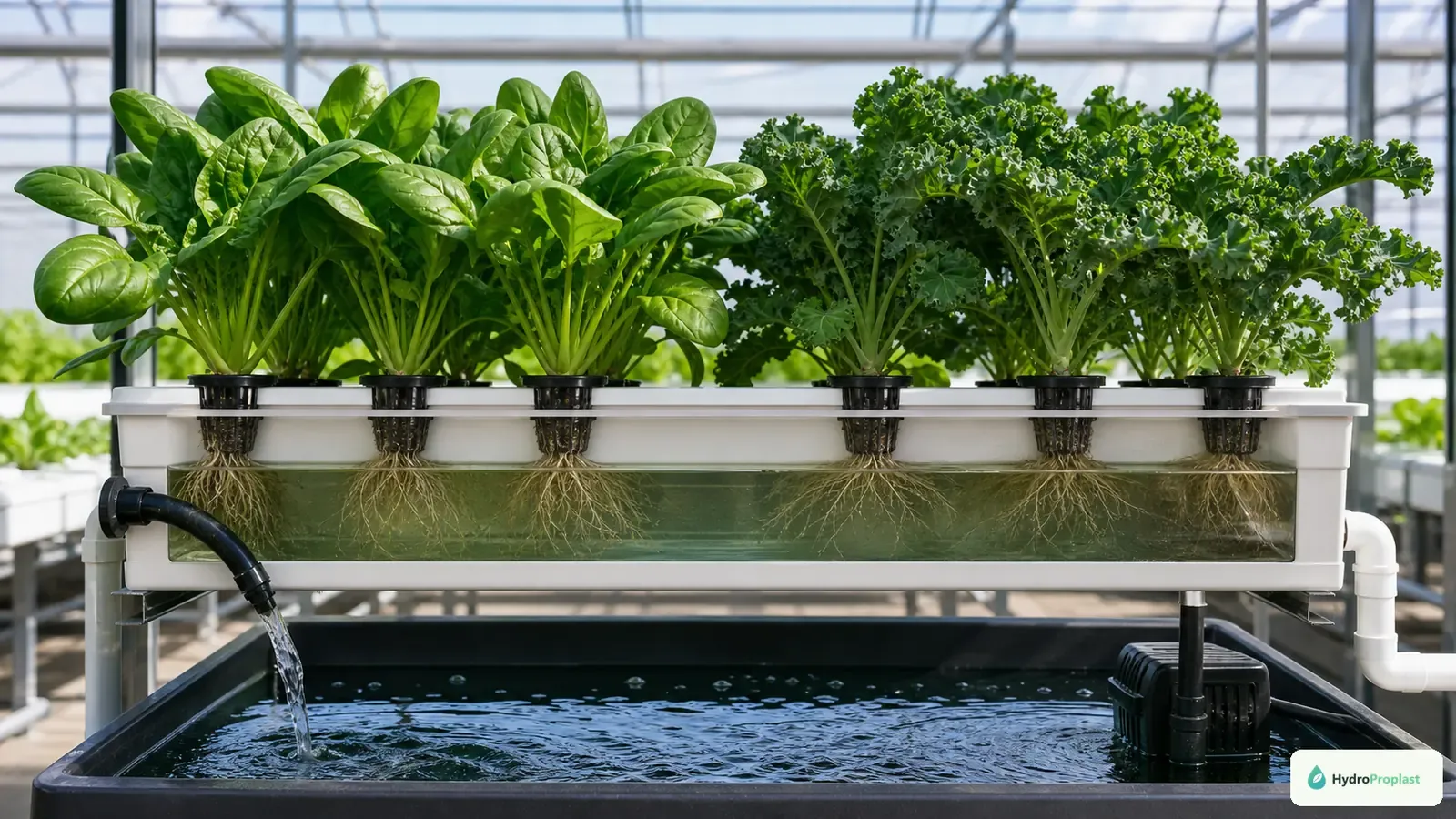
Growing Hydroponic Bok Choy and Asian Greens at Home: Fast, Beginner-Friendly Crops
Grow crisp hydroponic bok choy (pak choi), tatsoi, and baby mustard greens in 28 to 35 days with ideal pH, EC, lighting, and bolt-prevention tips.
Find a guide
Showing all 60 guides.
Grow crisp hydroponic bok choy (pak choi), tatsoi, and baby mustard greens in 28 to 35 days with ideal pH, EC, lighting, and bolt-prevention tips.
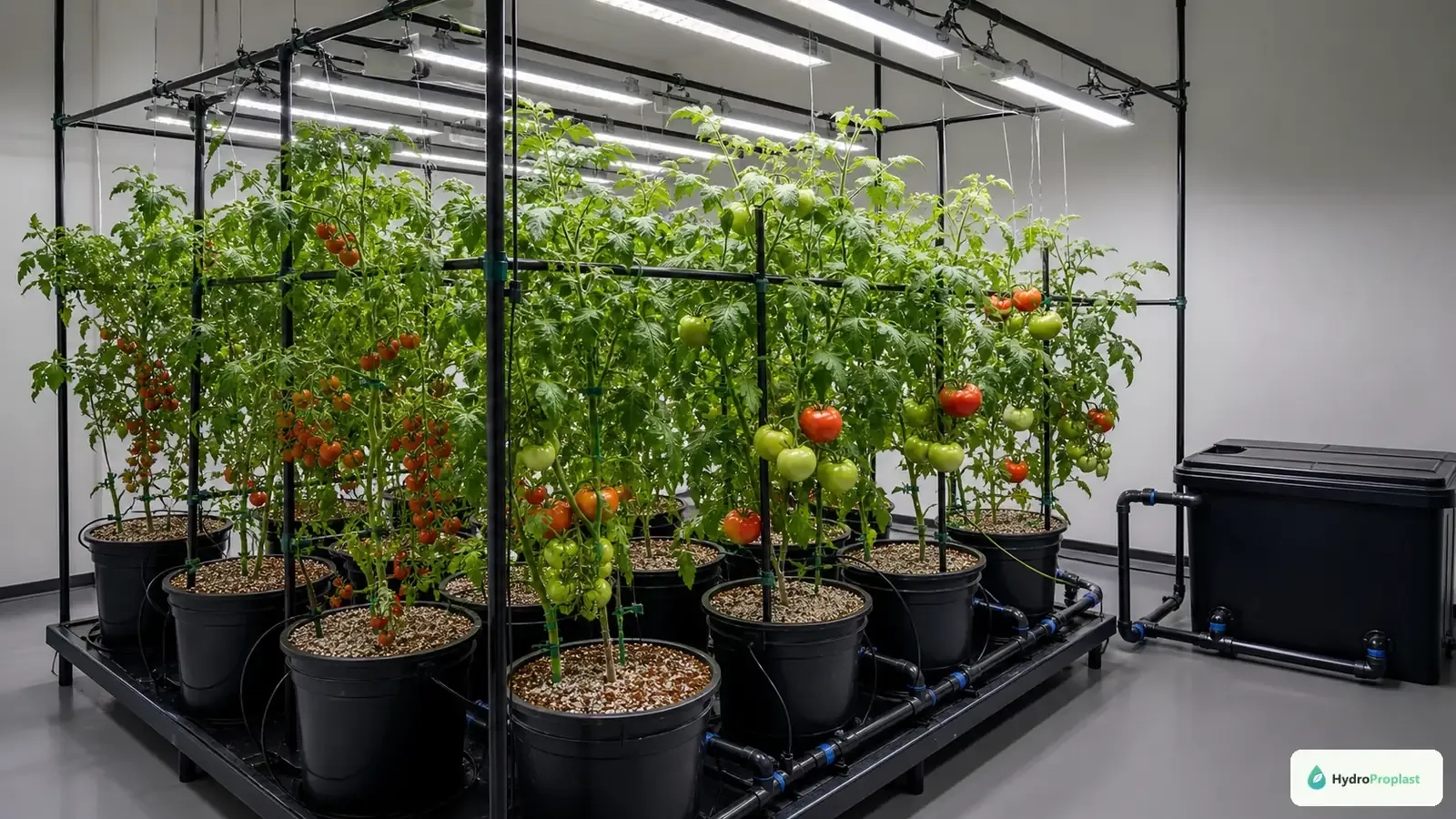
Prevent dark, sunken blossom end rot on indoor hydroponic tomatoes and peppers by stabilizing drip flow, EC, calcium uptake, root health, and humidity.
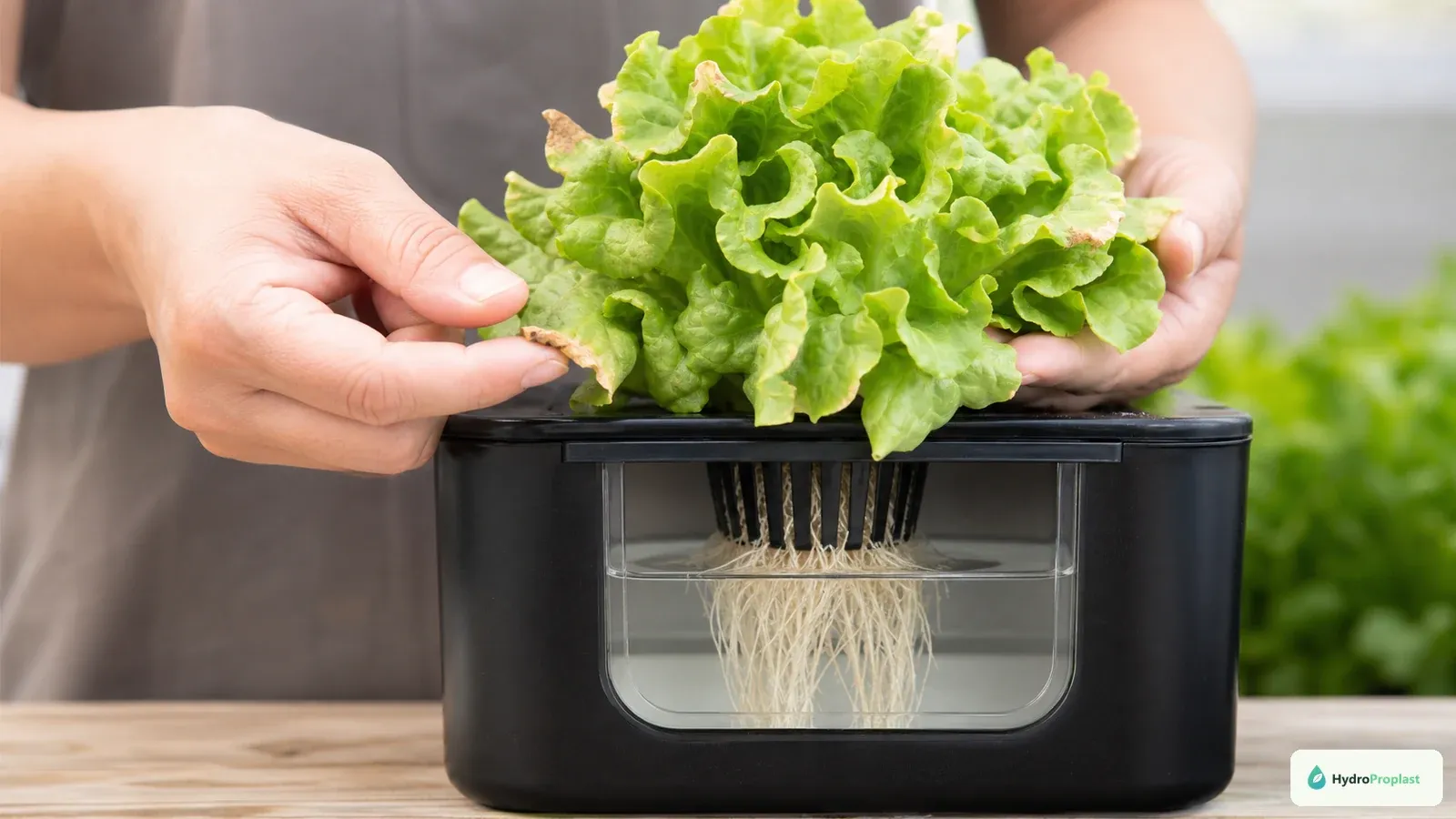
Stop inner leaf-edge browning (tipburn) and premature bolting in hydroponic lettuce by managing canopy airflow, calcium delivery, DLI, and root-zone temperature.
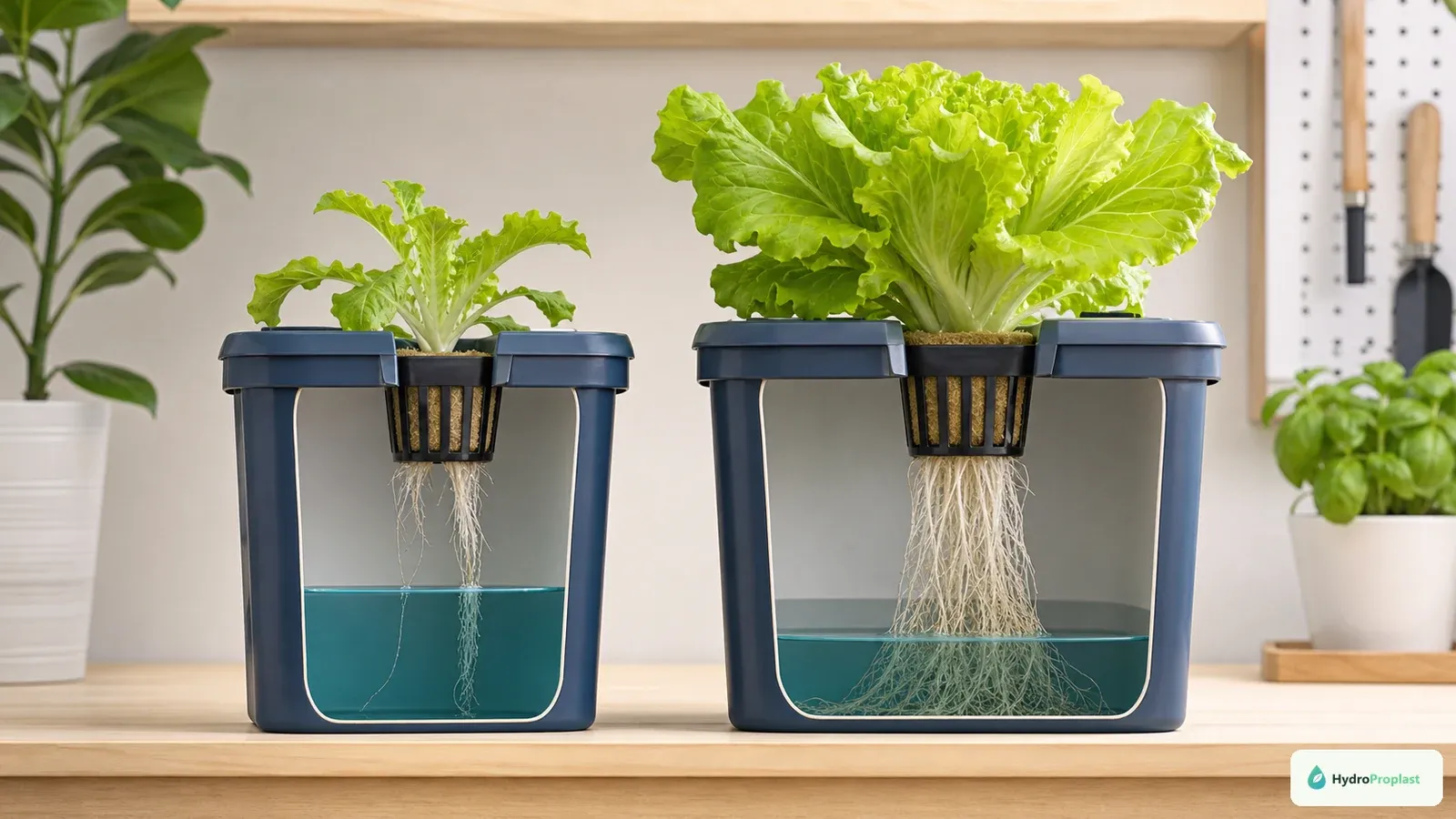
Build a passive Kratky hydroponic container with zero electricity. Learn how the self-regulating air gap works, how to size containers, and how to avoid drowning roots.
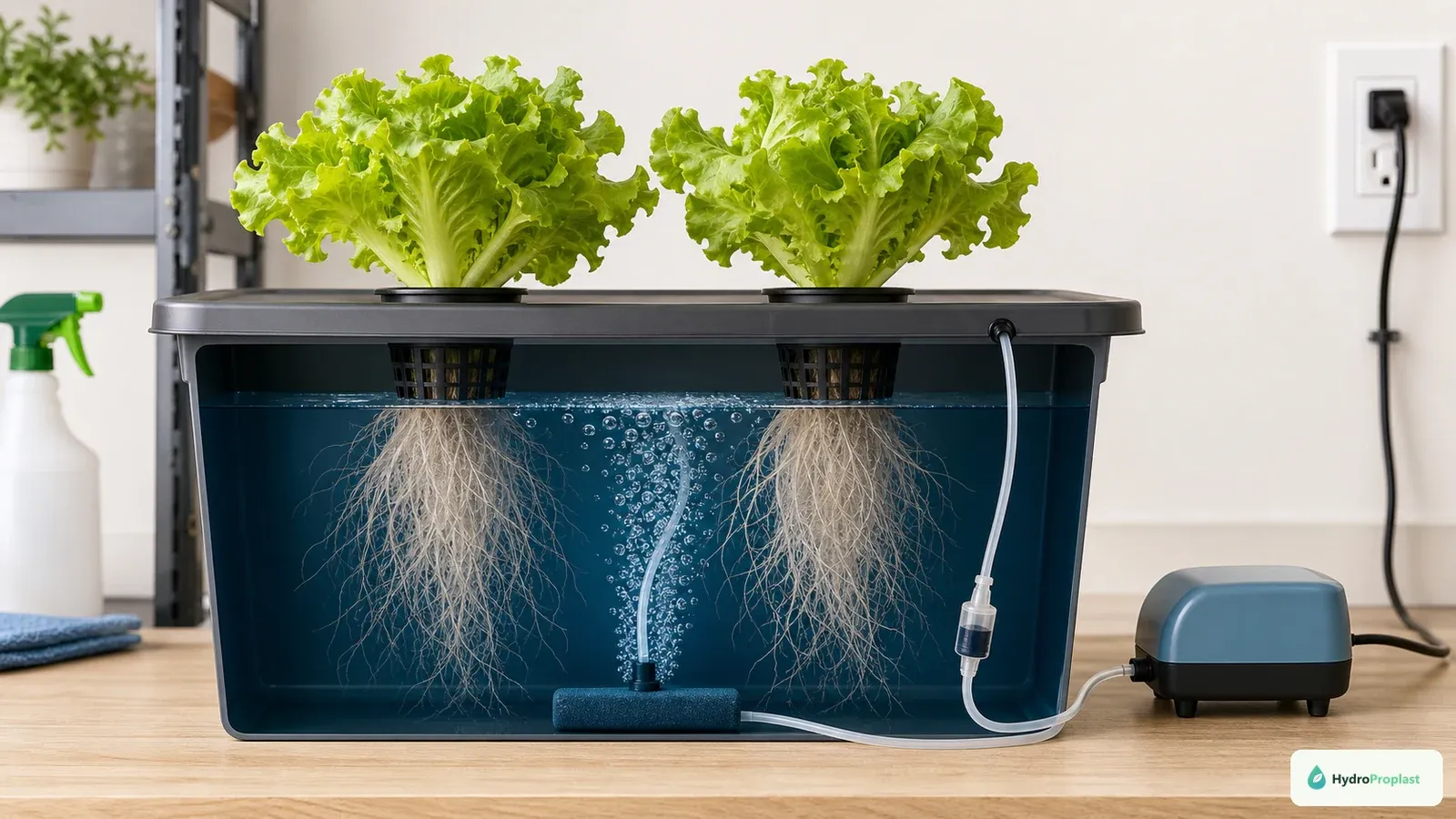
Learn how to build, aerate, and maintain a Deep Water Culture (DWC) bucket or tote system, set initial net pot water levels, and keep submerged roots healthy.
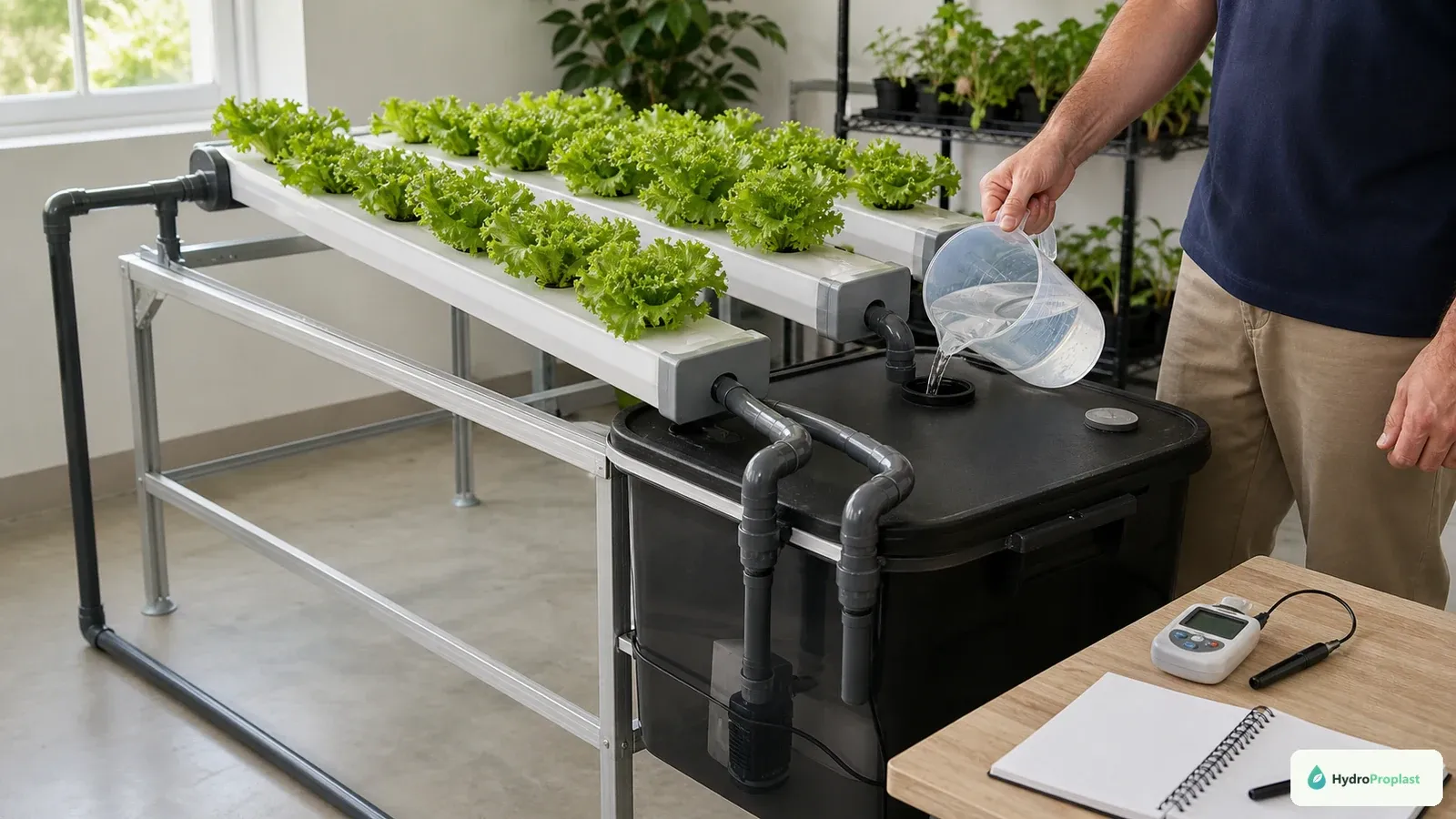
Decide whether a hydroponic reservoir needs water, nutrients, or replacement using water level, EC, pH, crop stage, source water, and solution history.
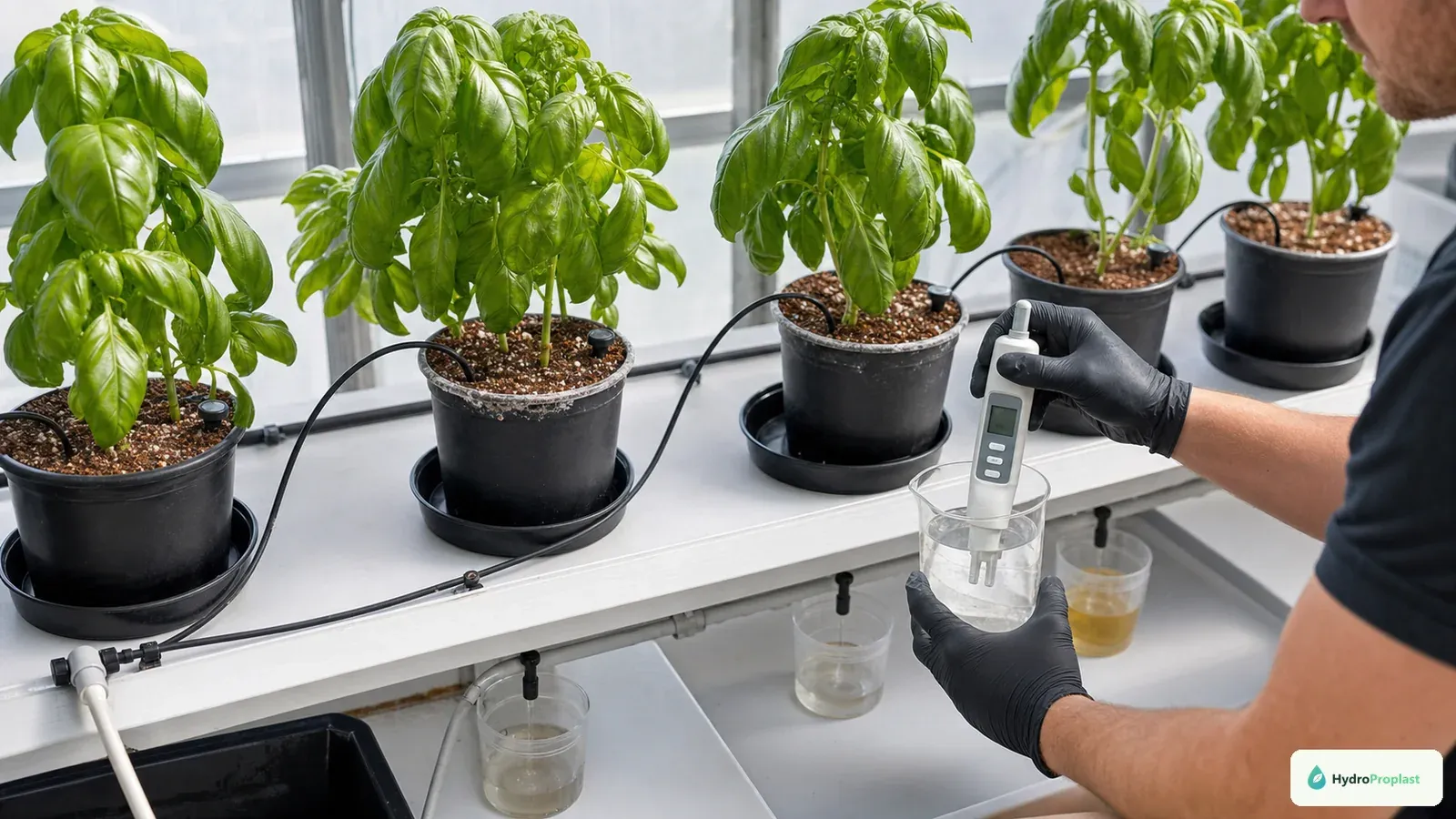
Learn why salts accumulate in hydroponic reservoirs and growing media, how to read EC and runoff trends, and when to rinse or replace solution.
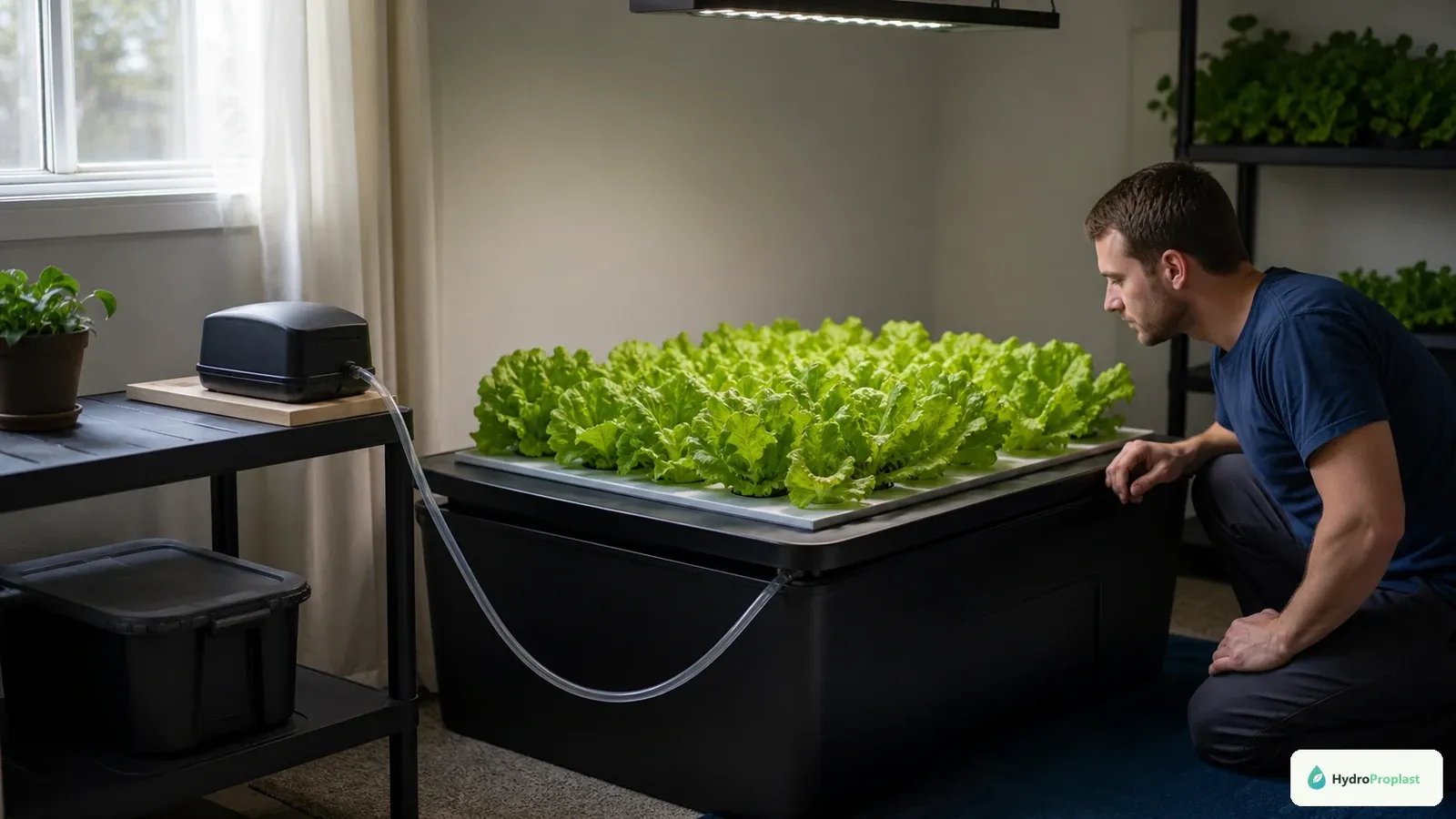
Protect hydroponic crops during a power outage with system-specific priorities, safe backup power, restart checks, and recovery guidance.
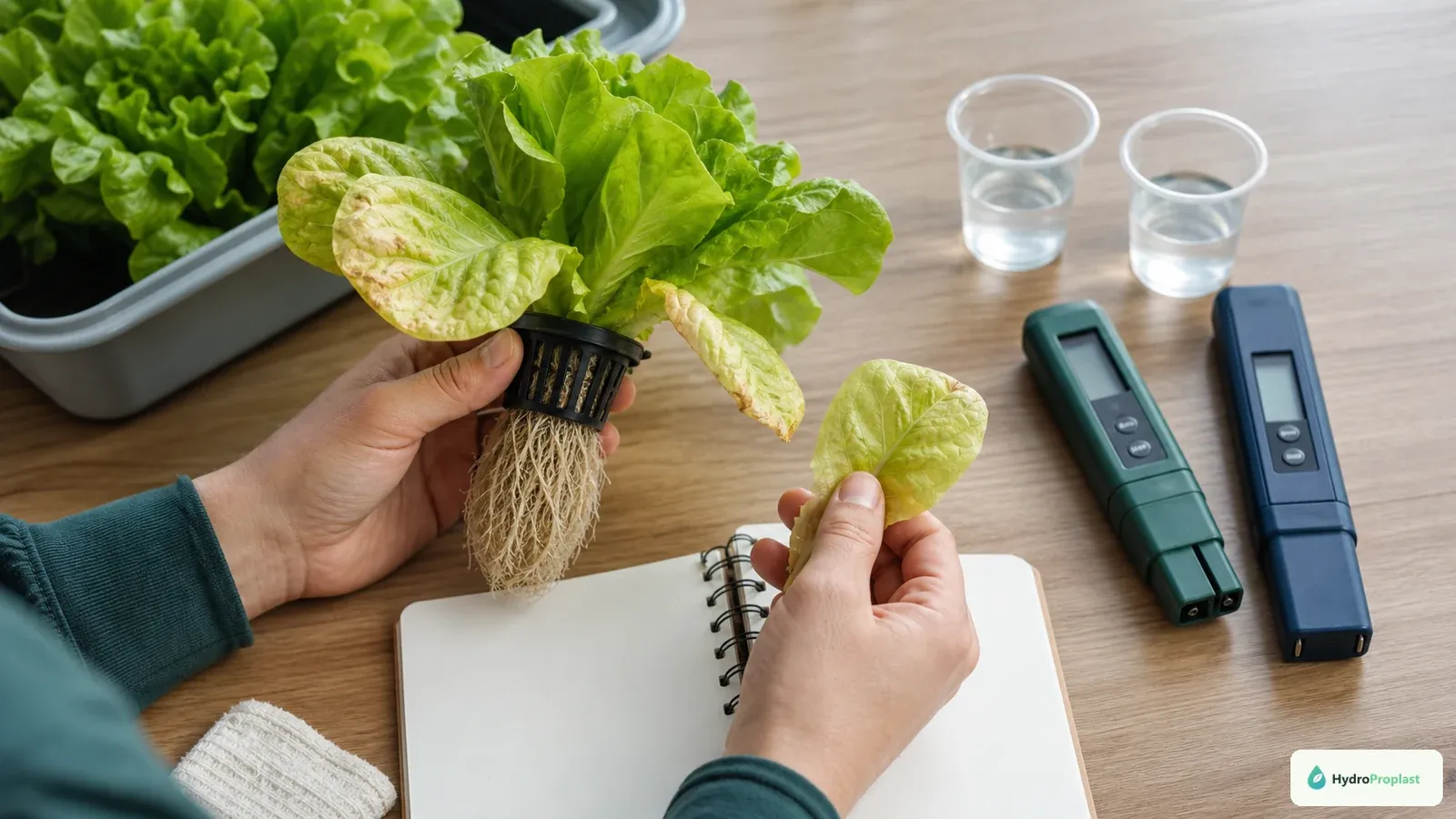
Learn how to diagnose hydroponic nutrient deficiencies using leaf patterns, roots, pH, EC, source water, mixing history, and delivery checks.
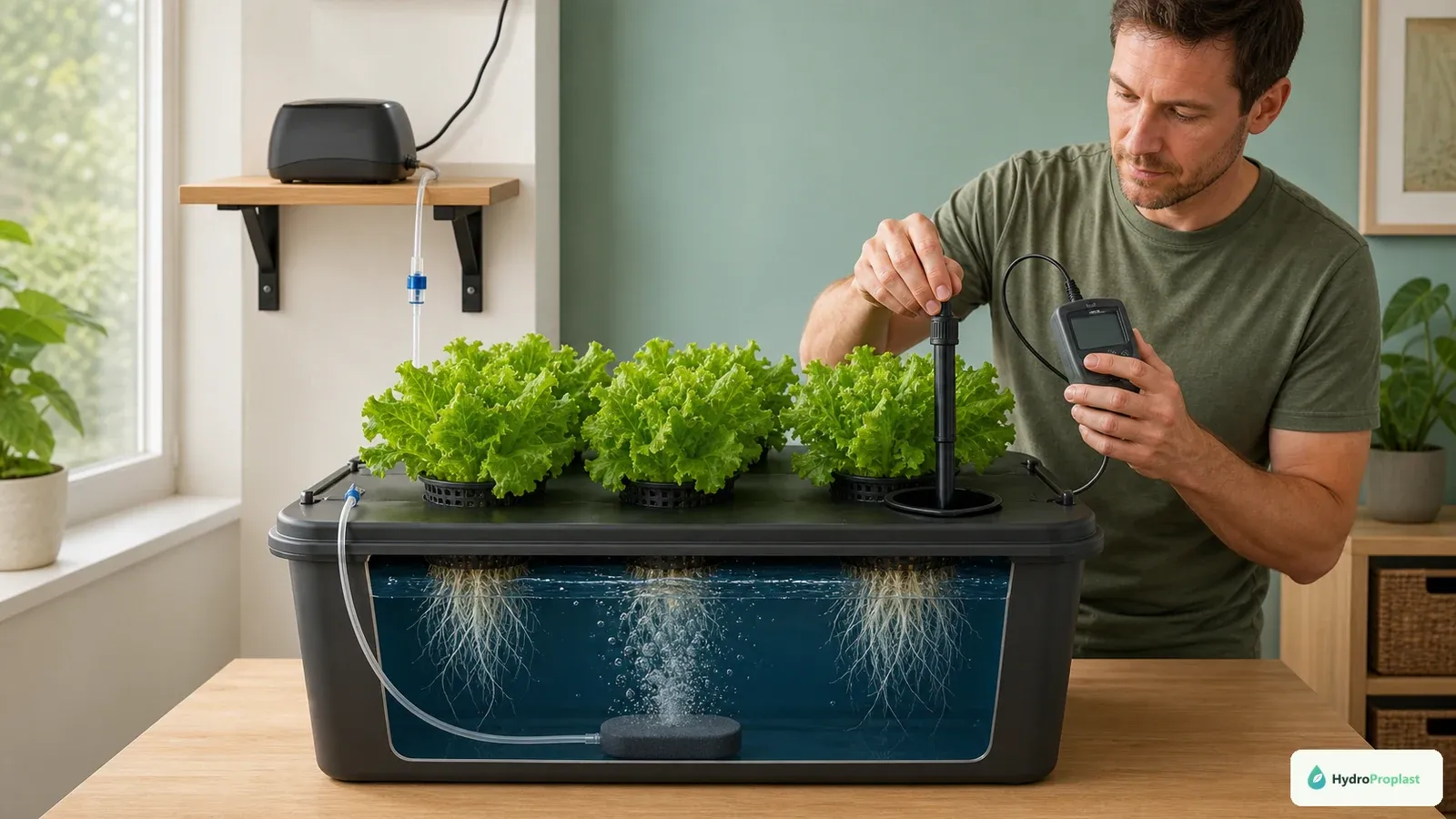
Learn what dissolved oxygen means in hydroponics, practical DO ranges, warning signs, testing methods, and safe ways to improve root-zone aeration.
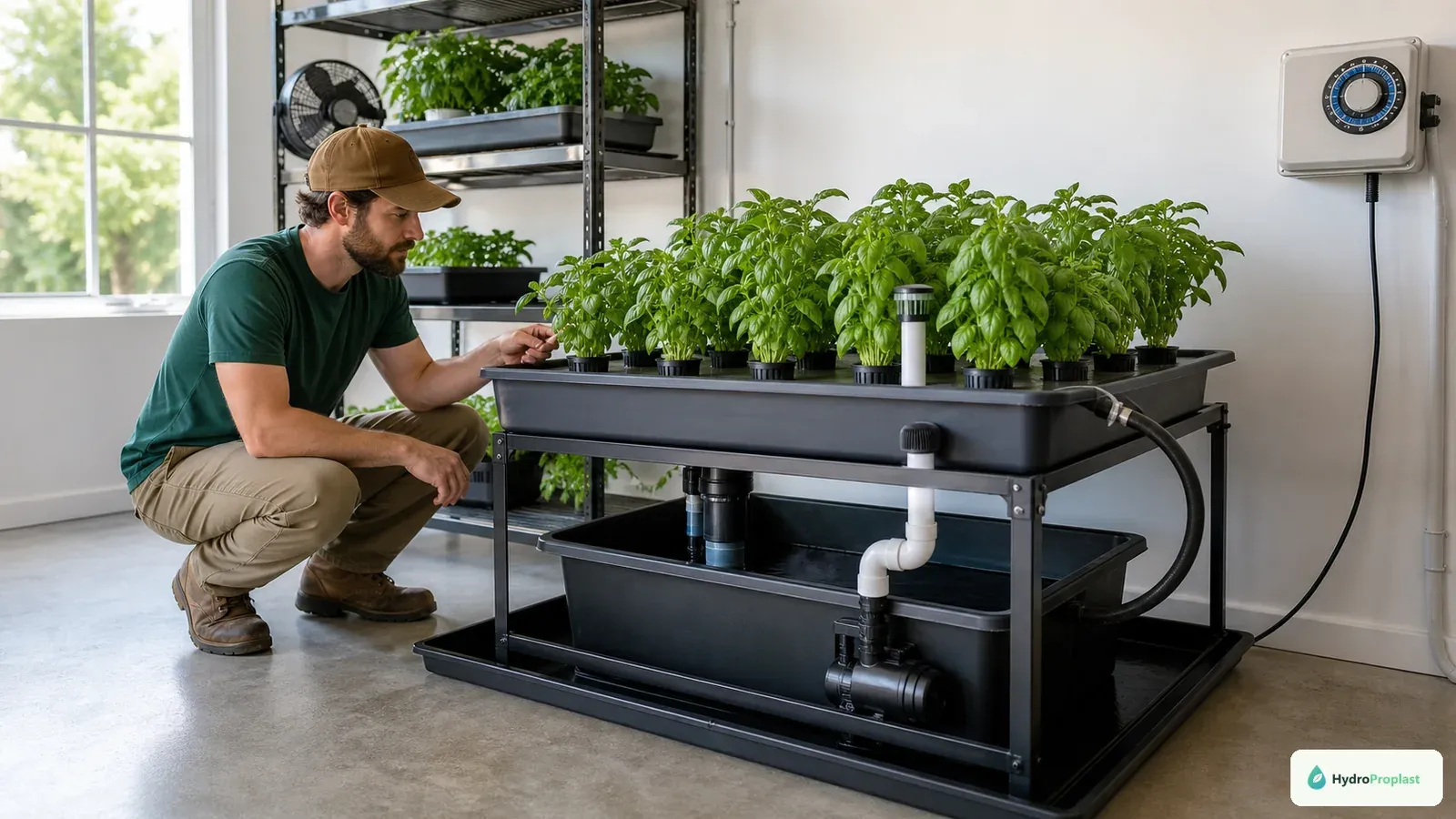
Prepare hydroponics for vacation with measured water demand, tested top-off limits, pump backups, alarms, power recovery, caretaker instructions, and simulation.
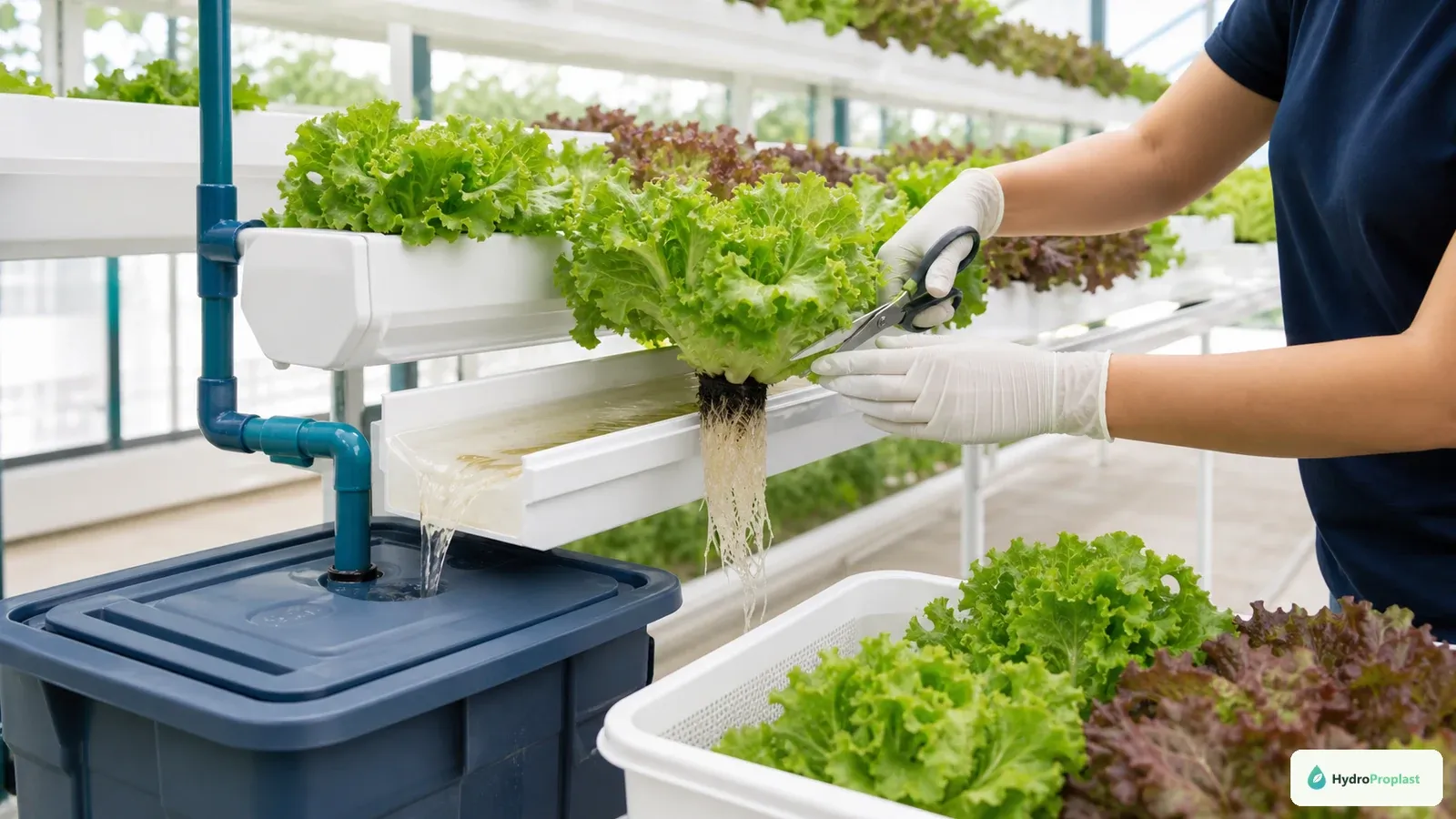
Harvest and store lettuce, greens, basil, and herbs with crop-specific cuts, hygienic tools, treatment clearance, cooling, moisture control, packaging, and traceability.
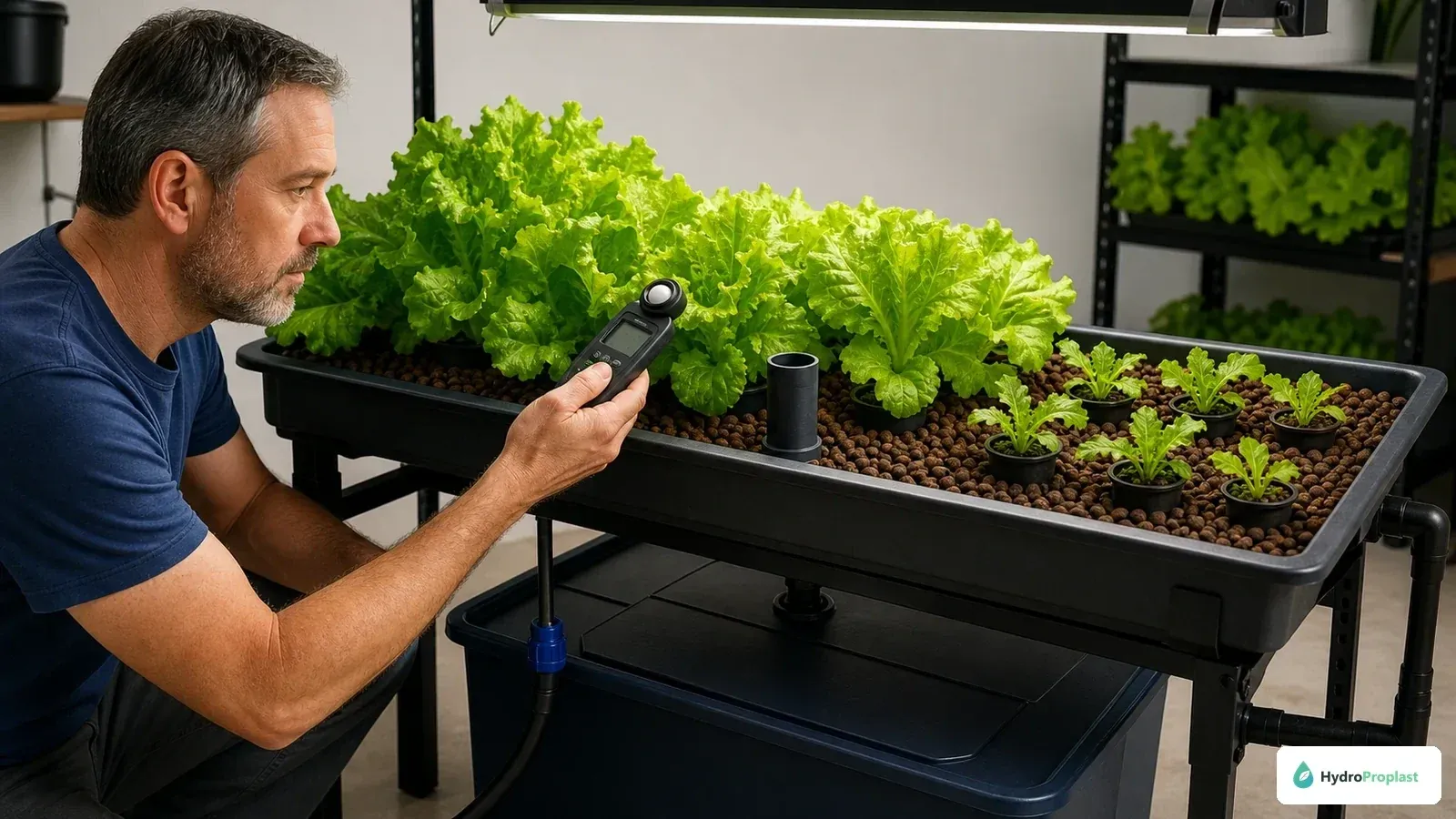
Diagnose slow hydroponic growth by defining the comparison, mapping positions, checking roots, light, climate, delivery, pH, EC, mixing, pests, and crop stage.
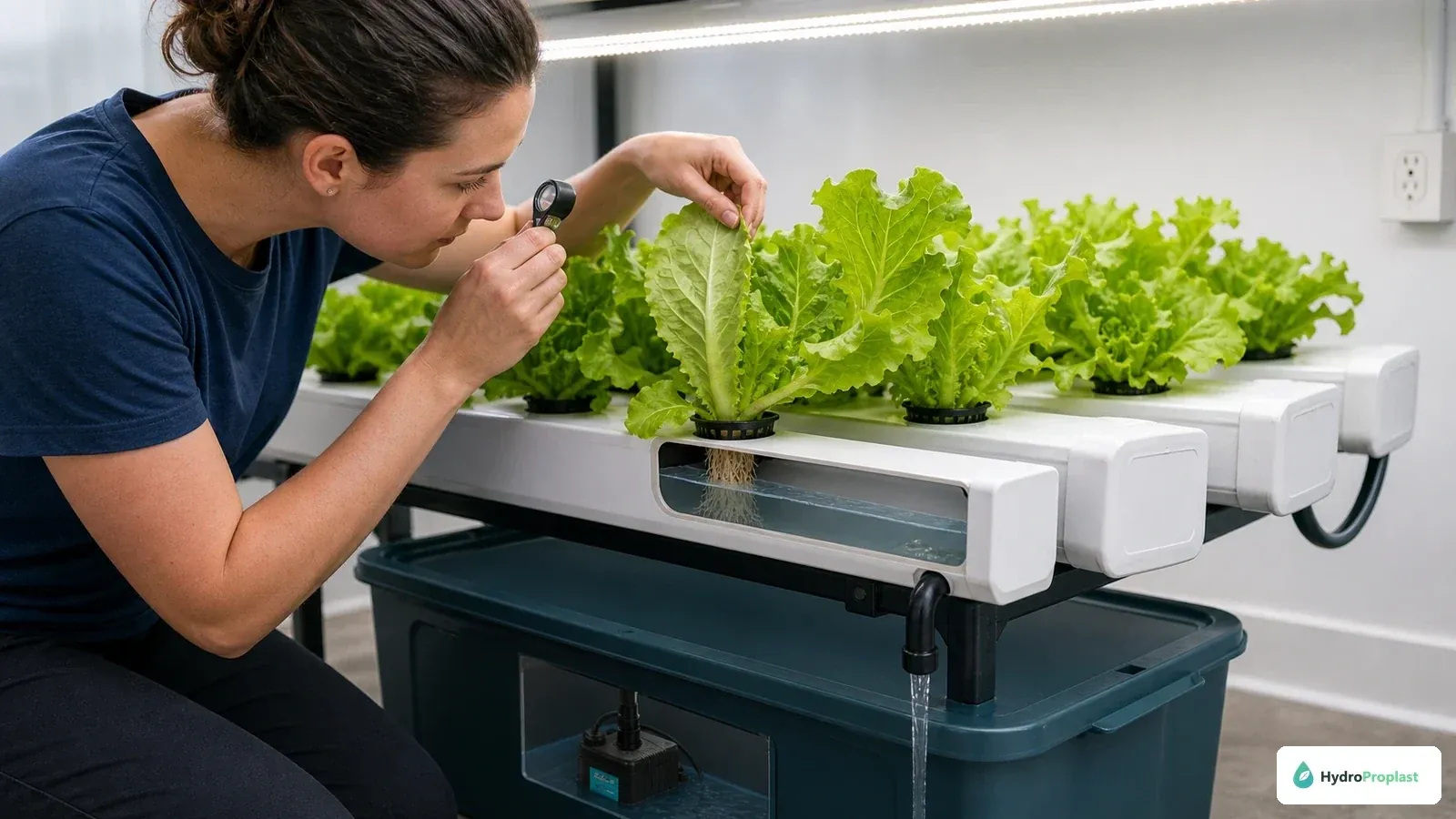
Identify and manage aphids, fungus gnats, and spider mites with monitoring, sanitation, habitat correction, biological controls, and label-compliant IPM.
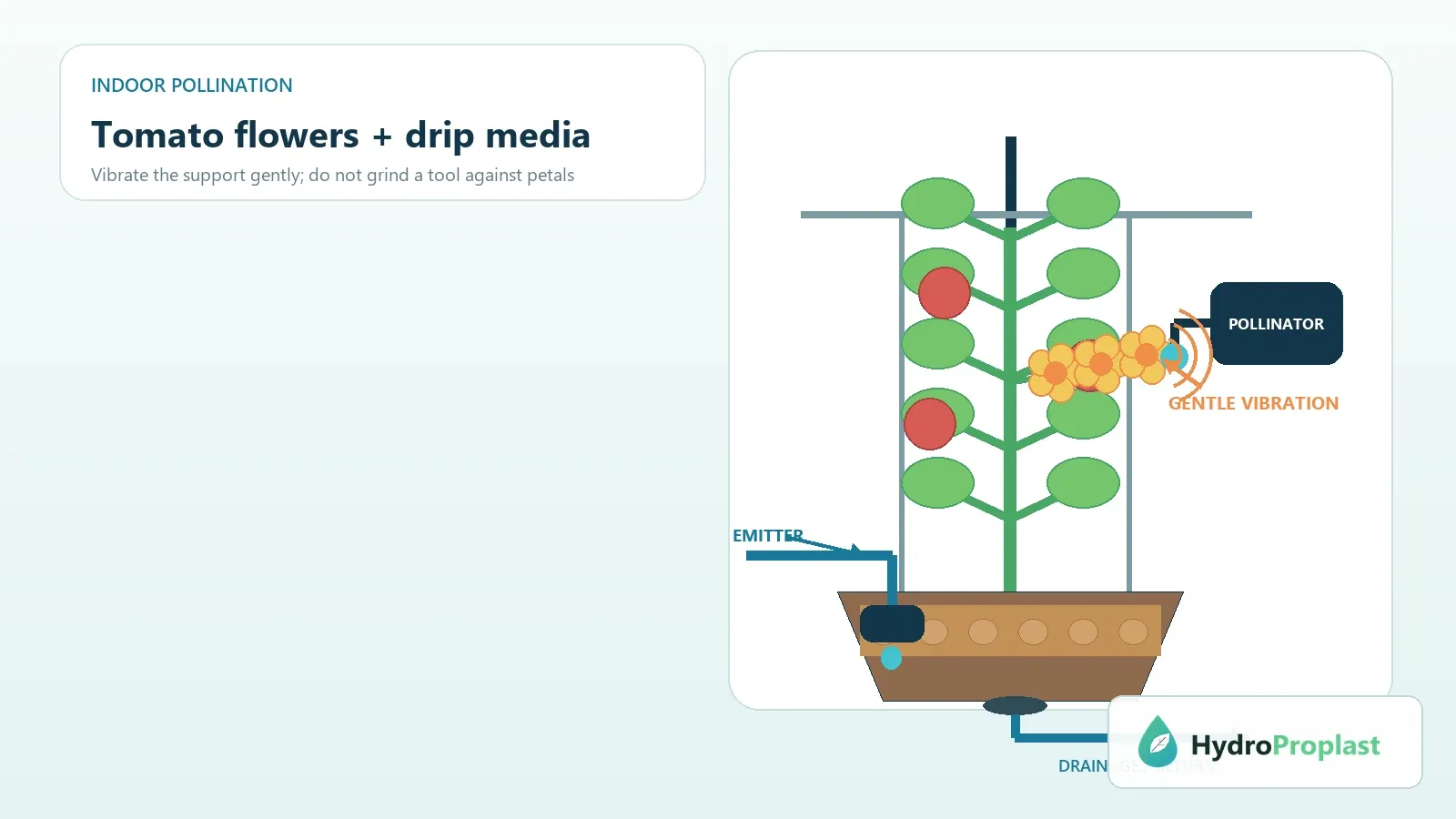
Match indoor pollination to tomato, pepper, and cucumber flower biology using vibration, pollen transfer, cultivar guidance, climate logs, and fruit-set records.
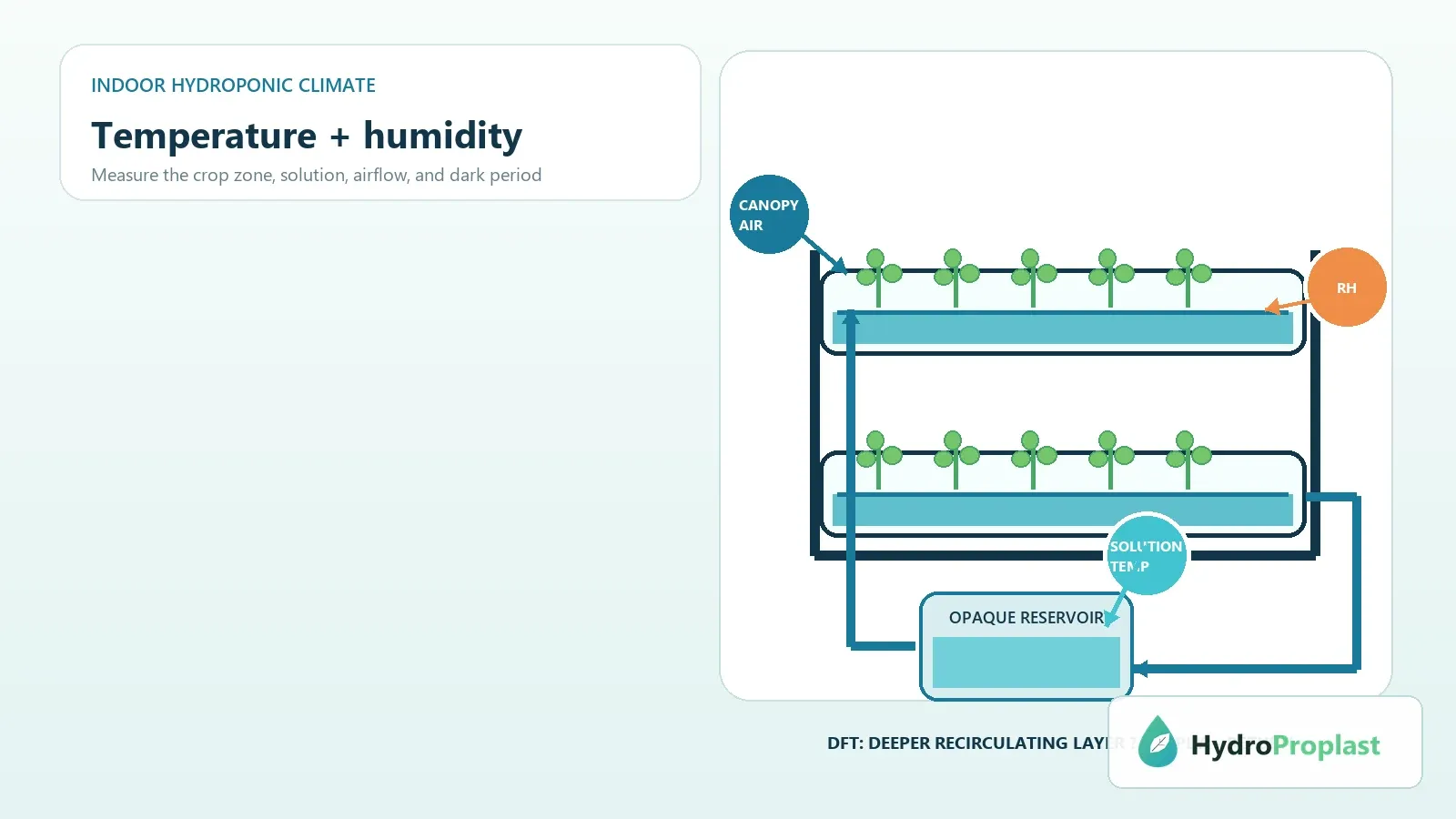
Monitor canopy air, nutrient water, relative humidity, dew point, airflow and dark-period condensation without relying on one universal climate target.
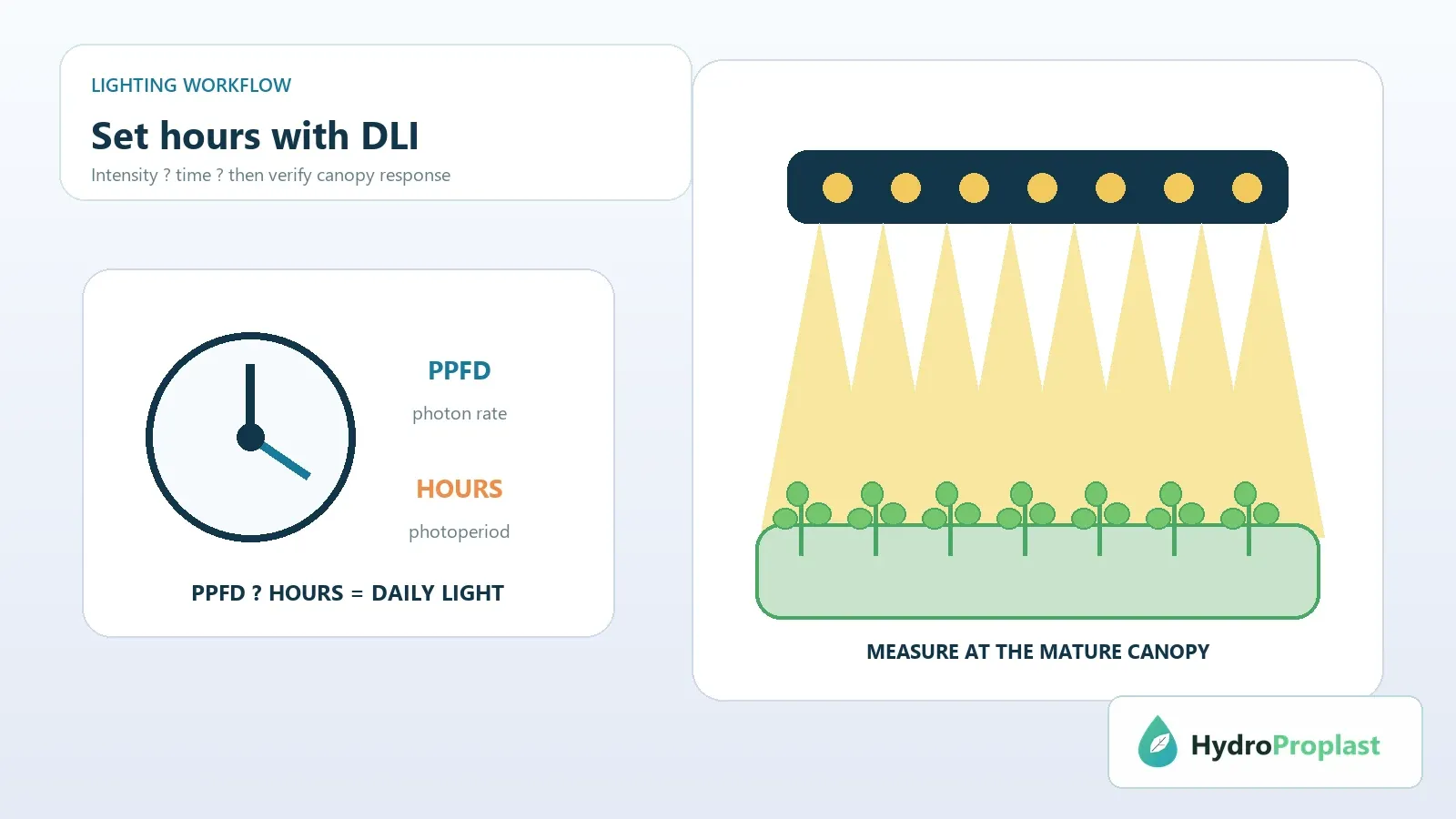
Set a hydroponic light schedule using PPFD, DLI, crop stage, canopy uniformity, dark period, heat, energy use, and measured plant response.
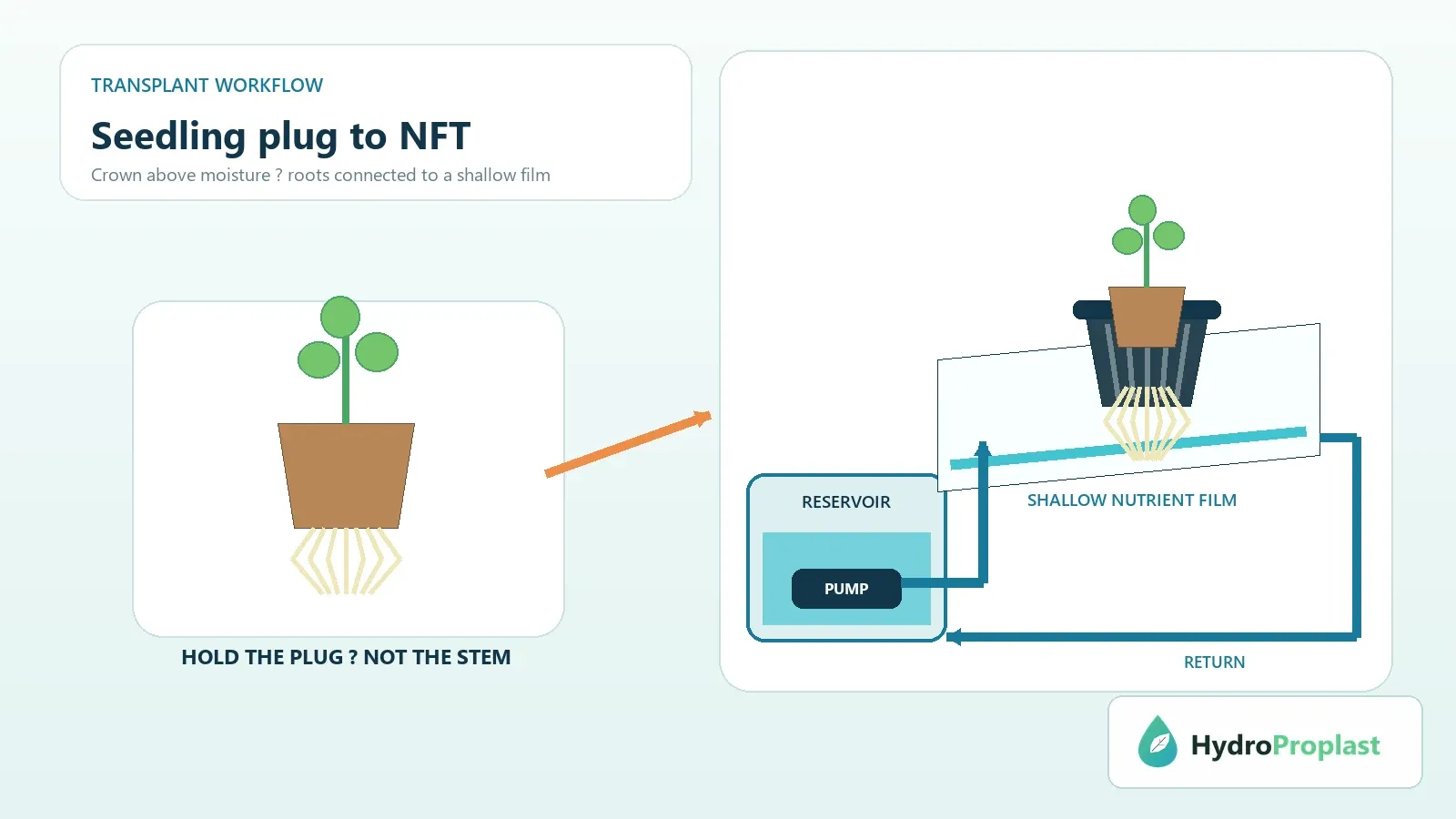
Move seedlings safely by checking readiness, commissioning the receiving system, setting plug height, protecting roots and monitoring the first 72 hours.
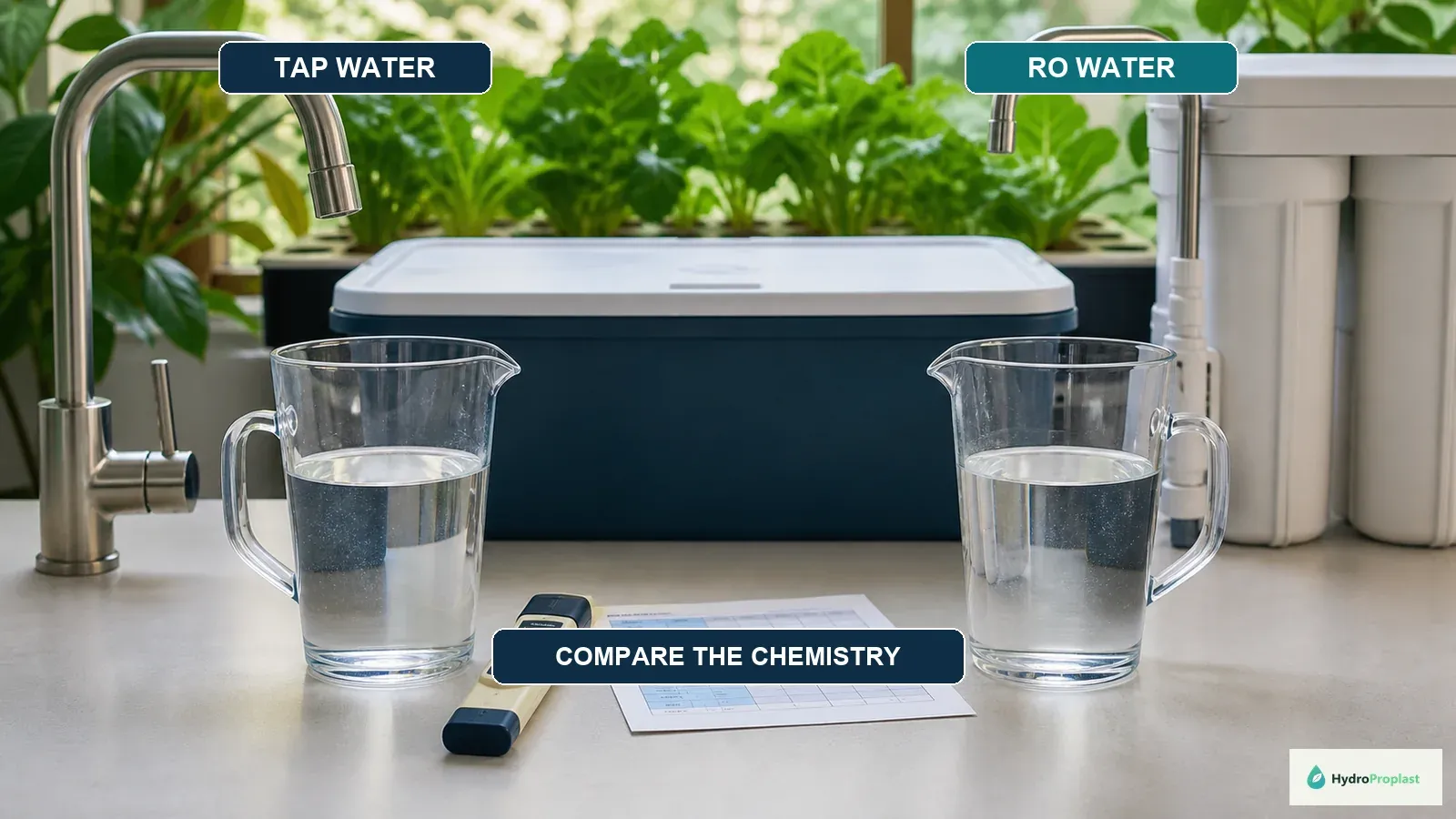
Choose tap, RO, or blended water from EC, alkalinity, hardness, sodium, chloride, nutrient compatibility, membrane maintenance, and operating cost.
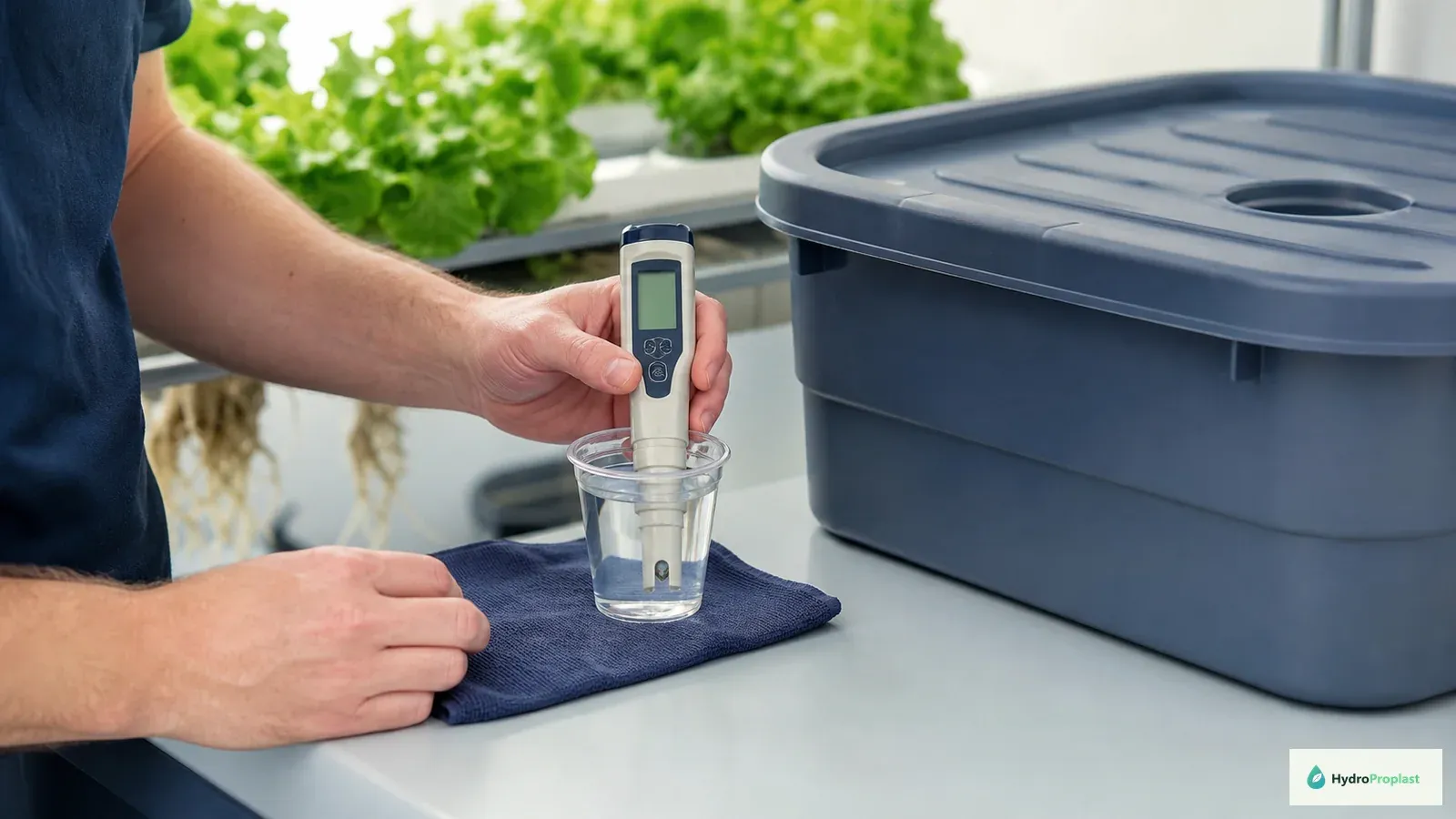
Learn what EC measures, how to calibrate and sample correctly, interpret EC with water level, adjust a known solution, and troubleshoot misleading readings.
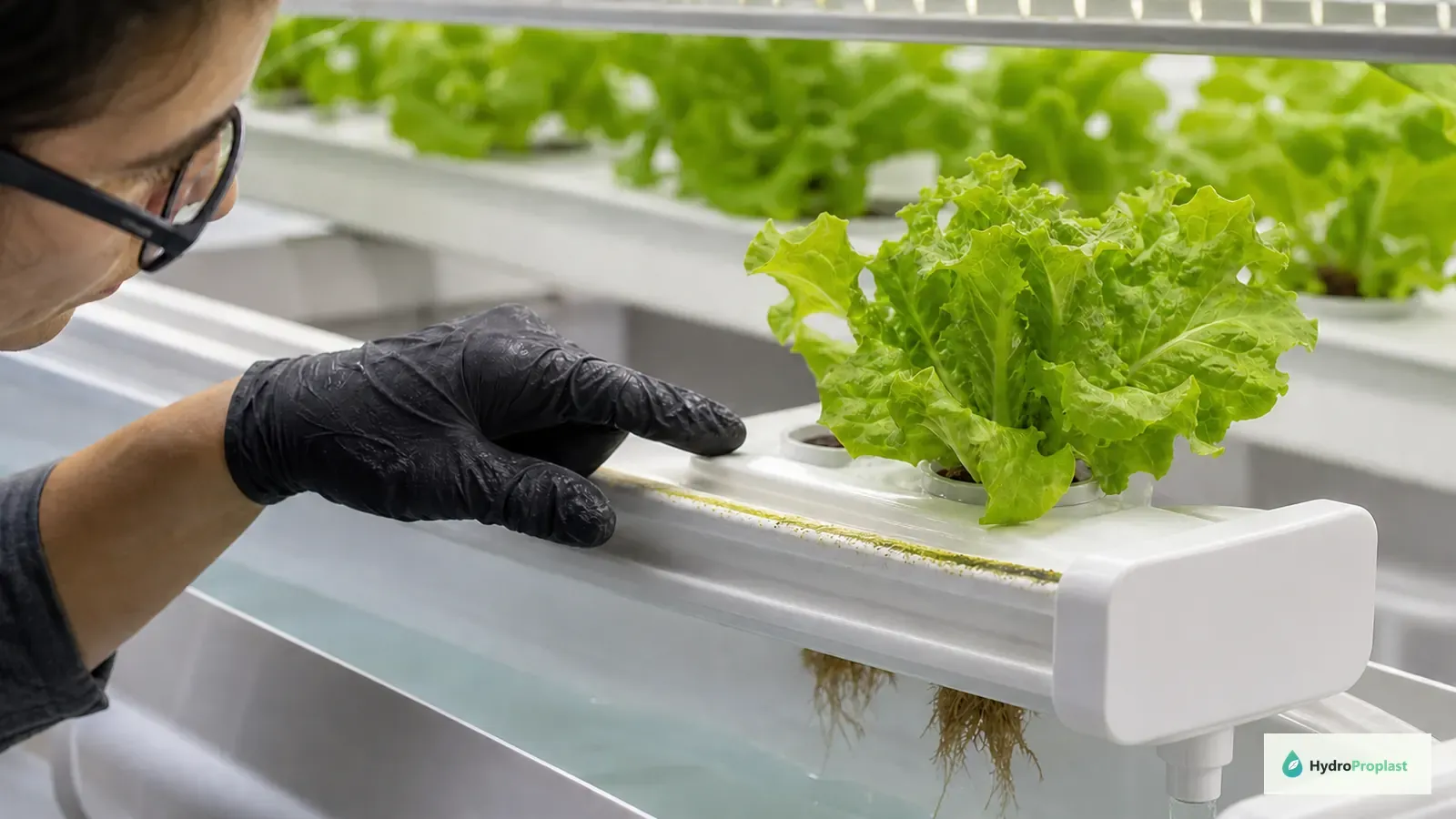
That green or brown slime in your reservoir is algae. Learn what causes it, why it harms your plants, and the simple steps that prevent it for good.
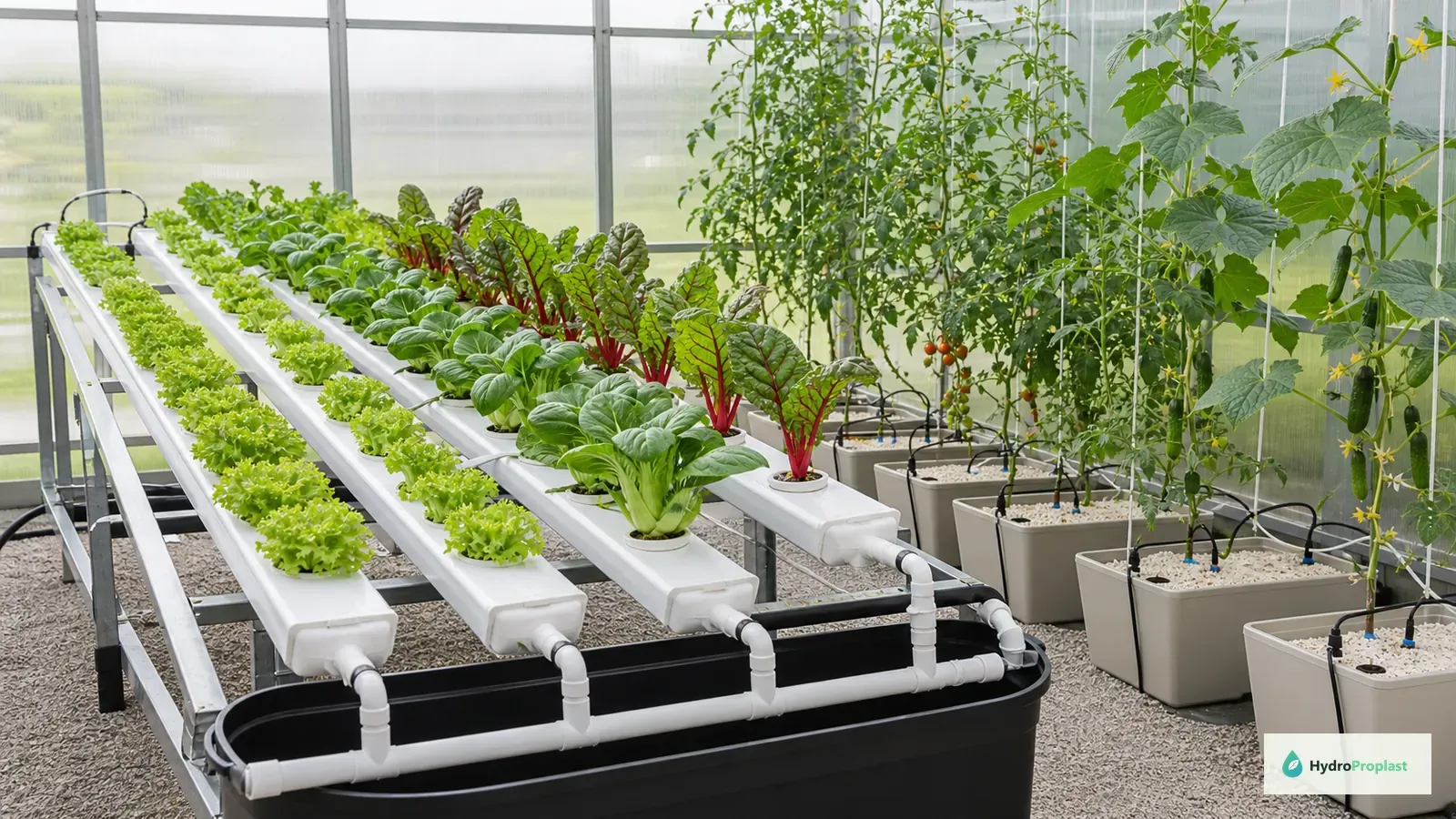
Not every crop suits a beginner hydroponic system. Here are the easiest, fastest, and most rewarding vegetables to grow hydroponically when you are starting out.
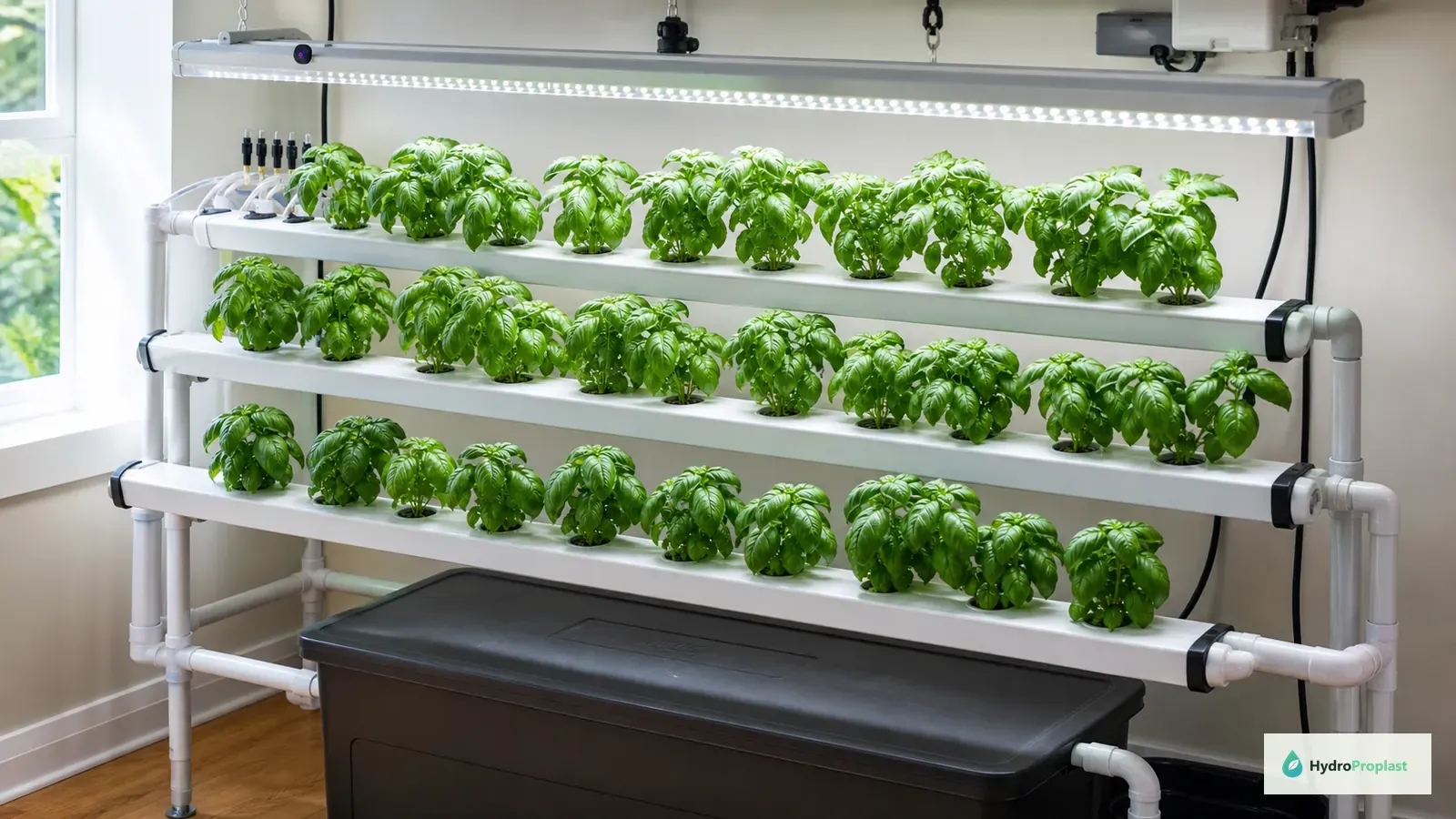
Basil is the star hydroponic herb — fast, fragrant, and high-value. Learn how to grow hydroponic basil from seed to harvest, including light, feeding, and pruning.
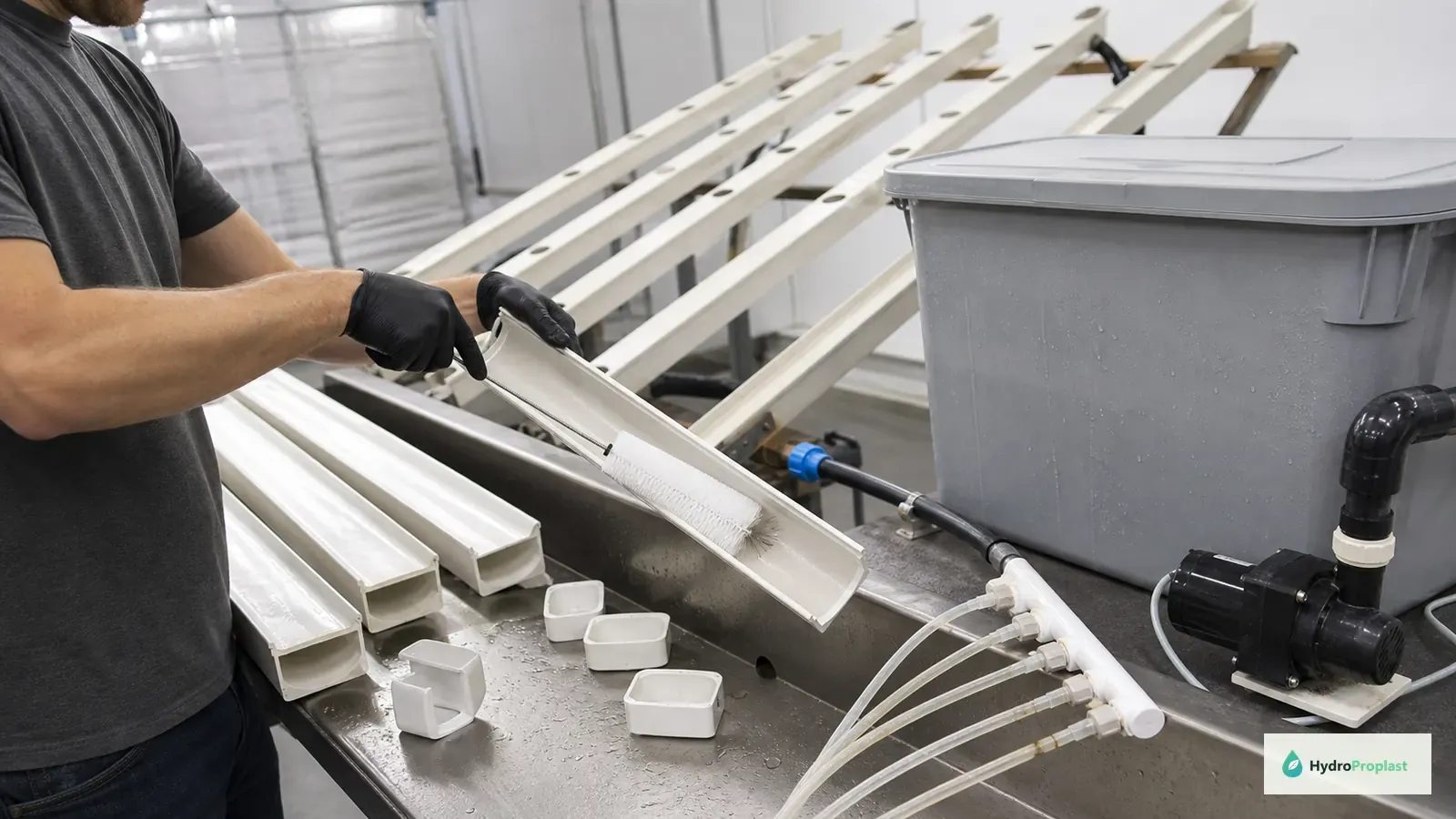
Cleaning your system between grows prevents algae, root rot, and salt buildup. Here is a simple, safe routine to reset your reservoir, tubing, and medium.
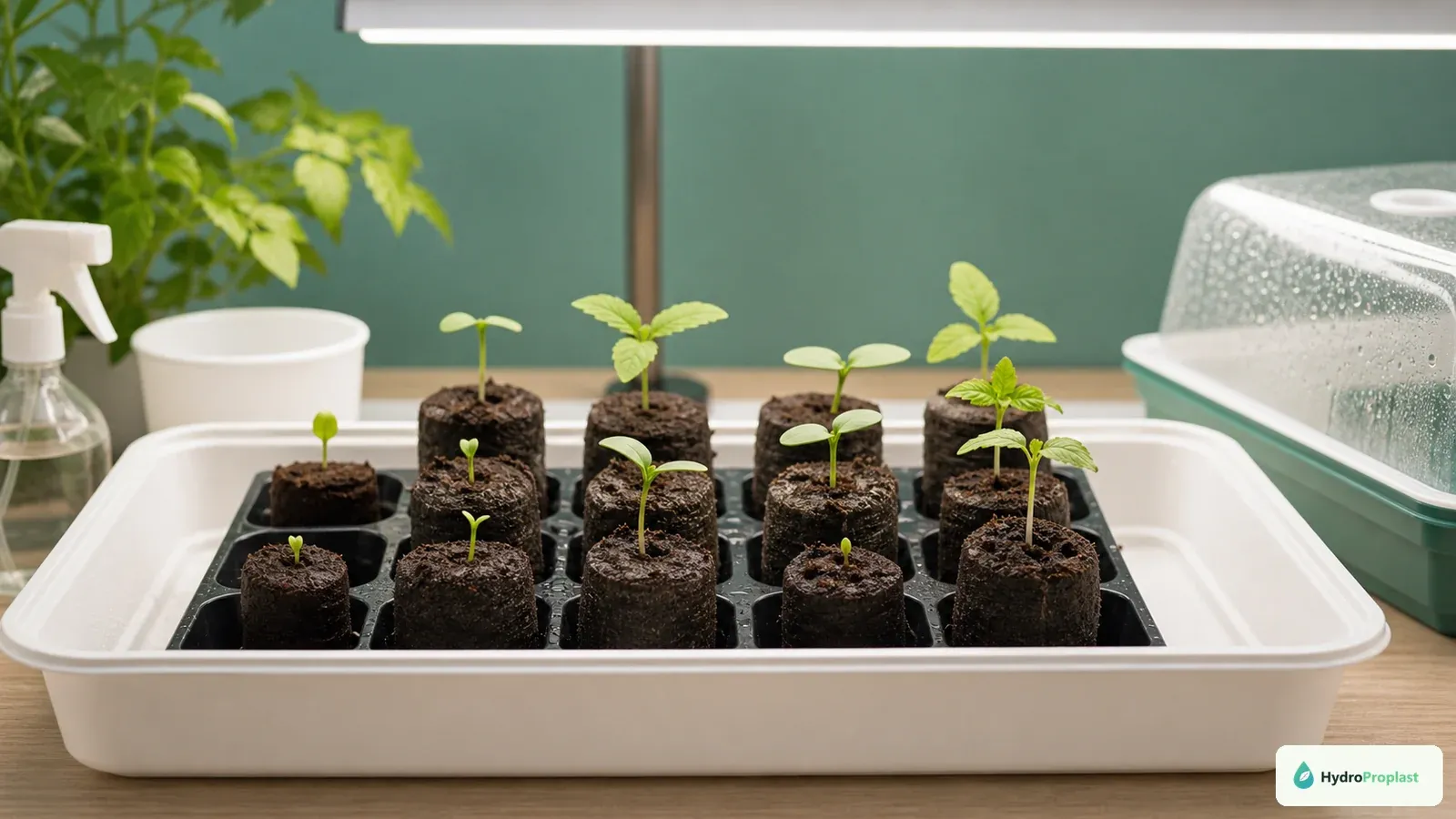
Starting seeds is where many hydroponic grows succeed or fail. Learn how to germinate seeds in rockwool or sponges, avoid leggy seedlings, and transplant cleanly.
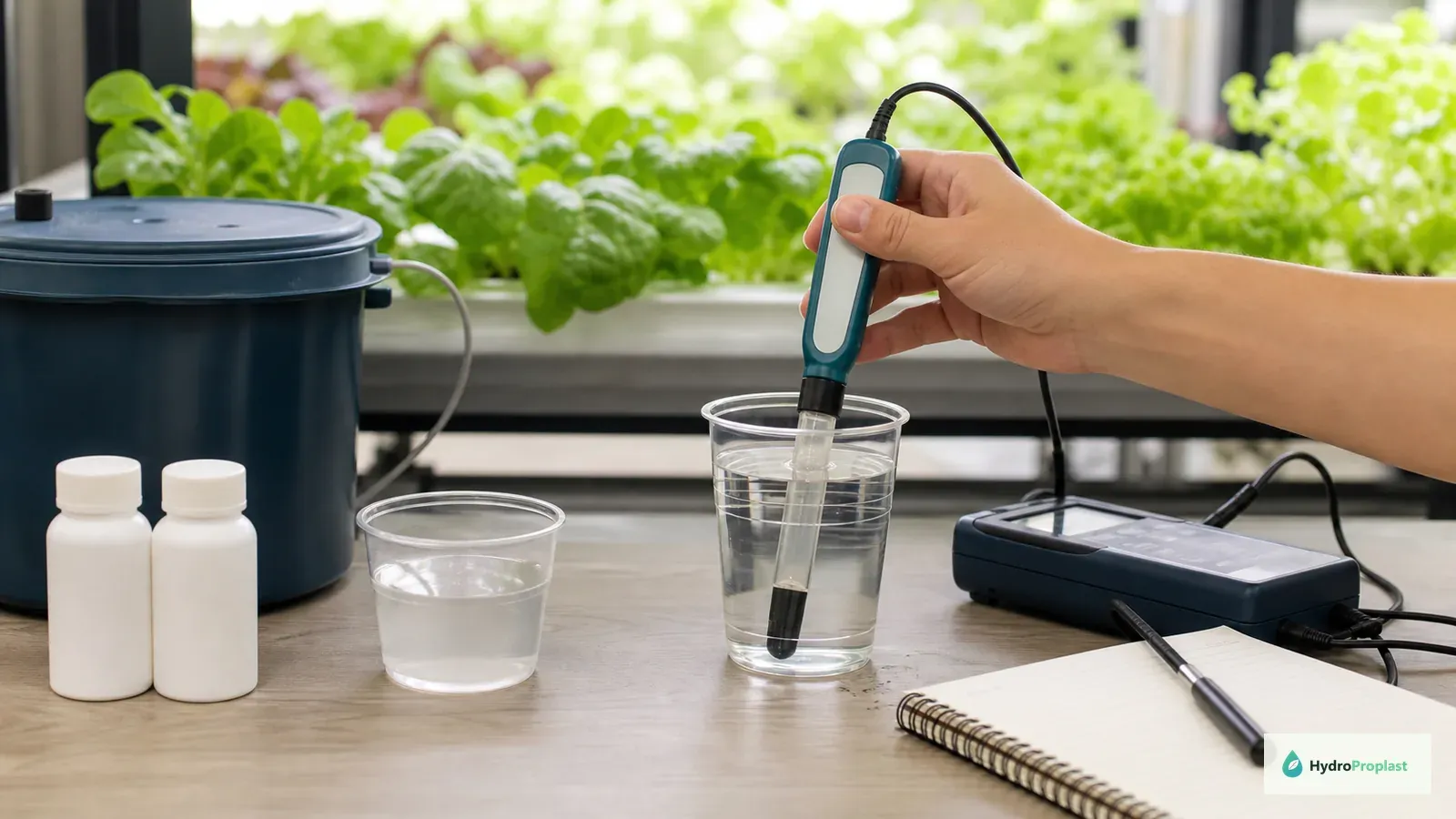
Learn how to choose a crop-specific hydroponic pH range, calibrate a meter, adjust solution safely, and interpret drift without chasing one decimal.
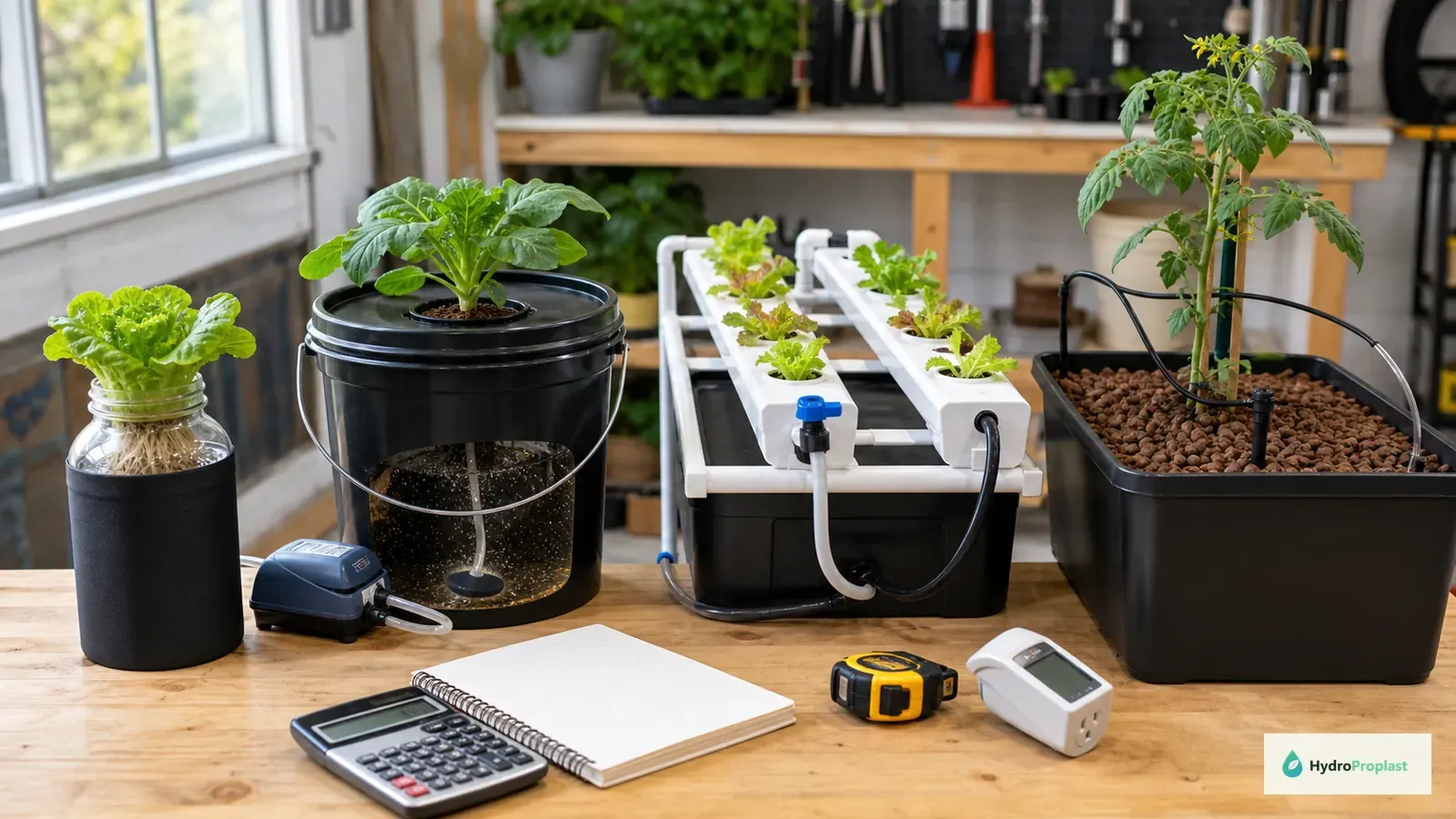
Build a realistic home hydroponics budget covering equipment, lighting, nutrients, meters, electricity, replacements, and crop-specific costs.
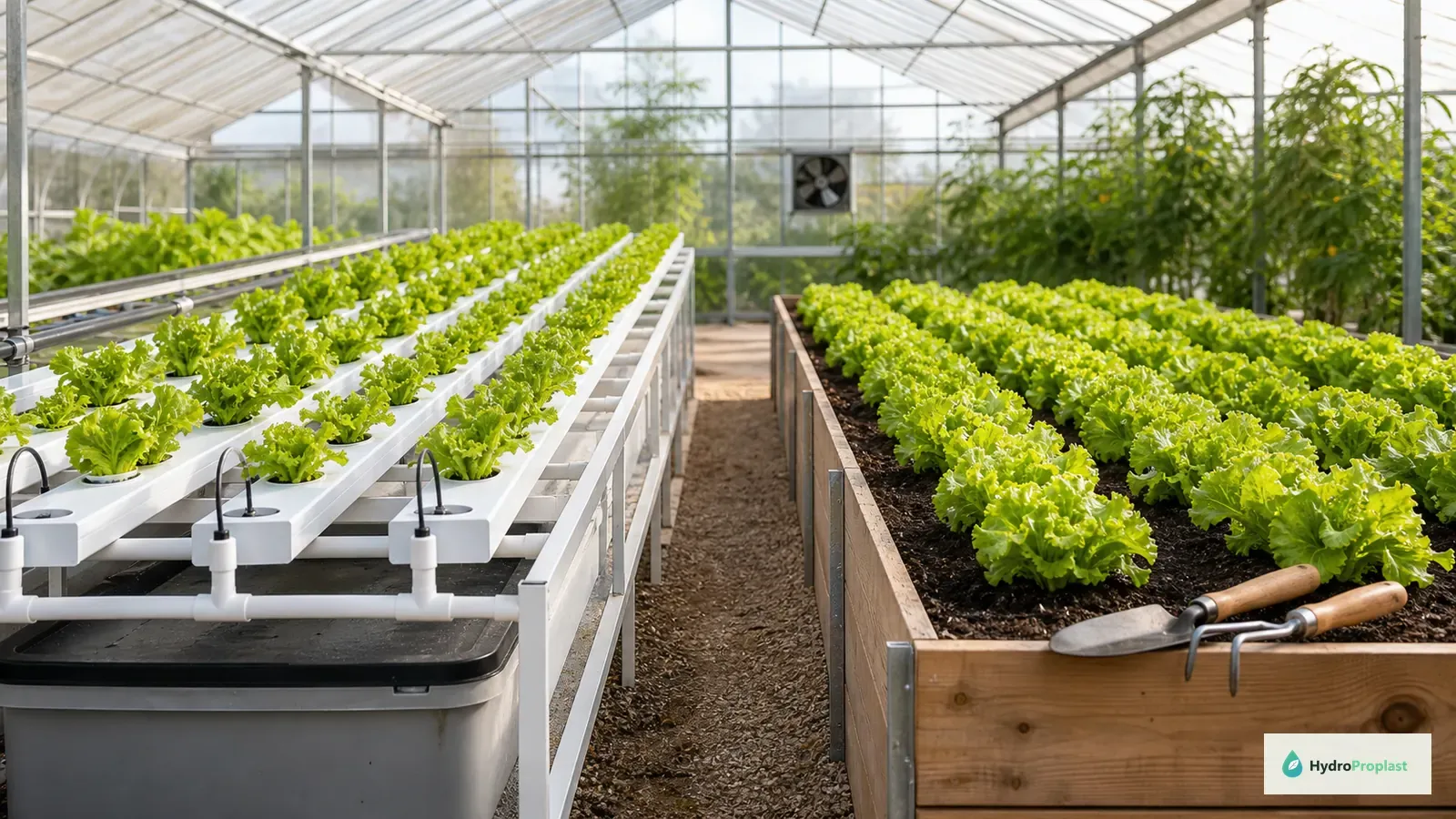
Compare hydroponics and soil by water, energy, cost, growth, disease, space, and maintenance to choose the right method for your crop and home.
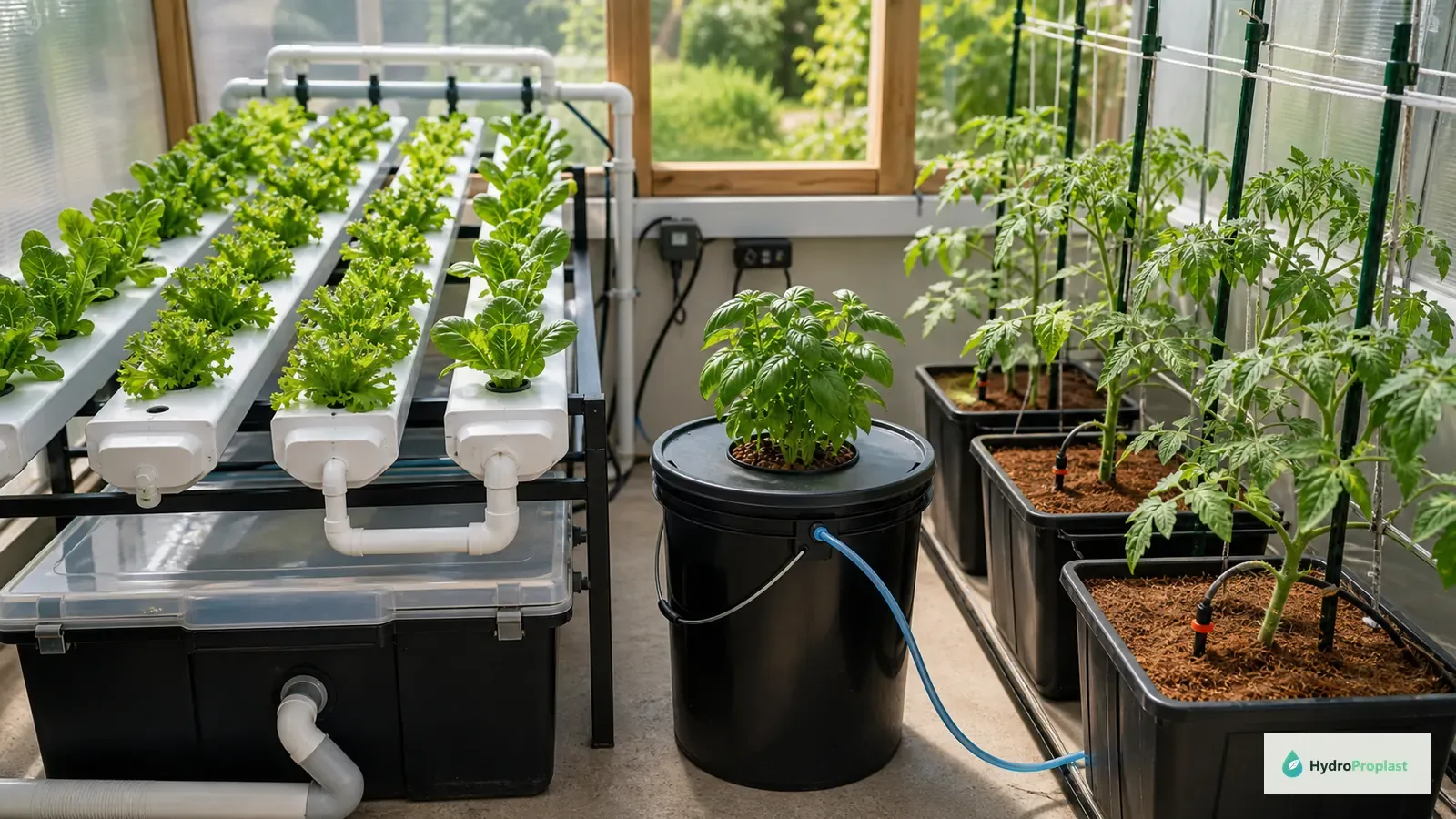
Learn how hydroponics supplies water, nutrients, and oxygen without soil, how common systems work, and what beginners need for a realistic first grow.
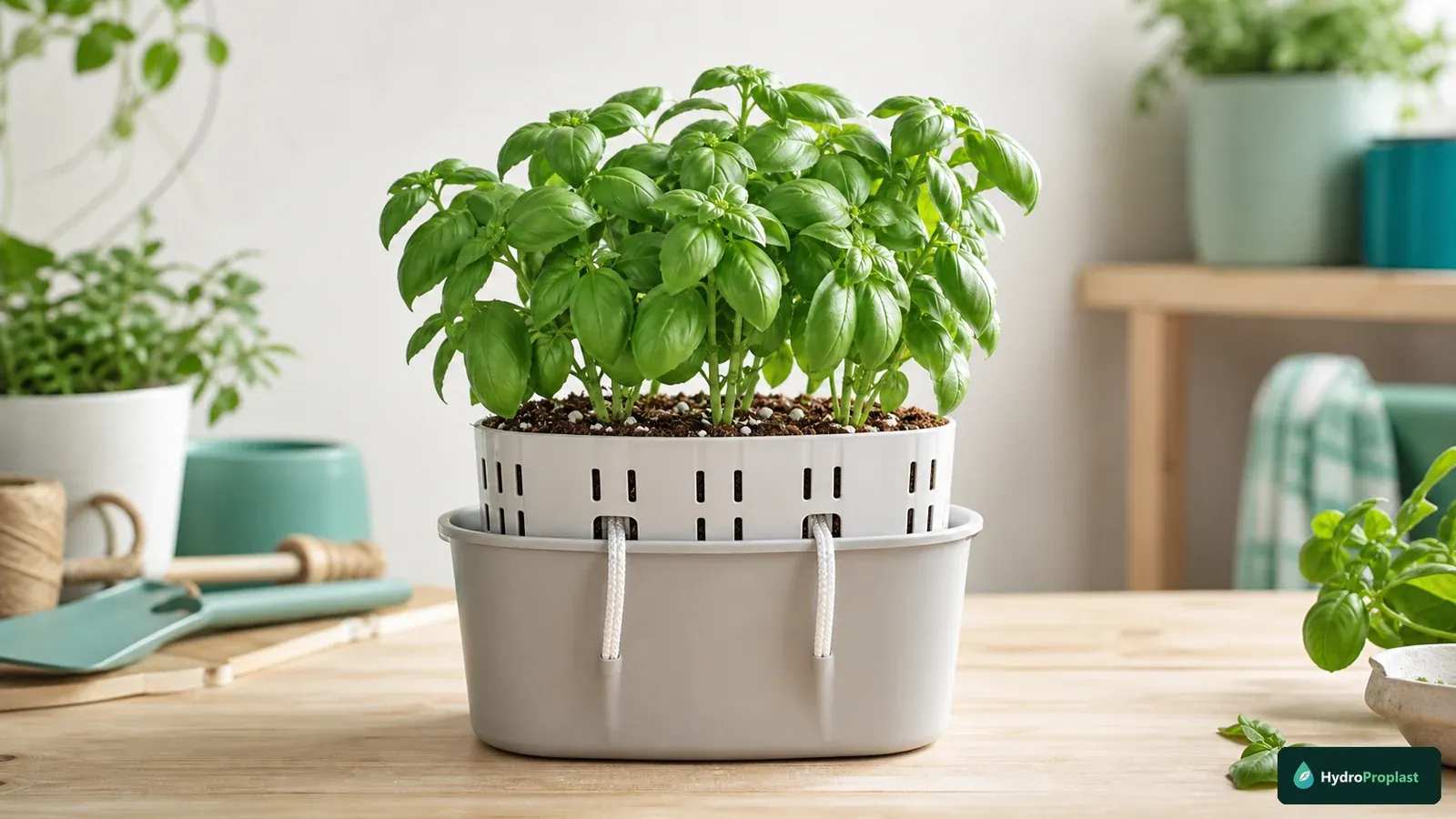
The wick system is the simplest hydroponic method, moving nutrients to roots with no pump or power. Learn how it works, what it grows well, and its limits.
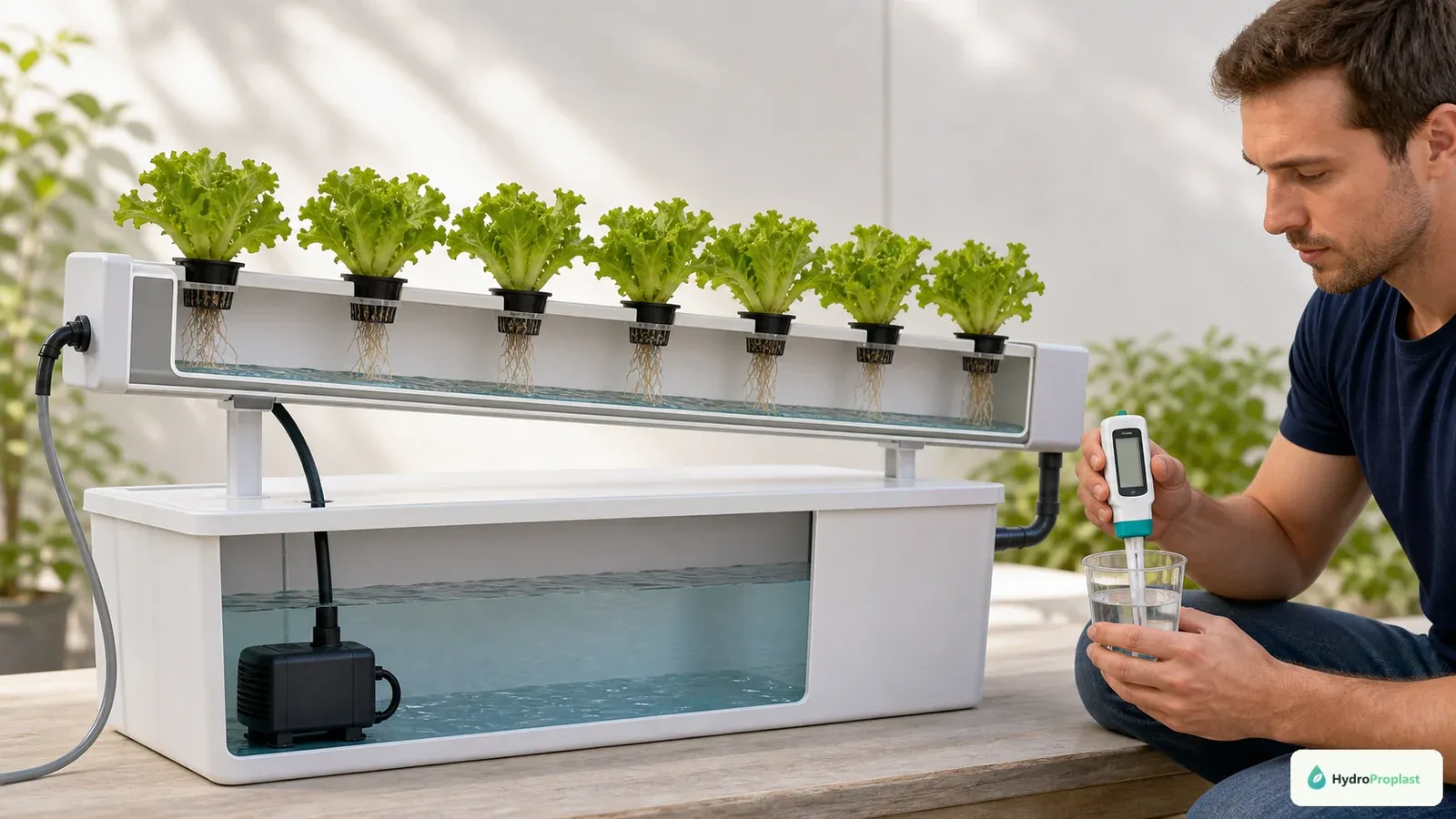
Hydroponic pH drift can come from water alkalinity, plant uptake, roots, algae, dosing, or measurement error. Learn how to diagnose the trend and adjust safely.
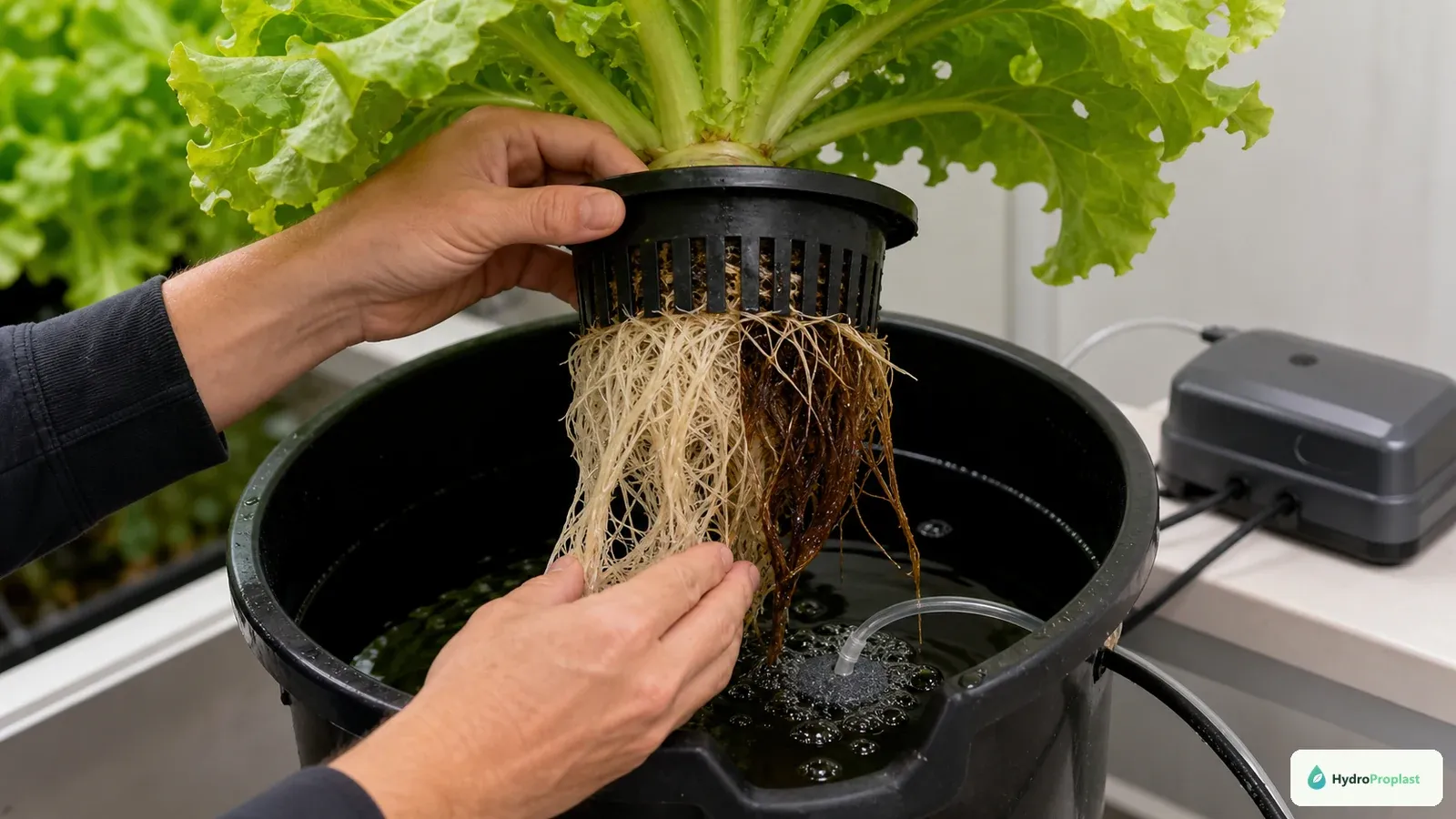
Spot the early signs of hydroponic root rot, distinguish stained roots from true decay, and protect your reservoir with dissolved oxygen, cool water, and clean equipment.
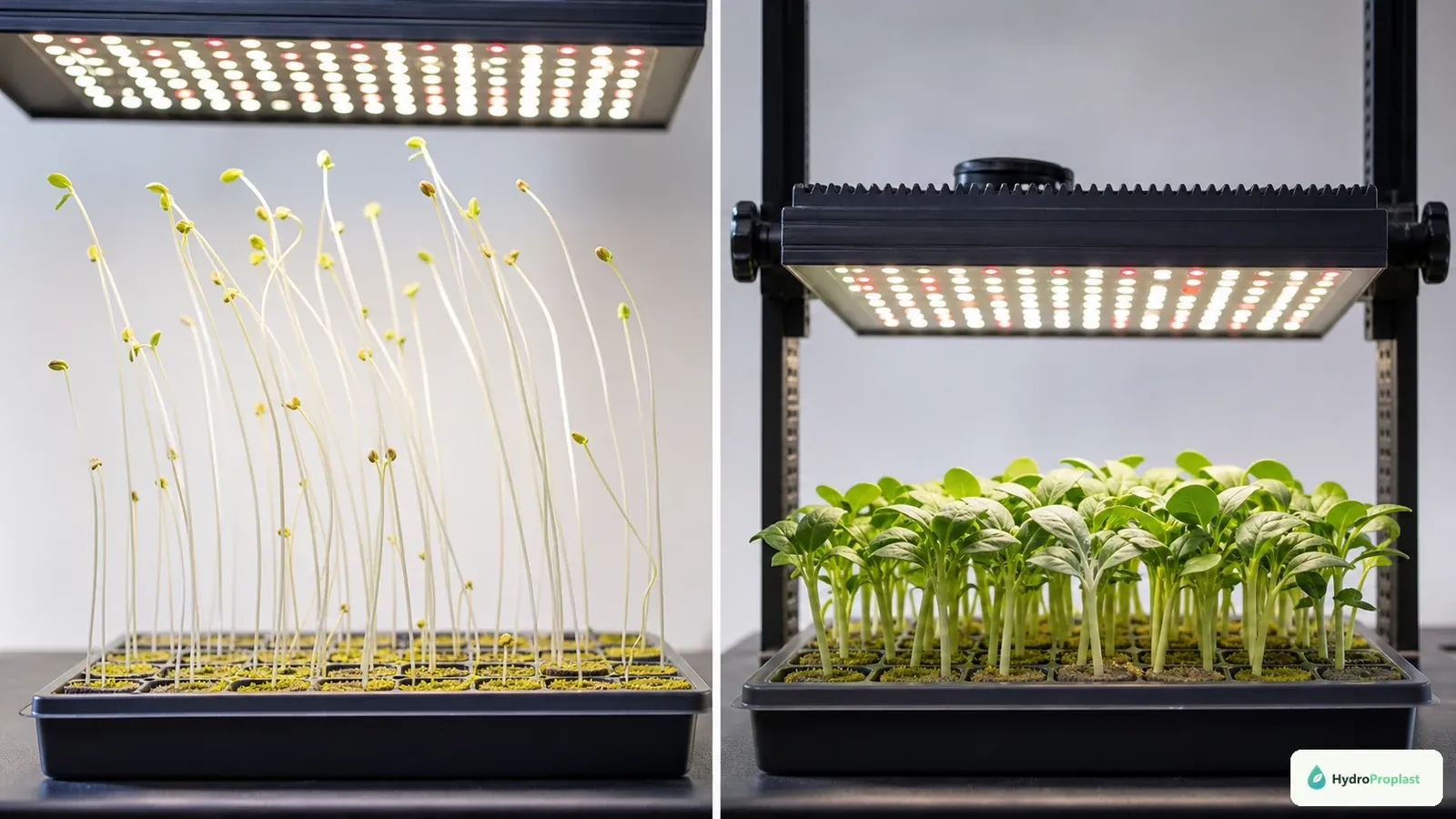
Find out why hydroponic seedlings stretch into thin, weak stems and how to fix light distance, DLI, temperature, and plug height before or during transplant.
Learn how to recognize nutrient burn in hydroponics from leaf-tip browning and rising EC, flush or dilute the reservoir safely, and prevent fertilizer salt buildup.
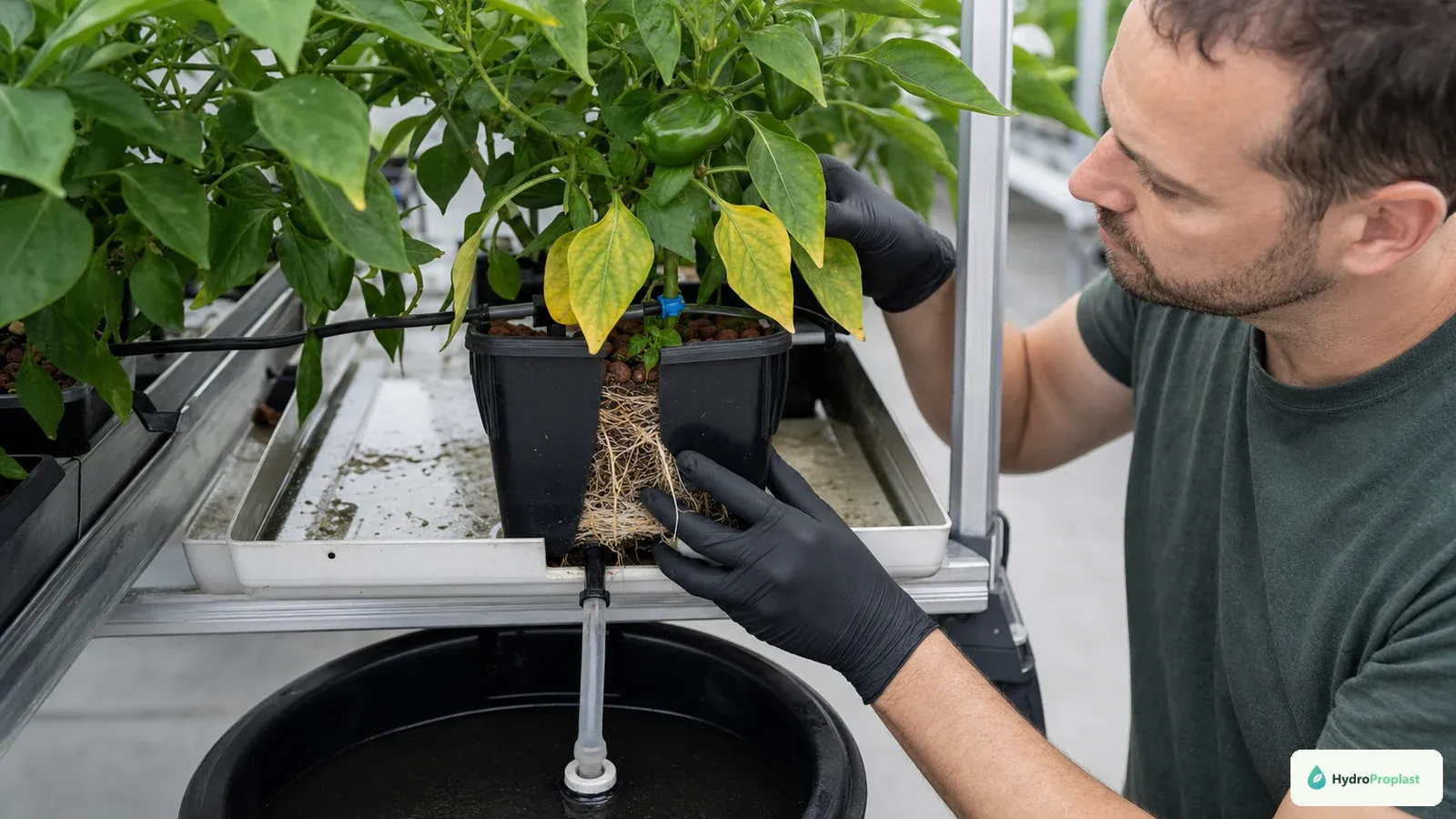
Diagnose yellow leaves in hydroponics step by step by checking leaf position, root health, pH, EC, lighting, water temperature, and true nutrient deficiencies.
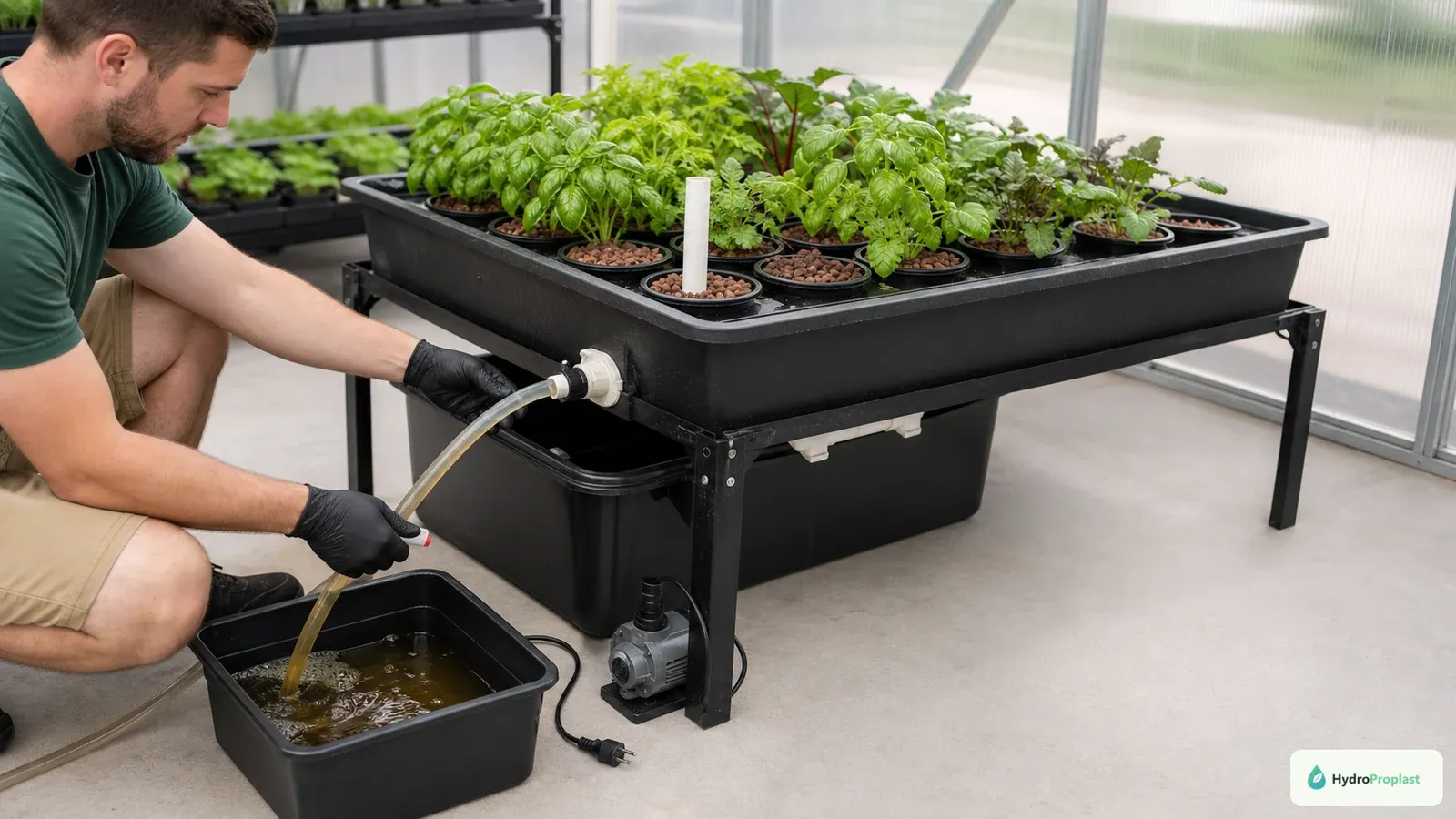
Learn when to top up or fully replace hydroponic nutrient solution using water quality, crop stage, EC, pH, and root health—not a rigid calendar.
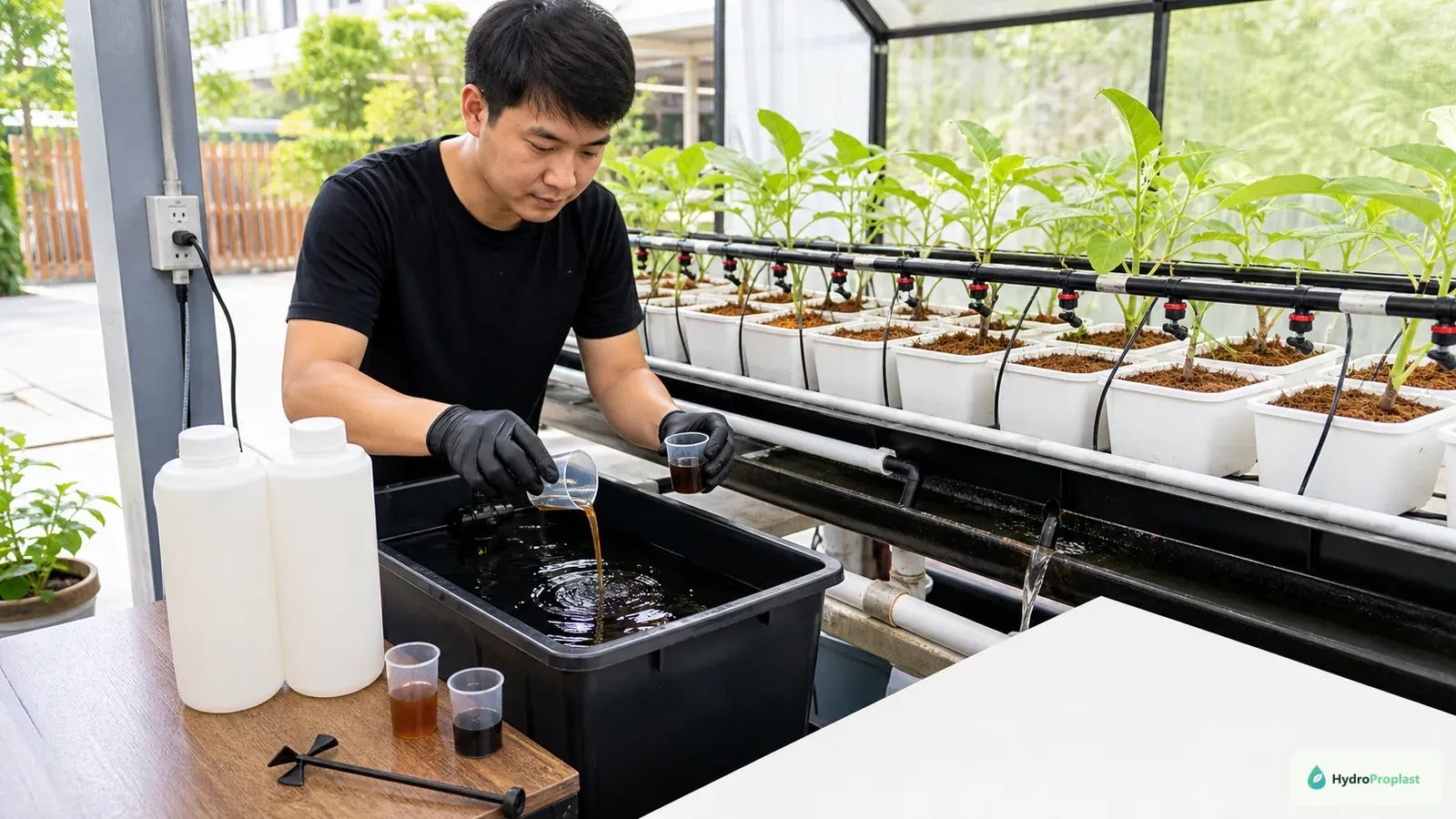
A practical beginner guide to choosing complete hydroponic nutrients, mixing two-part concentrates safely, checking EC and pH, and avoiding common mistakes.
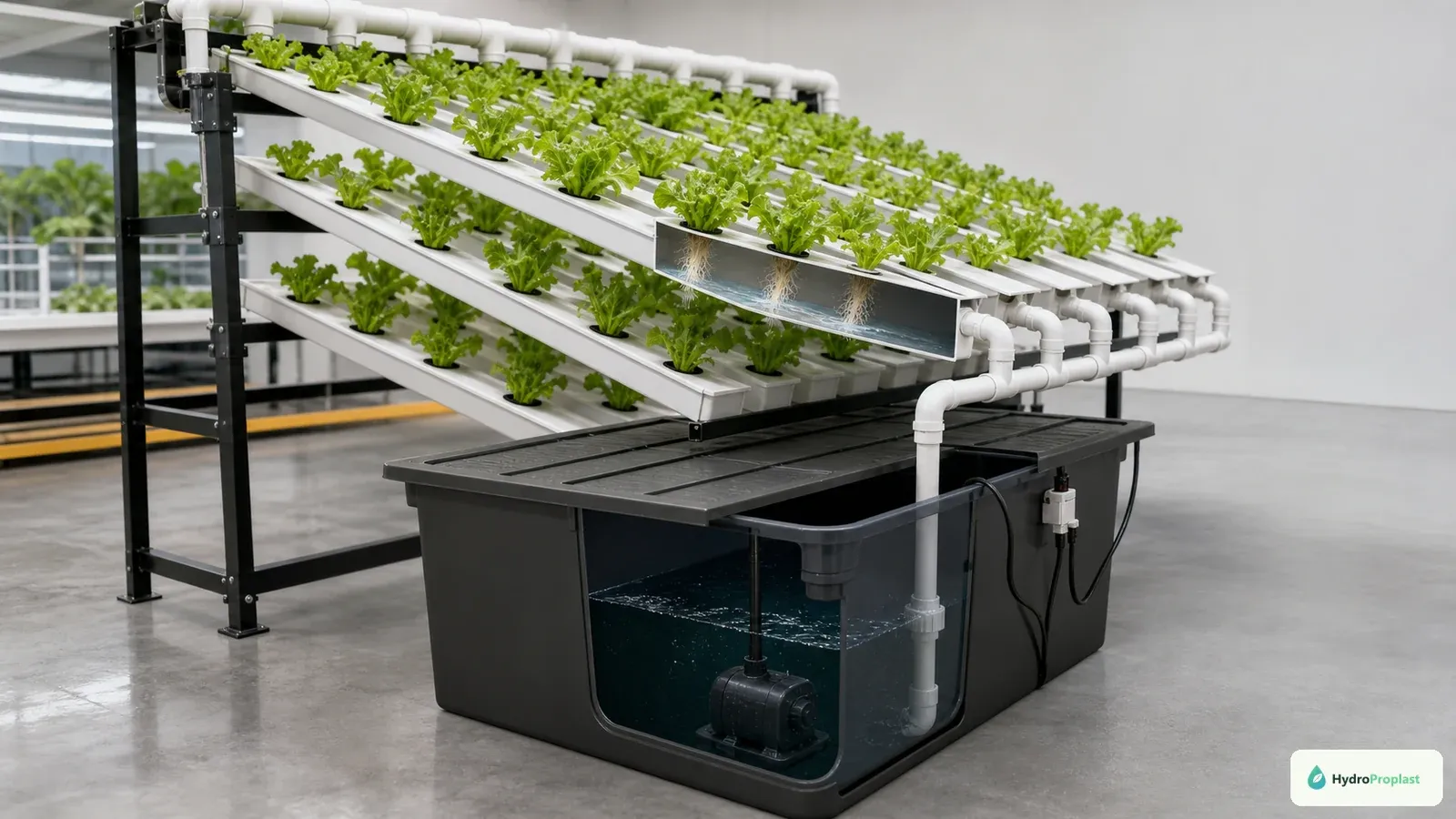
Choose a hydroponic reservoir using mature crop demand, working volume, pump margin, drain-back, temperature stability, and maintenance access.
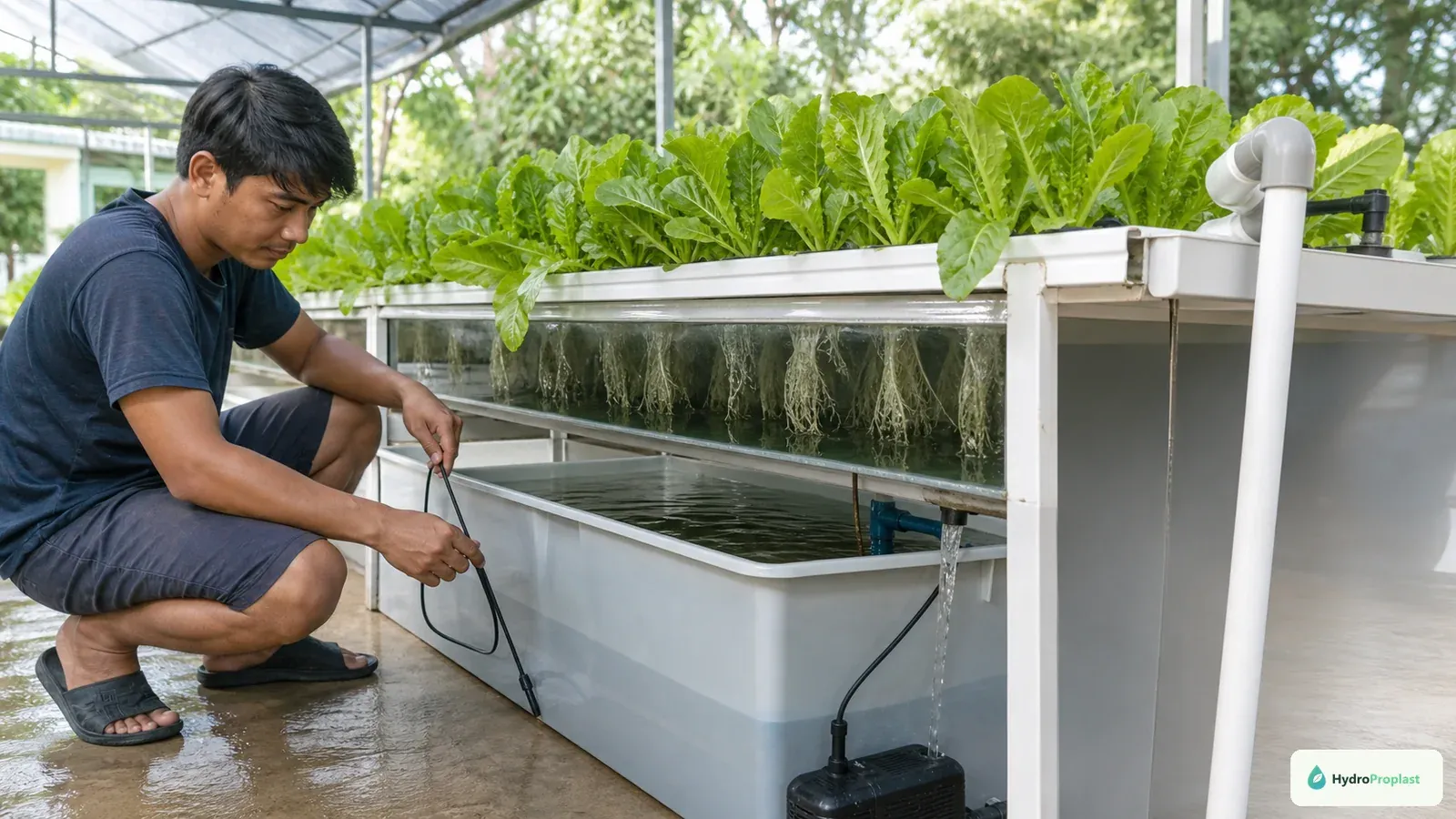
Learn how hydroponic water temperature affects oxygen, roots, and nutrient uptake, plus practical ways to measure and control daily heat swings.
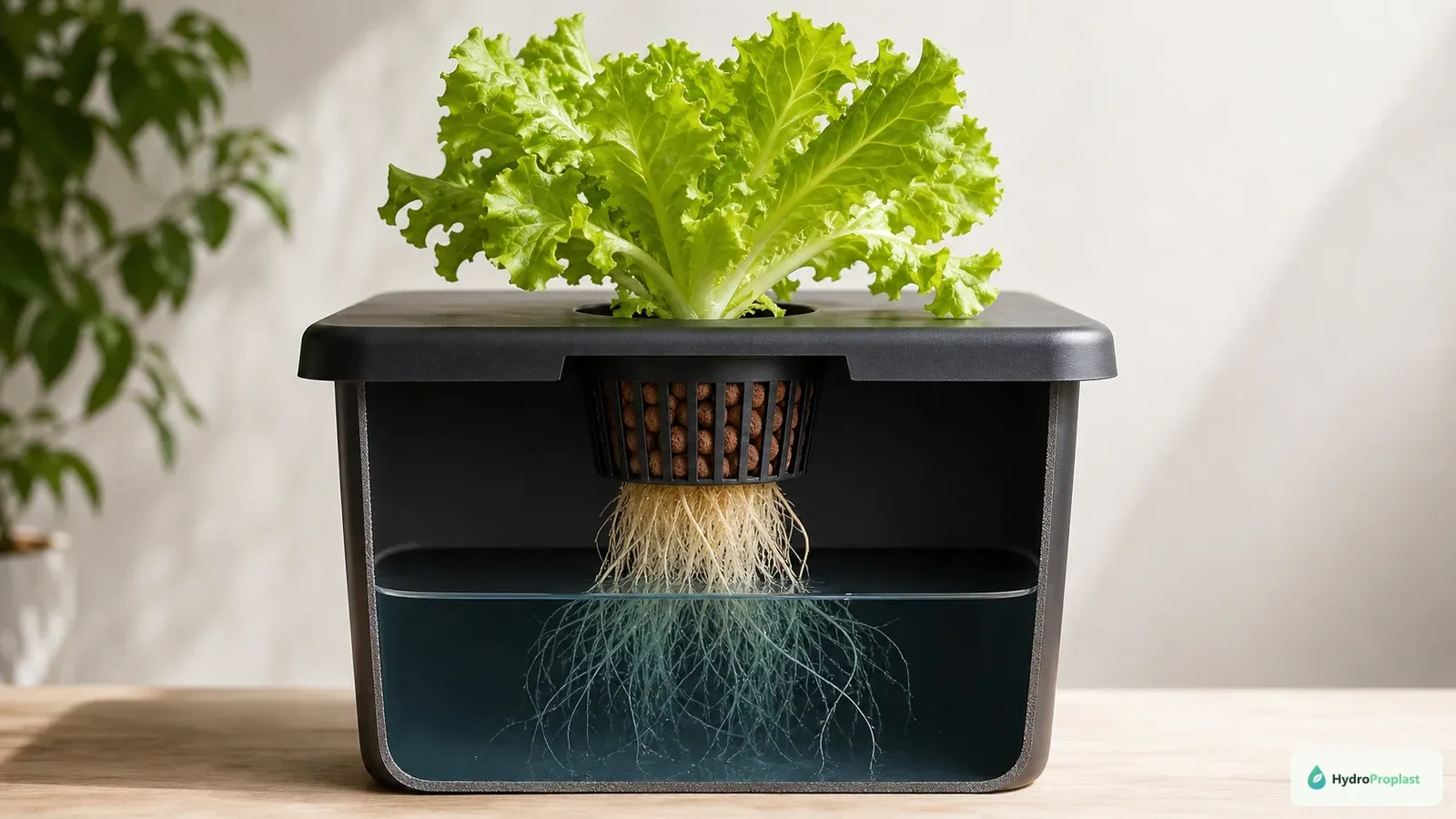
Learn how to choose net-pot size, growing medium, water level, spacing, light exclusion, support, and cleaning for common hydroponic systems.
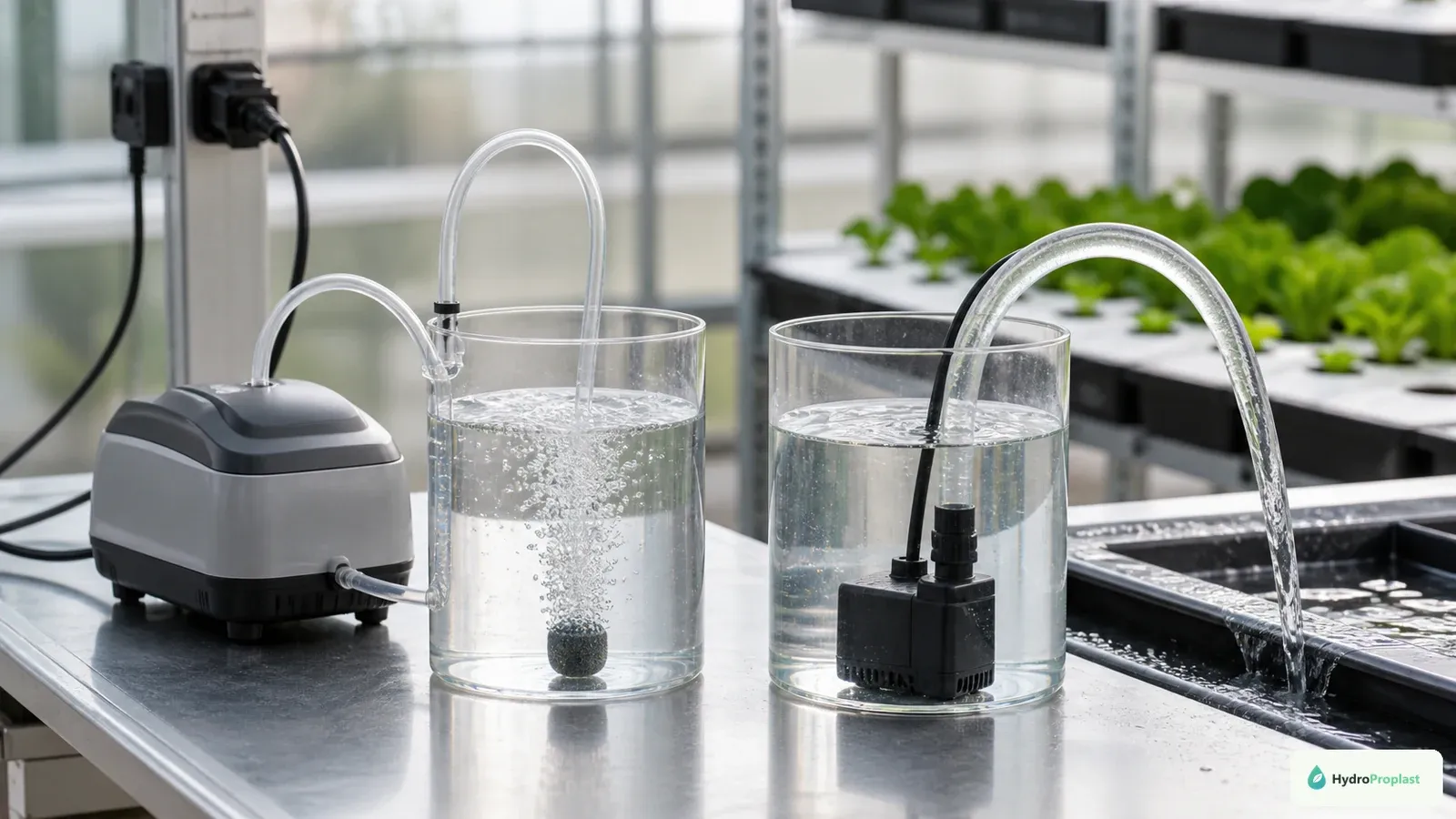
Learn what air pumps and water pumps do in hydroponics, which systems need each one, and how to size, install, maintain, and protect them safely.
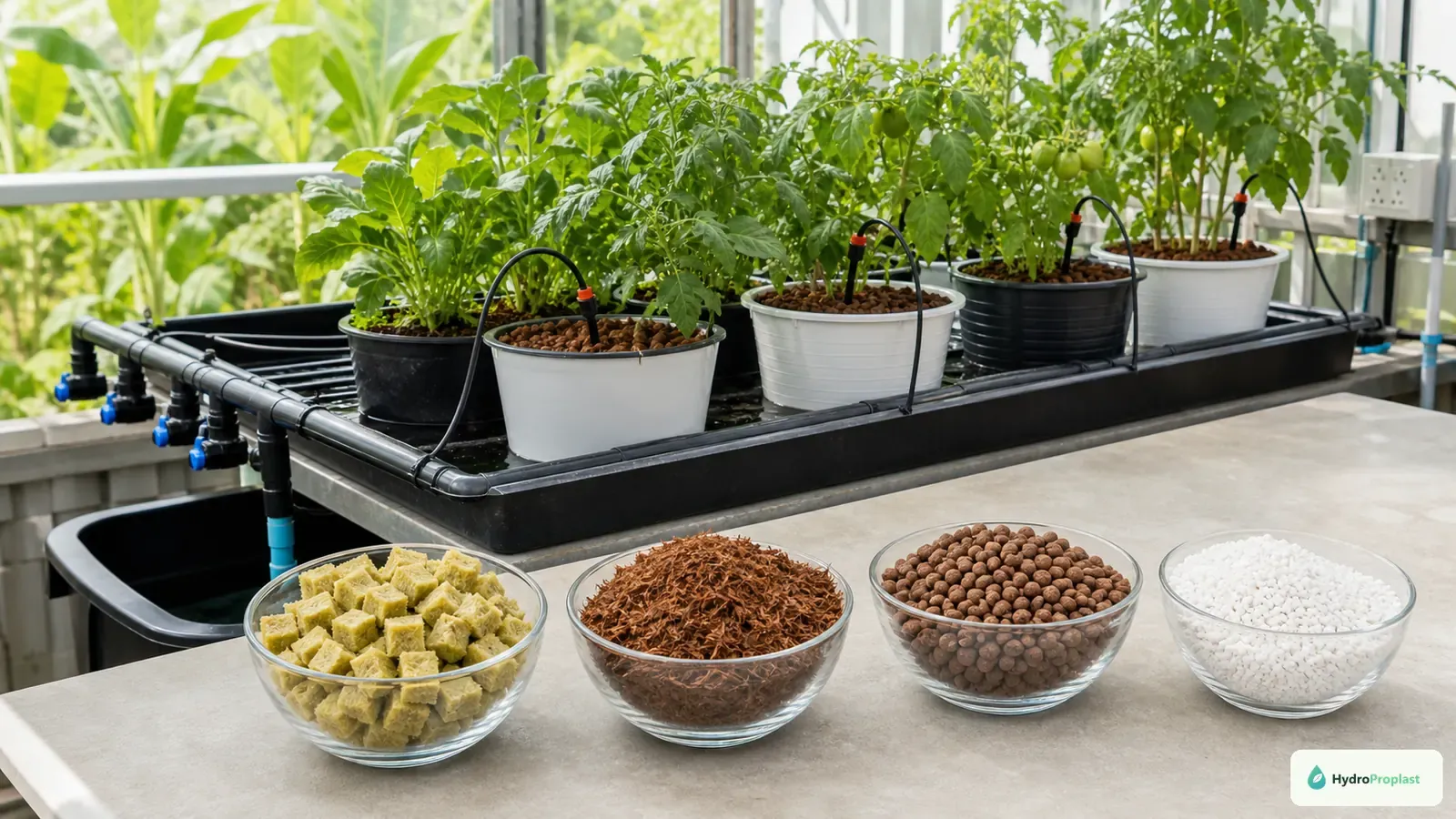
Compare rockwool, coco coir, clay pebbles, perlite, vermiculite, and starter plugs by water retention, aeration, system fit, reuse, and crop needs.
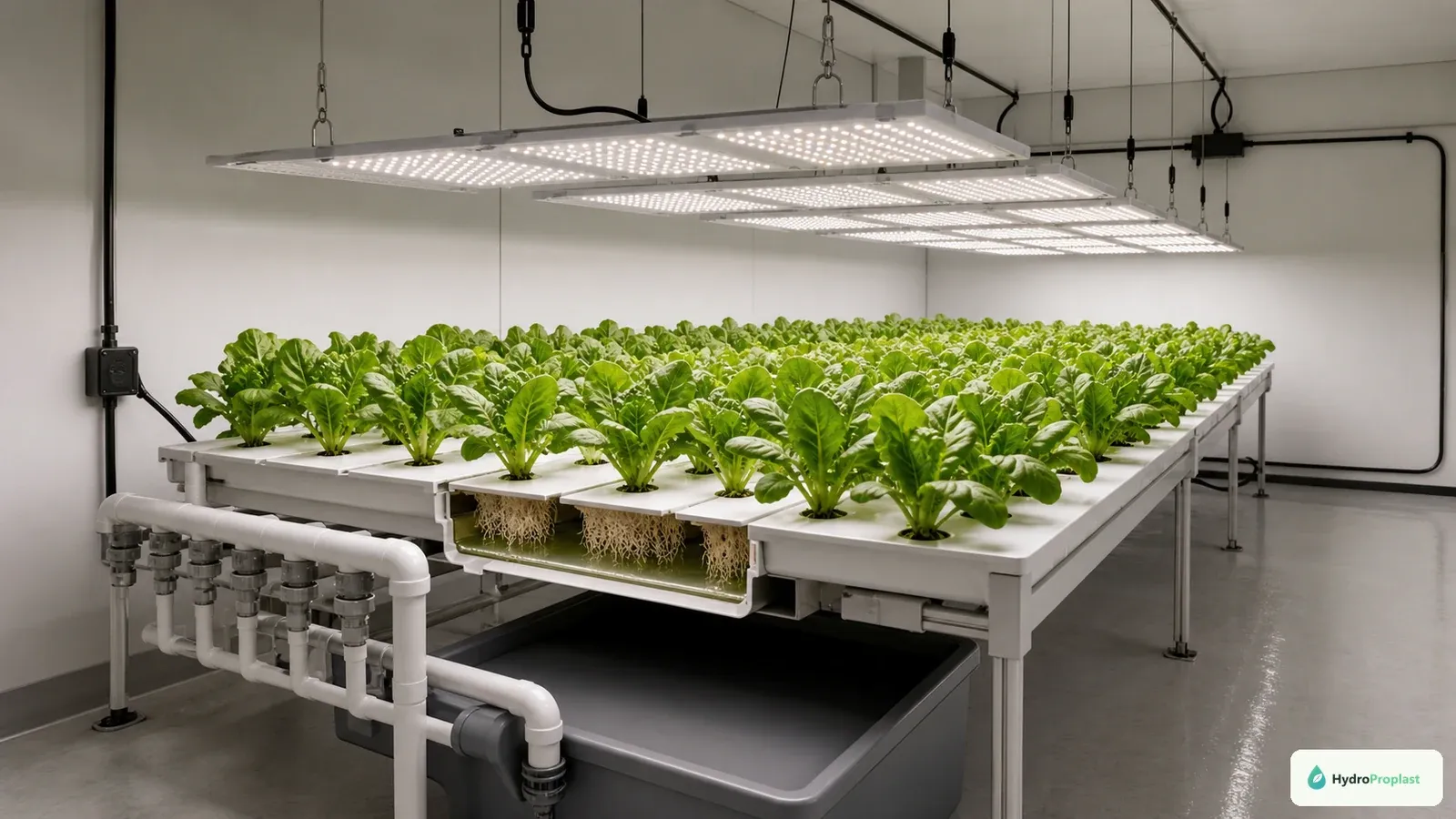
Choose hydroponic LED grow lights using canopy area, PPFD, daily light, spectrum, efficiency, mounting height, dimming, heat, safety, and measured results.
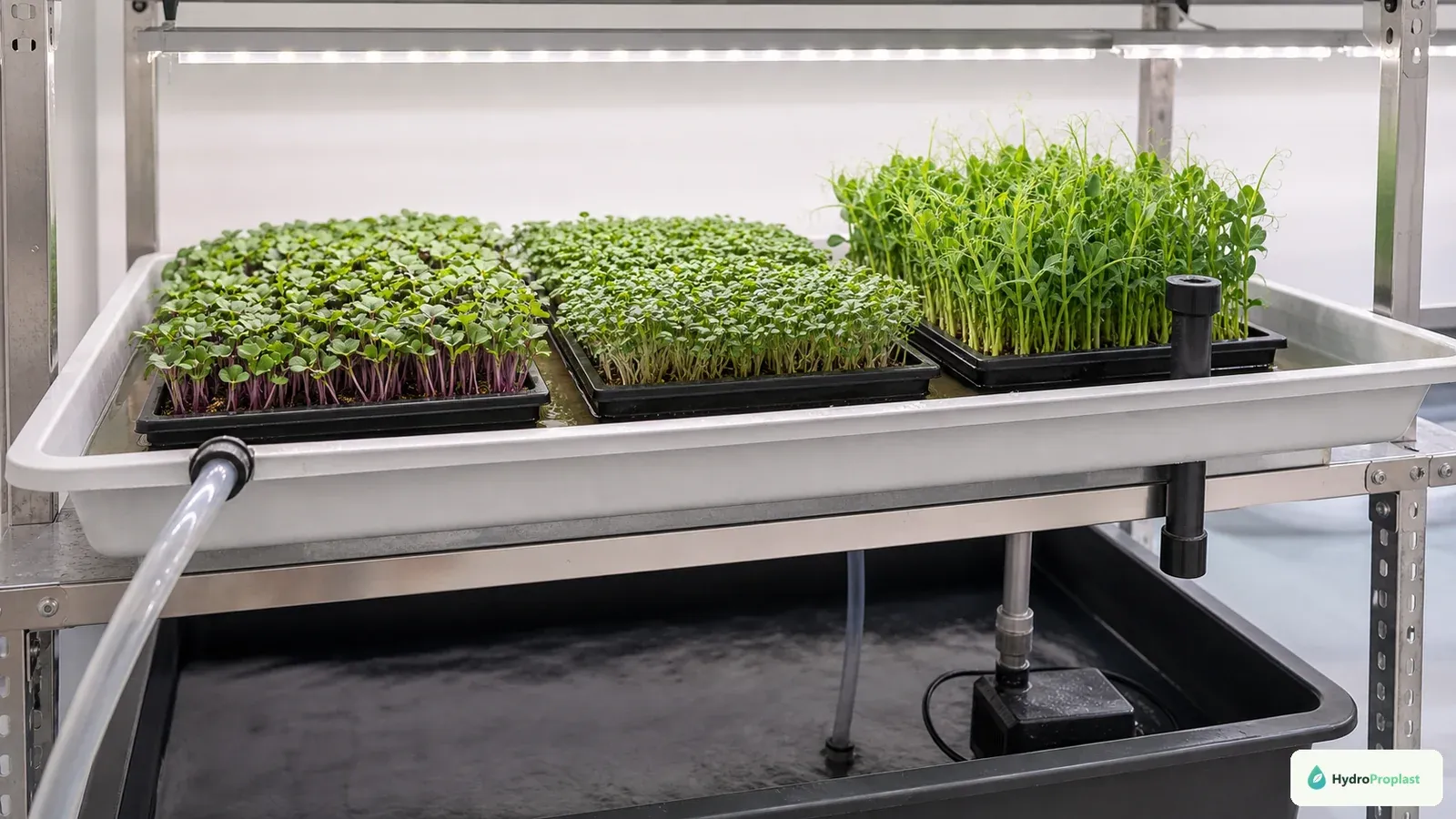
Build a repeatable hydroponic microgreens setup with suitable seeds, trays, media, even sowing, blackout, lighting, watering, airflow, hygiene, and harvest controls.
Compare hydroponic spinach and kale for beginners by germination, temperature, light, system choice, spacing, harvest style, common problems, cost, and schedule.
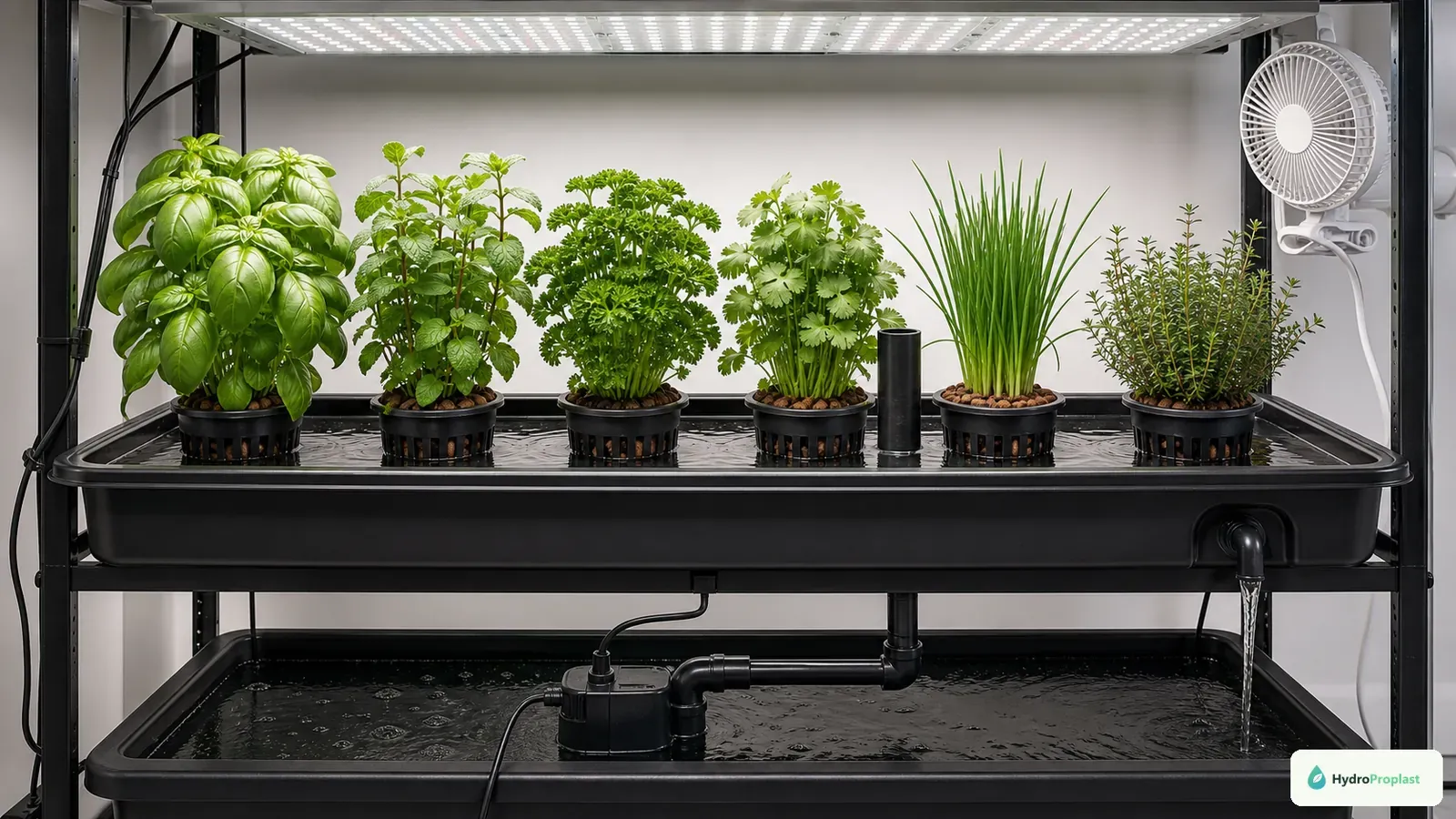
Compare beginner-friendly indoor hydroponic herbs—including basil, mint, parsley, cilantro, dill, chives, thyme, and oregano—by growth habit, harvest style, and system fit.
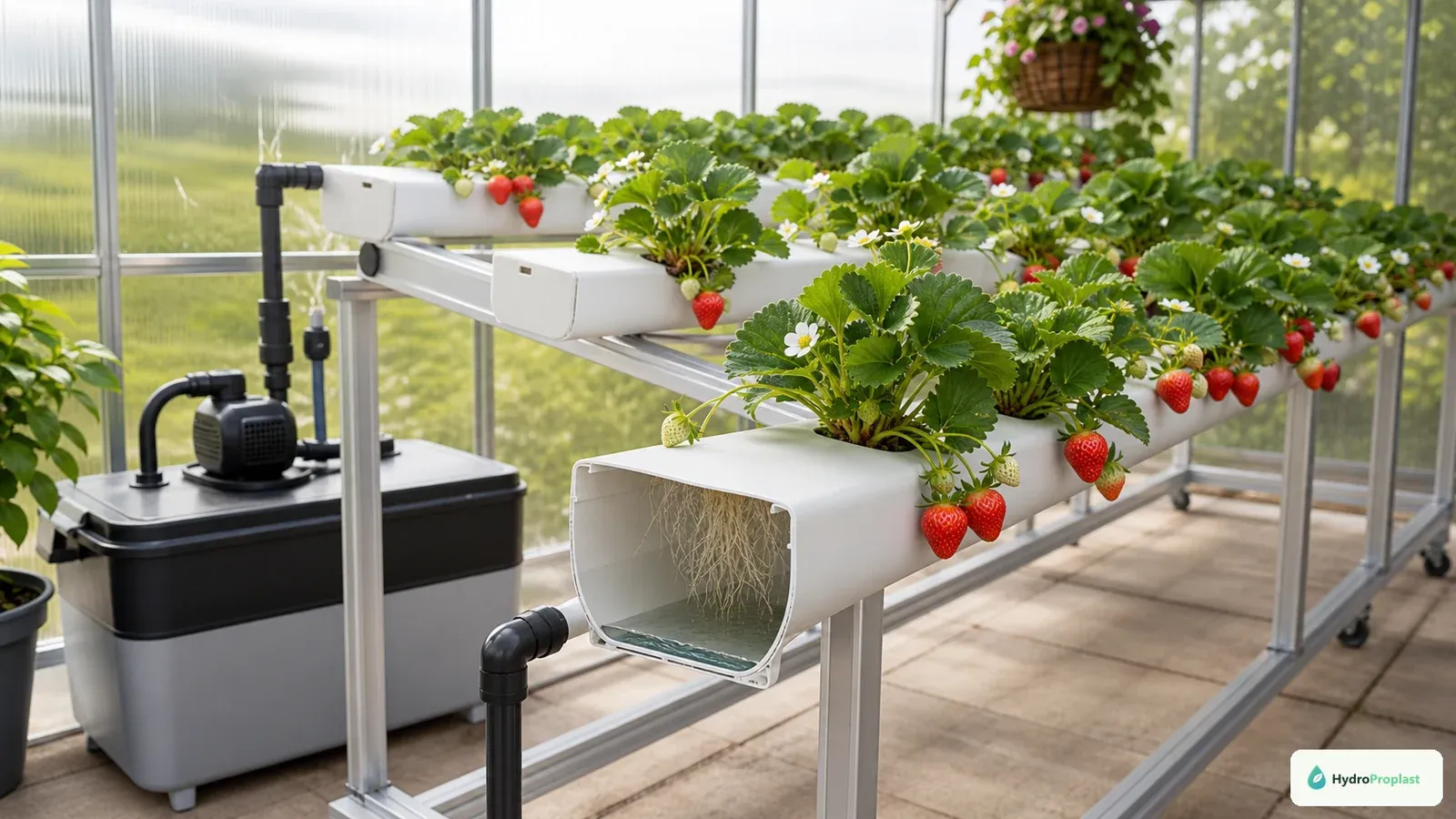
Learn how to grow hydroponic strawberries at home with healthy planting material, correct crown height, NFT or drip systems, pollination, clean fruit support, and stable care.
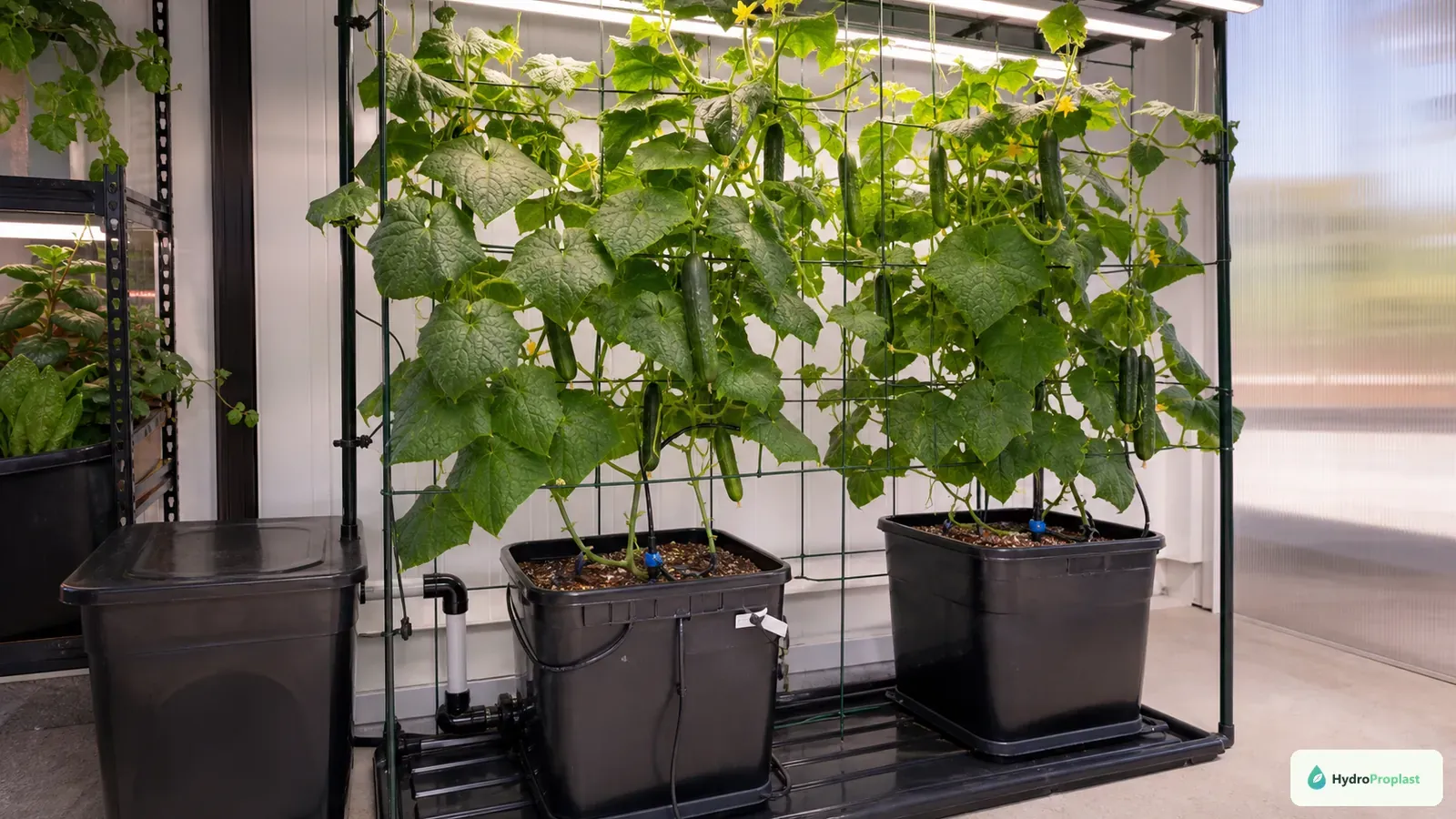
Grow hydroponic cucumbers at home with the right cultivar, drip-system capacity, sturdy trellis, reliable irrigation, pollination plan, pruning, and frequent harvest.
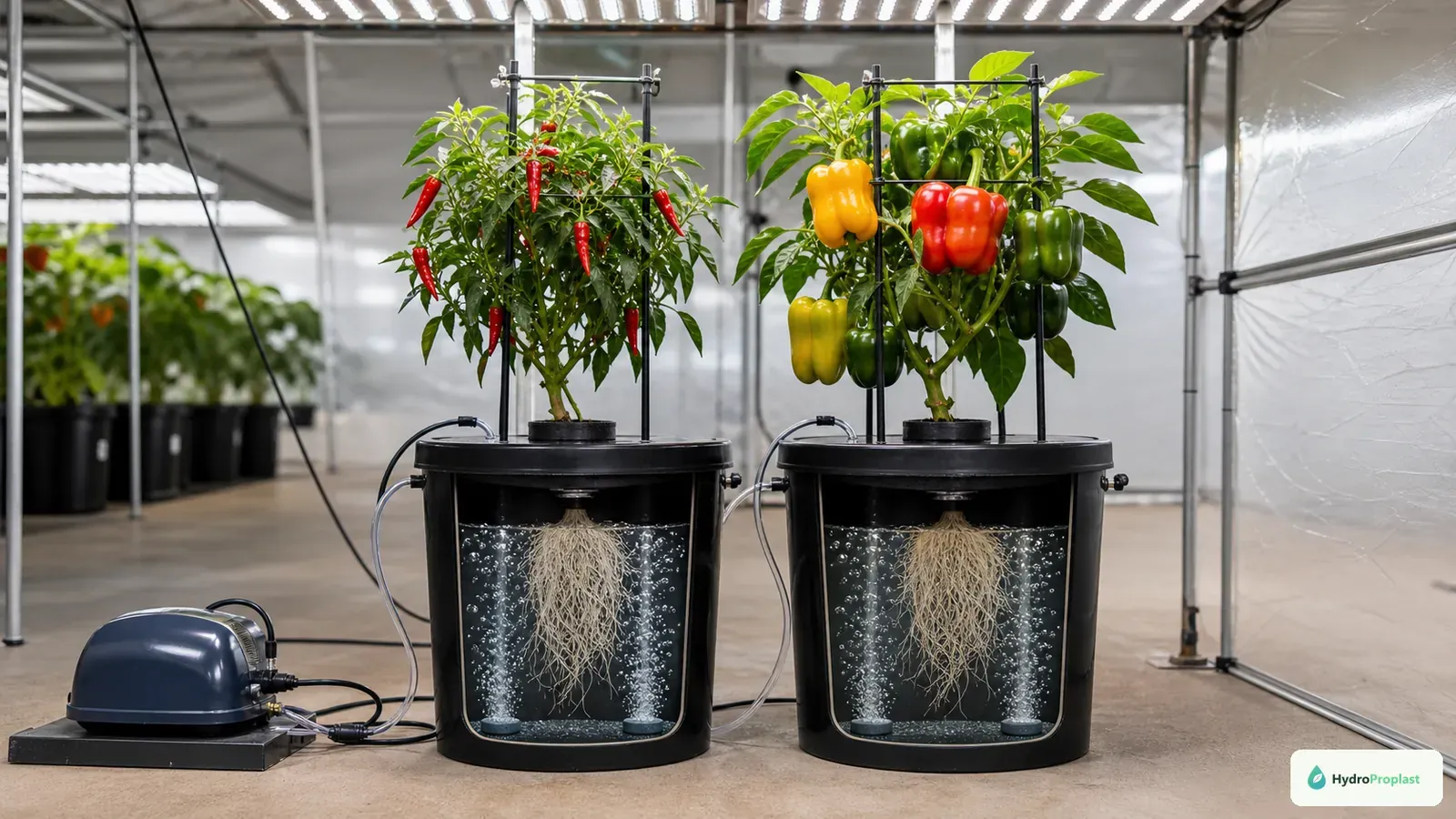
Learn how to grow chili and bell peppers hydroponically indoors with suitable varieties, root-zone capacity, strong lighting, support, pollination, and stable crop care.
A practical beginner guide to indoor hydroponic tomatoes covering cultivar choice, drip systems, root volume, lighting, trellising, pollination, nutrients, and harvest.
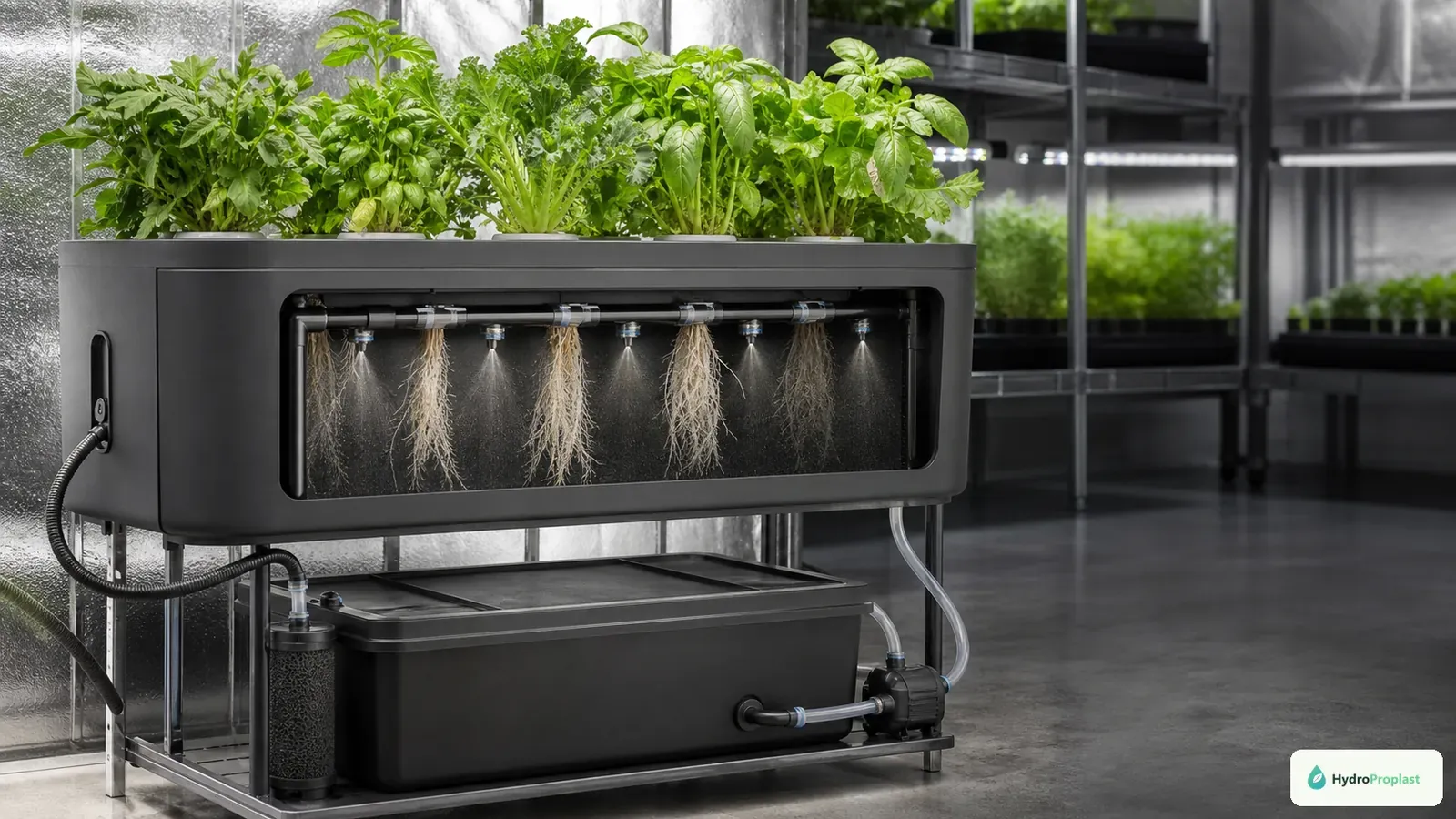
Compare aeroponics with DWC, NFT, drip, and other hydroponic systems for home growing, including equipment, maintenance, crop fit, outage risk, and cost.
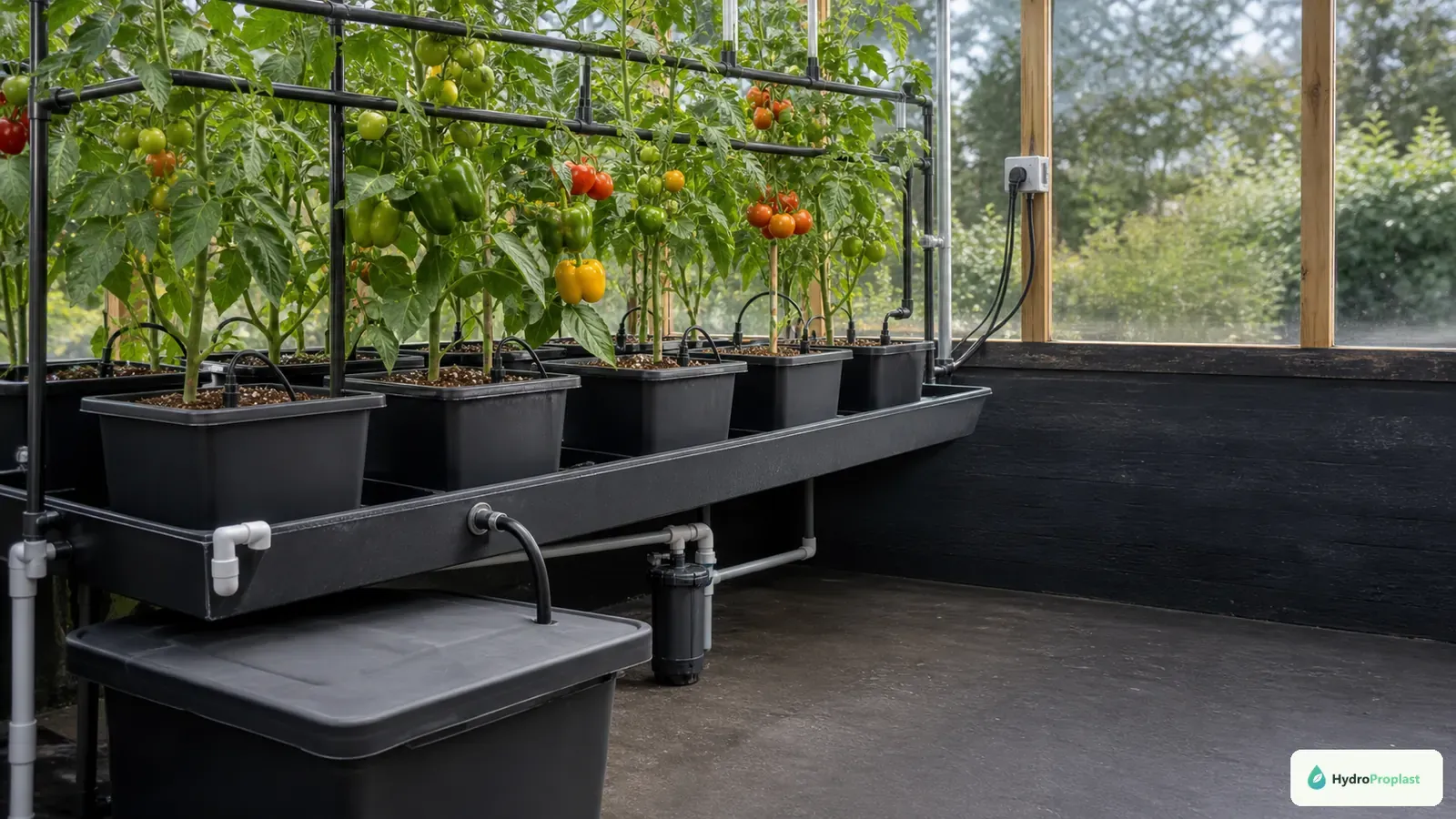
Learn how drip hydroponics delivers nutrient solution to growing media, including recirculating and drain-to-waste layouts, emitters, timing, drainage, crops, and maintenance.
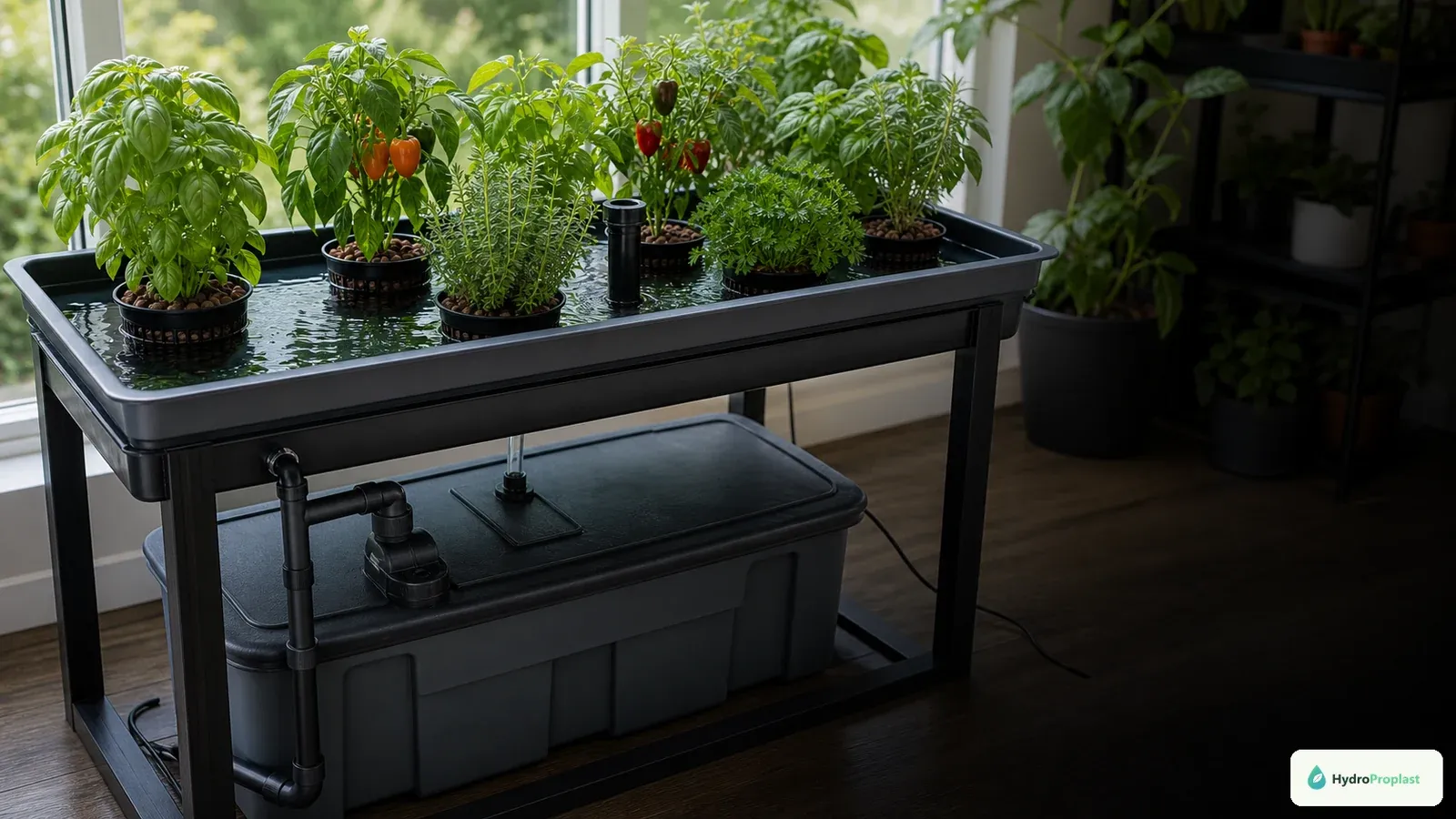
Learn how ebb and flow hydroponics floods and drains a shared tray, including pumps, standpipes, media, cycle timing, reservoir sizing, crops, flood prevention, and maintenance.
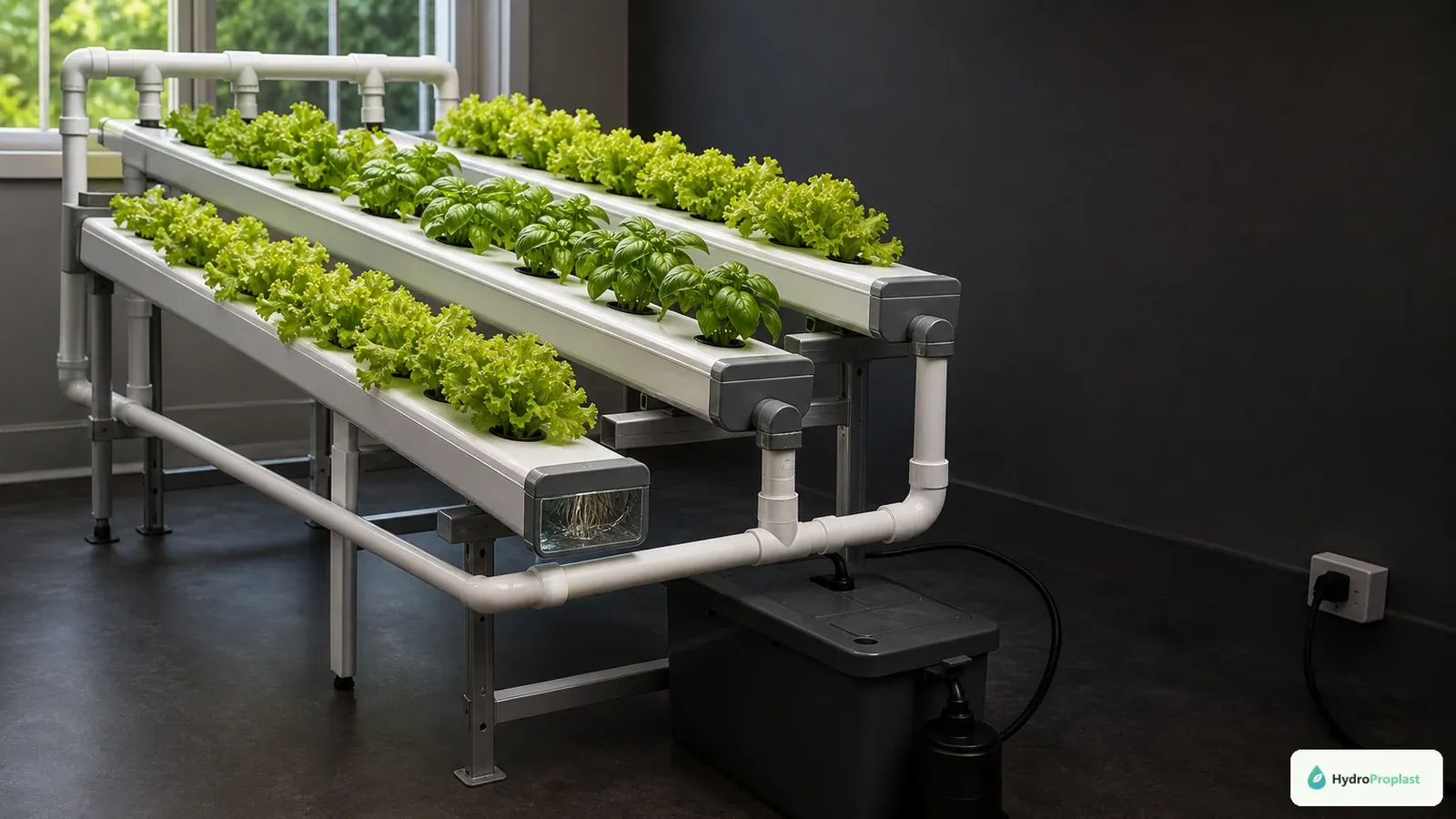
Compare the advantages and limitations of NFT hydroponics, including shallow-film flow, crops, channels, pump sizing, root blockage, outage risk, maintenance, and system commissioning.
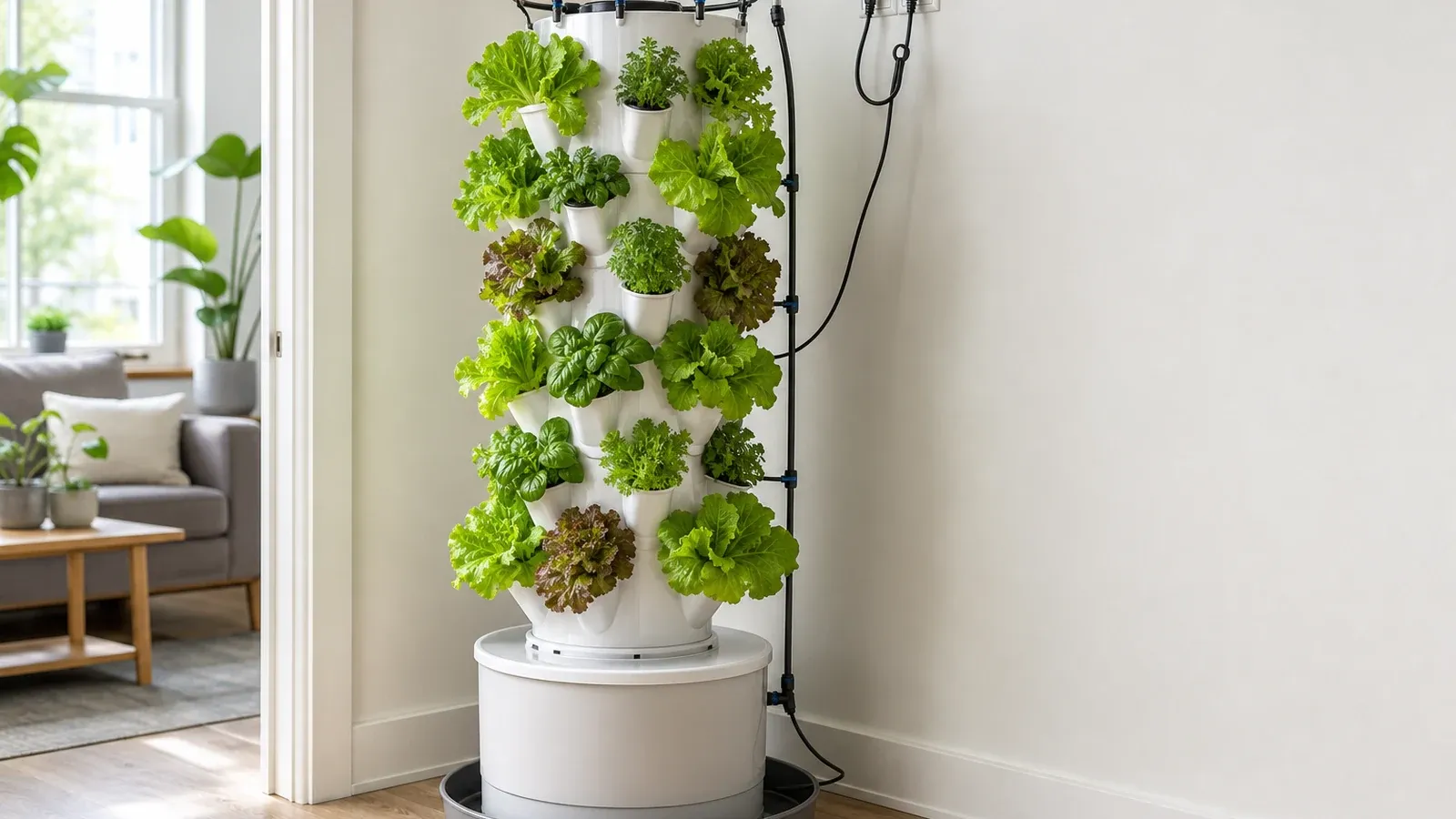
Plan vertical hydroponics for small spaces around mature canopy, even lighting, pump head, safe drainage, structural load, and maintenance access.
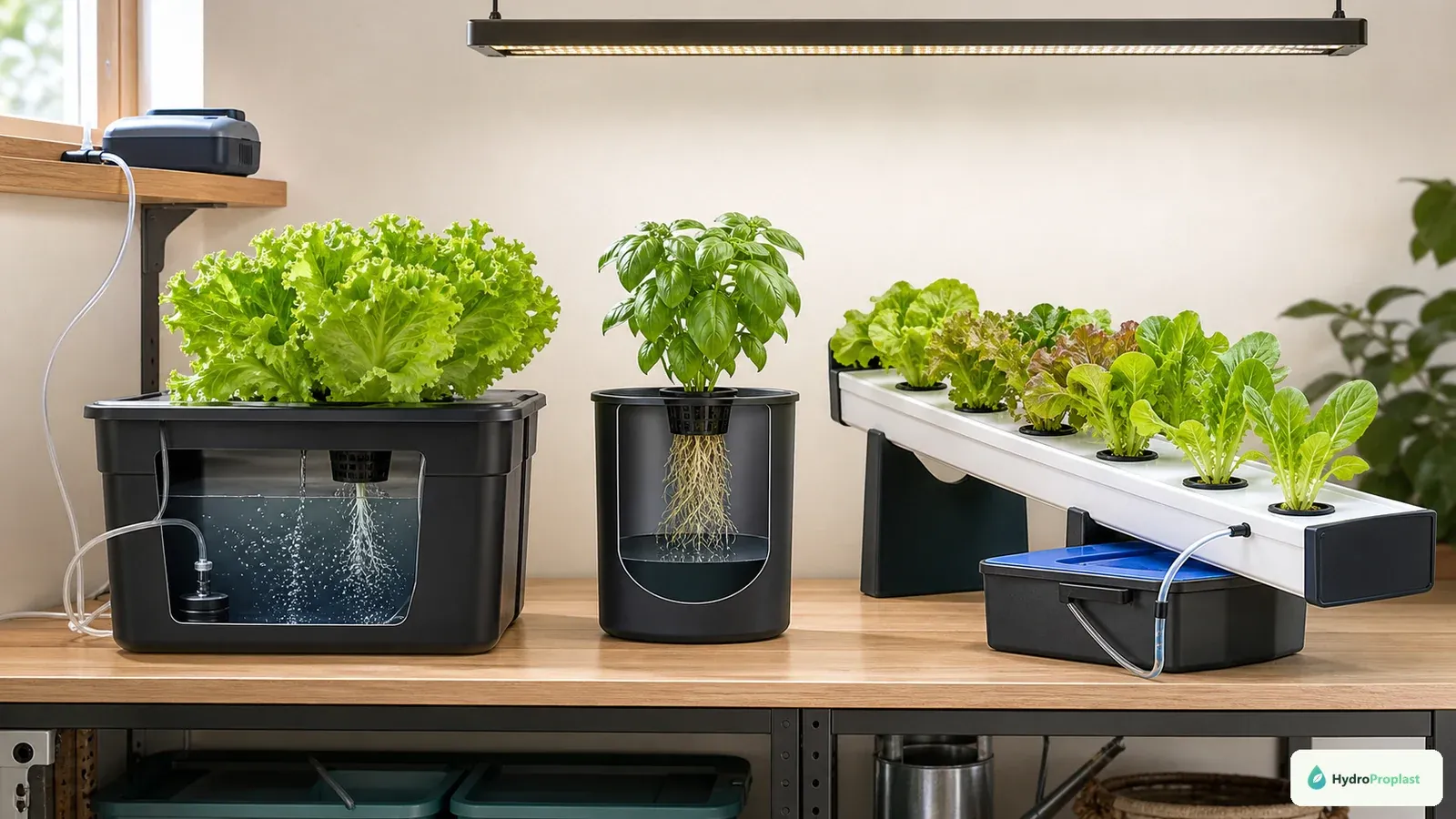
Compare DWC, Kratky, countertop kits, NFT, ebb and flow, drip, and aeroponics to choose a beginner hydroponic system that fits your crop, space, budget, and maintenance routine.
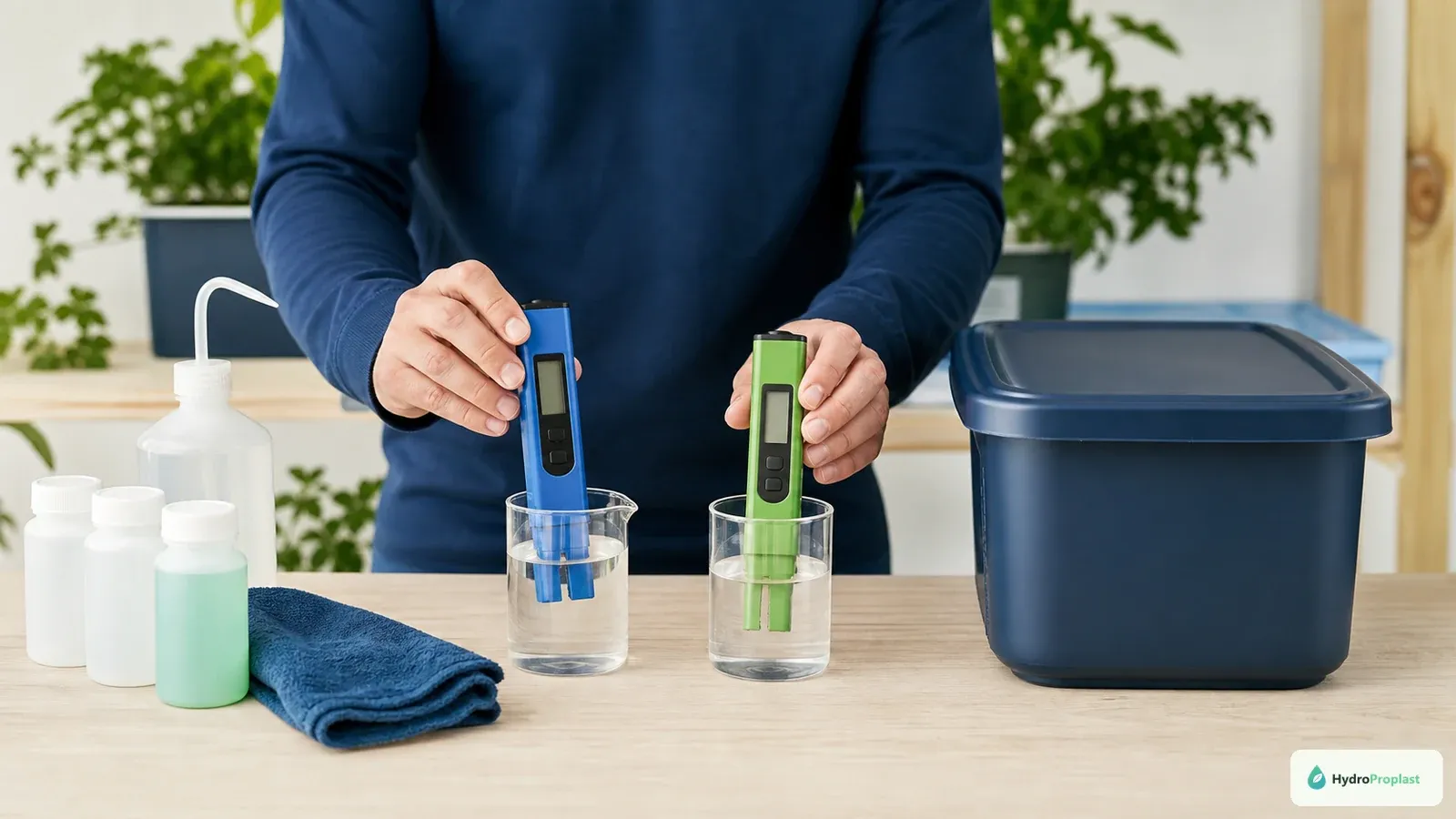
Learn when hydroponic growers need pH and EC meters, what each reading can and cannot reveal, how to calibrate, sample consistently, and act on trends.
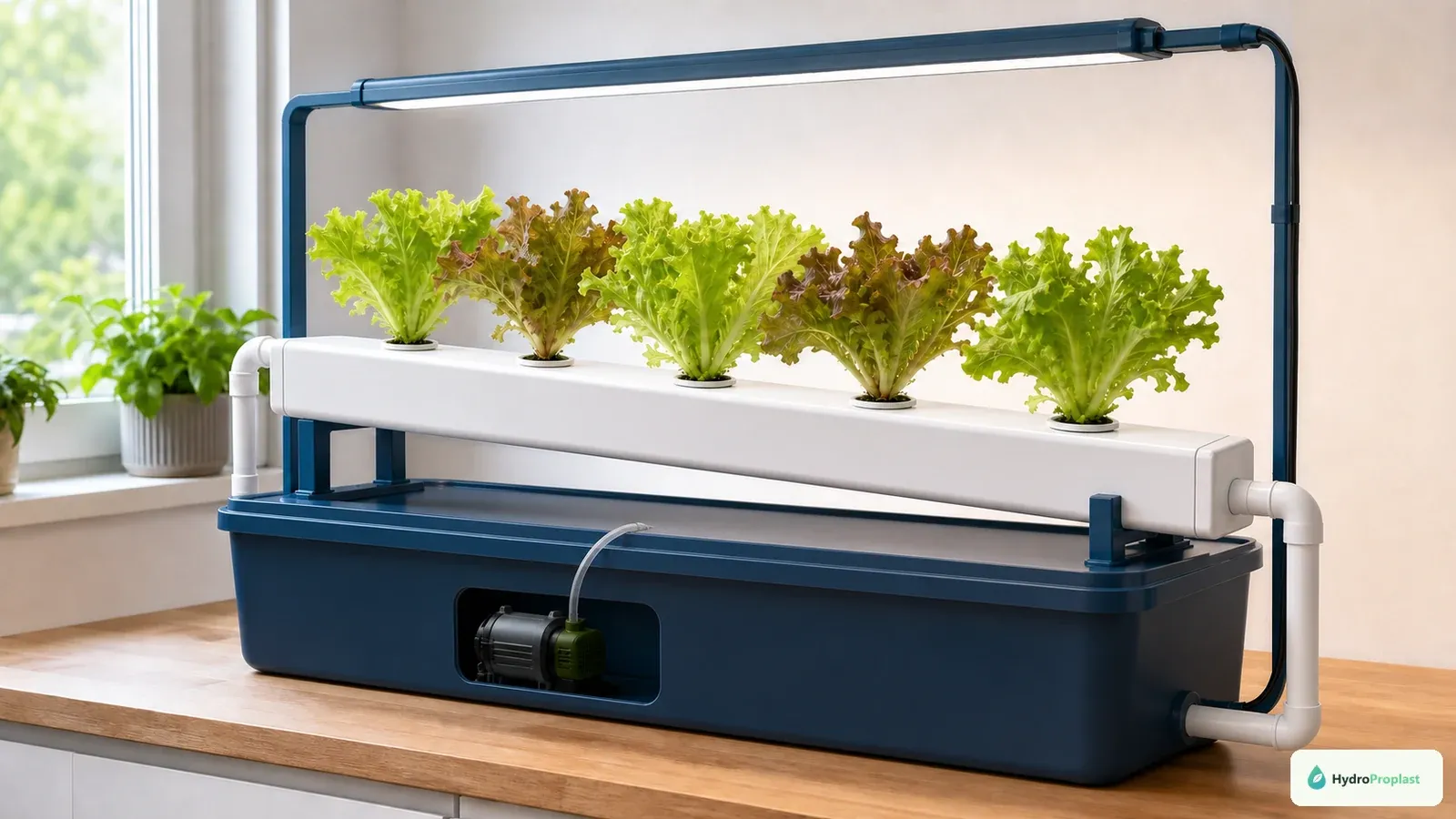
Start hydroponic lettuce at home with a beginner-friendly system, healthy seedlings, stable nutrients, suitable lighting, mature spacing, clean roots, and timely harvest.
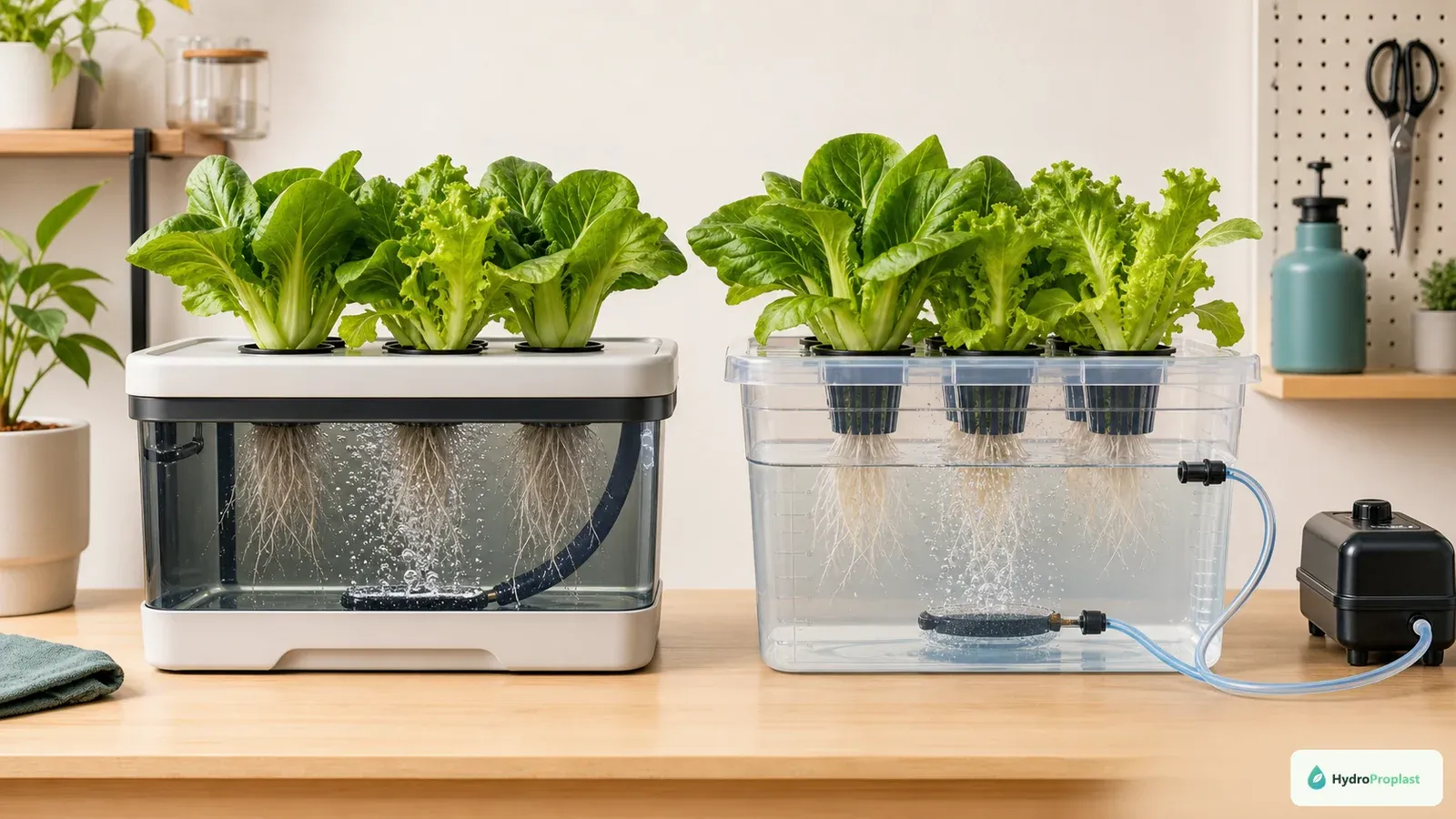
Compare ready-made hydroponic kits with DIY systems by setup time, crop fit, component access, maintenance, repairability, total cost, and future expansion.
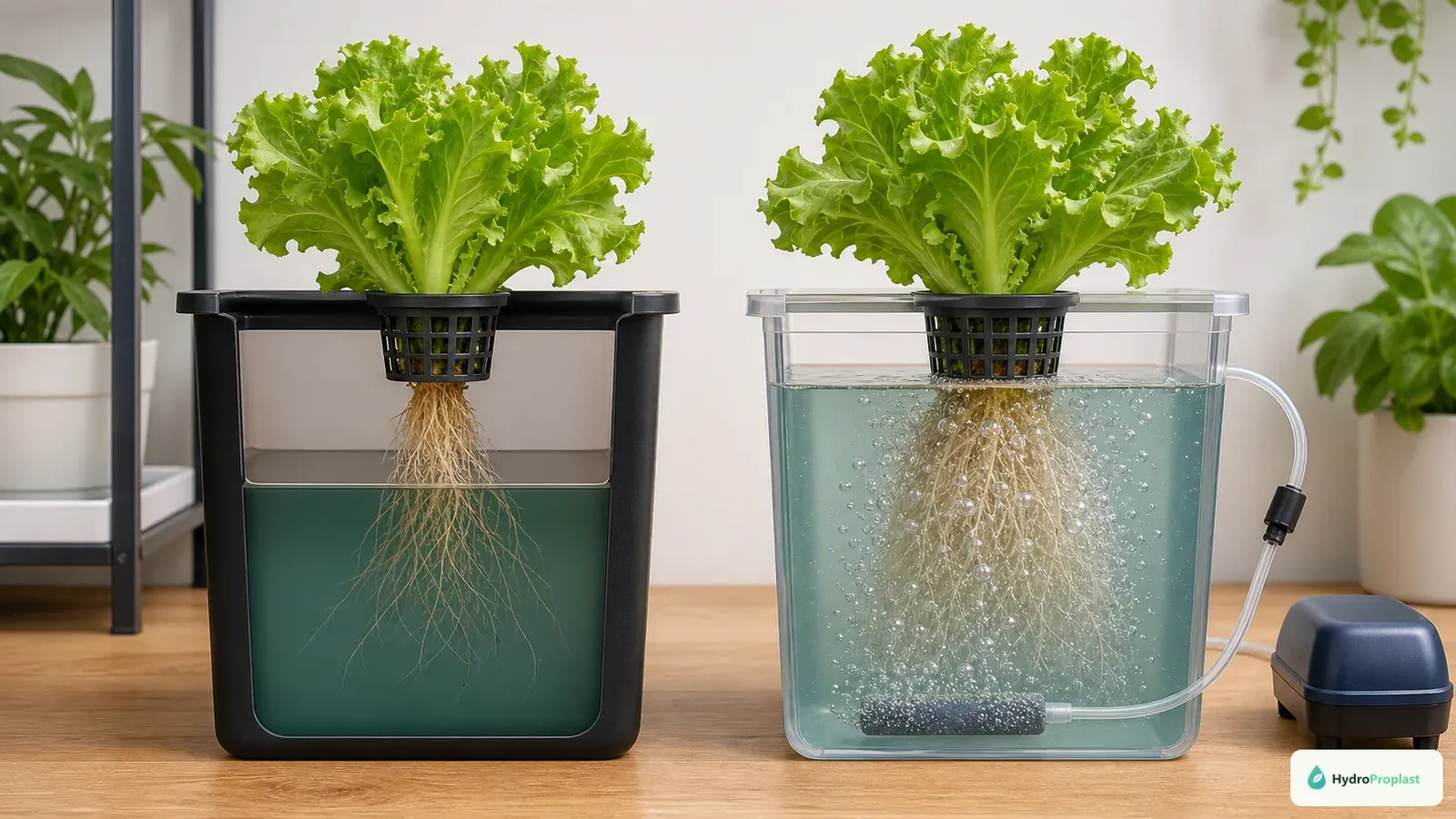
Compare Kratky and DWC by oxygen strategy, reservoir sizing, parts, refilling, power dependence, crop fit, daily care, and failure speed.
No guides match that search. Try a shorter or more general term.