The best vegetables to grow hydroponically are the ones that fit your system, light, space, temperature, and maintenance routine. For most beginners, leafy greens are the easiest way to learn because they grow quickly, stay compact, and show problems early. Fruiting crops such as cucumbers, tomatoes, and peppers can be rewarding, but they need stronger light, larger root volume, support, and more patience.
Use this guide as a crop-selection checklist rather than a fixed ranking. A vegetable that is perfect for one grower can be frustrating in the wrong room, reservoir, or season.
Choose from constraints, not popularity
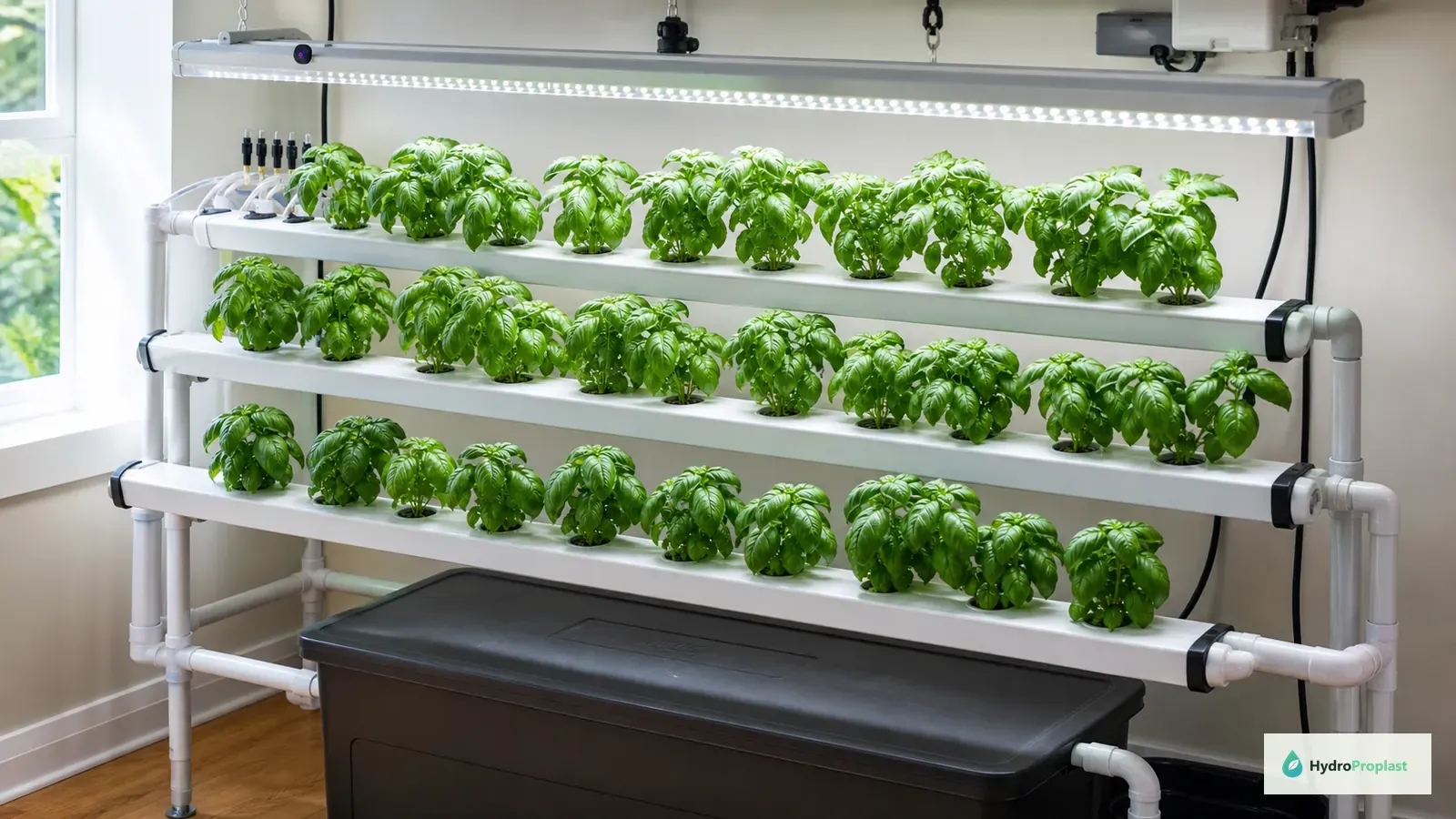
Start by measuring the mature growing area, vertical clearance, reservoir volume, and available light. Then decide how often the system can be checked and whether trellising, pruning, or hand pollination is realistic. A compact shelf usually favors lettuce, bok choy, herbs, microgreens, and other short-cycle crops. A tall tent with verified strong lighting can support cucumbers, tomatoes, or peppers.
This matters because hydroponics removes soil from the equation but does not remove plant biology. Roots still need oxygen and space. Leaves still need enough light. Fruiting plants still need flowers, support, and time.
Lettuce for the first repeatable crop
Loose-leaf, romaine, and butterhead lettuce are the easiest first vegetables for many home growers. They stay relatively compact, tolerate simple systems, and can be harvested leaf by leaf before the plant reaches full size. They work well in deep water culture, Kratky containers, NFT channels, and small recirculating systems when temperature and cleanliness are controlled.
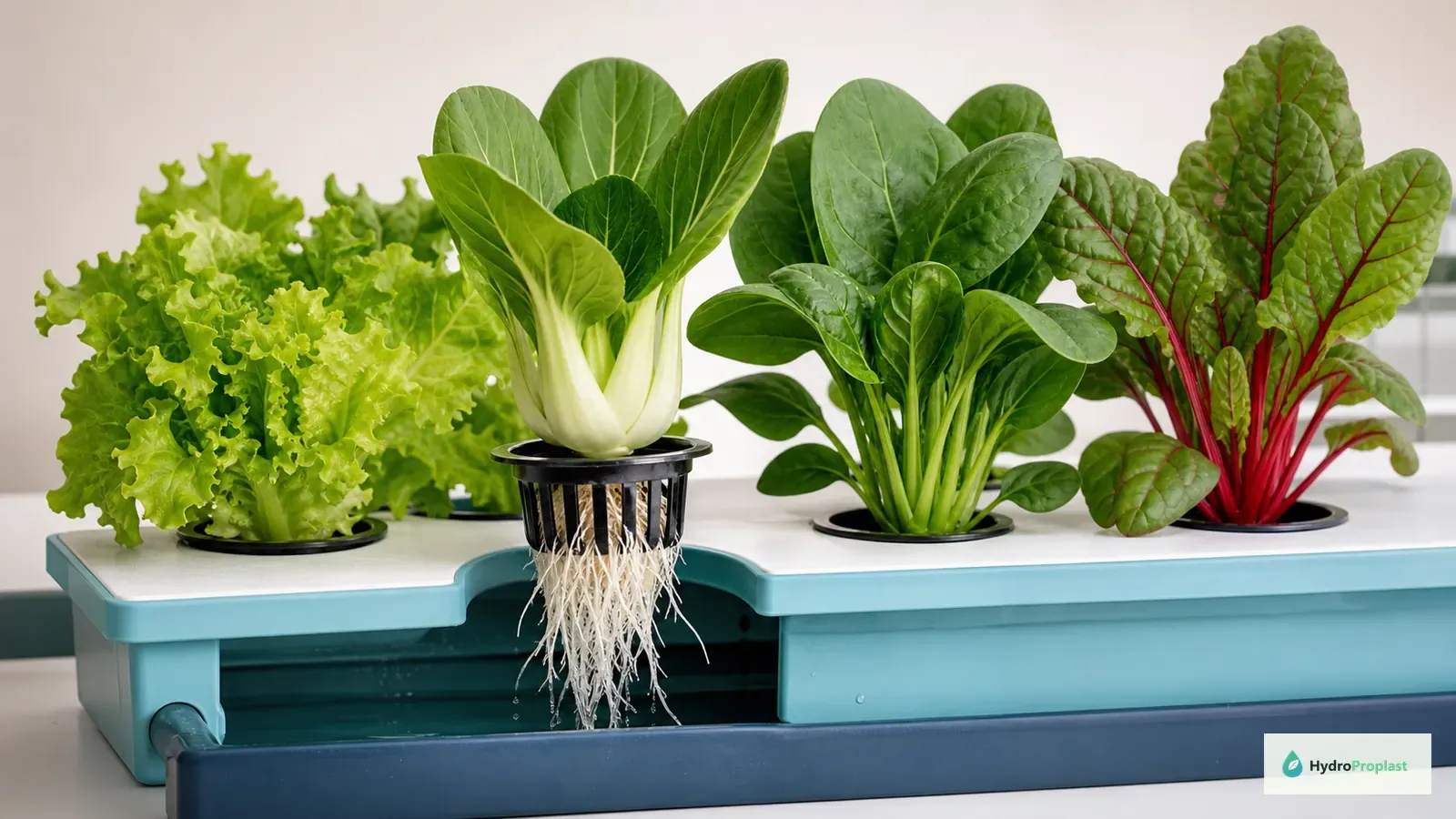
The main weakness of lettuce is heat. Warm rooms can lead to stretching, bitterness, tip burn, or bolting. If your grow area runs hot, pick heat-tolerant varieties, harvest younger leaves, and avoid crowding the canopy.
Bok choy and Asian greens
Bok choy, pak choi, tatsoi, mizuna, and other Asian greens are strong beginner choices when you want a fast crop with more texture than lettuce. Many varieties grow quickly and produce useful harvests before they become large. They are excellent trial crops because spacing, light, and temperature problems show clearly in the leaves.
Choose baby varieties for small systems. Full-size plants need more space than seedlings suggest, and tight spacing can trap moisture between leaves. Good airflow is important, especially in warm indoor rooms.
Spinach and kale require different planning
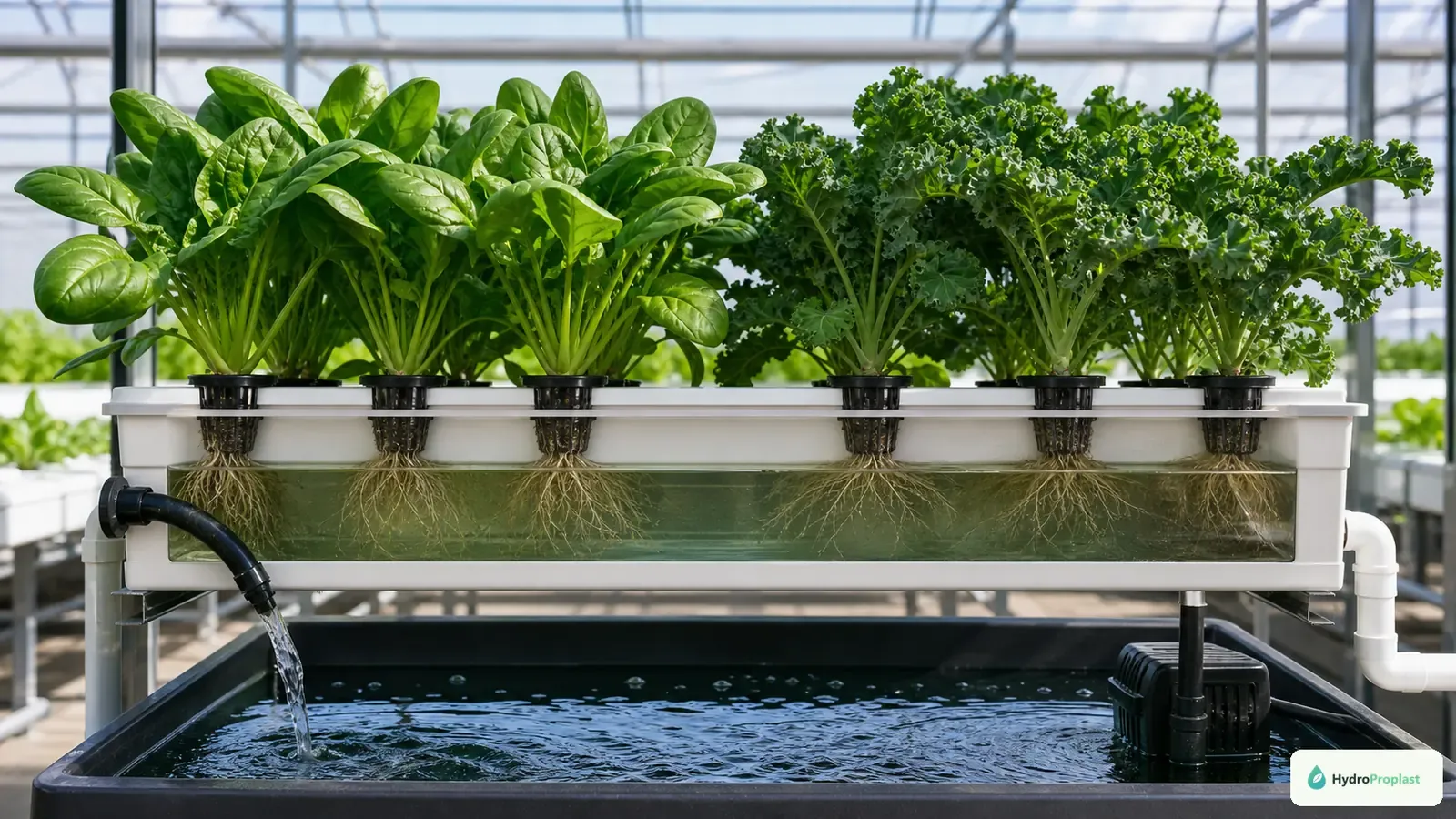
Spinach can grow well hydroponically, but it is less forgiving than lettuce in warm conditions. It prefers cooler temperatures and can be slow or inconsistent if the room is too hot. Kale is more tolerant and productive, but mature plants become larger and need more spacing.
For beginners, treat spinach as a cooler-season project and kale as a medium-size leafy crop, not a tiny salad green. Both can be worthwhile once you understand your grow area’s temperature pattern.
Swiss chard for colorful repeated harvest
Swiss chard is useful when you want repeated harvests, strong colors, and a crop that can tolerate a little more warmth than some lettuces. It develops bigger leaves and thicker stems, so it needs more spacing and steadier nutrition than baby greens.
Harvest outer leaves and let the center keep growing. Chard is not always the fastest crop, but it can be satisfying because one plant can produce over a longer window.
Radishes for roots and leaves
Radishes are possible in hydroponics, but they are not as automatic as leafy greens. The root needs room to form, and the crop is sensitive to crowding, inconsistent moisture, and excess heat. Some growers value the leaves as much as the bulb.
Use a deeper container or media bed, thin seedlings early, and avoid treating radishes like lettuce in a shallow net cup. If your goal is quick confidence, start with leafy greens first and test radishes as a short experiment.
Cucumbers for vertical production
Cucumbers can be excellent hydroponic vegetables when you have vertical space, strong light, and support. They grow quickly, transpire heavily, and can use a lot of water. A small system that works for lettuce may become unstable when a cucumber plant reaches full size.
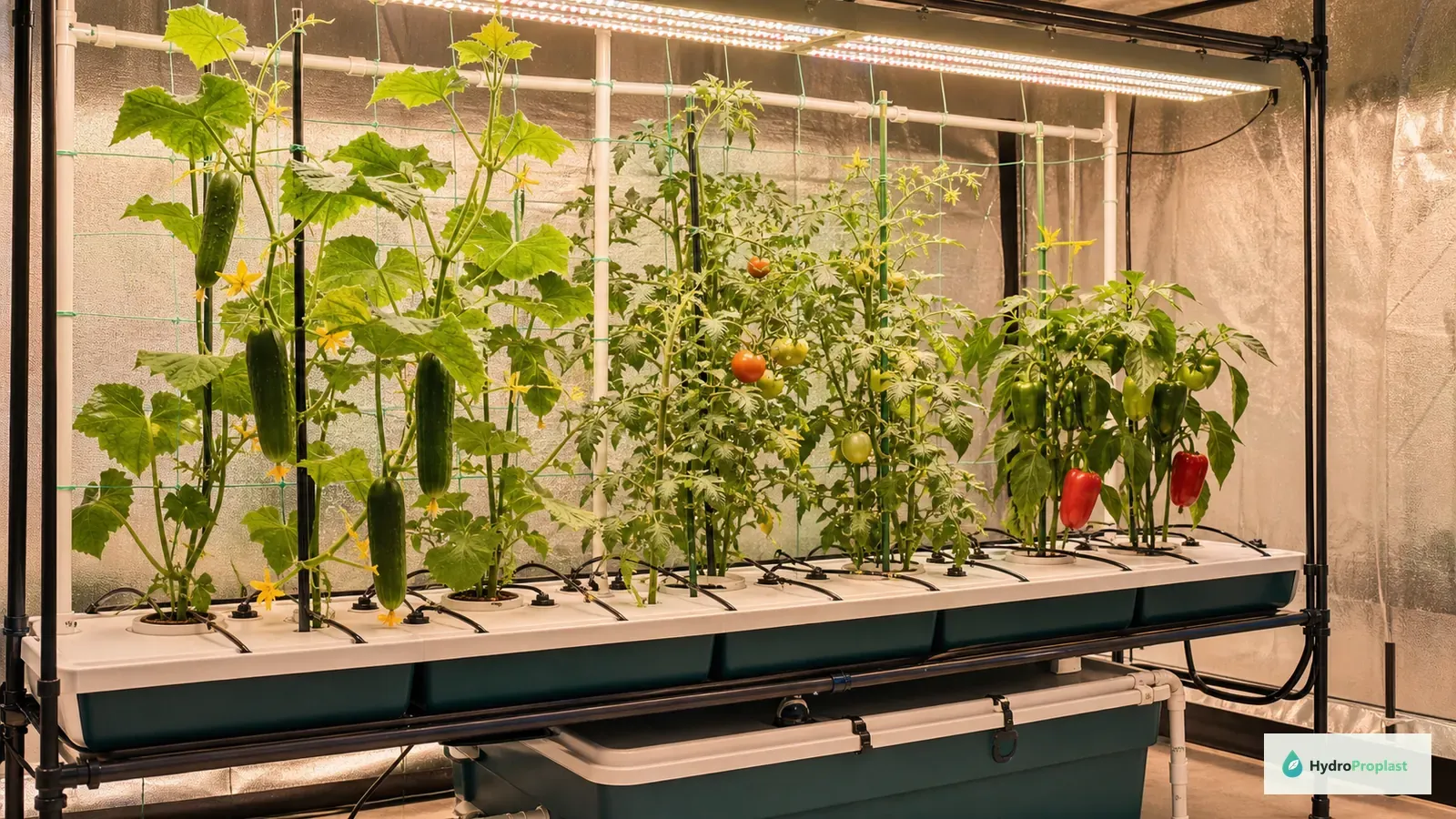
Plan for trellising before the plant needs it. Also choose varieties carefully. Compact or parthenocarpic greenhouse types can be easier indoors because they reduce pollination problems and fit controlled spaces better than sprawling garden varieties.
Tomatoes for committed growers
Tomatoes are popular, but they are not the easiest beginner vegetable. They need stronger light, more time, more root volume, and consistent nutrient management. Indeterminate tomatoes can outgrow small indoor systems quickly, while dwarf or determinate types are more realistic for compact spaces.
Start tomatoes only when you can provide enough light and support for the mature plant. If your system is still new, grow lettuce or bok choy first, then move to tomatoes after you have a stable routine.
Peppers for long-season value
Peppers are slower than leafy greens but can be valuable because one plant may produce over a long season. They need warmth, strong light, and patience. They also respond poorly to unstable root-zone conditions, so a tiny reservoir can make management harder.
Choose compact pepper varieties for indoor hydroponics. Expect a longer timeline before harvest and avoid judging the crop too early. Peppers are better as a second-stage project than as the first plant in a brand-new setup.
Match system to crop architecture
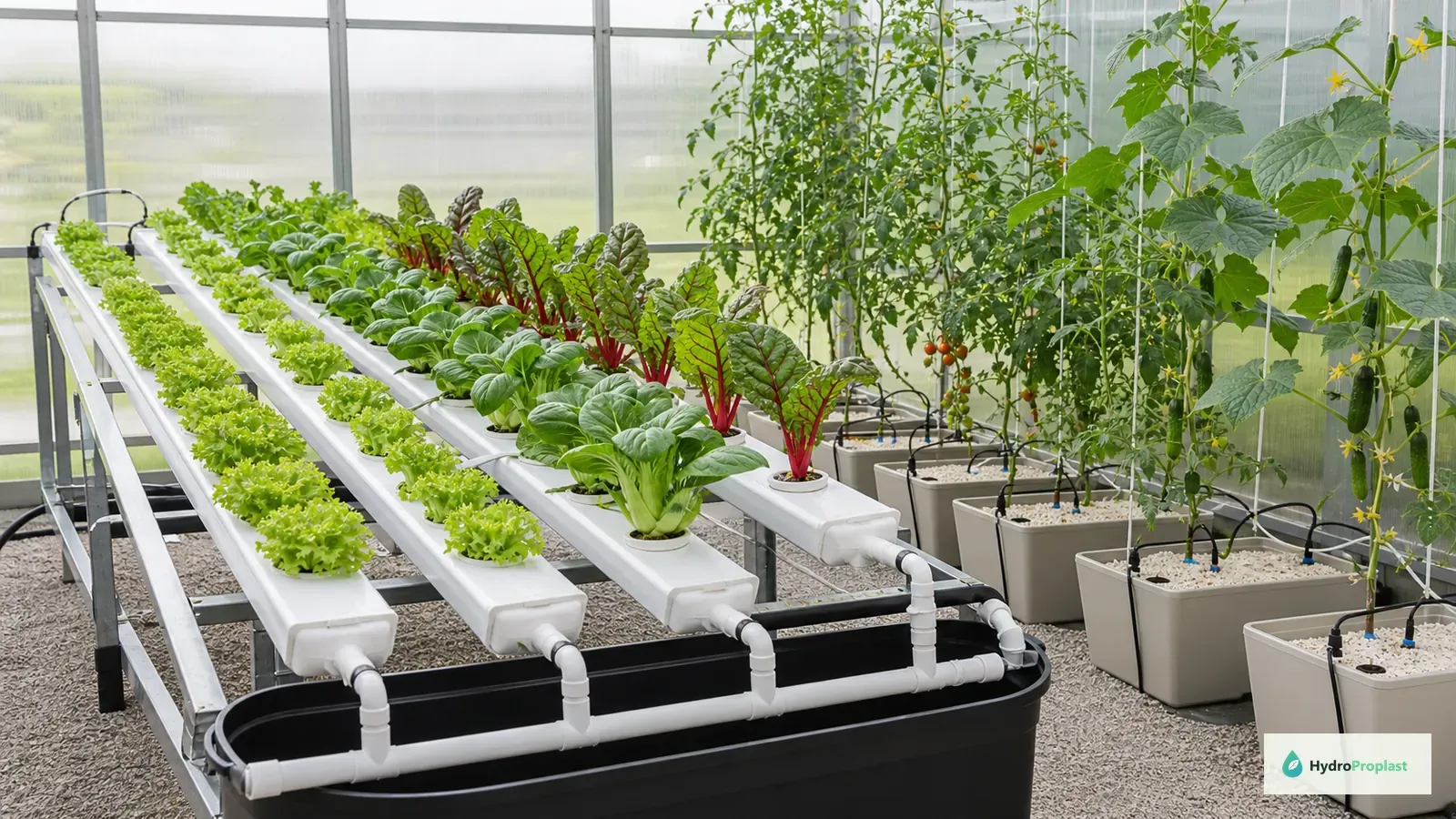
Crop shape should decide system choice. Short leafy greens suit NFT channels, rafts, Kratky jars, and compact DWC. Larger fruiting vegetables need more root volume, stable support, and easier access for pruning and harvesting. Root crops need media depth and spacing that allows the edible part to form.
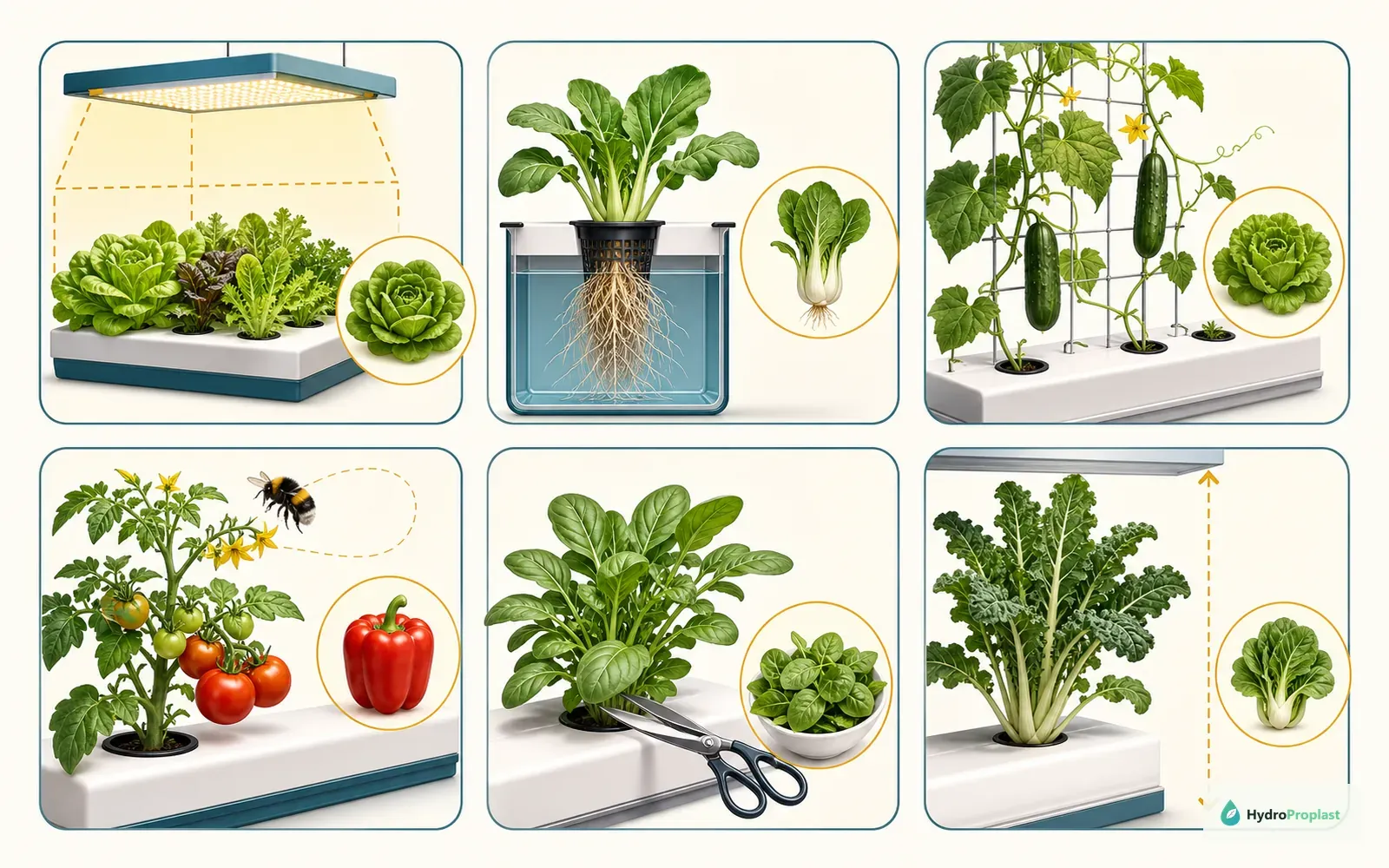
A good crop choice makes maintenance simpler. A poor match forces the system to fight the plant’s natural size and growth habit every week.
Light determines the realistic crop list
Light is usually the limiting factor indoors. Leafy greens can produce acceptable harvests under moderate grow lights. Fruiting vegetables need much higher daily light to flower, set fruit, and ripen. If the light is weak, tomatoes and peppers may stay alive but produce disappointing harvests.
Do not choose crops from seed packets alone. Choose them from the light level your setup can provide at the canopy for the number of hours you can run it safely and affordably.
Temperature compatibility matters
Cool-season greens such as lettuce and spinach can struggle in hot rooms, while peppers and cucumbers usually prefer warmer conditions. Matching crops to your room temperature reduces stress, disease pressure, and wasted seed.
If your room changes a lot by season, rotate crops. Grow lettuce and spinach in cooler periods, then test basil, chard, cucumbers, or peppers when the space naturally runs warmer.
Root volume and reservoir demand
Small reservoirs swing faster in pH, EC, temperature, and water level. That is manageable for a few small lettuce plants, but it becomes a problem for heavy-feeding fruiting crops. Bigger plants drink more and leave less room for error.
For a first system, the safest vegetable is often the one that keeps the reservoir stable long enough for you to learn the rhythm of topping up, checking roots, and adjusting solution.
Pollination and support
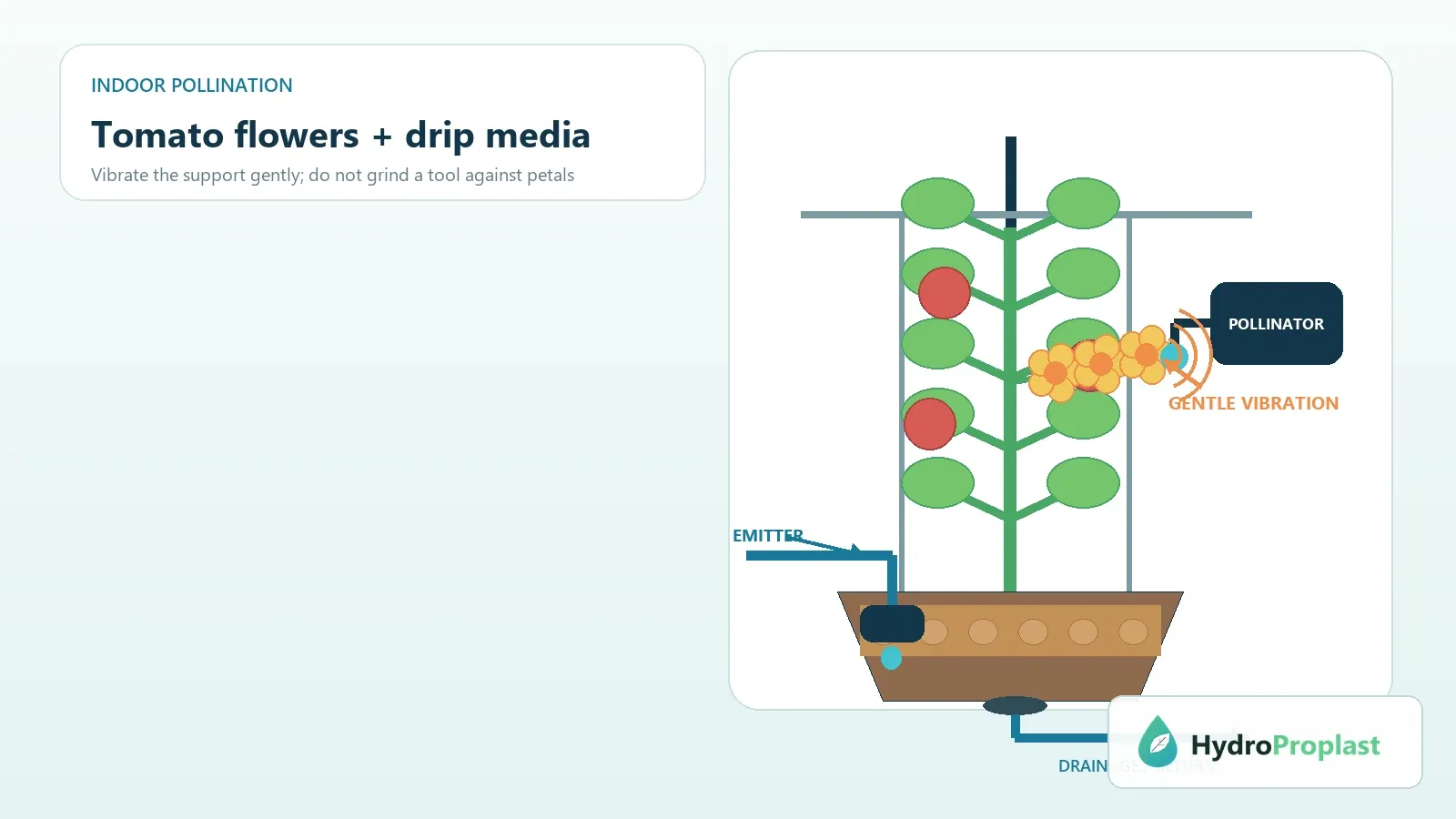
Leafy vegetables do not need pollination to give you a harvest. Fruiting crops do. Tomatoes may need vibration or gentle flower shaking indoors. Cucumbers depend on variety choice, and peppers may benefit from airflow or light hand pollination.
Support is just as important. A fruiting plant can become top-heavy before the first harvest. Build support early so roots and stems are not disturbed later.
Harvest style changes economics
Cut-and-come-again leafy greens provide frequent small harvests, which helps beginners learn faster. Fruiting vegetables may deliver fewer harvest moments but higher value per plant if the setup is strong enough. Microgreens give the fastest cycle but require repeated sowing and tray cleaning.
The best crop is the one you will actually harvest and eat. Hydroponics feels more rewarding when the crop fits your kitchen habits, not only your equipment.
Beginner vegetable quick shortlist
- Easiest first picks: loose-leaf lettuce, baby bok choy, tatsoi, mizuna, and microgreens.
- Good second-stage picks: Swiss chard, kale, basil, compact cucumbers, and compact peppers.
- More demanding picks: tomatoes, large cucumbers, full-size kale, and root crops that need media depth.
- Avoid at first: very large vining crops, long-season field varieties, and plants that exceed your light or height limits.
Troubleshooting across crops
If several crops fail at once, look for system conditions rather than blaming the seed. Check light distance, water temperature, root oxygen, pH, EC, airflow, and sanitation. If only one crop struggles while others grow well, the crop may not match the room or system.
Keep notes for each crop: germination date, transplant date, light schedule, pH and EC range, temperature, harvest date, and problems. A simple log turns each grow into useful data.
Run a selection trial
The fastest way to choose your best hydroponic vegetables is to run a small trial. Plant two or three leafy greens and one more ambitious crop. Keep the system stable, harvest what performs well, and repeat with small changes.
For most beginners, the winning path is simple: master a compact leafy green first, then expand into larger vegetables only after your light, reservoir, and routine are proven. That keeps the learning curve practical and makes each new crop feel like a controlled upgrade.