Dissolved oxygen is the oxygen gas present in a hydroponic nutrient solution and available to submerged or wetted roots. It is easy to overlook because a reservoir can look full, clean, and chemically balanced while the root zone is short of oxygen. For beginners, the practical goal is not to chase the highest possible reading. It is to keep oxygen delivery reliable, control the conditions that consume oxygen, and respond to trends before roots are damaged.
What dissolved oxygen means in hydroponics
Dissolved oxygen, usually abbreviated DO, is measured in milligrams per litre (mg/L) or parts per million (ppm). For the dilute water solutions used in hydroponics, those units are effectively equivalent for everyday monitoring.
DO is different from pH and electrical conductivity. pH describes acidity or alkalinity, while EC estimates the total concentration of dissolved ions. Neither value tells you how much oxygen is available to roots. A nutrient solution can have acceptable pH and EC but still have poor aeration.
The pH and EC meter guide explains what those two measurements can and cannot diagnose.
Why roots need oxygen
Leaves release oxygen during photosynthesis, but plant cells also use oxygen during respiration. Roots need that respiration to support active nutrient uptake, growth, repair, and other normal functions. The University of New Hampshire Extension notes that a hydroponic system must provide oxygen to the root zone and that stationary raft systems require especially dependable aeration.
When oxygen delivery falls behind demand, roots cannot function normally. Growth may slow even when light, nutrients, pH, and EC appear reasonable. A prolonged shortage can damage root tips and create conditions in which opportunistic root pathogens become harder to control.
Low DO is therefore not simply a “water problem.” It changes how effectively the plant can use the rest of the growing environment.
A practical dissolved-oxygen range
There is no single perfect DO number for every crop, growth stage, water temperature, elevation, and hydroponic design. Use crop-specific guidance when it is available.
For a useful general reference, University of Missouri Extension describes more than 6 ppm as optimum for hydroponic production. Virginia Cooperative Extension cites 7–10 ppm as an optimal management range and 4 ppm as a minimum in its production guide. UF/IFAS gives 5 mg/L as a good-oxygenation reference for small hydroponic lettuce systems.
These sources should not be compressed into one universal target. A practical interpretation is:
| DO reading | Practical interpretation |
|---|---|
| 7–10 mg/L | A strong operating range for many actively aerated systems, especially DWC, when temperature and crop guidance agree |
| Above 6 mg/L | A useful general goal for hydroponic nutrient solution |
| 4–6 mg/L | A caution range: review temperature, aeration, flow, root mass, and recent trend |
| Below 4 mg/L | Treat as an urgent low-oxygen condition for many submerged-root systems and investigate immediately |
One reading is only a snapshot. A system that measures 6.5 mg/L in the cool morning may fall much lower during the warmest part of the light period. Trend, sampling location, and temperature matter as much as the isolated number.
Temperature changes the oxygen ceiling
Warm water holds less dissolved oxygen than cool water. At the same time, warmer roots and microorganisms may consume oxygen faster. This creates a double disadvantage during hot conditions: the solution can store less oxygen while biological demand rises.
University of Missouri Extension illustrates this limitation with nutrient solution at 35°C (95°F): oxygen solubility is capped even if more air is pumped through the water. Extra bubbles cannot overcome the physical saturation limit indefinitely.
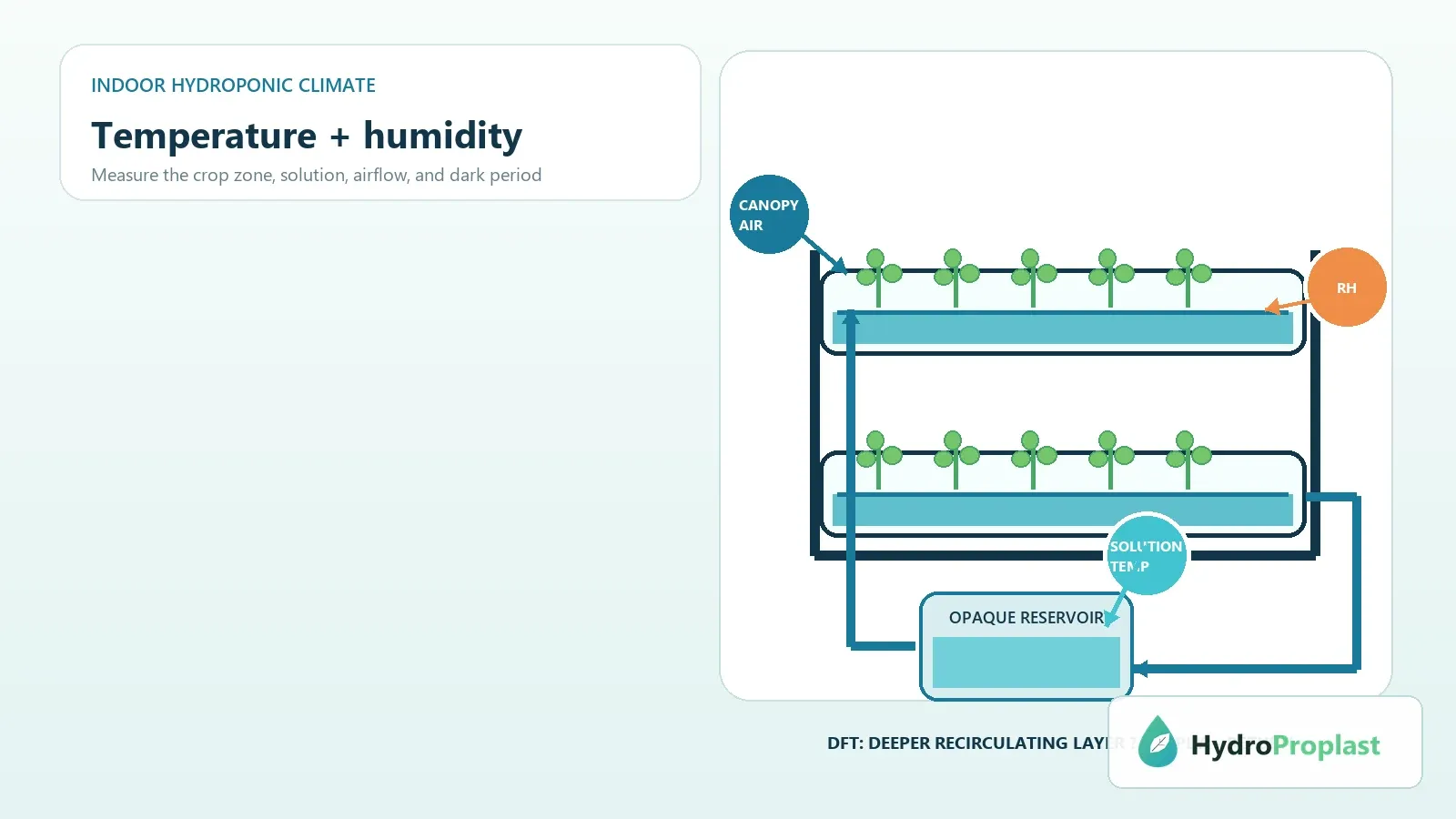
Control heat at its source. Shade and insulate the reservoir, keep it away from lamp and compressor exhaust, improve room ventilation, and use a correctly sized chiller when the crop and climate justify one. Avoid rapid temperature swings and do not add loose, unclean ice to nutrient solution.
See the hydroponic water-temperature guide for crop and equipment considerations.
How oxygen reaches roots in different systems
Deep water culture and raft systems
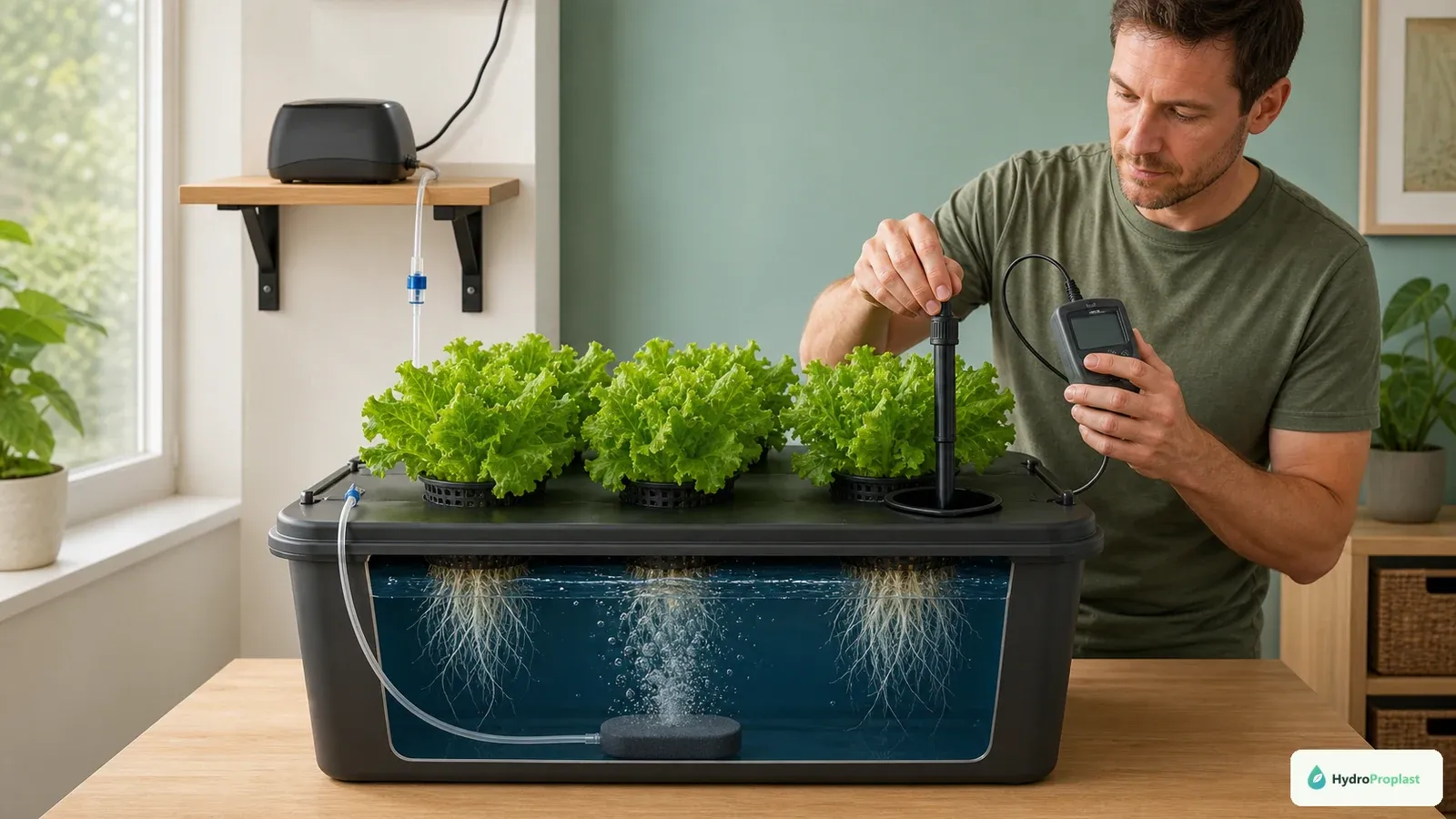
DWC keeps a large portion of the root system in deep nutrient solution. An air pump stays outside the reservoir and sends air through tubing to an air stone below the roots. The rising bubbles move water and continually renew the air-water interface.
The air pump must remain dry and safely positioned. Use a check valve or place the pump above the maximum water level according to the equipment instructions to reduce back-siphon risk. Keep electrical connections away from leaks and splash.
Nutrient film technique
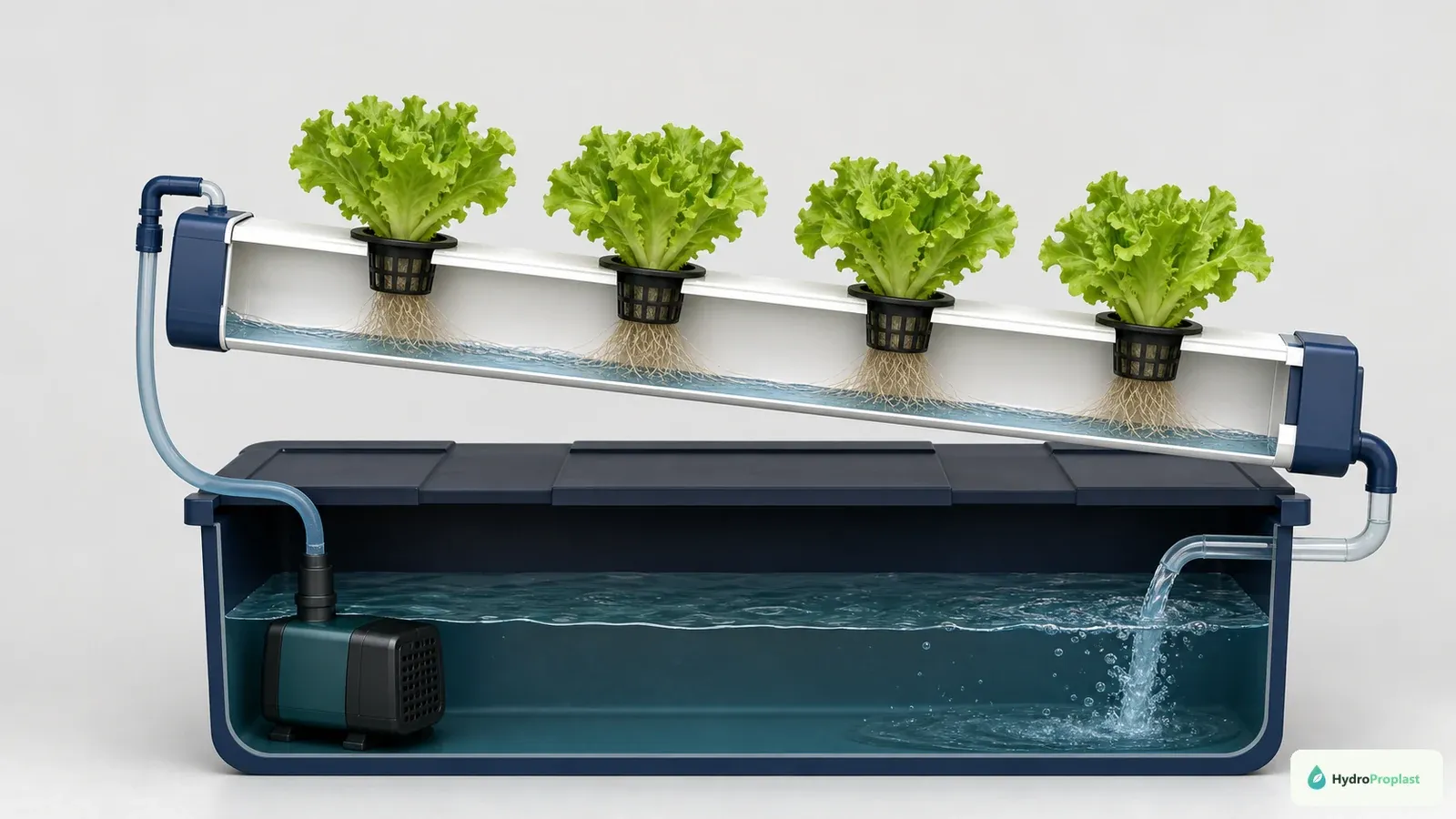
Correct NFT geometry keeps the nutrient film shallow while the pump supply and gravity return maintain circulation through the root zone.
NFT sends a shallow moving film through a gently sloped channel. Part of the root mat contacts nutrient solution while other root surfaces retain access to humid air. A reliable supply path, unobstructed channel, and gravity return are essential.
NFT does not become safer by running the channel deep. A deep pool can reduce air exposure and turn the root zone into something that behaves more like a poorly aerated deep-flow system. Reservoir aeration may still be useful, particularly in warm weather or systems with heavy root mass.
Drip and ebb-and-flow systems
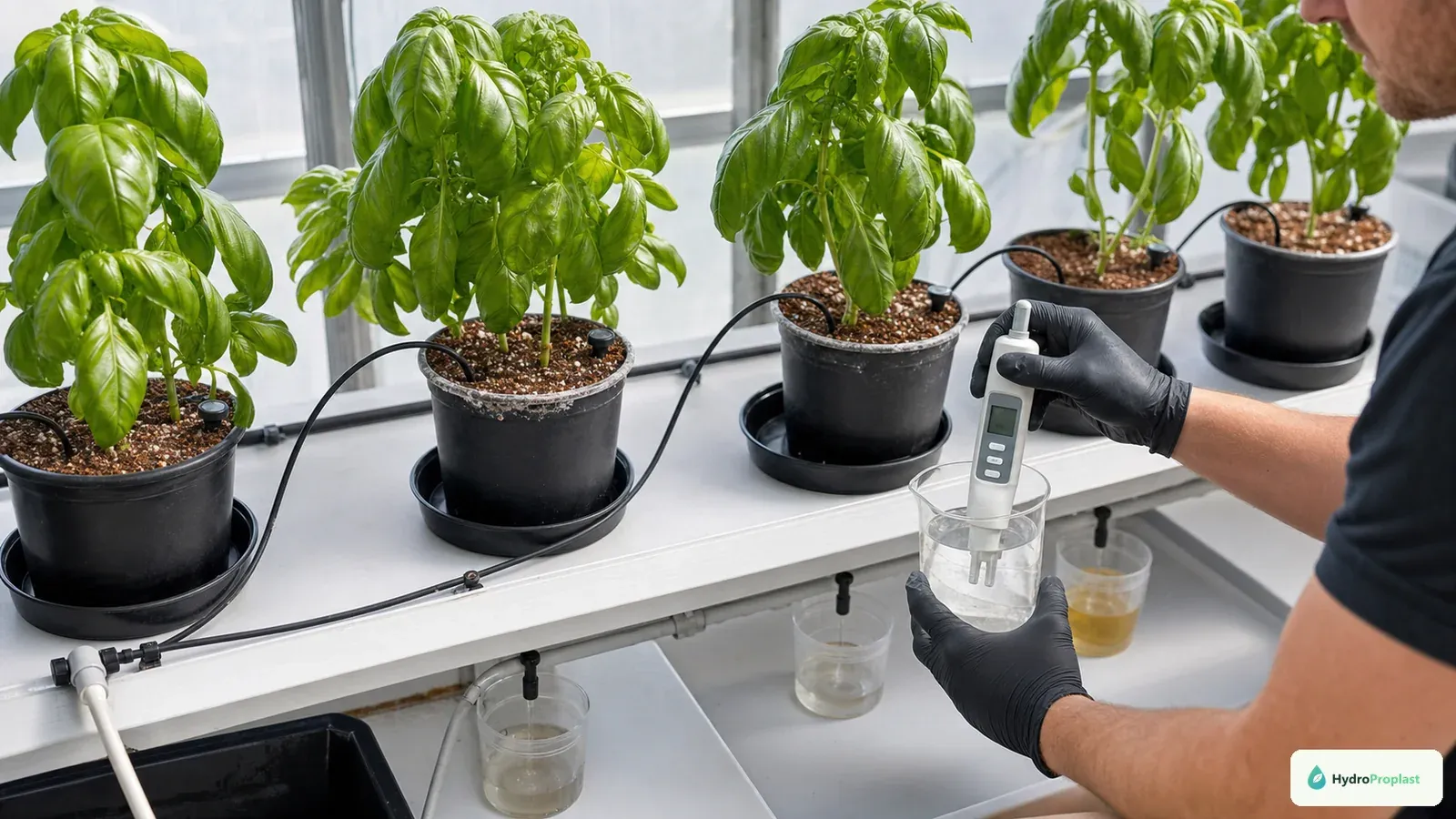
In media-based drip systems, oxygen also occupies pore spaces after excess solution drains. Emitters must wet the root medium without leaving it permanently saturated. In ebb and flow, each flood must be followed by effective drainage so fresh air can return to the root zone.
More irrigation is not always more oxygen. Check drainage, media structure, and cycle timing rather than increasing pump runtime automatically.
Kratky systems
Kratky is a passive method that develops a humid air gap as the solution level falls. Upper roots adapt to the moist air space while lower roots continue reaching the solution. Filling the container back to the crown can drown the air-adapted roots.
Kratky should not be judged by the same hardware checklist as DWC, but it still depends on correct root exposure, solution temperature, container volume, and crop fit. The Kratky versus DWC guide explains the difference.
Warning signs of inadequate root-zone oxygen
Possible signs include:
- plants wilting even though roots are in water
- unusually slow growth or weak recovery after transplanting
- roots becoming tan, brown, translucent, or soft instead of firm and pale
- a sour, swampy, or decaying smell from the reservoir
- slimy root surfaces or tissue that pulls apart easily
- rapid decline during hot afternoons
- recurring root disease despite apparently acceptable pH and EC
None of these signs proves low DO by itself. Nutrient imbalance, heat injury, pathogens, damaged pumps, blocked channels, poor light, and transplant stress can look similar. Inspect the entire system and measure where possible.
The hydroponic root-rot guide covers root inspection and sanitation in more detail.
A step-by-step low-oxygen check
Start with equipment before changing chemistry.
- Confirm that the air pump, water pump, timer, and power supply are operating.
- Look for bubbles, surface movement, channel flow, emitter output, and a clear return path.
- Check the nutrient-solution temperature at the root zone, not only room temperature.
- Inspect air stones, filters, pump intakes, tubing, and channels for roots, biofilm, kinks, or debris.
- Lift one representative plant and inspect root colour, texture, smell, and crown position.
- Check the water level. Make sure DWC roots still receive aeration, NFT channels are not deeply flooded, media can drain, and a Kratky air gap has not been refilled away.
- Measure DO at a consistent location and time if a meter is available, then compare with earlier readings.
If roots are deteriorating or the solution smells abnormal, isolate affected plants where practical and follow a crop-appropriate cleaning and solution-replacement plan. Do not hide the problem by adding more fertiliser or making a large pH correction.
How to improve dissolved oxygen safely
Restore dependable aeration
For DWC, confirm that the pump can deliver air against the water depth and through the installed tubing and stones. Replace clogged stones and leaking lines. Distribute aeration so one end of a large reservoir is not active while another remains stagnant.
Do not choose equipment from a universal “litres per minute per plant” rule. Reservoir depth, diffuser resistance, root mass, temperature, and pump performance all matter. Verify the result through water movement, root condition, and DO measurements when the crop risk justifies them.
The air pump versus water pump guide explains why the two devices are not interchangeable.
Improve circulation without damaging roots
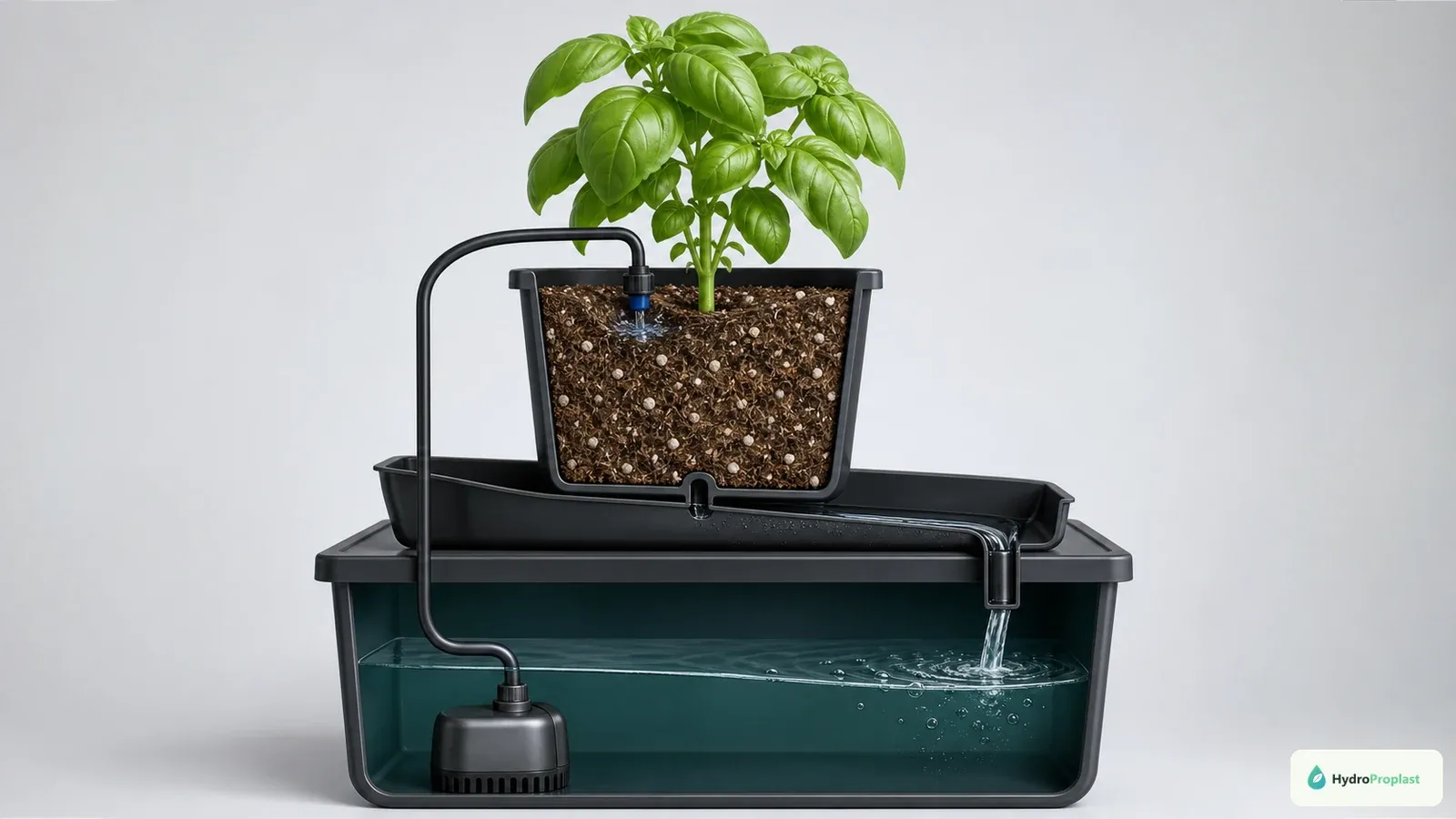
A controlled return above the solution surface can improve mixing and gas exchange without flooding the growing medium.
A return that breaks the water surface can improve gas exchange and mixing. Keep it controlled so it does not splash electricity, expose the pump intake, or create excessive mist and evaporation. Eliminate dead zones, but avoid a harsh jet that tangles or physically abrades roots.
In recirculating systems, restoring a blocked return may improve oxygen delivery more effectively than adding another air stone.
Keep the reservoir cool, dark, and clean
Use an opaque reservoir with a fitted lid. Light encourages algae, and excess organic material supports microbial activity that consumes oxygen. Remove dead roots and fallen leaves, clean spills, and follow a between-crop sanitation routine.
Do not add household disinfectants, bleach, or unmeasured hydrogen peroxide to a planted reservoir. Oxidising products vary in concentration, can injure roots, and do not replace reliable aeration or correct temperature control.
Reduce demand while correcting the cause
During an acute heat or equipment problem, reduce avoidable stress. Restore safe airflow, shade the reservoir, repair failed equipment, and remove decaying material. Make only crop-appropriate light or temperature adjustments; sudden darkness or severe cooling introduces new stress.
A temporary clean backup air pump can protect DWC while the primary unit is repaired. It is a bridge, not a diagnosis.
Do home growers need a DO meter?
Many small growers can operate successfully by using a proven system design, reliable aeration, controlled temperature, clean roots, and routine inspection. A DO meter becomes more valuable when:
- roots stay submerged, as in DWC or raft systems
- reservoir temperatures vary widely
- crop value or system size makes failure expensive
- oxygen problems recur without an obvious equipment fault
- you are comparing aeration changes or mapping dead zones
- you need records rather than visual estimates
Cheap pH or EC pens cannot measure DO. A dedicated optical or electrochemical DO meter needs manufacturer-specified calibration, storage, maintenance, and temperature handling.
How to take a useful DO measurement
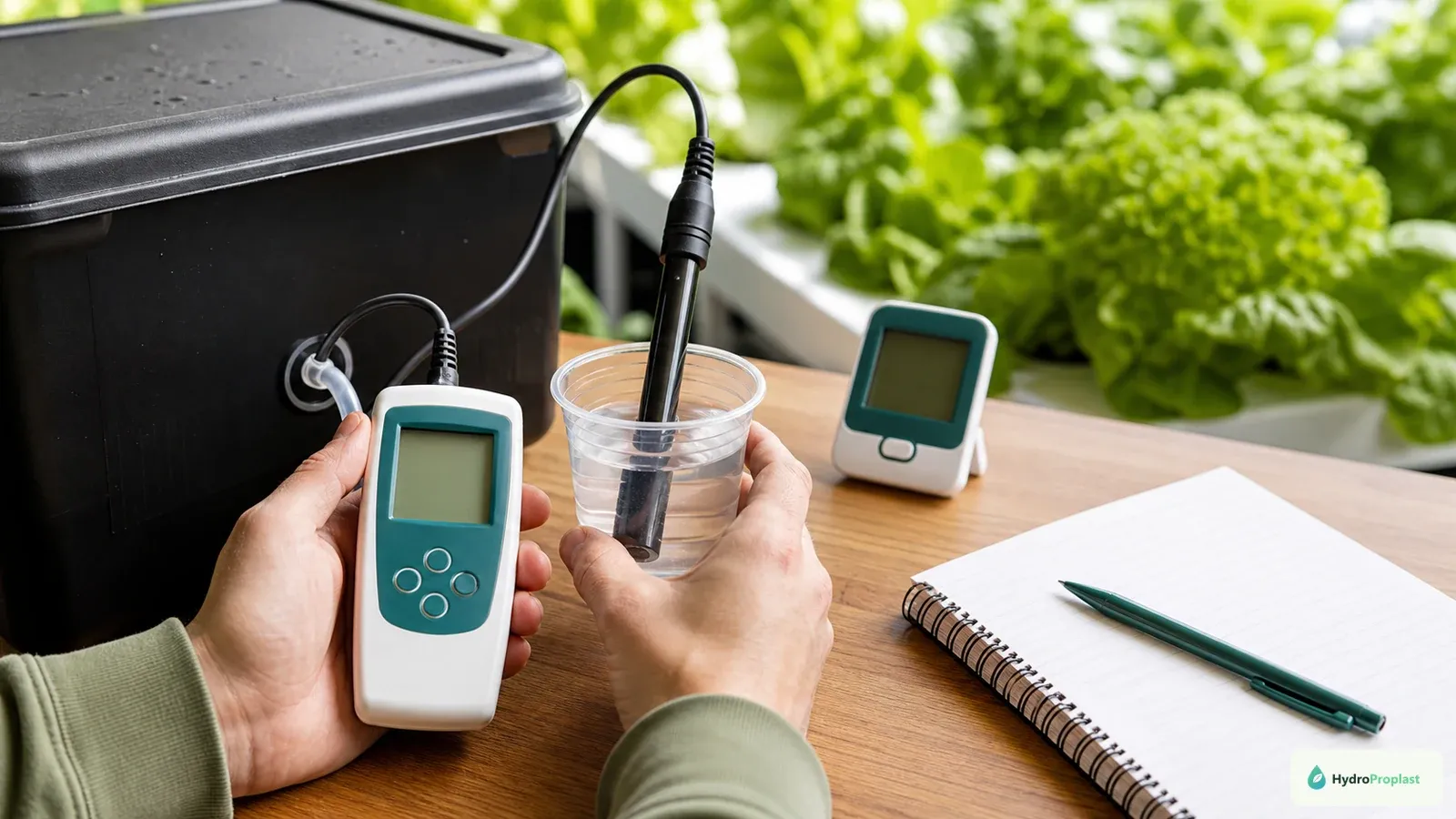
Record dissolved oxygen with solution temperature, sampling location, time, and equipment status so the reading is diagnostically useful.
Follow the meter manual first. Condition and calibrate the probe as required. Measure in a clean representative location without trapping a bubble against the sensor. Allow the reading to stabilise and record solution temperature at the same time.
For troubleshooting, compare the reservoir, the supply entering the grow area, and the return. Measure at consistent times, including the warmest expected period. A single value beside an air stone may look excellent while roots farther away receive less oxygen.
Record DO with temperature, water level, pump status, pH, EC, and root observations. That context turns a number into a useful diagnosis.
Common questions
Do bubbles directly oxygenate the water?
They contribute, but much of the useful transfer comes from the large air-water contact area and the circulation created as bubbles rise. Small bubbles and good mixing can improve transfer, but a visibly dramatic bubble column does not guarantee even oxygen delivery throughout the reservoir.
Can an NFT system run without an air stone?
A correctly designed NFT system can receive substantial oxygen through its shallow film, exposed root surfaces, circulation, and return. Reservoir heat, long channels, heavy root mats, low flow, or poor return design can change that balance. Judge the actual system rather than assuming that “NFT never needs aeration.”
Can there be too much aeration?
Ordinary air-pump aeration is more likely to be uneven or inefficient than chemically excessive, but extreme turbulence can damage roots, increase evaporation, and create unsafe splashing. Pure-oxygen injection is a controlled commercial technique and should not be improvised at home.
Will a water change fix low DO?
Fresh solution may temporarily improve conditions, especially if the old solution is warm or contaminated, but DO will fall again if heat, pump failure, blockage, excess root mass, or poor gas exchange remains. Correct the cause as well as the symptom.
A simple operating routine
Each day, confirm flow or bubbles, look at water level, and notice plant posture. Several times a week, inspect representative roots and solution temperature. On a regular maintenance schedule, clean intakes, check tubing and stones, test backup equipment, and review trends.
For high-risk or commercial systems, set measurement frequency and alarm thresholds from crop guidance and operating data. The goal is stable oxygen delivery across the entire root zone, not one impressive reading at the easiest sampling point.
Sources and further reading
- Hydroponic Nutrient Solutions — University of Missouri Extension
- Hydroponics at Home — University of New Hampshire Extension
- Hydroponic Production of Edible Crops: System and Crop Comparisons — Virginia Cooperative Extension
- Growing Lettuce in Small Hydroponic Systems — UF/IFAS Extension
Dissolved oxygen is one part of root-zone management. Stable temperature, suitable water depth, dependable flow, clean equipment, and crop-specific monitoring work together. When oxygen is treated as an operating condition rather than an emergency additive, hydroponic roots are easier to keep healthy and troubleshoot.