Buy a complete formula before trying to build one
Hydroponic nutrients are water-soluble mineral sources formulated to supply the essential elements plants would otherwise obtain from soil solution. For a beginner, the safest practical choice is a complete product labeled for hydroponics and appropriate to the crop, followed exactly according to its mixing order and growth-stage guidance.
Do not start by combining individual fertilizer salts, substituting ordinary garden fertilizer, or increasing strength to accelerate growth. A formula can contain plenty of nitrogen, phosphorus, and potassium while missing calcium, magnesium, iron, or other required elements. Too much total salt can make water harder for roots to absorb and create toxicity or imbalance.
Penn State Extension’s overview of hydroponic systems and plant nutrition explains the roles of essential nutrients and why pH must be considered alongside them. Nutrient management is a system, not a bottle.
What “complete” means on the plant side
Plants require relatively large amounts of nitrogen, phosphorus, potassium, calcium, magnesium, and sulfur. They also require smaller amounts of micronutrients including iron, manganese, boron, zinc, copper, molybdenum, chlorine, and nickel. The fact that micronutrients are needed in small quantities does not make them optional.
Each element has multiple roles. Nitrogen contributes to proteins and chlorophyll; potassium participates in water relations and enzyme processes; calcium is important in cell structures and growing tissues. A visible symptom rarely proves one missing element because root damage, pH, temperature, excessive concentration, pests, and disease can create similar patterns.
Read the guaranteed analysis and manufacturer instructions. A one-part product may be convenient at modest concentration. Multi-part products keep ingredients separated in concentrate to reduce unwanted reactions. They become complete only after each part is diluted correctly in water.
Why concentrates are separated
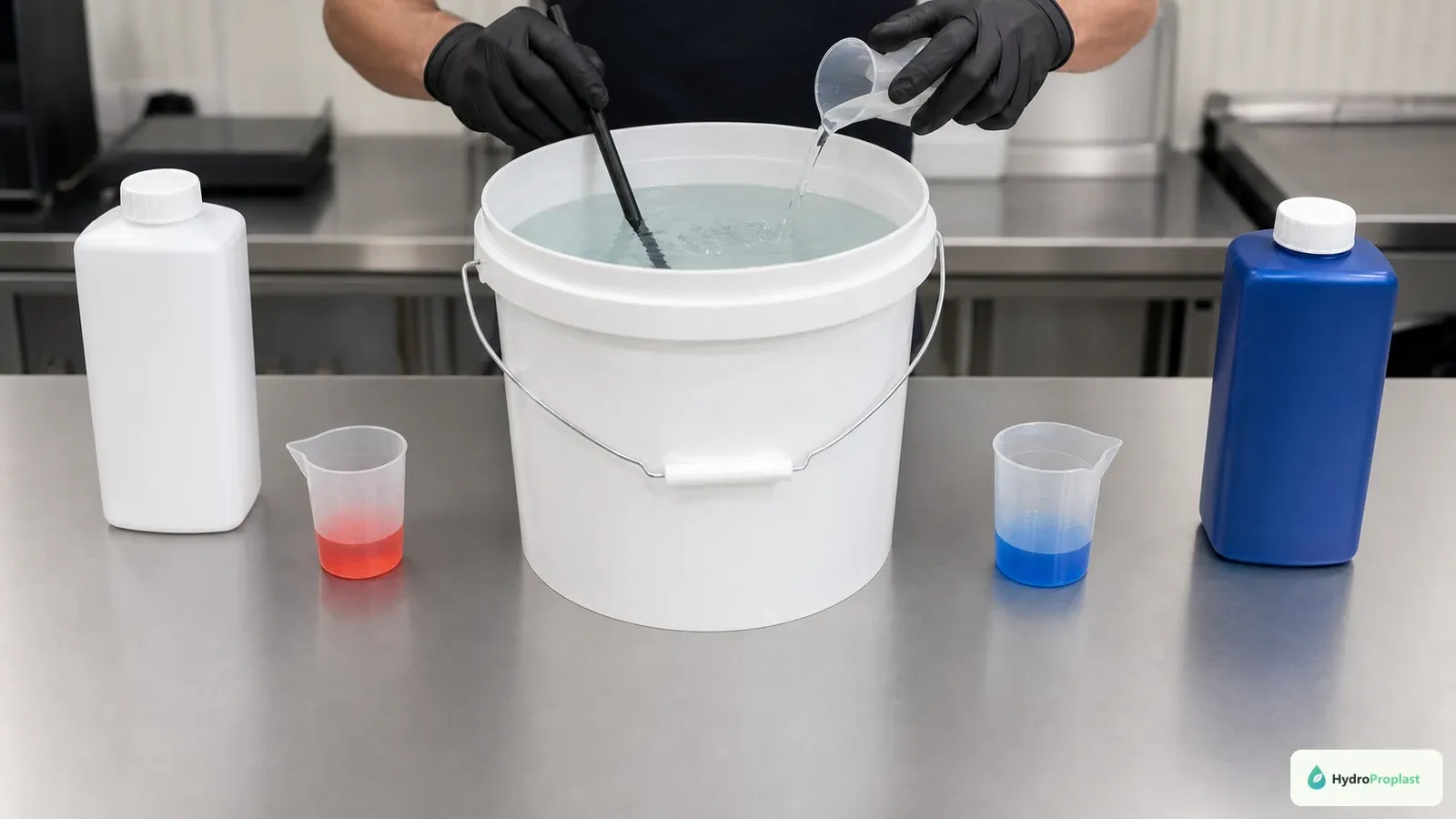
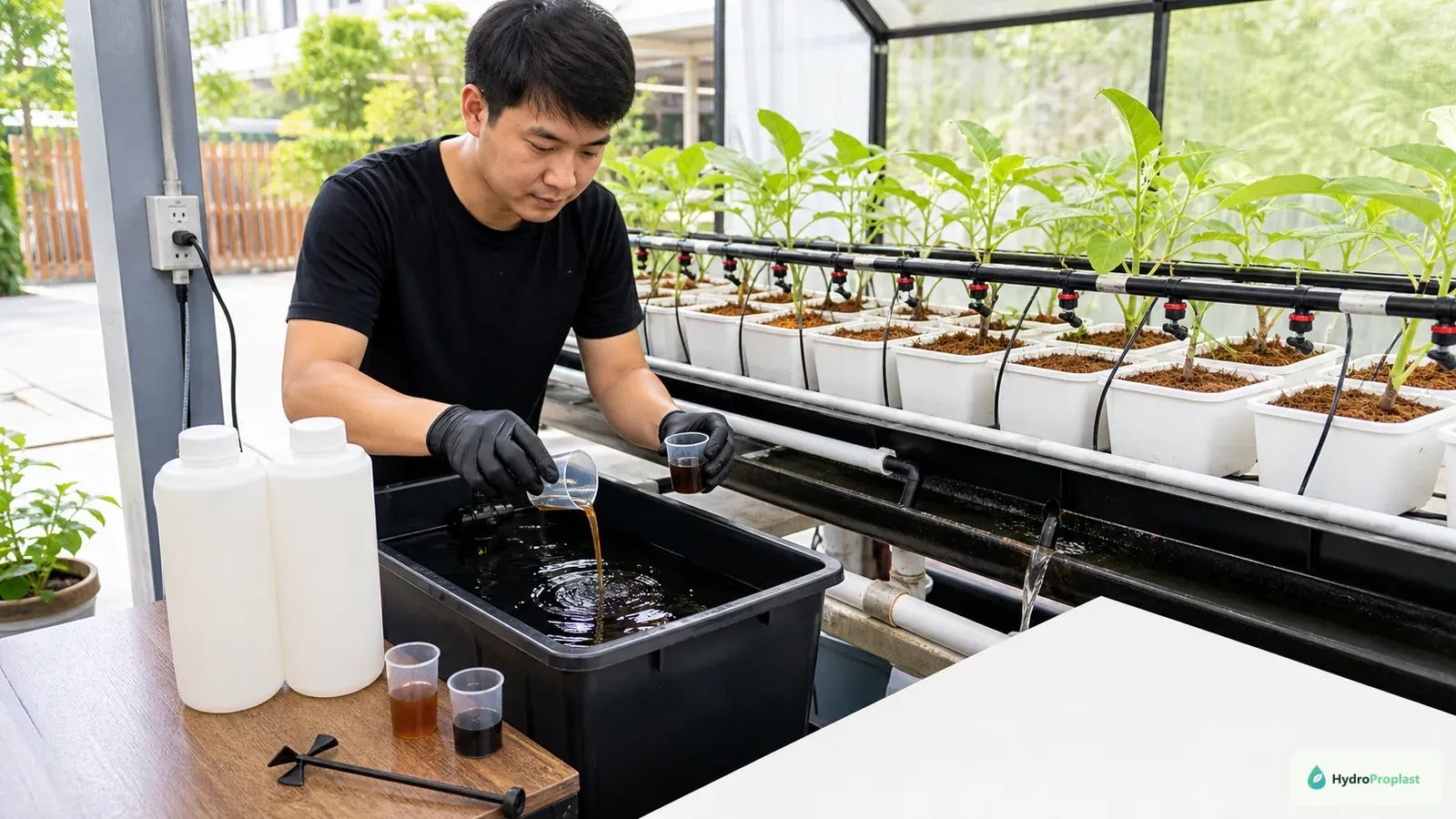
Never combine concentrated Part A and Part B directly; dilute each one fully in water first.
Highly concentrated calcium can react with concentrated phosphate or sulfate and form poorly soluble compounds. This is why two- and three-part formulas specify an order: add one part to the full water volume, mix thoroughly, then add the next. Never pour concentrates together before dilution.
Use separate clean measuring tools or rinse them so one concentrate is not contaminated with another. Replace caps immediately. Store products in their original labeled containers, away from children, pets, heat, and incompatible materials.
If instructions differ from a generic article, follow the product label. Formulations have different concentrations and intended water qualities. Do not convert milliliters to “capfuls” unless the cap is a verified measuring device.
Start with source water, not an empty spreadsheet
Water already contains dissolved minerals and alkalinity. Hard water may contribute calcium, magnesium, and bicarbonate; softened water may contain sodium that is undesirable for many hydroponic crops. Source-water EC is part of the final reading even before nutrient is added.
Oklahoma State University’s EC and pH guide recommends water analysis and identifies pH, EC, alkalinity, and nutrient balance as central characteristics. A laboratory analysis becomes valuable when water is difficult, the crop is valuable, or repeated unexplained problems occur.
Do not buy reverse osmosis equipment merely because another grower uses it. Test first. Very low-mineral water may require a formula or supplementation strategy suited to it, while acceptable municipal water may work without treatment. Let evidence drive equipment.
A reliable mixing sequence
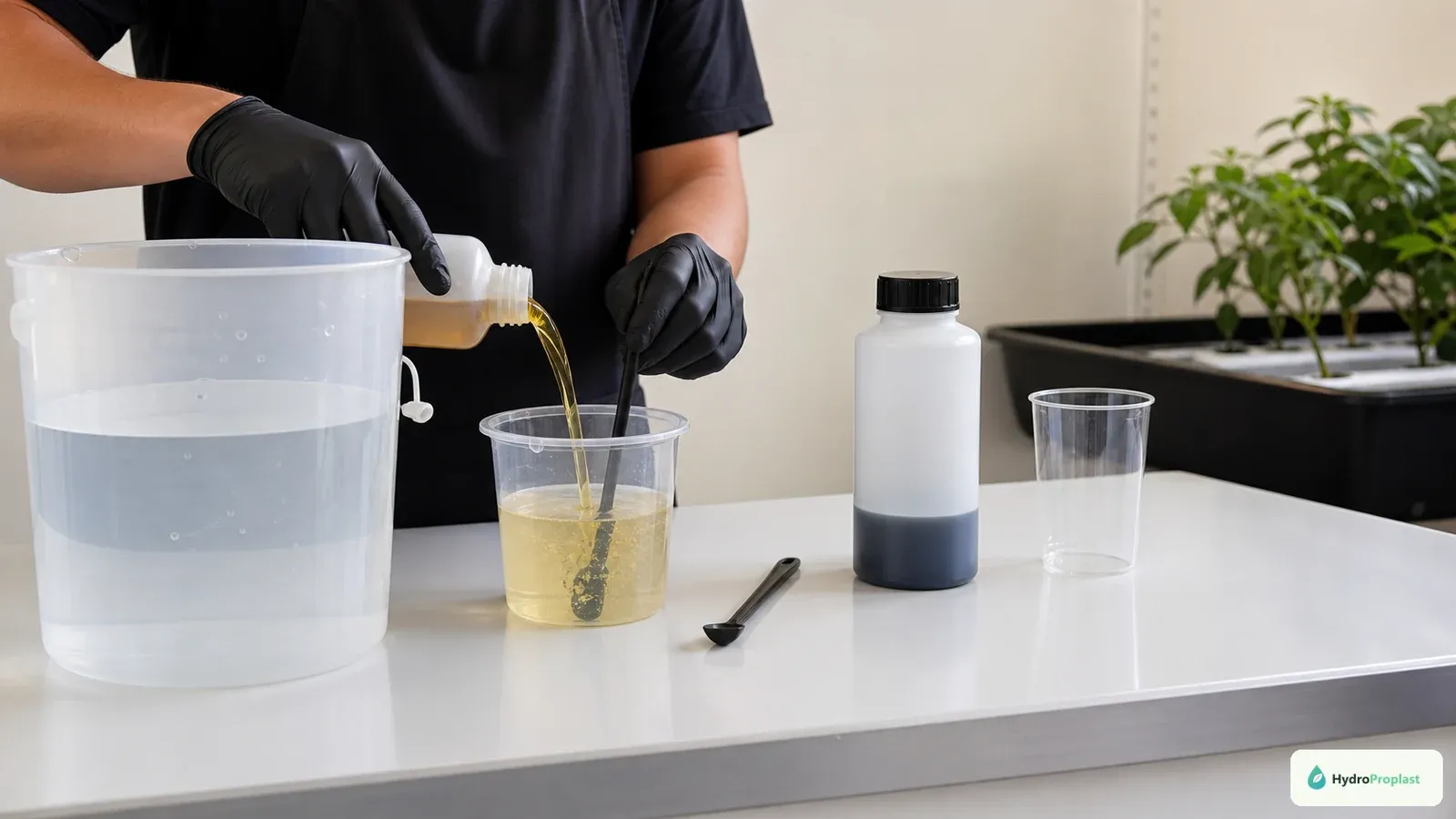
A repeatable order—water, first part, thorough mixing, then second part—reduces precipitation and dosing errors.
Begin with a clean reservoir or mixing container and a measured water volume. Bring water near the intended operating temperature and account for source-water treatment guidance. Add nutrient parts one at a time in the labeled order, mixing completely between additions.
Measure EC after the full formula is mixed and the reading stabilizes. Then measure pH. Adjust pH only after nutrients because fertilizer changes water chemistry. Add adjustment products in small diluted amounts according to their safety instructions, circulate, wait, and retest.
Record date, water volume, each product amount, source-water EC and pH, final EC and pH, crop, and growth stage. A written batch makes troubleshooting possible and prevents accidental double dosing.
Never add strong acid, alkali, or concentrate directly onto roots. Wear the protection stated on product labels and keep incompatible chemicals separate.
EC tells concentration, not composition

EC confirms overall solution strength after mixing, but it cannot confirm that every nutrient is balanced.
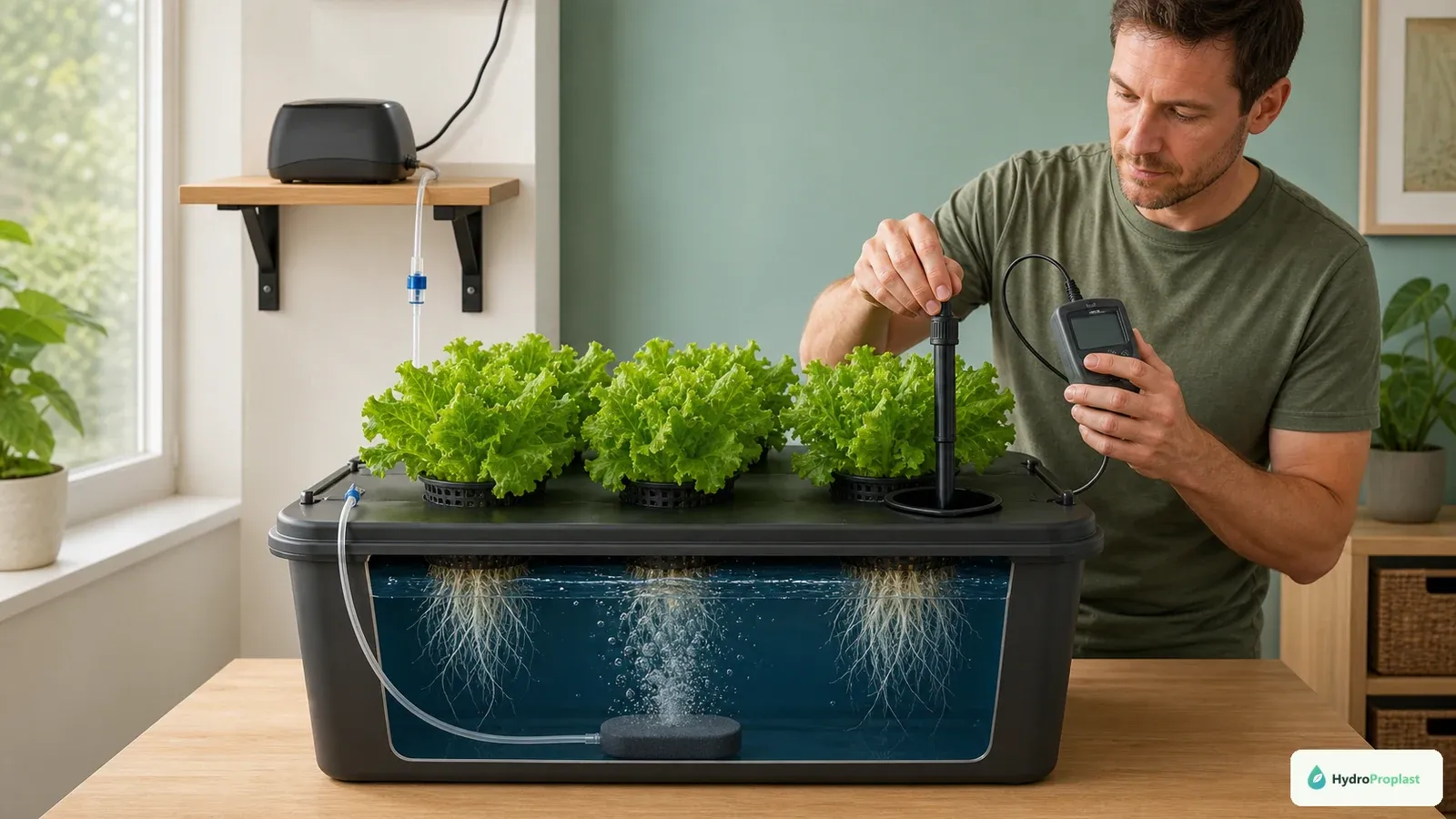
Electrical conductivity measures how readily solution conducts electricity. Dissolved fertilizer salts produce ions, so EC is a useful proxy for overall ionic concentration. A higher reading generally means more dissolved salts; it does not tell which ions are present.
Two solutions can have the same EC and different nutrient balance. Sodium and chloride from source water raise EC without feeding the crop appropriately. After weeks of plant uptake and top-ups, an apparently correct EC can hide depletion of one element and accumulation of another.
Use crop-specific ranges from authoritative guidance and product instructions. The University of Minnesota Extension notes that EC does not indicate individual nutrient or micronutrient concentrations. Interpret it with water level, pH, crop stage, roots, and leaves.
Strength should follow crop and stage
Seedlings have lower demand and less tolerance than large established plants. Leafy greens generally use a different strategy from fruiting tomatoes or cucumbers. Cultivar, light, temperature, humidity, and water quality alter uptake.
Begin within validated crop guidance rather than at the strongest label rate. If EC rises while water level falls, plants may be removing water faster than ions; adding more concentrate would worsen the problem. If EC falls, plants may be taking up ions or top-up water may be diluting the reservoir. Both trends need context.
Do not feed a mixed reservoir to crops with incompatible requirements merely because they share a shelf. Similar crop type and growth stage make management more coherent.
Top-ups are not complete resets
Plants remove water and individual nutrients at different rates. Evaporation removes water but leaves salts. Topping up with plain water lowers concentration; topping up with nutrient solution can maintain or raise it. Neither restores the original ion ratios with certainty.
Track the amount and type of every addition. Decide between water and prepared nutrient solution using EC trend, reservoir level, crop stage, and source water. A small reservoir under mature plants may change rapidly.
Periodic replacement provides a known starting mixture and removes accumulated ions, but a universal calendar is inappropriate. System volume, crop, recirculation, temperature, water, and testing all matter. Collect and dispose of spent solution responsibly under local guidance; do not discharge concentrated nutrient into storm drains or waterways.
pH controls access, not the amount in the tank
pH influences nutrient availability and root-zone chemistry. A nutrient can be present while plant uptake is limited by unsuitable pH or unhealthy roots. This is commonly called lockout, but do not use the term as a substitute for measurement.
Many hydroponic vegetables are managed in a mildly acidic range, with crop-specific targets. Penn State describes a broad vegetable range, while Oklahoma State provides crop tables. Select a target for the actual crop and system rather than treating one decimal as universal.
Measure consistently with a calibrated meter or suitable test method. Read Hydroponic pH Explained for adjustment order, alkalinity, and safety.
Read plant symptoms as a troubleshooting tree
When leaves yellow, note whether symptoms begin on old or new growth, between veins or across the whole leaf, and whether multiple plants are affected. Inspect roots, solution temperature, pH, EC, water level, light, pests, and recent mixing changes.
Do not add a single nutrient from a symptom chart before checking pH and root health. Calcium-like damage can involve transport and environment, not simply an empty calcium bottle. Iron-like chlorosis may arise when pH reduces availability.
If all plants changed after a new batch, verify arithmetic, water volume, product order, and meter calibration. If one plant differs, inspect delivery, roots, and local light. Our yellow-leaf troubleshooting guide provides a symptom-first process.
Common mixing mistakes
Using an estimated reservoir volume creates every later error. Mark actual working volume after roots and equipment displacement.
Combining concentrates before dilution can precipitate nutrients. Add separately to water.
Confusing EC units or meter conversion scales can produce a large dosing error. Record the meter’s native unit and use one reference system.
Adjusting pH before adding nutrient wastes effort because the formula changes pH. Mix first.
Making several corrections without waiting creates overshoot. Circulate and let readings stabilize.
Using softened water without testing may add unwanted sodium. Evaluate source water.
Chasing one damaged old leaf ignores that leaves may not recover even after the cause is corrected. Judge new growth.
Meters are only useful when maintained
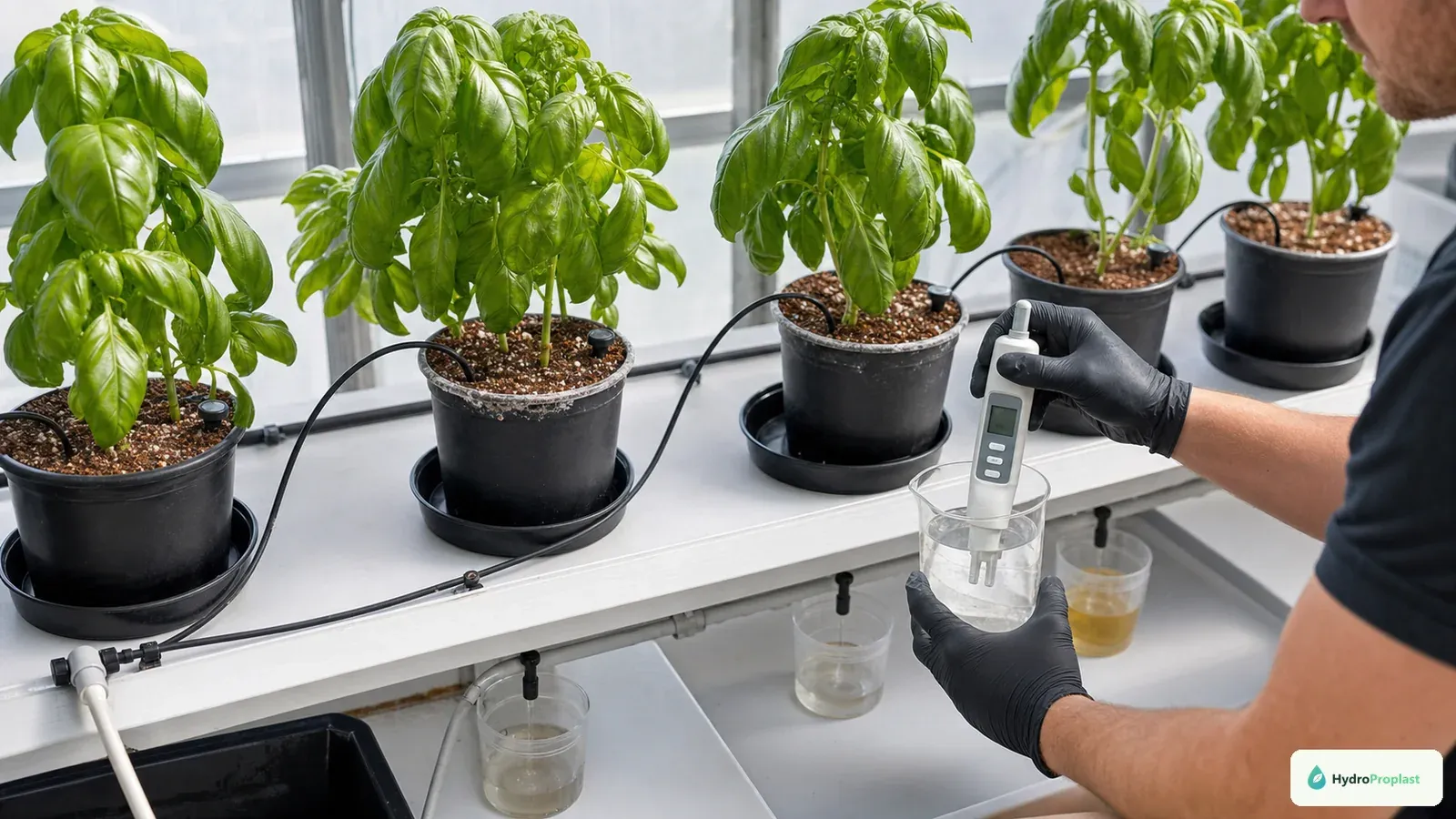
Calibrate pH and EC instruments with appropriate fresh standards at the frequency required by the manufacturer and whenever readings are doubtful. Rinse probes between samples. Store pH probes according to their instructions; many must not be allowed to dry or stored in inappropriate water.
Check a surprising result with a standard before changing the reservoir. Temperature compensation, dirty probes, depleted batteries, and contaminated calibration solution can mislead.
For a very small passive crop, a quality color test may be more dependable than the cheapest meter. For larger recirculating systems, reliable instruments and records become increasingly valuable. See Do You Need a pH and EC Meter? before choosing equipment.
Build a repeatable beginner routine
Choose one crop and complete nutrient. Test source water, measure working volume, mix in the labeled order, record EC, then pH, and make small corrections. Observe the reservoir and plants at a consistent time.
Keep a log of top-ups and compare new growth rather than reacting to every fluctuation. When a problem appears, verify water level, pump or aeration, temperature, roots, pH, EC, and light before adding products.
A nutrient program is successful when it is understandable and repeatable. Begin with complete formulation and clean measurement; custom recipes and automated dosing belong after your water, crop demand, and instruments are well characterized.
Audit one nutrient batch from label to reservoir
Before mixing, write the product rate exactly as printed, the intended working volume, and the unit conversion. Have another person or a calculator verify the arithmetic when the volume or unit is unfamiliar. Measure the reservoir rather than trusting its advertised capacity.
Photograph or record the product lot, mixing order, source-water reading, and appearance of each concentrate. Add each part separately, mix, and note final EC and pH only after stabilization. If the result differs greatly from prior batches, stop and check volume, units, calibration, and whether a part was omitted or doubled.
During the crop, keep a running total of water and nutrient additions. At replacement, compare the trend with plant size and environment. This audit cannot reveal every individual ion, but it catches the most common human errors and gives a manufacturer or extension specialist useful evidence.
Avoid changing brand, water source, meter, and target strength simultaneously. A repeatable baseline batch is the control against which a genuine crop response can be judged.
Keep an untouched label-rate reference in your records even if you later adjust strength for the crop. Without that baseline, gradual changes become difficult to reconstruct. When advice conflicts, prefer the product manufacturer, crop-specific extension material, and a water analysis over anonymous recipes. A disciplined simple program protects plants better than a shelf of supplements whose effects cannot be separated.