Indoor hydroponic peppers are long-season fruiting plants. They need more root space, stronger light, firmer support, and more patient management than lettuce or most herbs. A compact cultivar can fit a home grow room, but compact does not remove the need to manage flowers, heat, water use, or fruit load.
The safest beginner plan is one healthy plant in a system that is easy to inspect. Build for the mature canopy rather than the seedling you bring home.
Identify the pepper and harvest goal
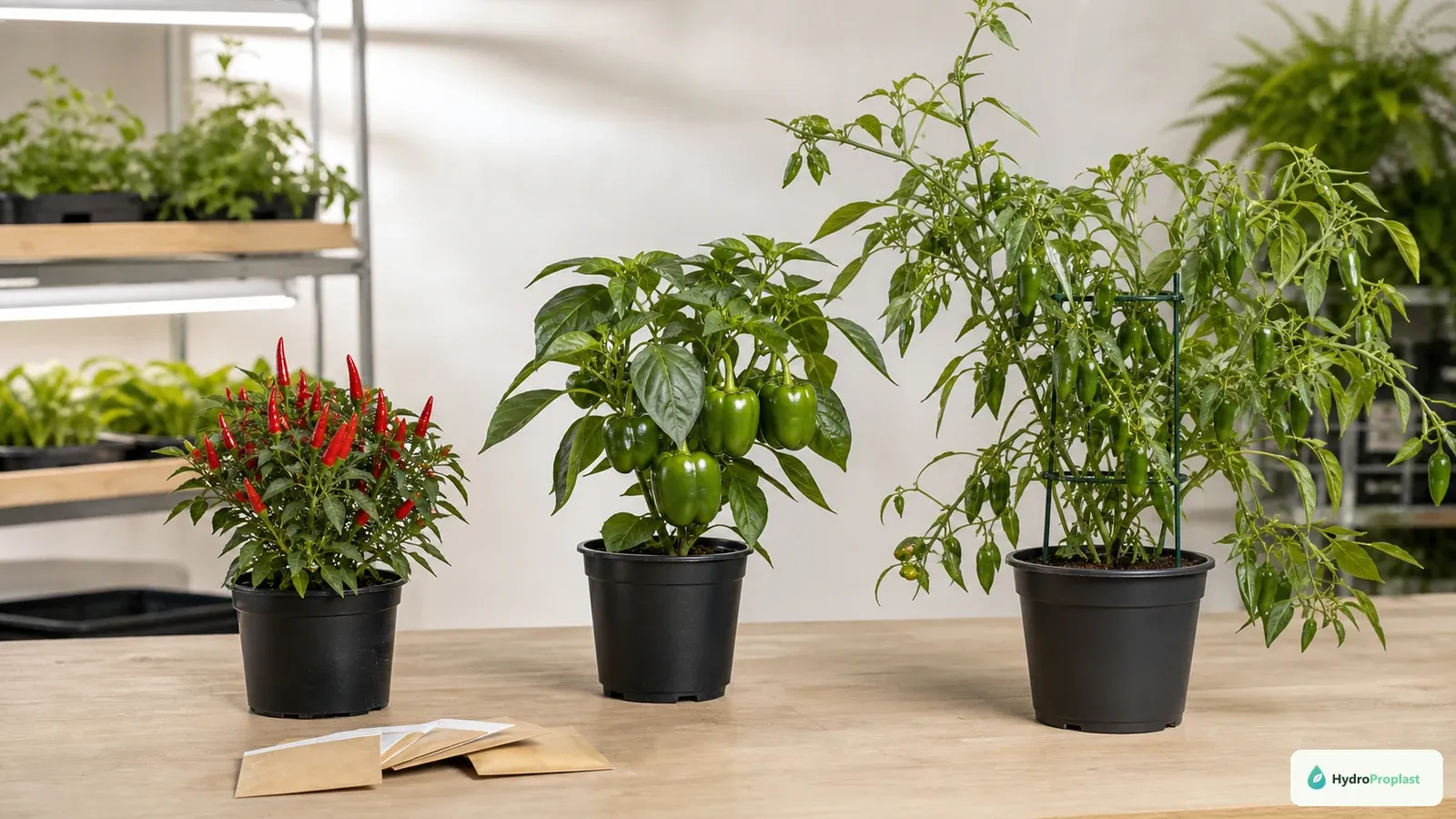
Choose pepper cultivars by mature canopy, fruit size, crop duration, and harvest goal before selecting equipment.
Choose the cultivar before choosing equipment. Compact hot peppers and patio peppers generally fit indoor shelves better than full-size bell peppers. Bell peppers often develop a wider canopy and heavier branches, while small chilies may produce many lighter fruits over a longer period.
Read the breeder’s description for mature height, spread, days to harvest, disease resistance, and ripe color. Confirm that an ornamental cultivar is intended for eating before growing it as food. Decide whether you want green fruit, fully colored ripe fruit, or a continuous small harvest because the goal changes crop time and branch load.
Choose a system for a long crop
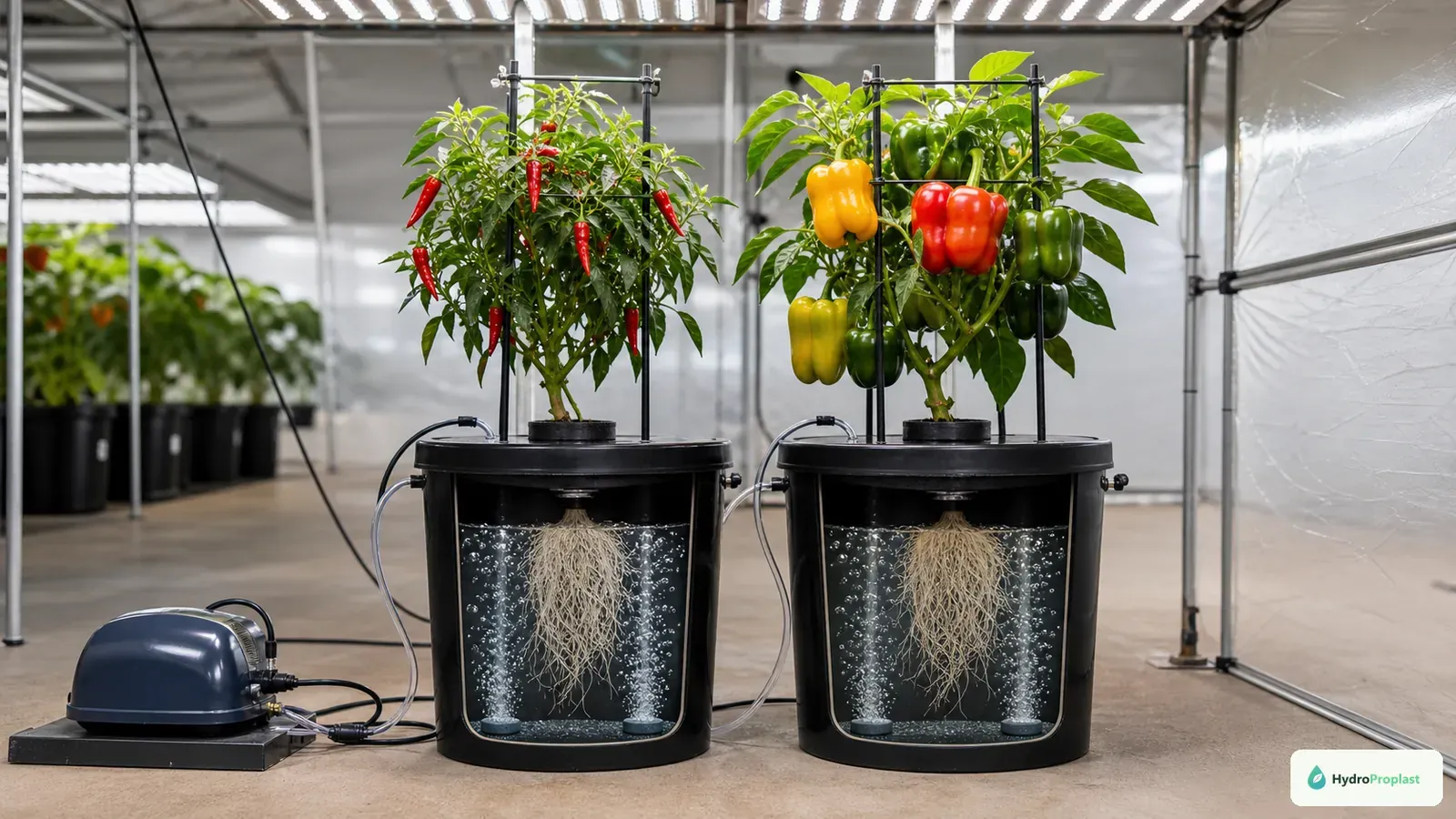
Large aerated DWC buckets and drip-fed containers are both practical options. DWC gives roots continuous access to solution but depends on reliable aeration, a covered reservoir, and stable water temperature. A recirculating drip container gives roots air-filled media and makes each plant easier to support, but emitters and drains must remain clear.
Avoid placing a mature pepper in a tiny countertop reservoir. The plant may survive while small, then become difficult to stabilize as water use, nutrient demand, and canopy size increase. The reservoir size guide explains why working volume and maintenance access matter.
Start and transplant strong seedlings
Begin with clean seed or a healthy pest-free transplant. Give seedlings even light and gentle airflow so stems thicken instead of stretching. Transplant after roots hold the starter plug together but before they circle densely or become damaged.
Keep the crown above the solution or saturated media. In DWC, aerated water can reach young roots while the starter plug remains mostly dry. In drip systems, deliver solution to the root medium rather than the stem.
Provide fruiting-level light
Peppers need more light than leafy greens, and the fixture must cover the mature canopy rather than only the center. Compare real power, efficiency, hanging height, dimming, and the measured pattern at leaf level. The LED grow-light guide explains PPFD, daily light, coverage, and heat.
Raise or dim the fixture when young plants are stressed, then adjust as the canopy expands. Pale stretched growth can indicate insufficient light, while bleached upper leaves, curled edges, or an overheated canopy can indicate excessive intensity or poor heat removal.
Balance temperature and airflow
Peppers prefer a stable warm growing environment, but high heat can reduce flower retention and increase water use. Do not treat air temperature and nutrient-solution temperature as the same measurement. Check both near the plants during the brightest part of the cycle.
Use gentle circulation through and above the canopy. Constant hard wind on one side can dry leaves and deform growth. Leave enough space between plants for inspection and evaporation without creating a cold draft.
Mix nutrients by stage and evidence
Use a complete hydroponic formula suitable for fruiting crops and follow the manufacturer’s sequence. Never mix concentrated Part A and Part B together before dilution. Add each component to water separately, mix thoroughly, then measure EC and pH after the solution is uniform.
Seedlings, vegetative plants, flowering plants, and heavily fruiting plants do not use water and minerals at the same rate. Track reservoir level, EC, pH, leaf appearance, and root condition together. The beginner nutrient guide provides a safe mixing workflow.
Build support before flowers
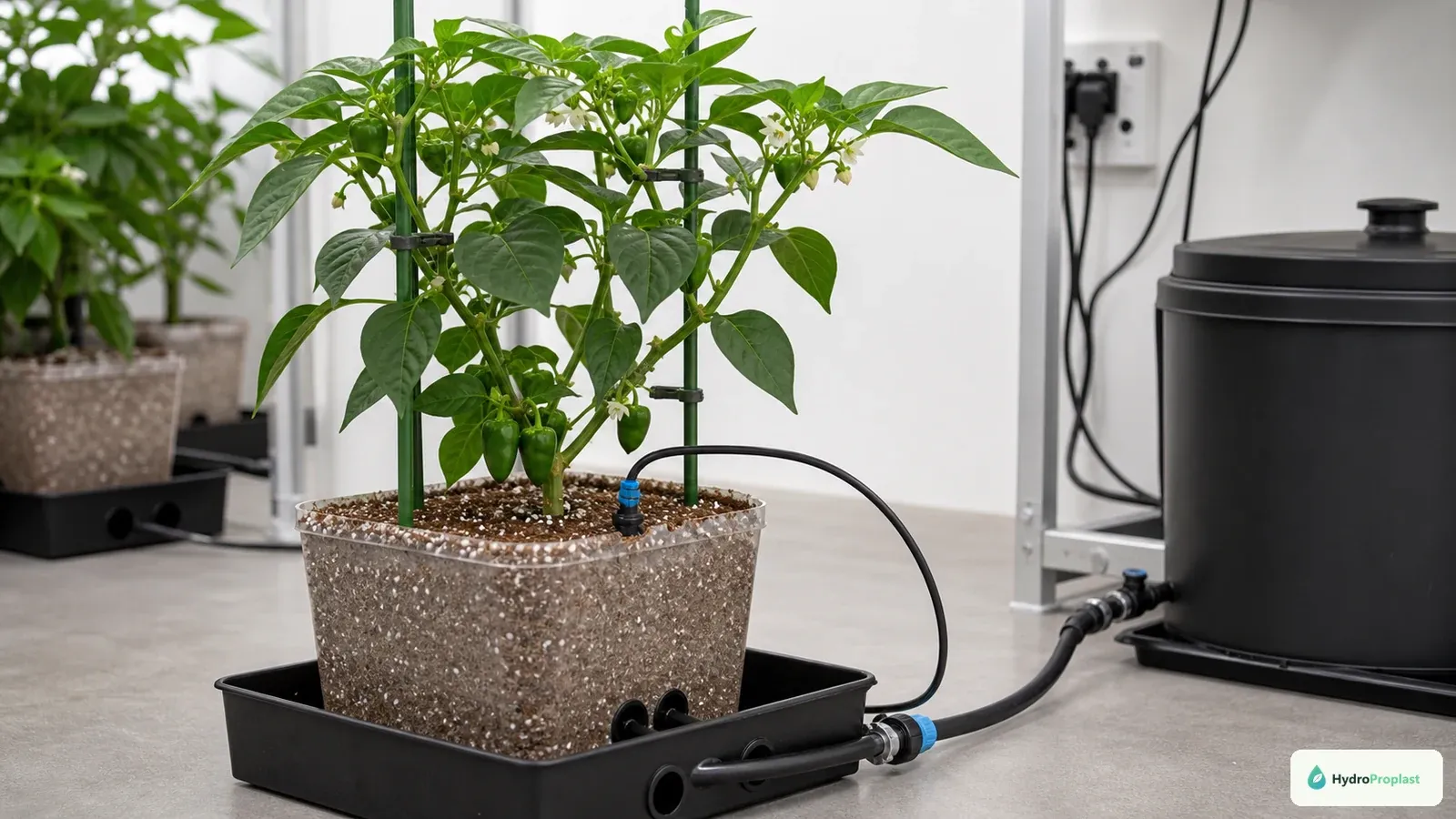
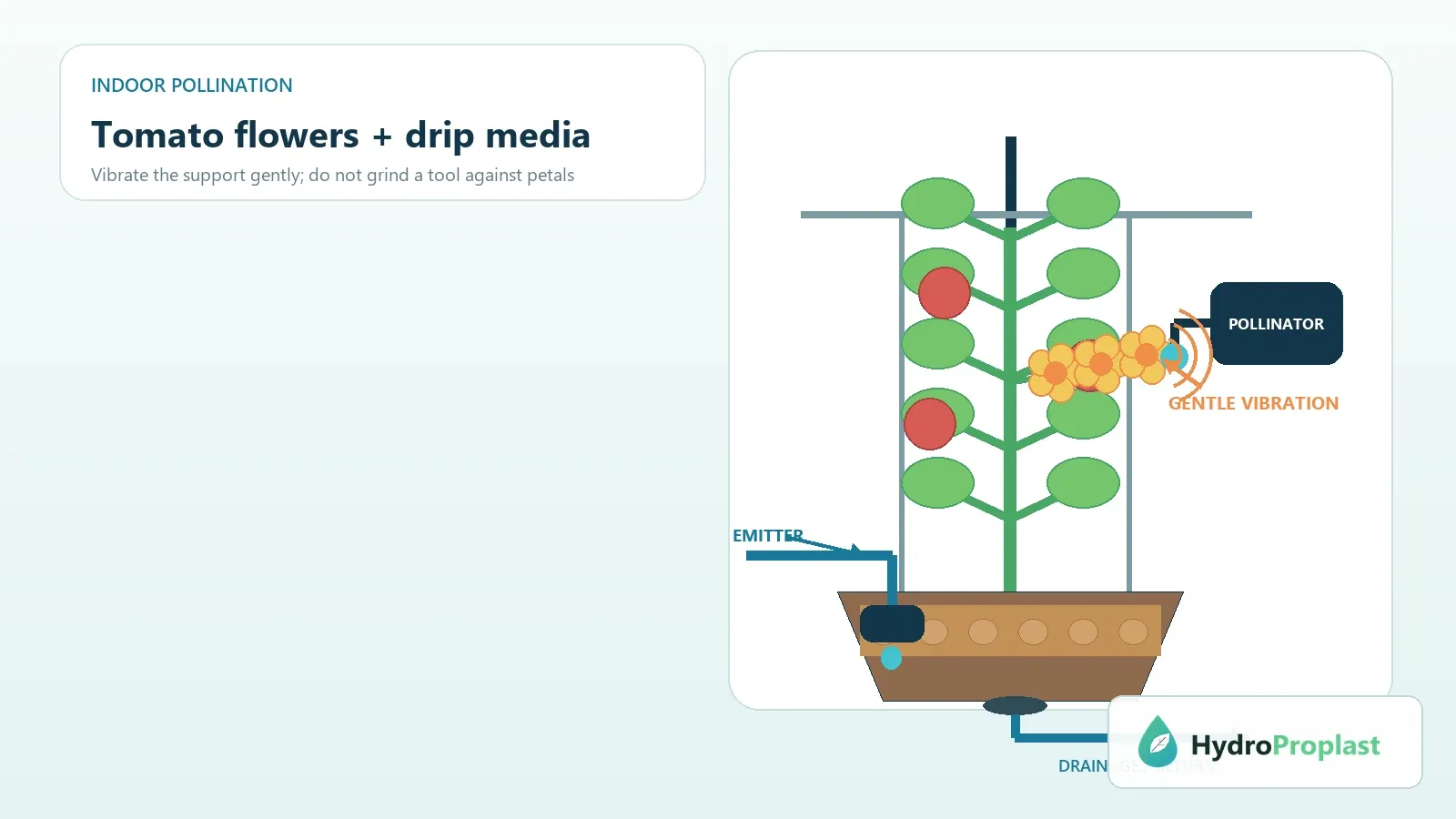
Install stakes and soft clips while branches are light, and direct each drip emitter into freely draining root medium.
Install stakes, clips, or a small frame while the plant is young. Waiting until branches carry heavy peppers increases the chance of splitting stems or damaging roots while adding support. Fasten ties loosely and inspect them as stems thicken.
Support the main structure rather than tying every leaf-bearing shoot. Keep fruit from resting on wet surfaces, and make sure the plant and reservoir cannot tip when the canopy becomes top-heavy.
Pollinate indoor pepper flowers
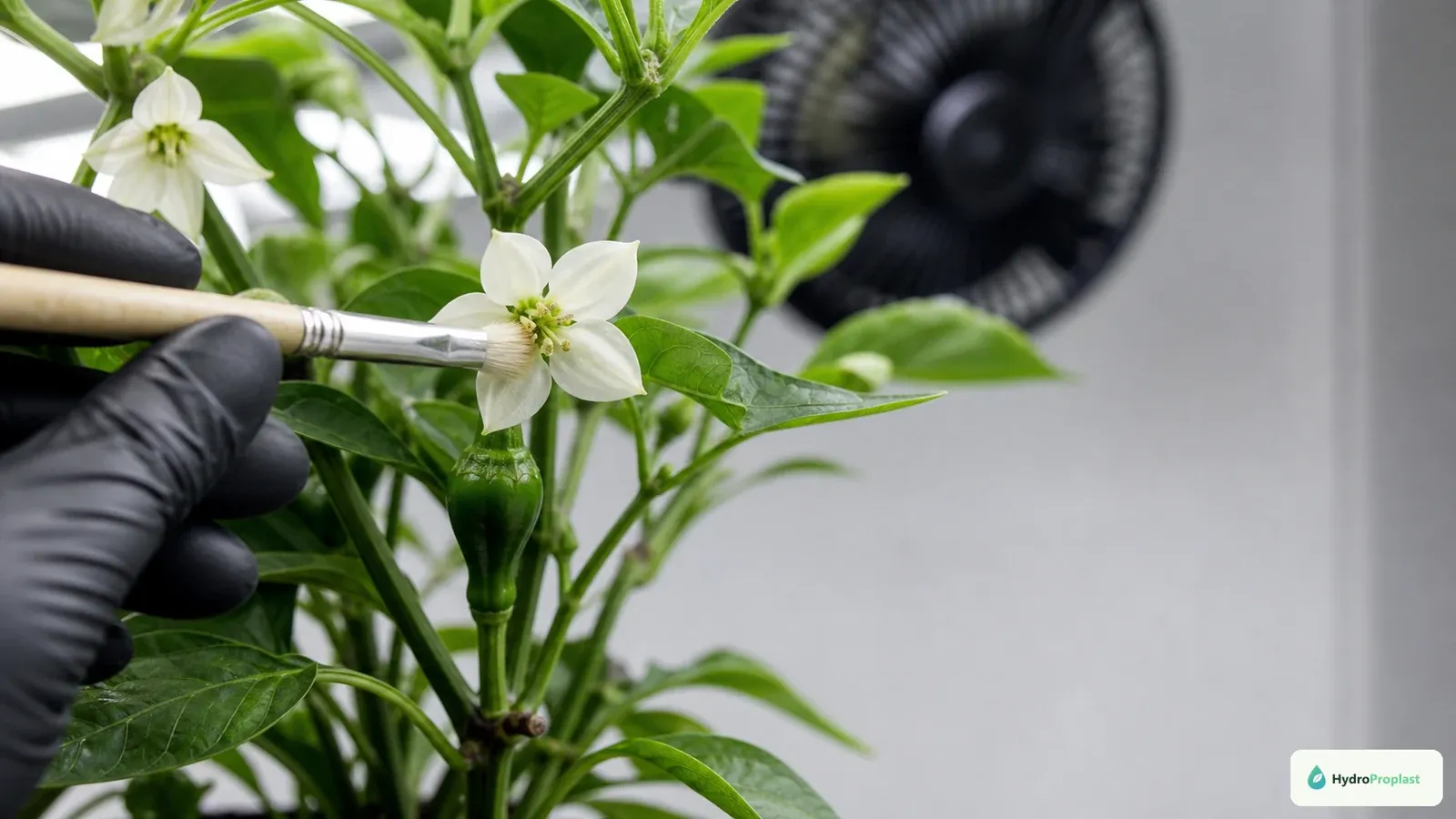
Pepper flowers can self-pollinate, but gentle airflow or a clean soft brush helps move pollen in still indoor rooms.
Pepper flowers can self-pollinate, but still indoor air may reduce pollen movement. Gentle airflow, lightly tapping the support, or touching open flowers with a clean soft brush can help. Work when flowers are dry and avoid crushing the petals.
Some early flowers may drop while the plant is establishing. Review light, heat, water availability, and overall plant stress before assuming a nutrient deficiency. Repeated flower drop across the canopy is evidence to investigate, not a reason to add an unverified supplement.
Prune conservatively
Remove dead, damaged, or crowded growth with clean tools. Avoid copying aggressive pruning routines designed for different cultivars or commercial greenhouses. Leaves power fruit development, and removing too much canopy at once can slow the plant.
Maintain a clear lower area for airflow and inspection, but preserve healthy productive branches. Make one pruning change at a time so the response is understandable.
Inspect roots and delivery
Healthy hydroponic roots are generally firm and light colored, though nutrients can stain them. Brown slimy roots, sour odor, weak aeration, blocked emitters, or a warm reservoir require prompt investigation. Do not diagnose root disease from color alone.
Check air stones, pumps, return lines, and root congestion routinely. The root-rot guide covers temperature, oxygen, sanitation, and flow.
Watch pests closely
Inspect leaf undersides, growing tips, flowers, and support clips. Aphids, mites, thrips, and whiteflies can establish quickly indoors because predators and weather are absent. Quarantine new plants and keep weeds, outdoor soil, and dirty tools away from the grow area.
Identify the pest before choosing a control. Follow product labels and local rules for edible crops, and consider the time remaining before harvest.
Manage fruit load
A small young plant may set more fruit than its roots, light, and branches can support. Thin damaged or badly positioned fruit when necessary, but do not remove healthy peppers simply because a fixed online rule says to do so.
Judge balance from branch strength, new leaf growth, flower retention, fruit size, and recovery after harvest. A stable smaller crop is more useful than many undersized fruits on a declining plant.
Harvest at the intended stage
Many peppers can be harvested green or left to reach their mature color. Ripe fruit usually takes longer and keeps the branch loaded, but flavor and heat may change as it colors. Cut fruit with clean scissors instead of pulling it from brittle branches.
Record days from transplant, first flower, fruit set, and harvest. These dates make the next crop easier to schedule and help distinguish a slow cultivar from a weak system.
Plan outages and crop turnover
DWC needs aeration backup because submerged roots can lose oxygen during an outage. Drip systems need enough moisture-holding capacity and a plan for pump failure. Test alarms and backup equipment before plants are large.
End the crop when disease, root congestion, declining quality, or maintenance burden outweighs useful harvest. Clean and sanitize the system between crops rather than planting a new seedling into old roots and deposits.
Beginner checklist
- Choose a compact edible cultivar with known mature size.
- Size the system, light, and support for the mature canopy.
- Keep the crown protected and roots oxygenated.
- Track water level, EC, pH, temperature, and root condition.
- Install branch support before fruit becomes heavy.
- Provide gentle airflow and assist pollination when needed.
- Harvest with clean tools and document the crop.
Indoor hydroponic peppers are realistic for beginners who accept a longer learning cycle. Start with one compact plant, make the root zone easy to inspect, and treat stable operation as the first harvest.