A wick system moves solution without a pump
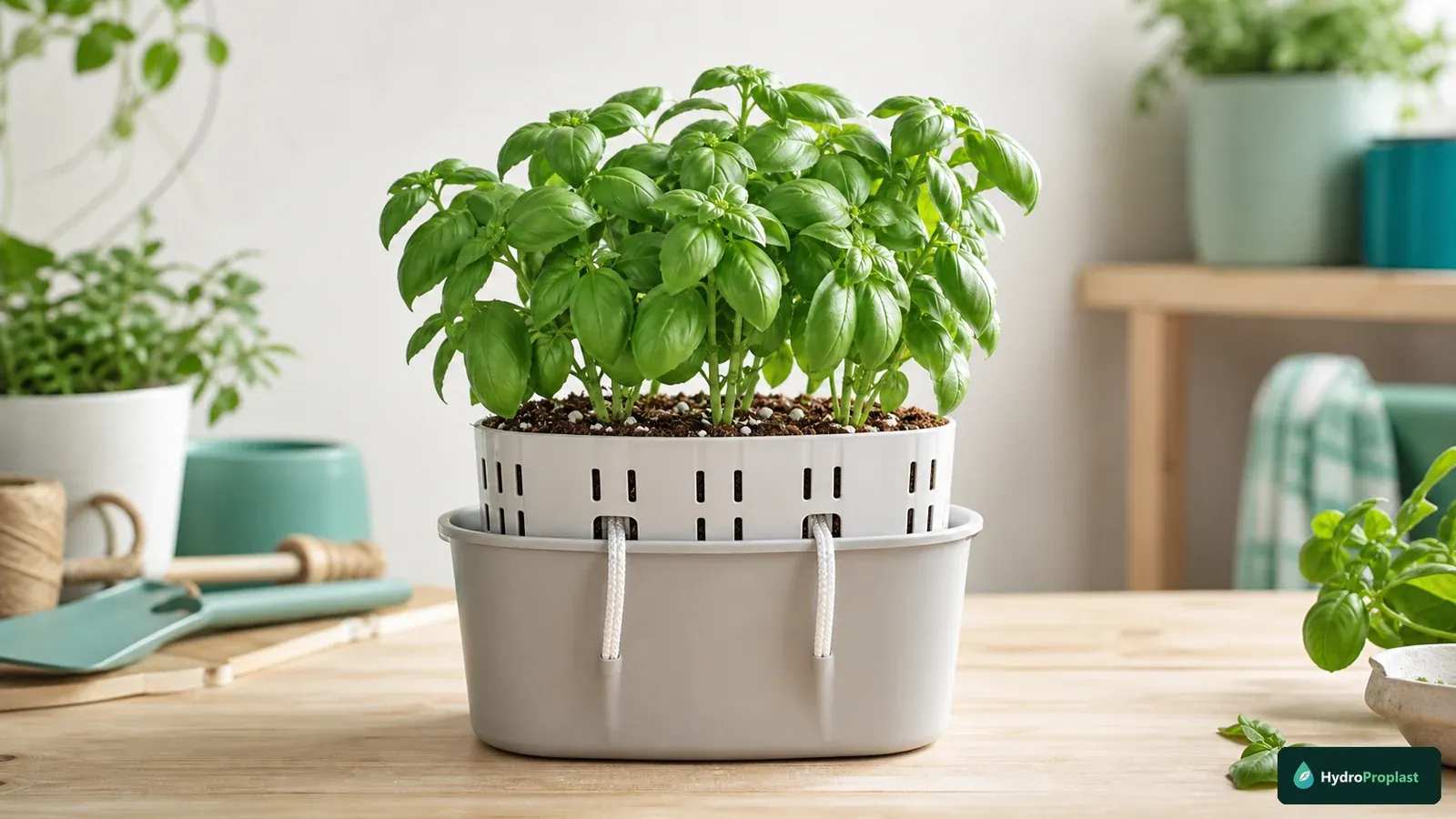
A wick hydroponic system uses capillary action to draw nutrient solution from a reservoir into a growing medium. The plant sits above the water, and one or more absorbent wicks connect the reservoir to the root zone. There is no water pump, irrigation timer, or pressurized line.
It is best for small, slow-to-moderate water users such as compact herbs, young leafy greens, and educational experiments. It is a poor match for mature tomatoes, cucumbers, or other thirsty plants because a wick can deliver only so much water and nutrient. The method’s simplicity is real, but it shifts design work toward wick material, medium, distance, and reservoir sizing.
Oklahoma State University’s hydroponics overview describes passive systems as using wicks and media with high capillary action and identifies wick culture as the simplest common hydroponic type. Simple does not mean self-correcting: light, nutrition, oxygen, and moisture still have to match the crop.
Is a wick system a good fit?
- Good fit: compact herbs, young leafy greens, propagation, and small educational builds.
- Poor fit: mature tomatoes, cucumbers, and other crops with high or rapidly changing water demand.
- What controls delivery: wick material and area, growing medium, vertical lift, reservoir level, and mature crop demand.
- No pump does not mean no maintenance: moisture, pH, nutrient strength, cleanliness, and reservoir level still need checking.
Capillary action does the transport work
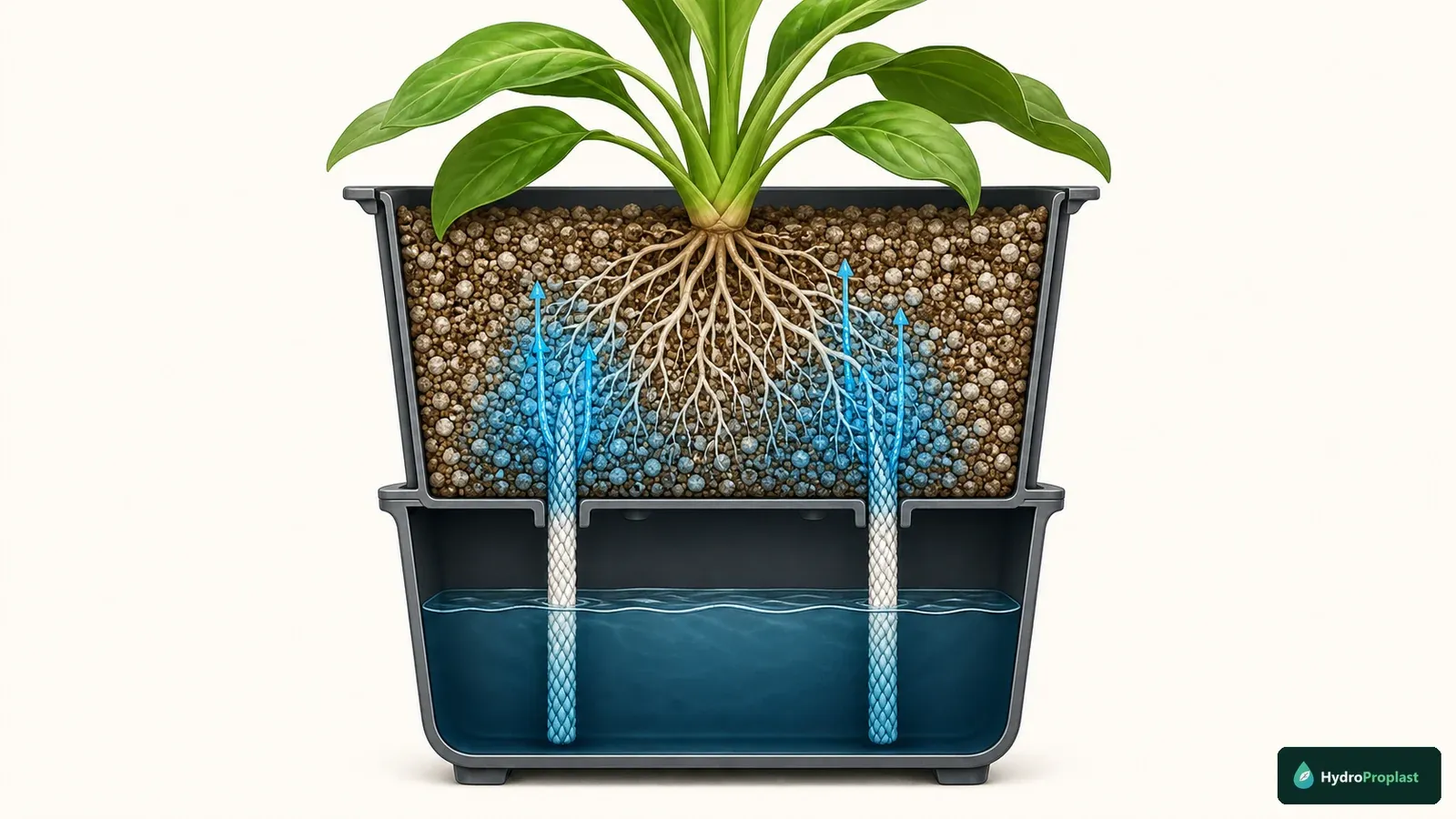
Water adheres to the fibers of a wettable wick and moves through small spaces. The growing medium also spreads moisture through its pores. As roots remove water from the medium, the moisture difference helps pull more solution upward.
The rate is not fixed. Wick diameter, fiber structure, number of wicks, vertical lift, contact area, nutrient concentration, medium, root demand, and temperature all matter. A cord that wets rapidly in plain water may move concentrated nutrient differently after salts and roots accumulate.
The reservoir should remain below the pot so the medium is not continuously flooded by gravity. The wick ends must stay submerged at the lowest intended water level, while the upper portions must contact the moist root zone. An air gap between pot and reservoir can help keep the container from sitting in water, but excessive vertical distance reduces delivery.
Parts for a useful small build
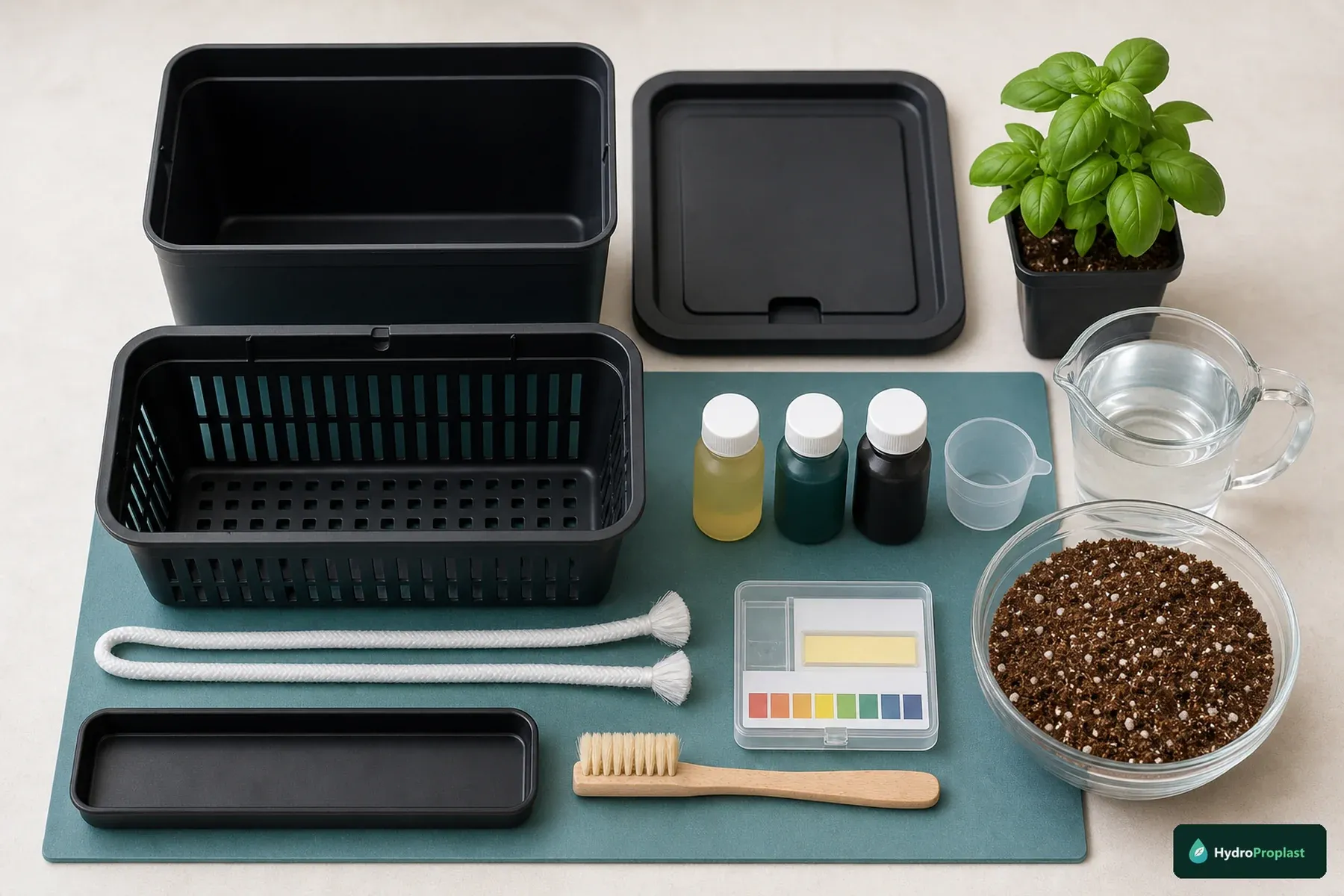
Use an opaque reservoir with a lid or plant support, a separate perforated inner pot, an appropriate growing medium, one or more durable absorbent wicks, complete hydroponic nutrient, and a healthy seedling. Add adequate light, pH testing, a way to measure water volume, and a spill tray.
The reservoir must be easy to inspect and clean. The plant support should not sag when the medium is wet. Keep unused holes covered so light does not reach nutrient solution and encourage algae.
Route the wick through the pot so it contacts multiple parts of the medium rather than creating one wet point. A loop across the lower root zone can distribute moisture better than a short vertical tip. Do not pack medium so tightly that air spaces disappear.
Before adding nutrient or plants, assemble with plain water and confirm moisture reaches the intended root area over several hours. A wick test in an empty room is cheaper than rescuing a dry seedling.
Selecting and testing wick material
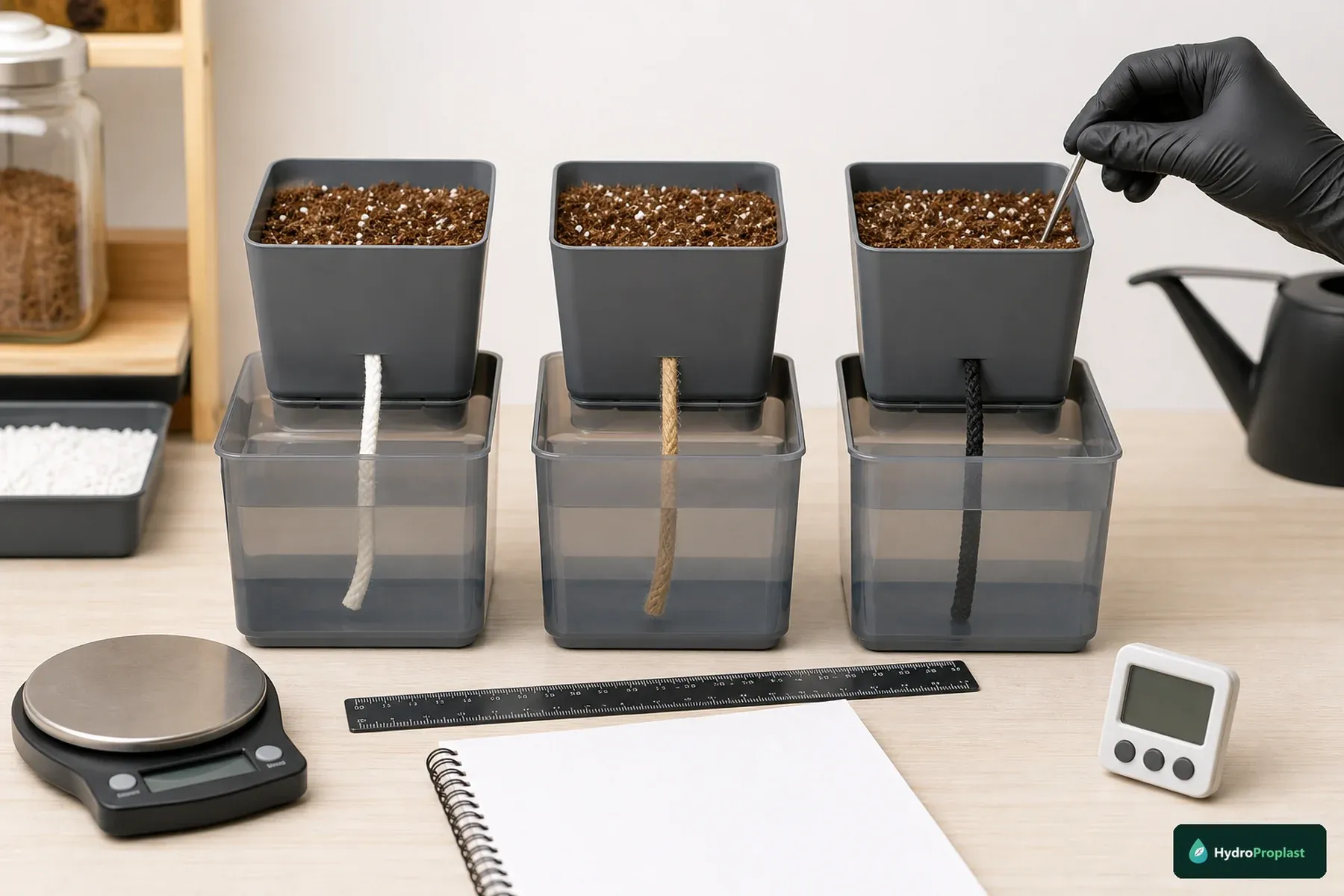
A useful wick is wettable, consistent, resistant to decay, and chemically compatible with nutrient solution. Synthetic braided cord is often chosen because it does not rot quickly. Cotton can move water well but may degrade. Avoid material treated with unknown chemicals, dyes that bleed, or metal reinforcement that can corrode.
Do not rely on a product name alone. Cut equal lengths of candidate materials, place one end of each in the same water level, and compare rise and delivery into identical media containers. Then repeat with the intended nutrient concentration. Observe for several days, not minutes.
More wick area increases potential delivery but can keep retentive medium too wet. Adding a second wick is not always the correct response to wilting; the plant may have root damage, excessive heat, poor light acclimation, or concentrated solution. Verify medium moisture first.
Growing medium is half of the irrigation system
The medium must accept moisture from the wick, spread it through the root zone, and retain enough between uptake events while preserving oxygen. Coir, perlite, vermiculite, and blends behave differently. Expanded clay alone may not distribute wick moisture uniformly unless designed carefully.
The Oklahoma State guide to soilless media explains that media selection depends on plant, irrigation-water pH, cost, life, and system. It also emphasizes the balance between staying damp long enough for uptake and maintaining air.
A fine, highly retentive mix plus several large wicks can remain saturated. A coarse mix and thin wick may leave upper roots dry. Start with a small homogeneous crop, inspect moisture at several depths, and change one design element at a time.
Crops that fit the delivery limit
Compact basil, mint, chives, and some leafy greens can fit a well-sized wick container. Seedlings and propagation demonstrations also benefit from gentle passive moisture, although germination humidity and light still need separate management.
Crop suitability changes with maturity. A basil seedling may thrive while the mature harvested plant consumes faster than the wick can replenish. Multiple small plants also compete for the same delivery capacity. Plan for peak canopy, not the first week.
Avoid large fruiting crops as a first wick project. Tomatoes, peppers, and cucumbers require longer feeding, greater root space, strong light, and substantial water. A drip system or DWC setup provides more controllable delivery.
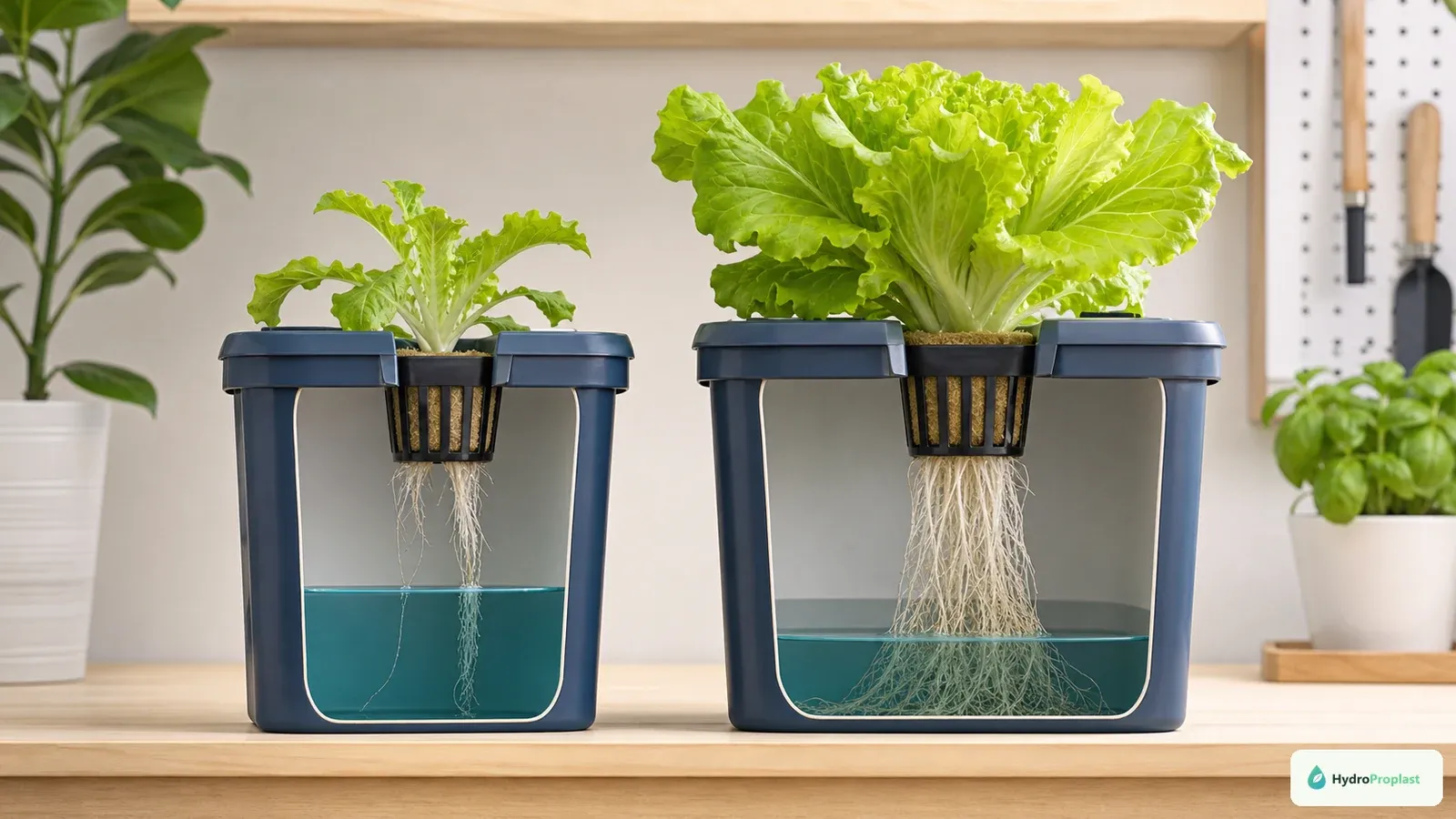
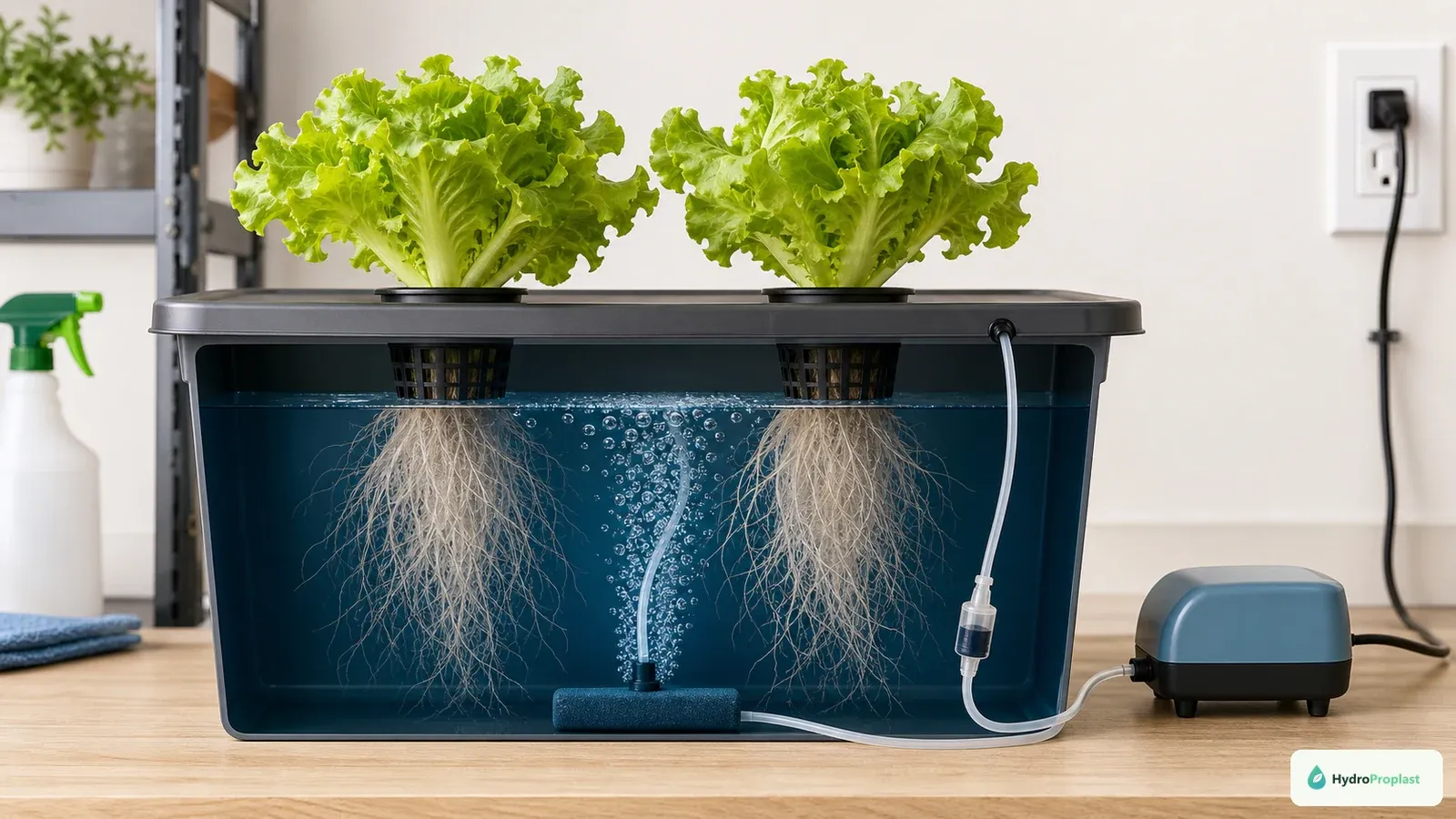
If your goal is one lettuce with no pump, compare the wick method with Kratky versus DWC. Kratky gives roots direct solution access and develops an air gap; wick culture keeps most roots in medium.
Nutrient and reservoir management
Use a complete fertilizer formulated for hydroponics and follow crop-stage directions. Nutrients travel with water through the wick, but plants and medium can alter the balance. Evaporation from the medium may leave salts near the surface.
Mark the reservoir’s working and minimum levels. Top up based on water level, EC trend if measured, and crop response. Do not pour concentrated nutrient directly beside the wick. Mix and dilute it completely in a separate measured volume or according to safe product instructions.
Check pH after mixing. The small reservoir and medium may change differently from a large recirculating tank. Our hydroponic nutrients guide explains why EC reflects total dissolved ions but cannot confirm each nutrient remains balanced.
Periodically inspect for odor, algae, deposits, and root intrusion. Replace solution when the management plan requires it rather than merely adding concentrate indefinitely.
Diagnose dry, wet, and uneven root zones
If the medium is dry, confirm the wick is still submerged, wettable, in contact with medium, and not salt-crusted. Check reservoir level and vertical lift. Compare plant demand with wick output by monitoring reservoir loss and pot moisture.
If the medium remains saturated, reduce wick area only after confirming the pot drains freely and is not touching solution. A more aerated medium or smaller wick may be needed. Dark, soft roots and stale odor indicate that moisture management deserves immediate attention.
If only one side is wet, route the wick across a broader area or use two smaller, evenly placed wicks. Do not bury the stem crown in constantly wet medium.
Leaf wilt does not prove dryness. Lift or probe the medium, inspect roots, check heat and light, and review nutrient concentration before changing the system.
Limits of passive “automation”
A wick has no motor to fail and makes no noise. It can operate through a power outage if lighting and climate remain acceptable. That makes it attractive for classrooms, desks, and small spaces.
However, it cannot increase delivery when a hot day or mature canopy raises demand. It does not measure pH, nutrient concentration, or reservoir level. A clear decorative bottle may expose solution to light, while a very small vessel can empty quickly.
Test how long the system operates before leaving it unattended. Give caretakers a marked top-up level and prepared water instructions. “Fill to the top with nutrient” can create concentration and moisture problems.
Clean design prevents recurring problems
Between crops, discard unhealthy roots, remove wicks, wash the reservoir and pot, and clean or replace reusable components. Wicks are inexpensive enough that replacement may be safer than trying to sanitize degraded fibers. Reuse medium only when its material and crop-health history make that sensible.
Block light from the reservoir and exposed wet medium. Algae competes for resources, creates biofilm, and can change wick performance. Covering the surface is more durable than repeatedly treating algae.
Follow cleaning-product directions, rinse thoroughly, wear appropriate protection, and never mix chemicals. A reservoir opening wide enough for a brush is more valuable than a narrow decorative neck.
Run a delivery test before choosing plant count
Set up the final reservoir, wick, pot, and medium without plants. Weigh the dry prepared pot, allow it to wick for a fixed period, then weigh again to estimate water gained. Continue until moisture stabilizes. Repeat at high and low reservoir levels because lift distance changes.
This does not predict exact plant uptake, but it exposes weak contact and poor distribution. After transplanting one plant, record reservoir loss, pot moisture, room conditions, and new growth. Add plants only after delivery remains adequate near mature demand.
When the wick system is the right answer
Choose wick hydroponics for a small crop, quiet location, limited budget, and hands-on learning about media moisture. Choose it when avoiding pumps matters more than fast response or scaling.
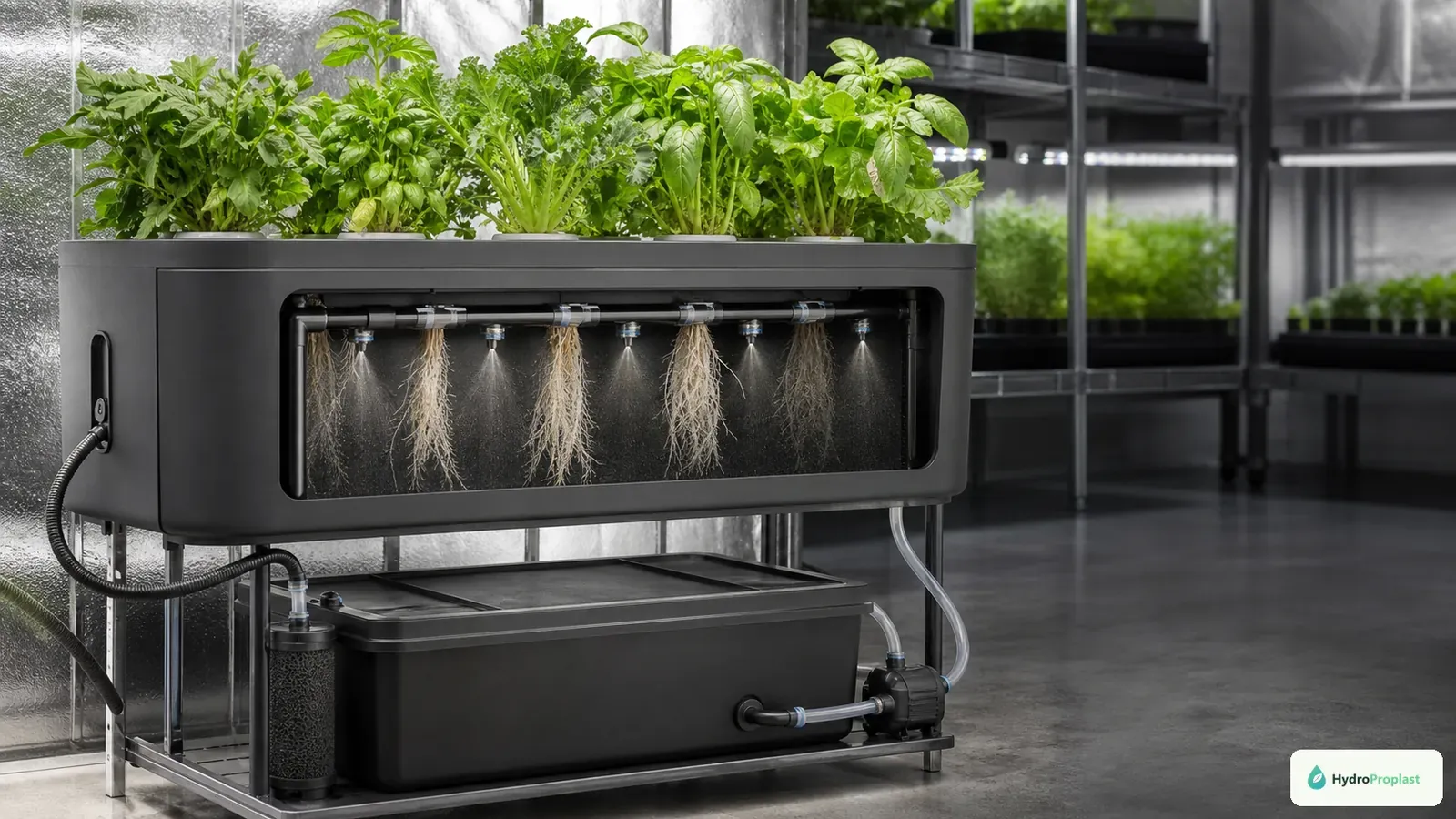
Choose vertical hydroponics only when floor space is the true constraint and you can manage pumps, uniform light, and drainage. Choose an active system when plant water demand exceeds passive delivery.
Begin with one opaque reservoir and one or two identical plants. A successful wick system is not the one with the most planting holes; it is the one whose wick output, medium, and mature crop demand remain in balance through harvest.
Compare wick delivery at different reservoir levels
A wick performs under changing lift, not one laboratory condition. Mark a high, middle, and minimum safe reservoir level. At each level, let an identical prepared pot wick for the same interval and record weight gain. Check moisture near the wick and at the far edge. This reveals whether delivery fades before the wick actually leaves the water.
Then repeat with the intended nutrient solution after confirming that the medium can drain. Salts and repeated wetting can change fiber and media behavior. Watch for crusting, channels, or a permanently saturated lower layer. Do not use the result as a promised plant-consumption rate; transpiration changes with canopy and environment.
For the first crop, record daily reservoir loss and medium condition through maturity. If demand begins to exceed supply, reducing canopy, lowering lift within safe design, or moving the plant to an active system is more reliable than adding random extra wicks. The test turns a decorative passive idea into a system with a known operating range.
Keep one spare prepared wick and note the material and dimensions. If replacement changes delivery sharply, re-test rather than assuming all cords sold under the same name behave alike.
When comparing results, include the labor needed to refill, inspect, and clean. A passive container that needs daily rescue is not simpler than a small aerated reservoir. Conversely, a modest herb that finishes with stable moisture may not benefit from a pump. Let measured delivery and mature demand—not the absence of cables—define whether the wick design succeeded.