The best indoor hydroponic herb is the one whose mature size, light demand, root behavior, harvest style, and temperature preference fit the actual system. Basil grows quickly but likes warmth and regular pruning. Mint is forgiving but invasive. Cilantro and dill are useful yet often better as succession crops than permanent cut-and-come-again plants.
Choose herbs by kitchen use and crop behavior instead of filling a shelf from a generic top-ten list. A small mixed system works best when its plants can share light, nutrients, and space without one crop overwhelming the others.
Define the harvest you want
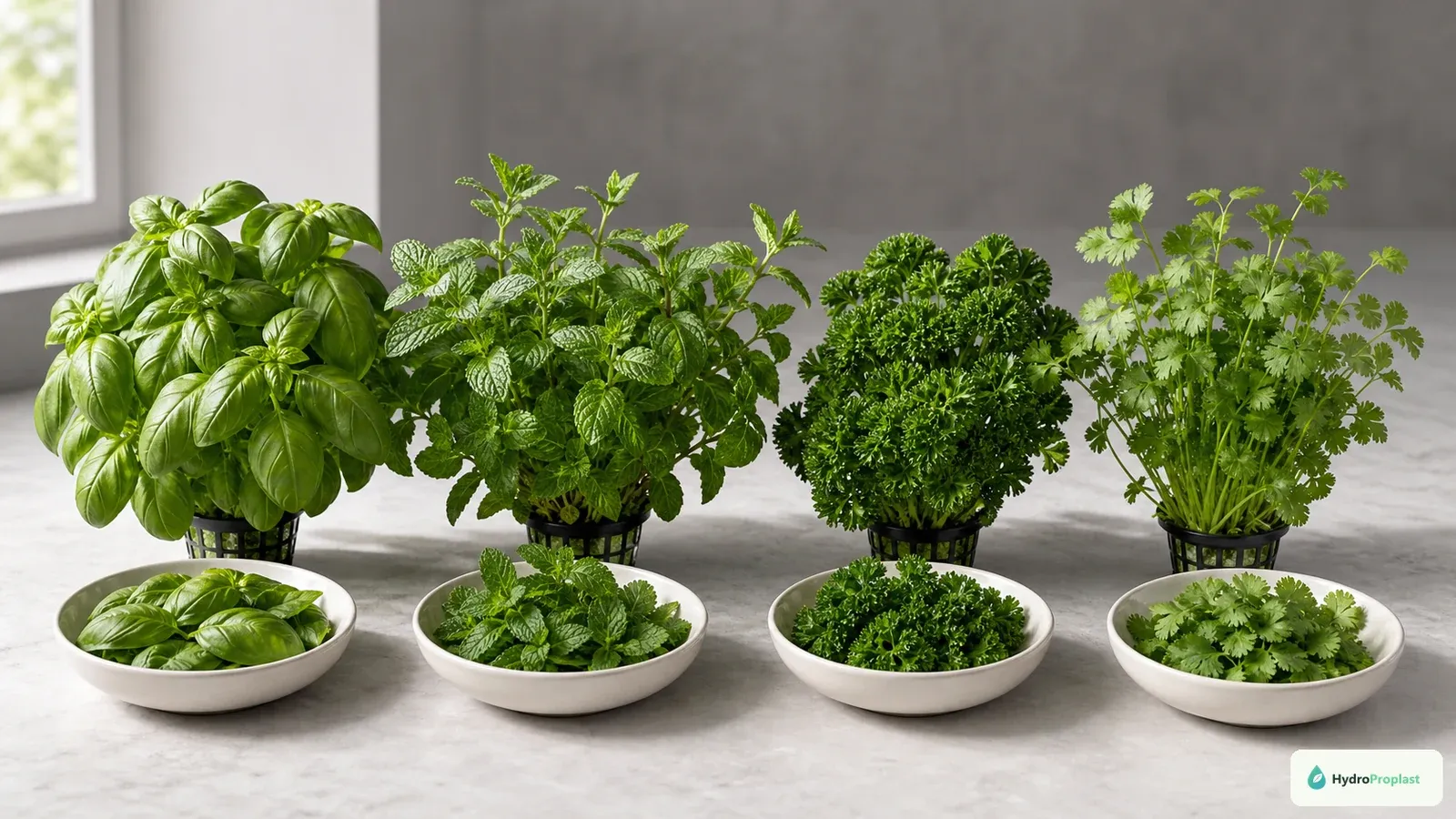
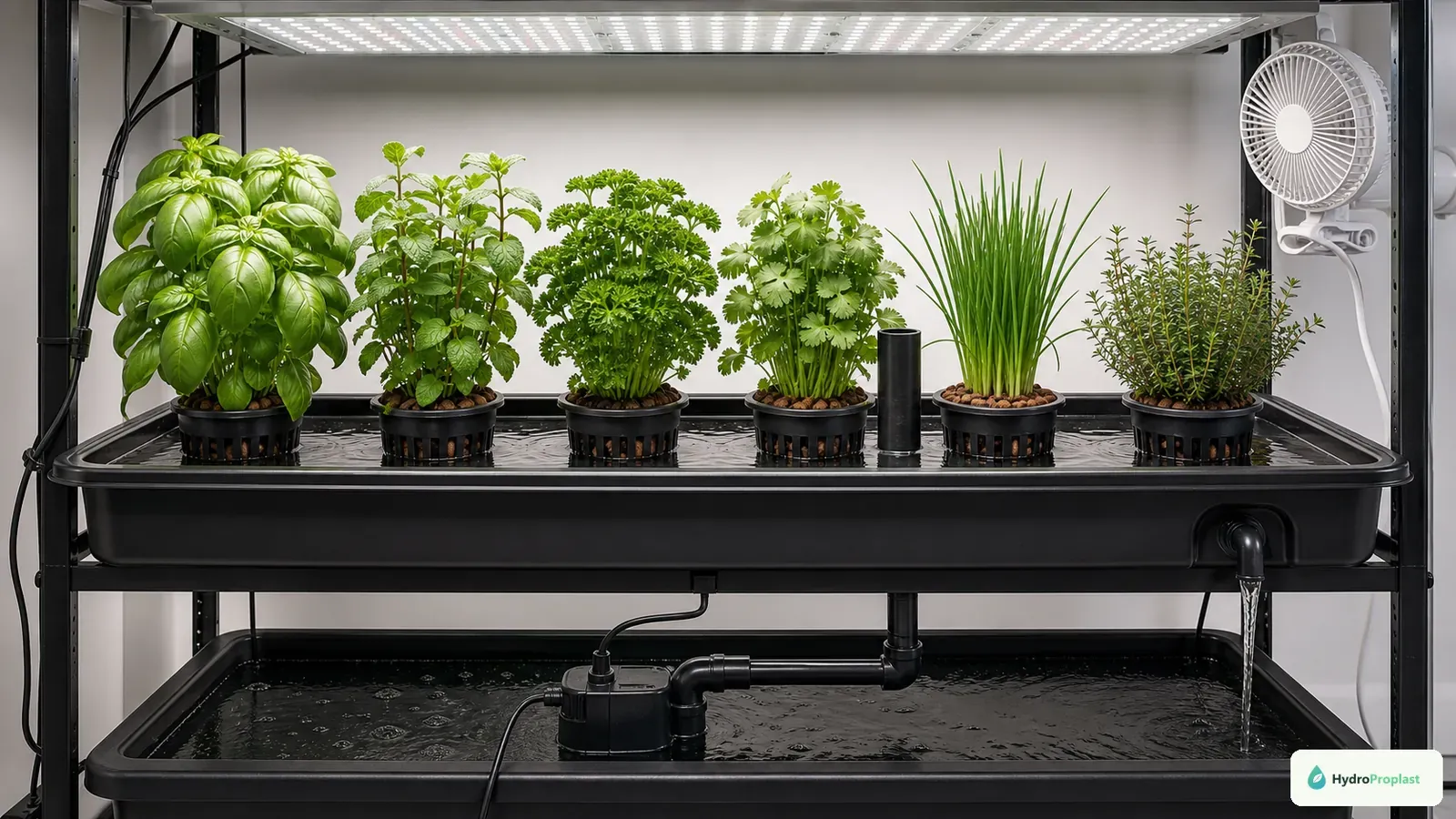
Basil, mint, parsley, and cilantro differ in canopy size, harvest style, temperature response, and useful crop duration.
List the herbs used each week and whether the kitchen needs individual leaves, tender stem tips, chive clumps, or whole plants. Estimate realistic quantity. One vigorous basil or mint plant can outproduce several weak seedlings, while cilantro may need regular resowing.
Decide whether the goal is continuous small harvests, occasional bunches, or experimentation. This determines plant count and sowing interval more reliably than package photographs.
Basil for repeated warm-season harvest
Basil is fast, productive, and responsive to pruning, which makes it a strong first choice. It prefers a warm stable canopy and good light. Cut above a healthy node so side shoots can develop rather than stripping every leaf from one stem.
Avoid crowding several basil plants into one small opening. Mature roots and leaves expand quickly, and an oversized plant can shade slower herbs.
Mint for vigorous beginners
Mint tolerates repeated harvest and roots easily, but those strengths make it aggressive. Give it a separate container or easy-to-remove net pot so roots do not invade an entire channel or return line.
Harvest stem tips regularly and inspect the plant for runners. A single healthy mint plant may be enough for a home kitchen.
Parsley for patience and steady cutting
Parsley germinates and establishes more slowly than basil. Once mature, it can provide repeated outer-stem harvests while the center continues growing. Give seedlings time before judging the crop as a failure.
Keep the crown clean and avoid cutting every stem at once. Replace declining plants rather than forcing a congested old crown to continue indefinitely.
Cilantro for succession planting
Cilantro often moves quickly toward flowering, especially under warm conditions or stress. Grow small batches at regular intervals instead of expecting one plant to produce forever. Harvest leaves or whole young plants according to the kitchen goal.
Choose cultivars described for leaf production when available, provide even light, and avoid root disturbance during transplanting.
Dill for vertical space
Dill can become tall and cast shade across a mixed shelf. Place it where height will not block smaller herbs and consider compact cultivars. Its delicate roots and stems benefit from gentle handling and airflow.
Succession sowing is usually easier than repeatedly cutting an aging dill plant. Plan the replacement before the first plant occupies the entire light zone.
Chives for clumps and repeated cuts
Chives grow as a clump and tolerate repeated cutting when the base and growing points remain intact. Give the clump enough opening width and remove dead leaves from the center so moisture does not accumulate.
Harvest cleanly above the base and allow regrowth. Divide or replace crowded clumps when roots and old leaf material become difficult to manage.
Oregano, thyme, and compact Mediterranean herbs
Oregano and thyme generally grow more slowly and prefer an airy root zone. A drip container with free-draining media can be easier to balance than a constantly wet shared channel. Compact cultivars help keep a mixed shelf organized.
Let the root zone drain and avoid using the irrigation schedule of thirsty basil without checking these herbs. Crop groups with very different water demand may be better in separate systems.
Rosemary is an advanced choice
Rosemary can be slow to establish from seed and dislikes a persistently saturated root zone. A healthy cutting in an airy drip medium is usually a more practical starting point than adding rosemary to a wet mixed-herb channel.
Treat it as a separate crop with its own irrigation response. It is not the best plant for testing a small beginner system.
Match herbs to the system
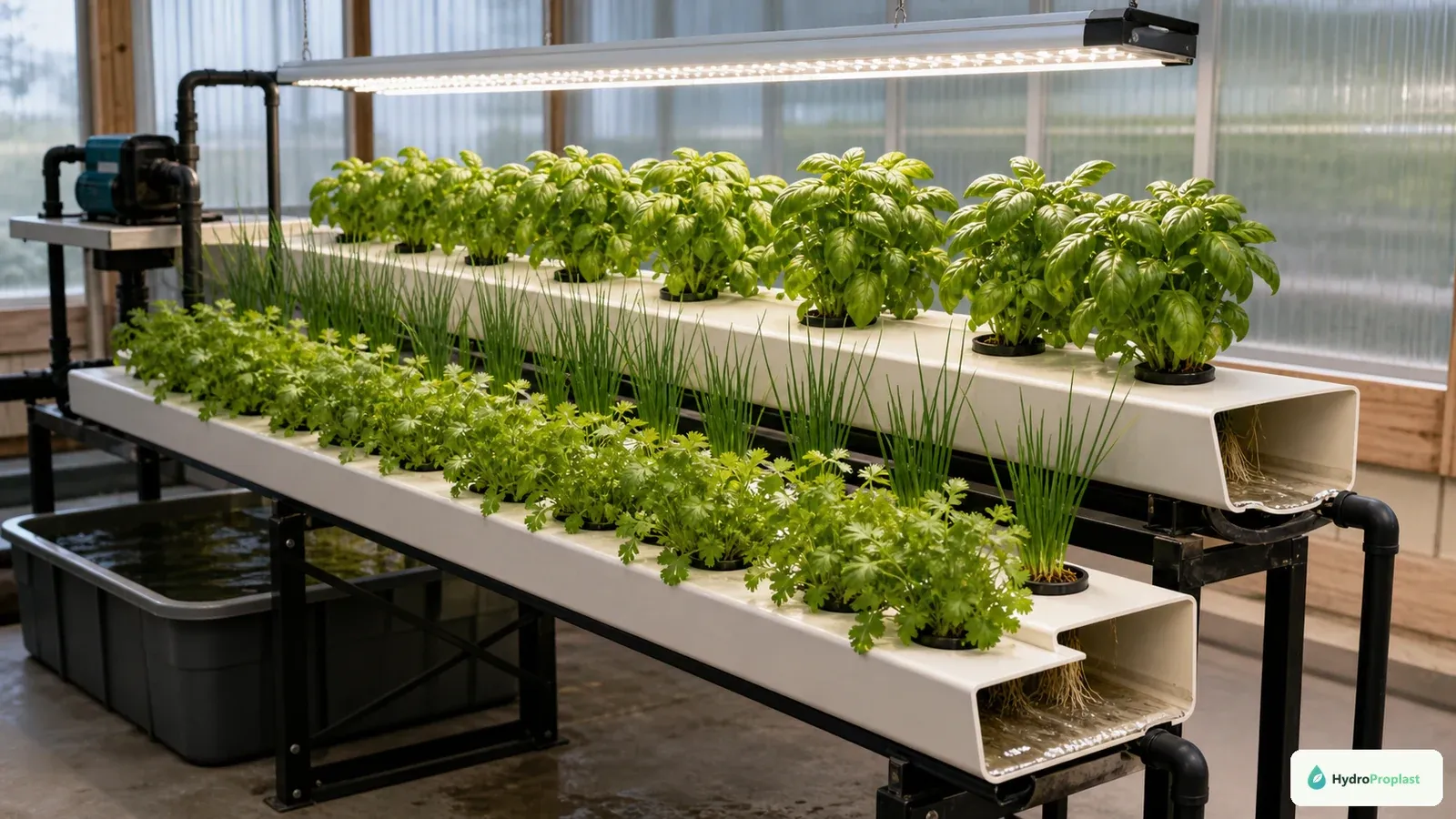
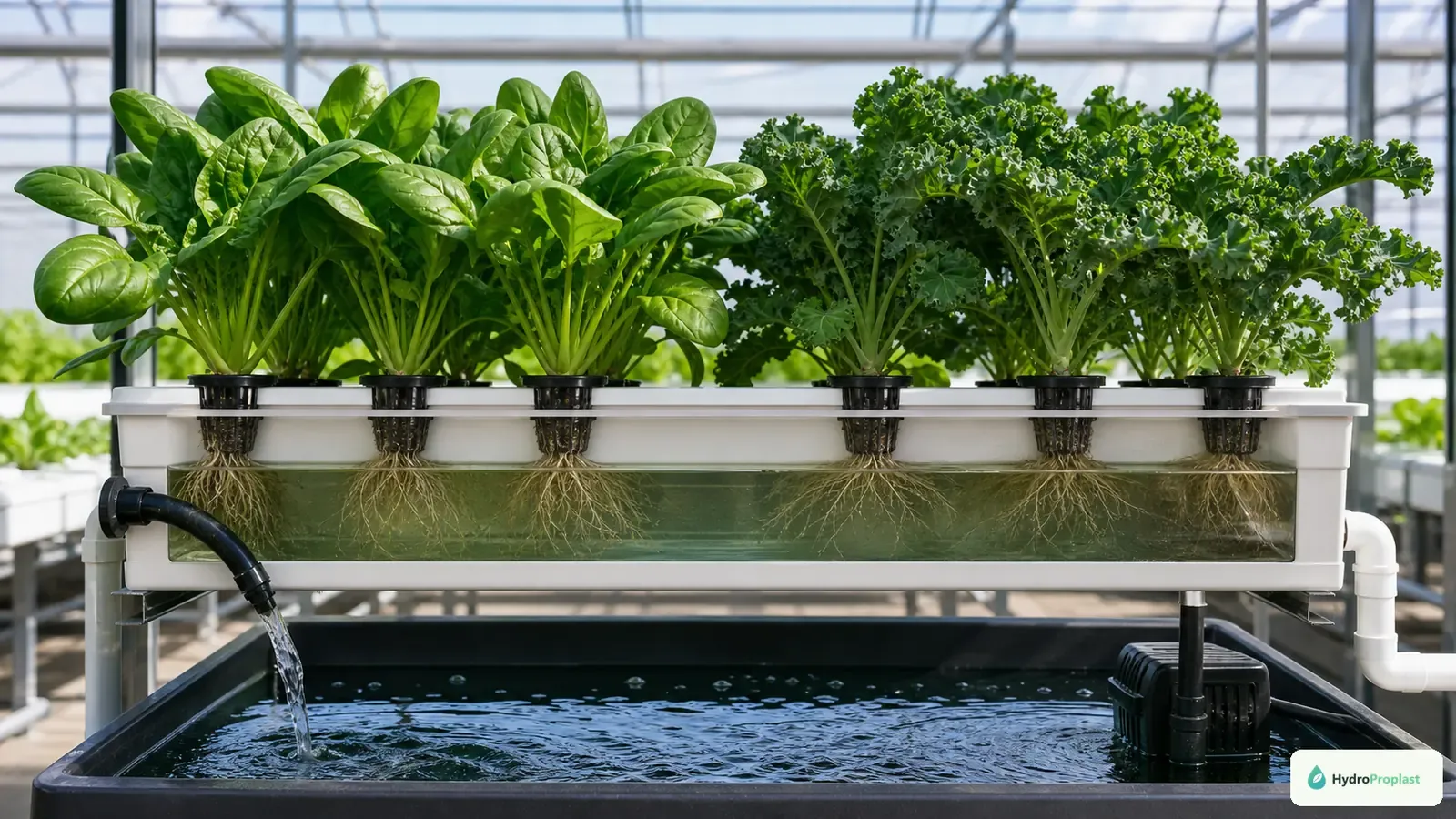
Arrange herbs by mature height so tall basil does not shade smaller crops, and keep the NFT film shallow and recirculating.
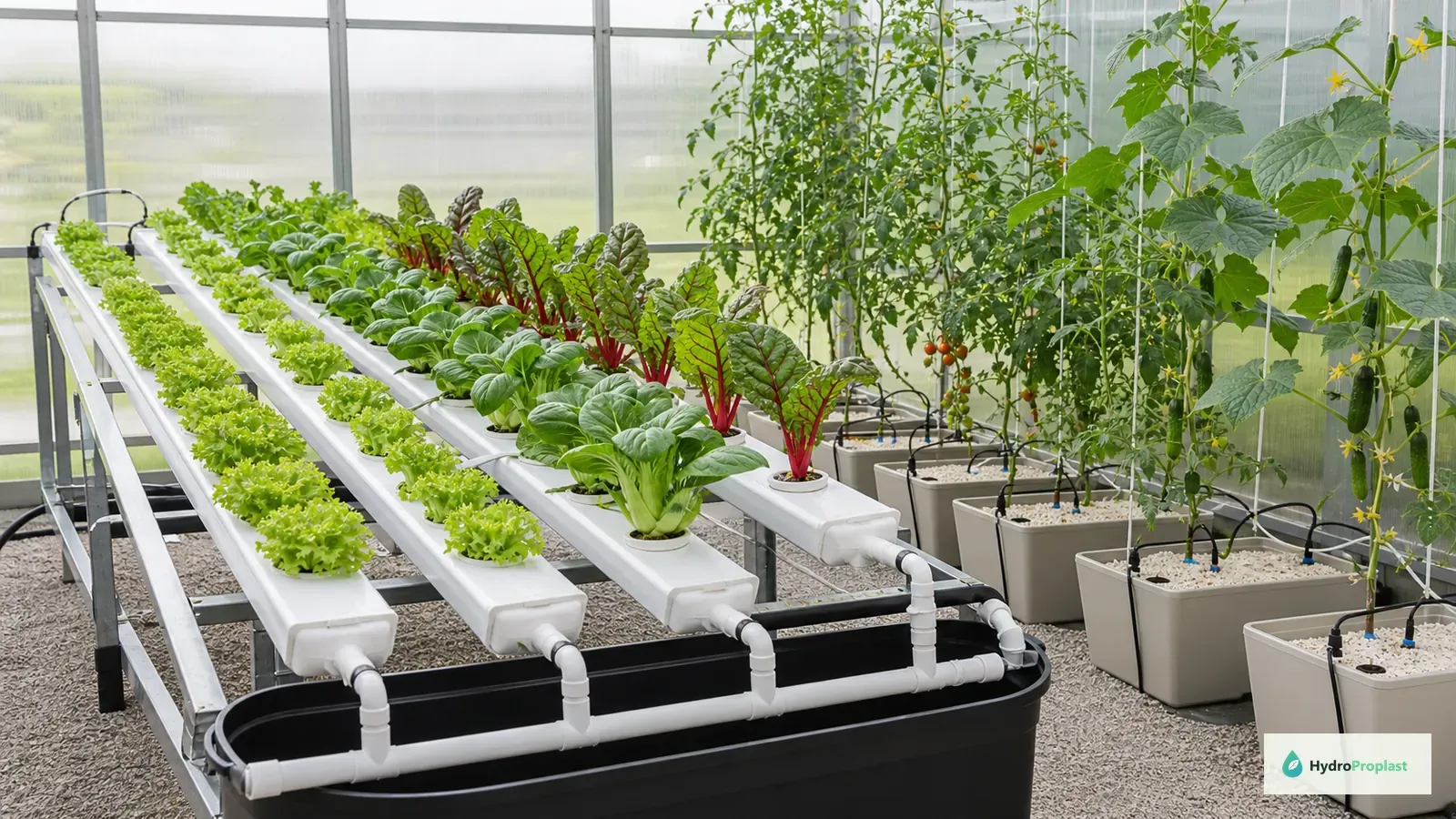
NFT can suit basil, parsley, cilantro, dill, and chives when channels have a shallow film, clear return path, and enough room for roots. Ebb and Flow works well with separate pots and lets media choice vary. Drip systems are useful for larger basil, mint kept in its own container, and drier Mediterranean herbs.
Kratky can support selected herbs in individual opaque containers, but the developing air gap and falling solution level must remain correct. DWC needs active aeration. Do not call every container of water the same system.
Start seeds and transplants cleanly
Use clean seed, inert starter plugs, and sanitized trays. Provide even moisture and light after emergence. Transplant when roots hold the plug together without becoming tangled or damaged.
Quarantine store-bought herb plants before placing them beside a clean indoor crop. Soil, pests, and old media should not enter a shared hydroponic reservoir.
Share nutrients cautiously
A complete leafy-herb formula can support several compatible crops, but identical nutrient strength does not make their water use or growth rate identical. Track EC, pH, reservoir level, leaf pattern, and root condition.
Separate crops when one repeatedly shows stress under conditions that suit the others. The nutrient guide explains safe mixing and why EC measures overall concentration rather than individual nutrient balance.
Plan light by the mature canopy
Arrange plants so tall basil and dill do not shade parsley, cilantro, thyme, or young seedlings. Measure light at leaf height across the full shelf and adjust fixtures rather than rotating plants randomly to hide poor coverage.
The LED guide explains coverage and daily light. Keep a consistent dark period and remove heat from the fixture and driver.
Harvest according to plant architecture
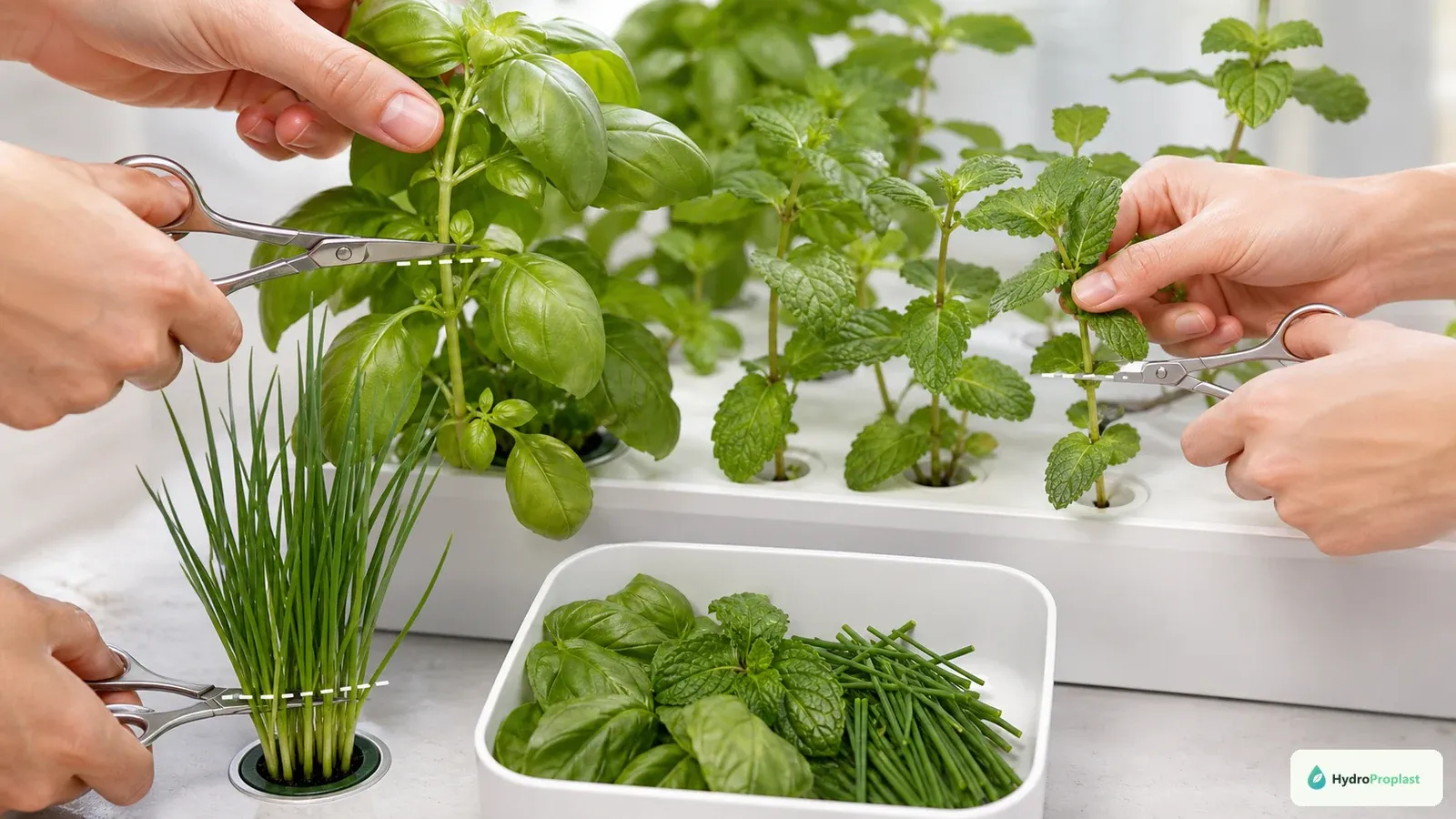
Cut basil and mint above healthy nodes and leave the chive base intact so each plant can regrow after harvest.
Cut basil and mint above nodes to encourage branching. Harvest outer parsley stems while preserving the center. Cut chives above the base. Harvest cilantro and dill according to whether the plan is leaves, stems, or whole plants.
Use clean scissors and separate damaged material from usable herbs. The harvest guide covers hygiene and storage principles.
Troubleshoot by crop and position
If one herb struggles while neighboring plants thrive, compare root crowding, canopy height, emitter flow, and crop preference before changing the whole reservoir. If every plant changes together, investigate shared light, water, temperature, and equipment.
Inspect roots and plumbing on a schedule. Mint roots, chive clumps, and mature basil can restrict small channels or drains.
Use a practical mixed-herb layout
Place tall or fast crops where they cannot shade the rest. Keep mint removable. Group oregano and thyme in a drier drip zone. Reserve a tray or channel section for succession crops such as cilantro and dill.
Leave empty access space for pruning, cleaning, and checking roots. A slightly smaller garden that remains inspectable usually produces more usable herbs.
Plan succession and replacement
Sow small batches of cilantro and dill at intervals. Replace old woody basil or congested parsley when quality declines. Keep records of sowing, transplant, first harvest, and replacement so the shelf provides a steadier kitchen supply.
Do not wait until every plant fails at once. Staggered replacement keeps harvest available while the next plants establish.
Reliable starting recommendations
- Start with one basil, one isolated mint, and a small chive or parsley crop.
- Add cilantro or dill as a scheduled succession tray.
- Keep Mediterranean herbs in a freer-draining zone.
- Match plant height to the measured light footprint.
- Harvest with clean tools according to each plant’s growth points.
- Inspect roots, drains, EC, pH, and reservoir level routinely.
For most beginners, basil offers the fastest feedback, mint offers resilience, and parsley or chives provide slower steady harvests. Build a small compatible group first, then add crops only when their light, root, and irrigation needs fit the system you already understand.