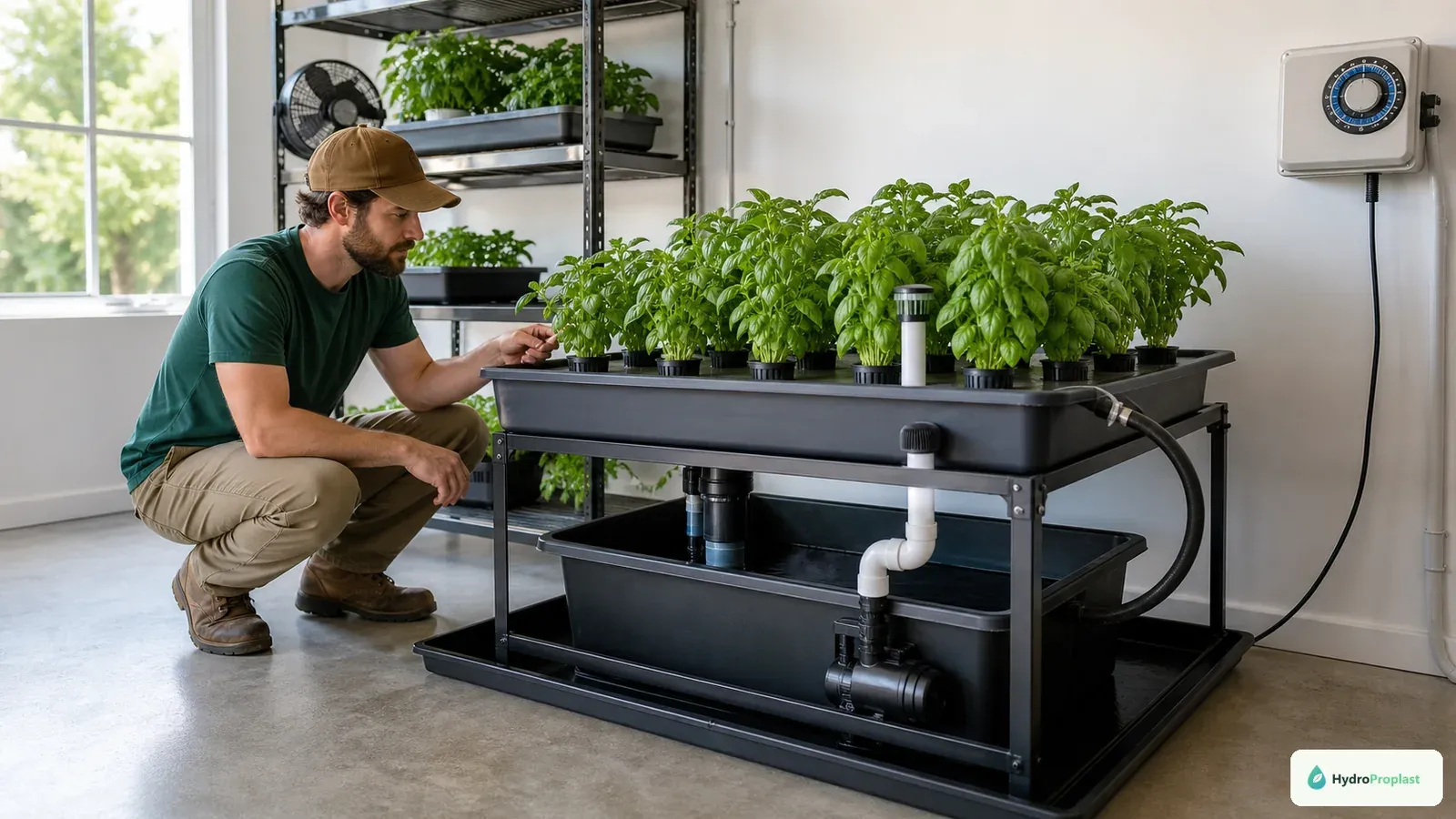
A power outage can stop circulation, aeration, irrigation, cooling, and environmental controls at the same time. The correct response is not to panic or pour additives into the reservoir. It is to make the area electrically safe, identify which life-support functions have stopped, and restore the most time-sensitive function with equipment that is suitable for the load.
This guide is for home and small-scale hydroponic growers. It explains how outage priorities differ among DWC, NFT, drip, ebb-and-flow, and Kratky systems; what to do during an outage; how to choose backup power; and how to restart without creating a second problem.
First protect people, then plants
Hydroponics puts electricity close to water, so personal safety comes before crop recovery. Do not touch plugs, switches, power strips, pumps, or generators while standing in water or with wet hands. If electrical equipment has become wet, leave it off until it is completely dry and has been assessed by a qualified electrician when there is any doubt.
If you see sparks, damaged wiring, smoke, or smell burning insulation, disconnect power only if you can do so from a dry, safe position. Keep people away from the area and obtain qualified help.
Fuel-powered generators must operate outdoors and far from doors, windows, vents, and occupied spaces. Never back-feed a building by connecting a generator to a wall outlet. A permanent connection to building wiring requires an approved transfer switch installed by a qualified electrician. Battery power stations do not produce exhaust, but they still need dry placement, correct load ratings, ventilation specified by the manufacturer, and protection from splashes.
Confirm what actually stopped
An apparent outage may be a tripped ground-fault device, failed timer, loose plug, blocked pump, empty reservoir, or overloaded power strip. From a dry position, check whether the outage affects the building, one circuit, or one device. Use a flashlight rather than a flame.
Record the time the failure was discovered. Then identify every stopped function:
- air pumps and diffusers
- nutrient circulation pumps
- drip or flood irrigation pumps
- ventilation and cooling fans
- heaters and thermostats
- grow lights and light timers
- dosing, monitoring, and alarm equipment
Do not assume all loads deserve equal priority. Root-zone oxygen, water delivery, and dangerous temperature usually matter before lighting during a short interruption.
Set priorities by hydroponic system
System design determines what roots lose when power stops.
| System | What stops during an outage | First crop priority |
|---|---|---|
| DWC or raft | Active aeration and sometimes circulation | Restore oxygenation and limit solution warming |
| NFT | The shallow nutrient film and return flow | Keep roots moist and restore circulation |
| Drip | Timed delivery to the growing medium | Prevent the root zone from drying while maintaining drainage |
| Ebb and flow | Scheduled flooding | Prevent excessive drying; resume a verified flood-and-drain cycle |
| Aeroponics | Frequent misting | Restore root moisture delivery urgently without flooding equipment |
| Kratky | Normally no pump or aeration | Protect the designed air gap and manage heat; the root zone may be less power-dependent |
These are priorities, not guaranteed survival times. Crop size, root mass, solution temperature, humidity, growing medium, reservoir volume, plant health, and system cleanliness all change how quickly stress develops.
Restore DWC aeration first
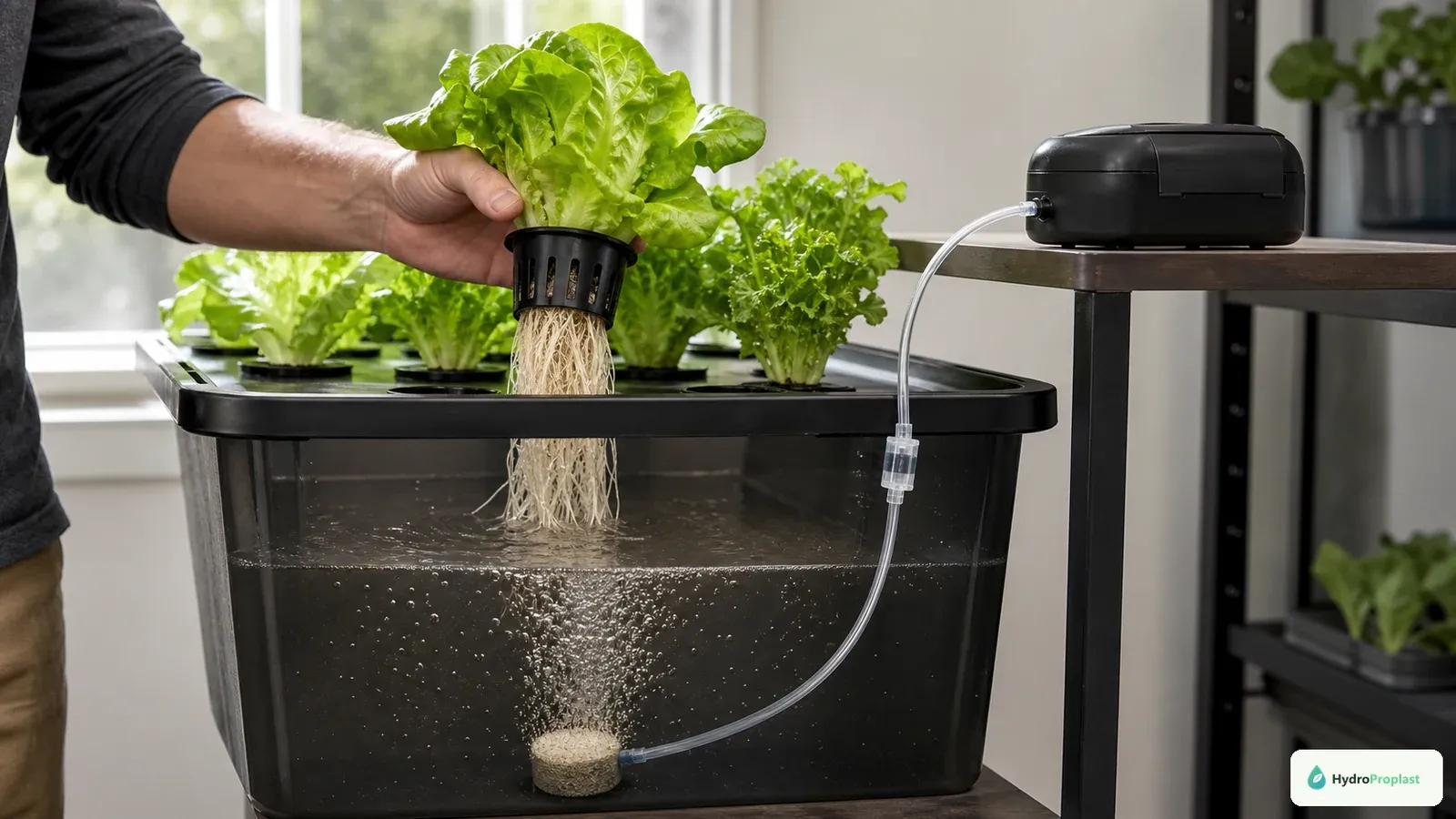
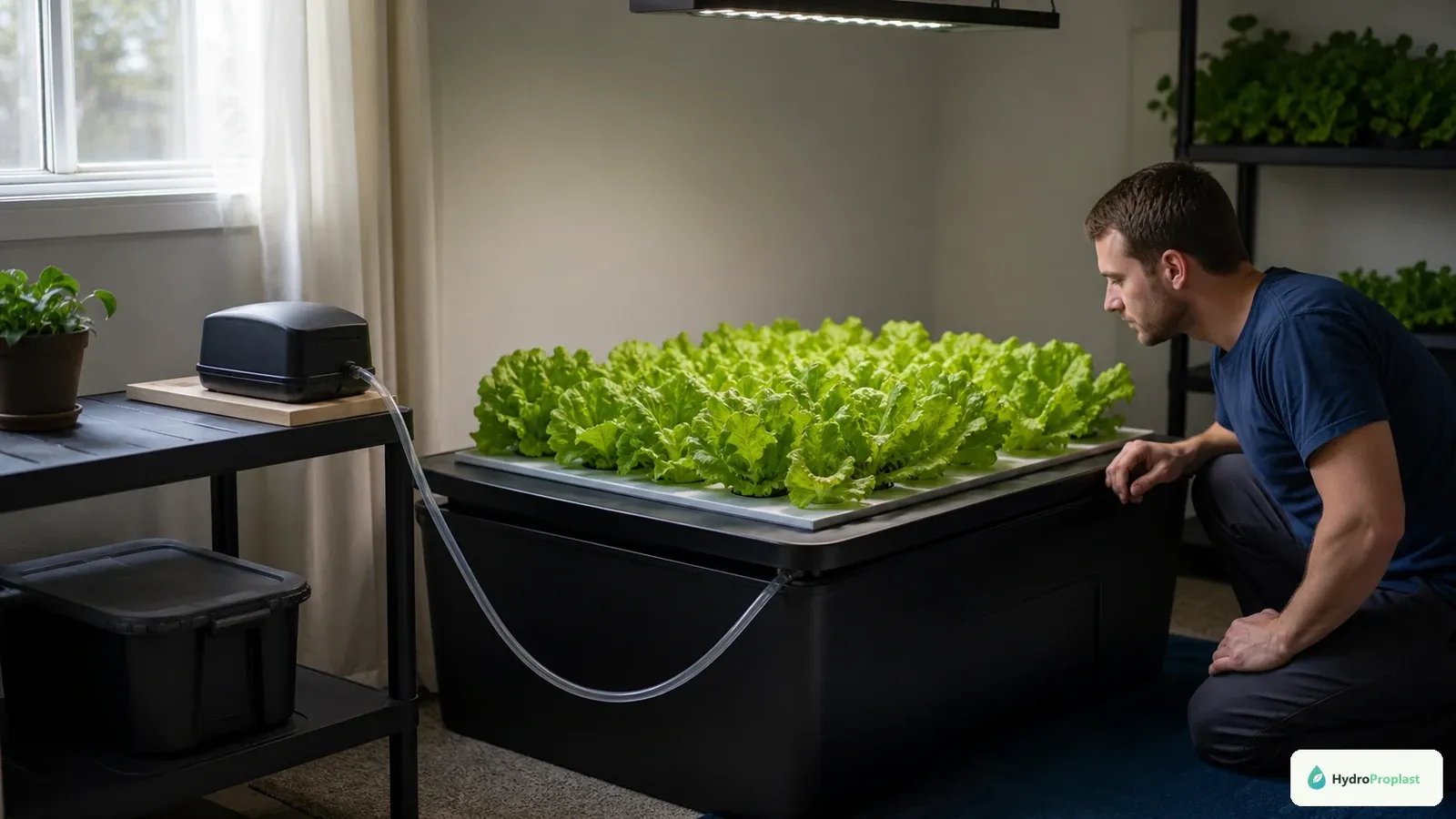
A self-contained battery air pump above the maximum water level can maintain DWC gas exchange without exposed batteries or wet electrical connections.
In deep water culture, roots remain in a large volume of nutrient solution, but the air pump or circulation system may be the main source of gas exchange. Virginia Cooperative Extension describes air pumps, air lines, and diffusers as tools that aid solution movement and dissolved oxygen in smaller DWC systems.
A battery air pump sized for the reservoir is usually a practical first-line backup. Position the pump above the maximum water level or use a correctly oriented check valve so solution cannot siphon toward the pump. Keep the power source and connections on a dry shelf away from splashes.
If no powered backup is available, gently lifting and returning clean reservoir water can increase surface agitation temporarily. Do not splash dirty tools or untreated water into the system, and do not treat manual agitation as a substitute for a tested backup plan. Warm solution loses oxygen more readily, so shade and safe room ventilation may be as important as extra agitation.
Keep NFT roots moist and the return path open
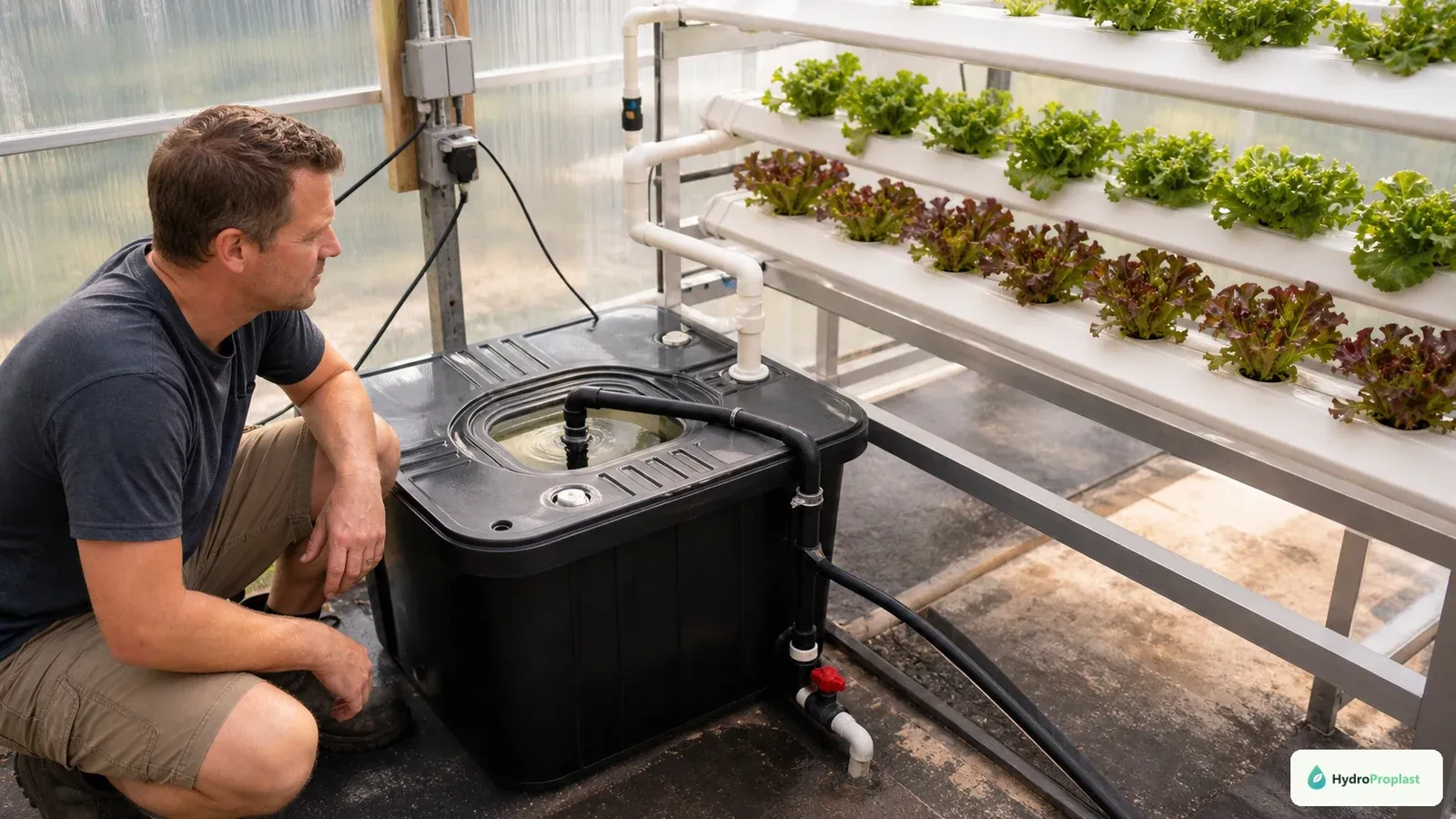
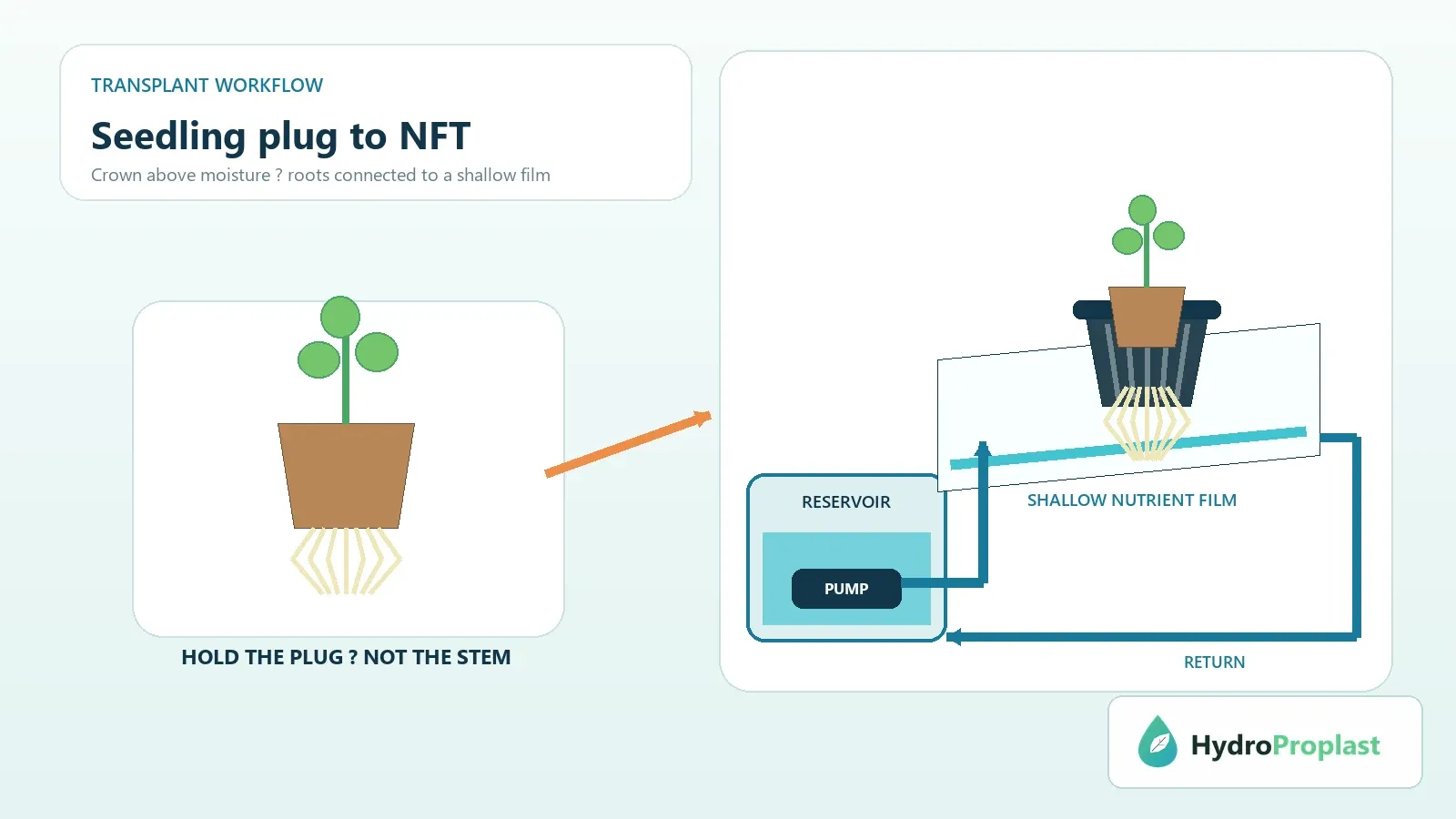
After restart, confirm the pump, shallow film, farthest channel, and return path rather than assuming that power alone restored uniform NFT flow.
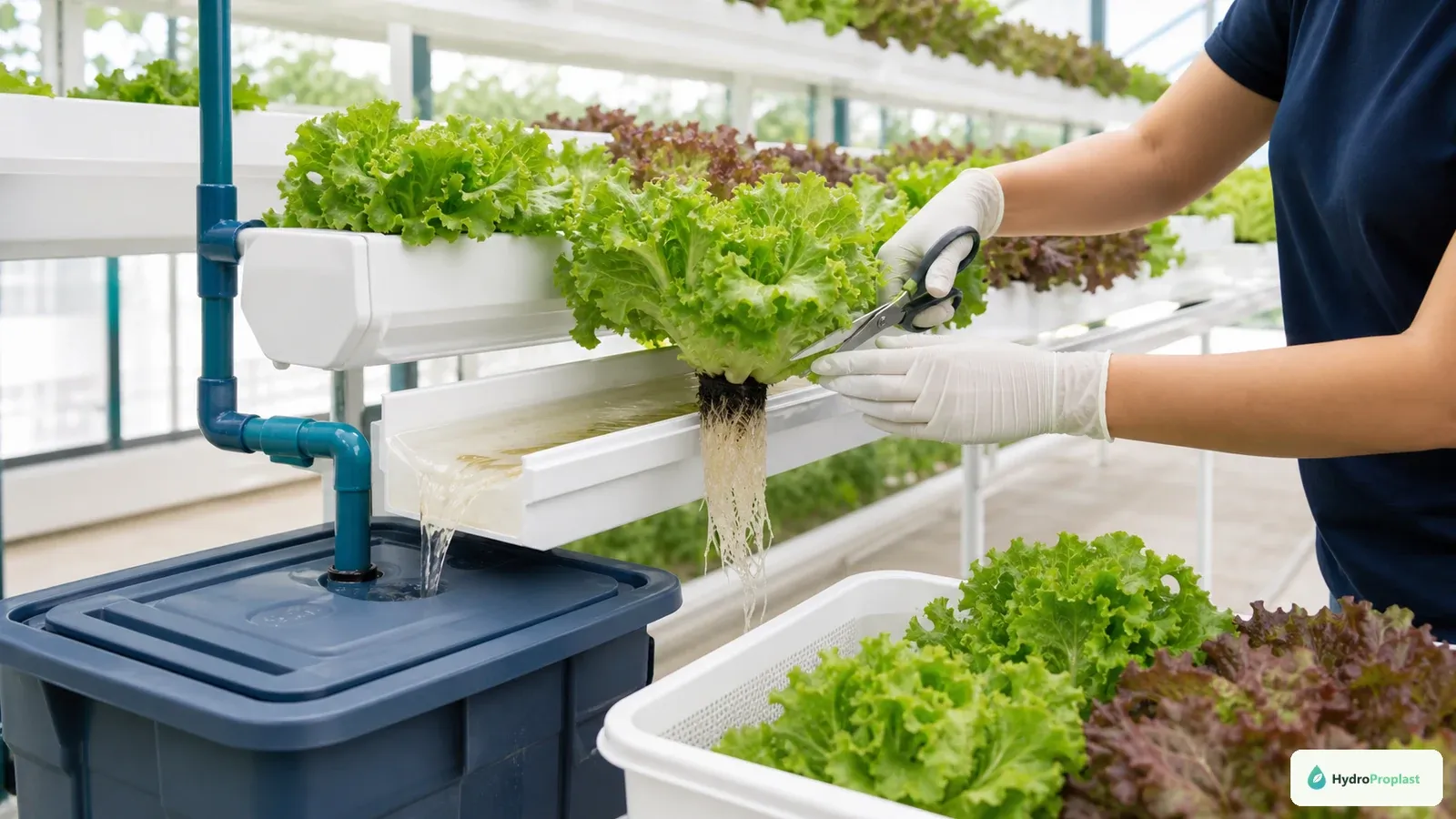
NFT relies on a shallow, continuously renewed film moving through a sloped channel and returning to the reservoir. When the pump stops, much of the root mat may no longer receive solution. Large plants, warm air, and dry moving air can shorten the response window.
Check that the reservoir still contains enough solution and that a leak did not cause the pump to run dry. If it is electrically safe, use a correctly rated backup pump or power source to restore the normal supply-and-return loop. Avoid pouring a large volume into the upper channel without confirming that the drain and return can accept it; overflow near electrical equipment creates a larger hazard.
For a brief manual bridge, wet the root zone carefully with system nutrient solution while preventing standing water around crowns. The correct frequency depends on crop and conditions. Observe root moisture rather than following a universal timer.
Protect drip and ebb-and-flow root moisture
Growing media provide a moisture buffer, so drip and flood systems may not react as quickly as exposed NFT roots. The buffer varies greatly: fine coir can retain much more water than coarse perlite or expanded clay.
Check representative pots at the upper, lower, sunny, and shaded parts of the system. If irrigation is needed, apply a measured amount of correctly mixed solution slowly enough to wet the root zone without leaving containers waterlogged. Confirm that runoff has a safe return or collection path.
For ebb and flow, do not begin a manual flood unless you can also drain the tray. Roots need oxygen after the solution recedes. Once power returns, observe one full flood-and-drain cycle instead of assuming the timer resumed correctly.
Do not destroy a Kratky air gap
Kratky systems are passive and may continue through a power outage if they do not depend on lights, cooling, or room controls. The key design feature is the air space that develops as plants use solution. Upper roots adapted to that humid air zone should not be submerged by an emergency overfill.
Check solution temperature, light exposure, and water level, but preserve the established air gap. If the crop is in a hybrid Kratky system with an optional air pump, treat it according to how dependent the root mass has become on active aeration.
Reduce heat and water demand safely
During a warm-weather outage, solution temperature and plant water demand can rise while pumps and fans are unavailable. Use passive shade, open safe ventilation paths, and move non-fixed small systems away from direct sun only when this can be done without spilling solution or handling live electrical equipment.
Do not seal plants in stagnant plastic to reduce water loss. Do not add unclean ice directly to nutrient solution. A sealed bottle of clean frozen water can provide temporary cooling in a small reservoir, but monitor temperature and avoid abrupt swings. The hydroponic water-temperature guide explains how heat, oxygen, and root health interact.
If lights are off but pumps can run, prioritize root support and temperature control. Most crops tolerate a temporary lighting interruption better than a severe loss of root moisture or oxygen. Restore the normal photoperiod rather than running an unusually long catch-up light period.
Size backup power from measured loads
List the essential devices, their running watts, and their starting requirements. Motors can require substantially more current while starting than while running. University of Florida Extension recommends identifying the essential equipment that must operate at the same time and accounting for motor starting demand when sizing greenhouse backup power.
For a small indoor garden, a useful order is often:
- battery air pump for the DWC reservoir
- backup circulation or irrigation pump where roots otherwise dry
- controller or timer needed to operate those devices
- ventilation or cooling needed to prevent unsafe heat
- lighting only after life-support loads are covered
Measure actual consumption with a suitable energy meter when possible. Estimate runtime as usable battery watt-hours divided by the total running watts, then apply a conservative allowance for inverter losses, battery protection limits, aging, and motor start-up. A label calculation is a planning estimate, not a runtime guarantee.
Test the complete setup under supervision before an emergency. Confirm that pumps restart, check valves work, timers retain or recover their schedules, and alarms report loss and restoration of power.
Choose a backup method that matches the risk
A battery air pump is inexpensive protection for a small DWC system. A direct-current backup pump or uninterruptible power supply may support a modest circulation load. A larger battery power station can run selected equipment without combustion exhaust. A fuel generator may support larger loads and longer outages, but it introduces carbon-monoxide, fuel, noise, connection, and maintenance risks.
There is no single best device. Match the backup to the essential load, required start-up current, expected outage duration, safe operating location, and the person responsible for testing it. Never exceed the manufacturer’s rating or improvise incompatible connectors near water.
Use a written outage checklist
An outage is easier to manage when decisions are written before the room goes dark.
- Keep a waterproof equipment list with running and starting loads.
- Label the circuits for aeration, circulation, irrigation, cooling, and lighting.
- Store a dry flashlight, batteries, extension leads rated for the intended environment, and manufacturer instructions.
- Mark normal reservoir levels and safe Kratky air gaps.
- Keep a clean container for manual root-zone watering.
- List emergency contacts for the utility, electrician, equipment supplier, and responsible grower.
- Test backups on a schedule and record battery condition, pump output, and runtime.
The hydroponic vacation guide provides a broader unattended-system checklist, while the air-pump versus water-pump guide helps verify which function each backup device must support.
Restart in a controlled sequence
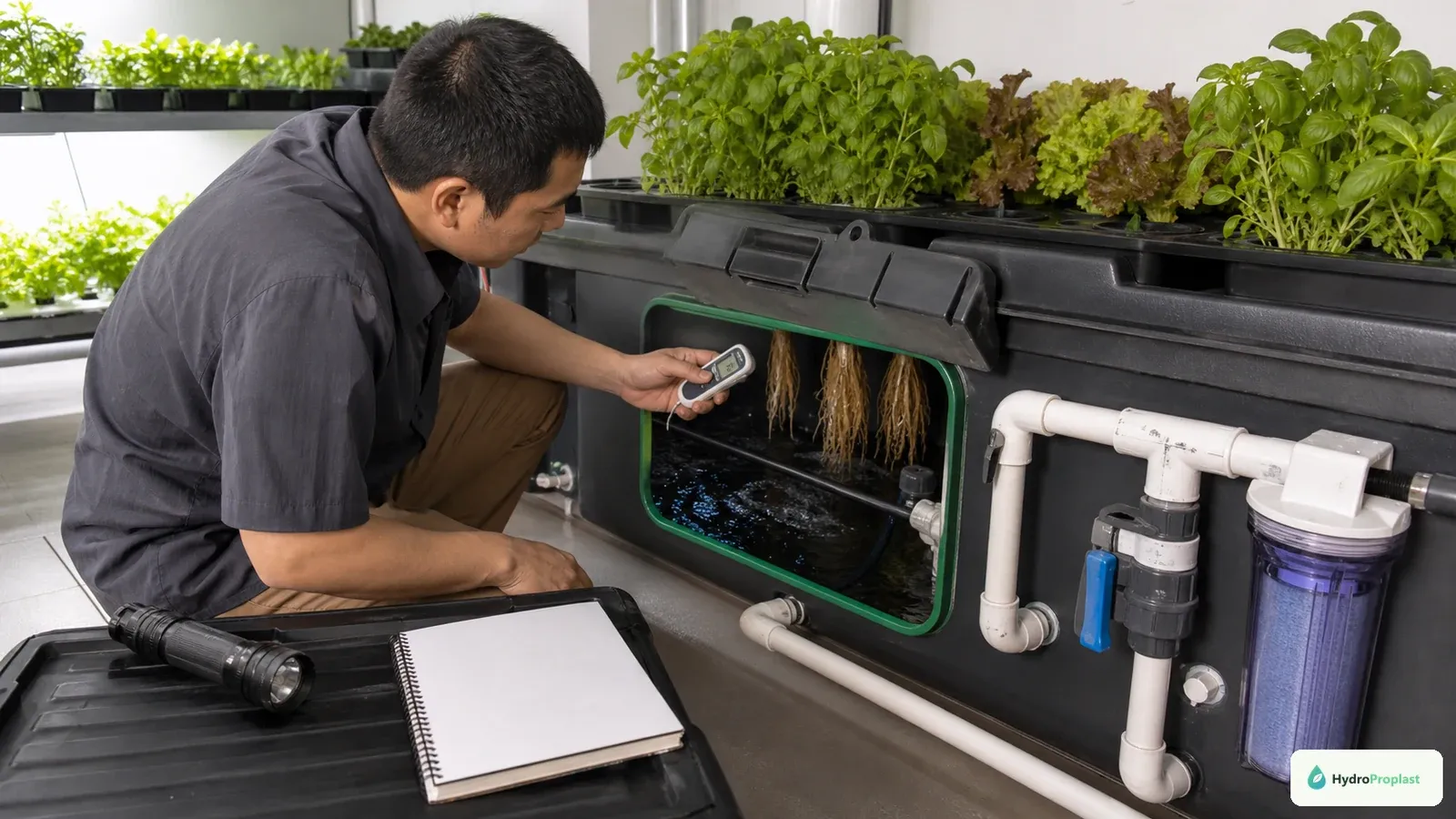
Inspect dry electrical equipment, water level, roots, filters, drains, and return flow before bringing every load back online.
When utility power returns, inspect the area before reconnecting everything. Confirm that plugs, cords, controllers, and floors are dry. Check the reservoir level, pump inlets, filters, air lines, drains, and overflow paths.
Start essential equipment one device at a time. Observe DWC bubbles, NFT flow through the farthest channel, drip output at representative emitters, and a complete ebb-and-flow cycle. Starting large motors sequentially also reduces simultaneous start-up demand.
Then measure solution temperature, pH, and EC after circulation has mixed the reservoir. Correct water level first, allow mixing, and make only evidence-based nutrient or pH adjustments. A stopped system does not automatically need extra fertilizer.
Check timers and controllers against the clock. Some resume their stored schedule; others restart from the moment power returns. Verify lighting, irrigation, and flood events for at least one full cycle.
Watch plants for delayed stress
Root injury may appear after power is restored. Over the next several days, inspect roots for loss of firmness, unusual discoloration, odor, or sloughing. Look for wilting that does not recover, uneven plants along an NFT channel, or pots that remain too wet after emergency hand-watering.
Do not expect damaged leaves to repair themselves. Evaluate healthy new growth and stable roots. If roots deteriorate, follow the root-rot prevention guide and verify dissolved oxygen with the dissolved-oxygen guide.
Common questions
How long can hydroponic plants survive without power?
There is no reliable universal duration. An aeroponic root chamber can dry much faster than a moisture-retentive drip pot, while a passive Kratky system may not lose root support at all. Temperature, crop size, humidity, root health, and system design matter. Respond to the stopped function and visible root-zone condition, not a generic countdown.
Should I add hydrogen peroxide during an outage?
Not as a routine substitute for aeration or circulation. Concentration, product formulation, crop, microbes, and contact time all matter, and misuse can injure roots. Restore safe physical operation first.
Can one UPS run my whole garden?
Only if its continuous and surge ratings cover the connected loads and its tested runtime meets the plan. It is often more efficient to protect essential low-wattage aeration and circulation than to include high-wattage lights.
Should I replace the nutrient solution after every outage?
No. Replace it when measurements, contamination, unknown additions, excessive heat, root debris, or solution history justify replacement. Otherwise restore circulation, mix, inspect, and test first. See the water-change guide.
Sources and further reading
- Auxiliary Power Units for Greenhouse Operations — University of Florida IFAS Extension
- Hydroponic Production of Edible Crops: Deep Water Culture Systems — Virginia Cooperative Extension
- Electrical Hazards During Disasters — U.S. Centers for Disease Control and Prevention
- Power Outages and Indoor Air Quality — U.S. Environmental Protection Agency
A resilient hydroponic system does not try to power everything indefinitely. It keeps people safe, identifies the function each crop depends on, supports the smallest critical load, and proves the recovery with observed flow, aeration, drainage, temperature, pH, and EC.