Growing hydroponic basil is a practical first project because basil responds quickly, fits compact systems, and can be harvested repeatedly. Success still depends on matching the plant to its environment: clean water, oxygen around the roots, adequate light, gentle airflow, and regular pruning matter more than owning complicated equipment.
This guide takes you from seed to repeat harvest. If hydroponics is new to you, first review how hydroponics works so the roles of water, nutrients, oxygen, and plant support are clear.
The beginner plan at a glance
- Choose a compact basil variety and a clean, light-blocking reservoir.
- Germinate one or two extra seeds so you can select the strongest seedling.
- Transplant only after roots emerge from the starter plug and true leaves are developing.
- Begin with a mild nutrient solution, then adjust gradually as the plant establishes.
- Provide consistent white grow light, moderate warmth, and gentle air movement.
- Prune above leaf nodes and harvest regularly before flowering reduces leaf quality.
Choose a basil variety that fits the space
Genovese and sweet basil are familiar choices for pesto and general cooking. Thai basil grows well in warm conditions and has a firmer stem, while compact varieties suit small countertop units. The best variety is one you will use and one whose mature height fits beneath your light.
Avoid starting with too many plants. Basil becomes broad and bushy after pruning, so crowded seedlings soon compete for light and airflow. One well-managed plant can be more productive than several weak, shaded plants.
Select a simple hydroponic system
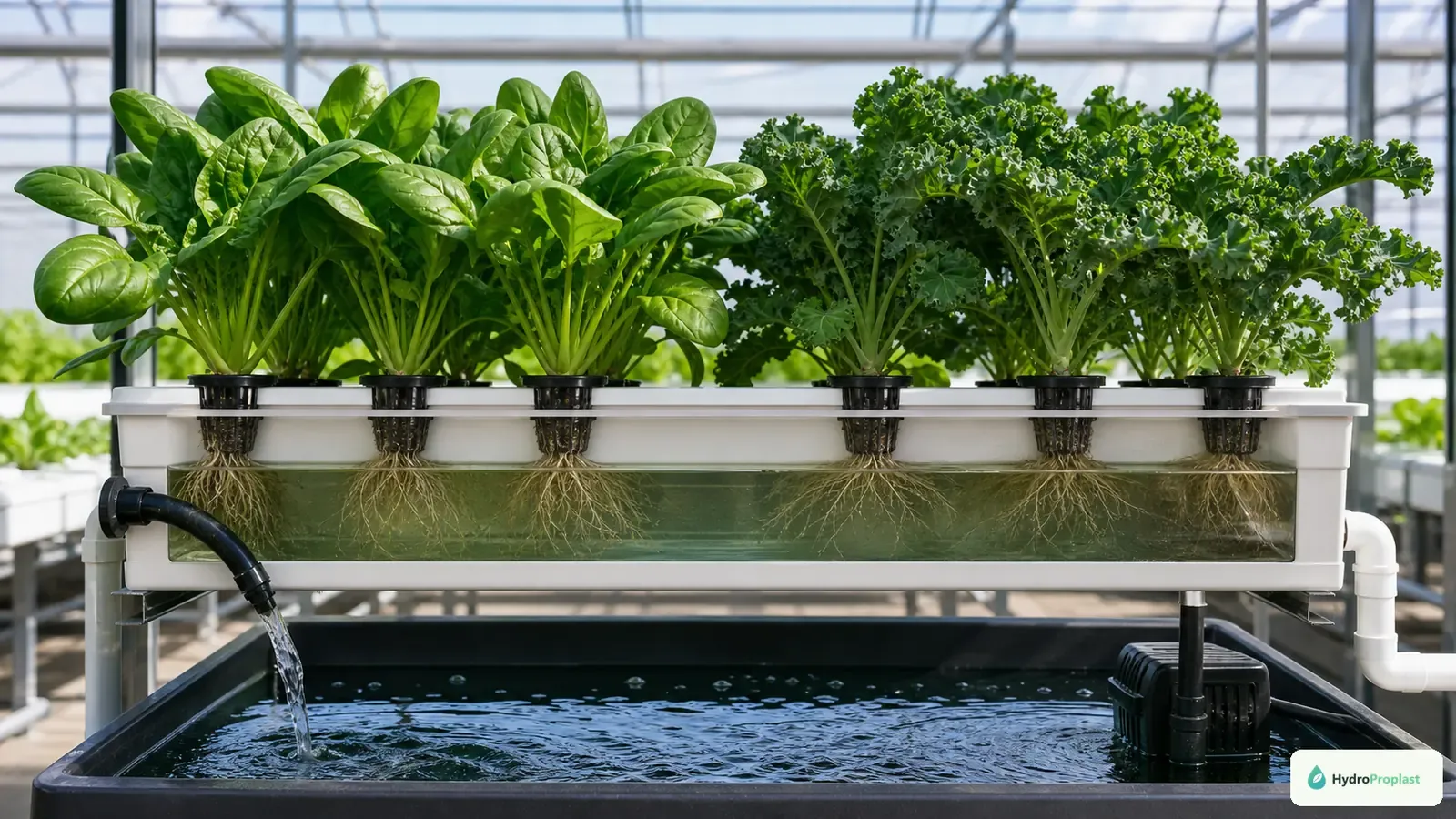
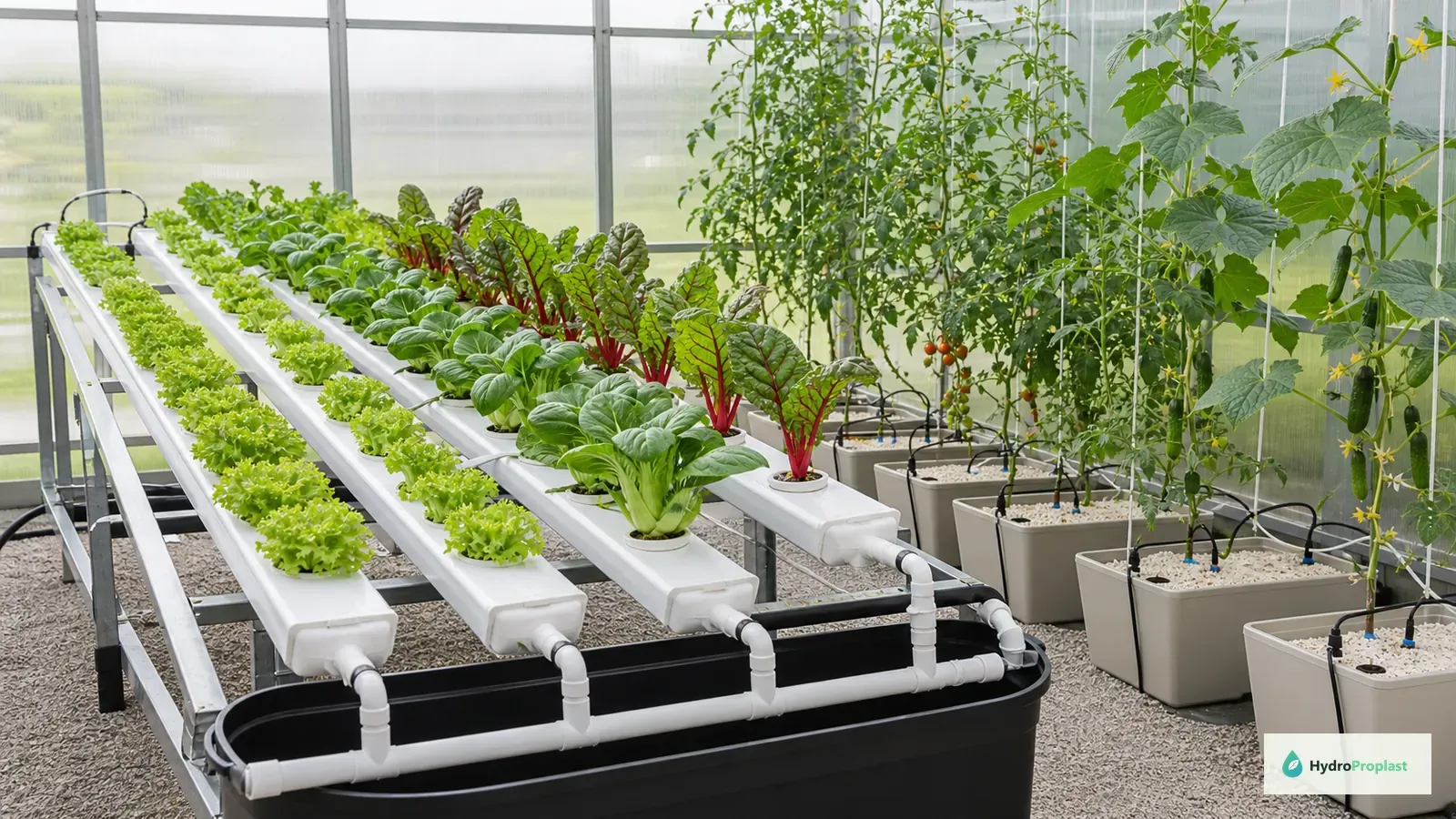
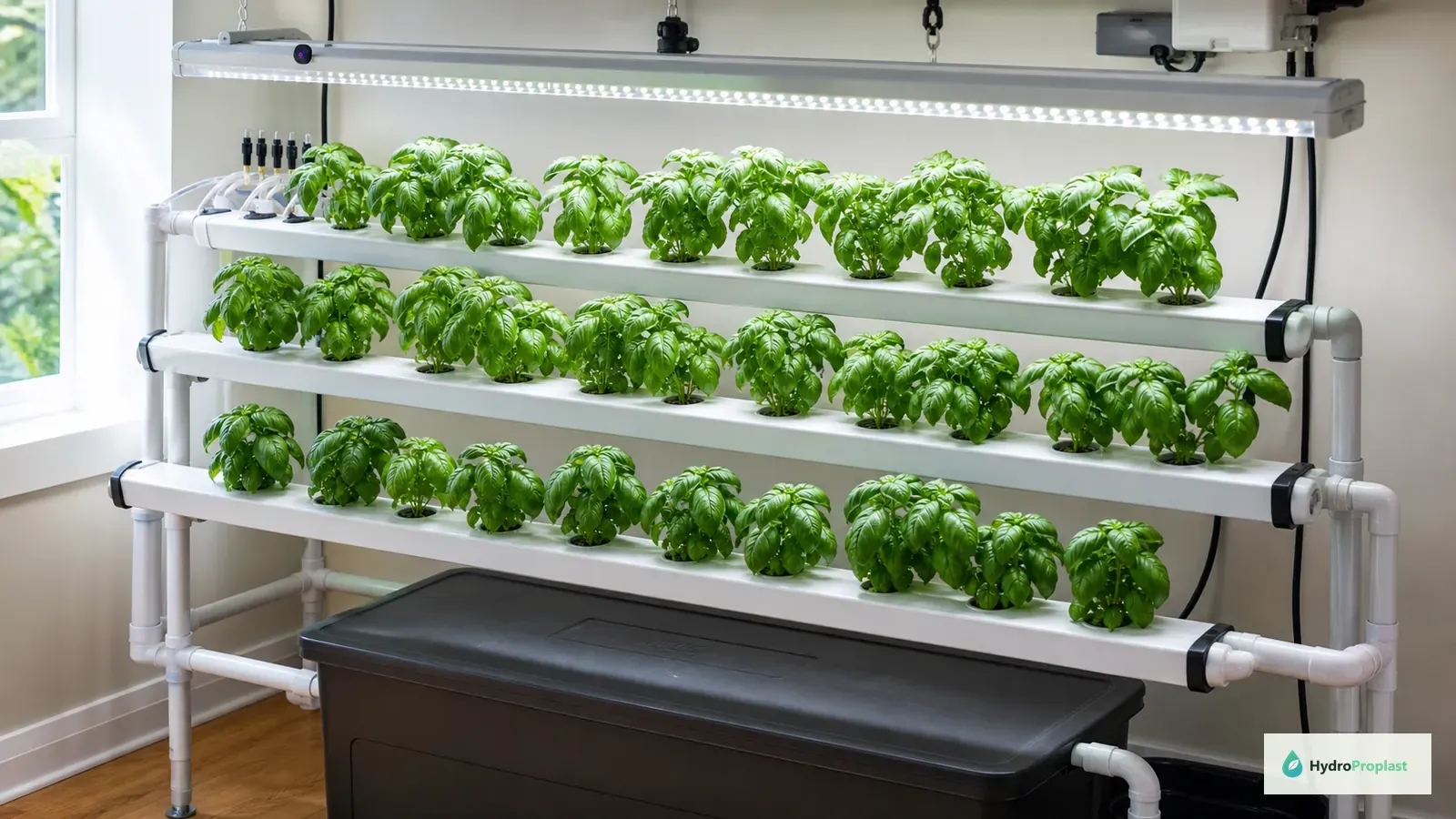
Deep water culture is beginner-friendly when the reservoir is opaque and the nutrient solution is aerated. A small recirculating system also works if flow is reliable. Kratky growing can be successful, but the air gap and water level must change correctly as roots develop; continuously flooding the crown invites trouble.
Whatever system you use, make sure the net cup is stable, the reservoir blocks light, and the roots can access both moisture and oxygen. Keep electrical connections above and away from water, and place any external air pump outside the reservoir.
Germinate basil in a clean starter plug
Moisten a compatible starter plug with clean water, place the seed at the recommended depth, and keep it evenly moist rather than waterlogged. Warm, stable conditions usually produce more consistent germination than a cold windowsill. Once the seedling emerges, provide gentle light promptly so the stem stays compact.
For a detailed seed-starting routine, see how to germinate seeds for hydroponics. Do not add strong nutrients to a newly emerged seedling just to force faster growth; young roots need a gentle transition.
Transplant at the right stage
Move the seedling when it has developed true leaves, the stem can support itself, and healthy pale roots are beginning to leave the plug. Handle the plug rather than pulling the stem. Place it in the net cup so the crown remains above the wet zone while the lower plug or emerging roots can reach moisture.
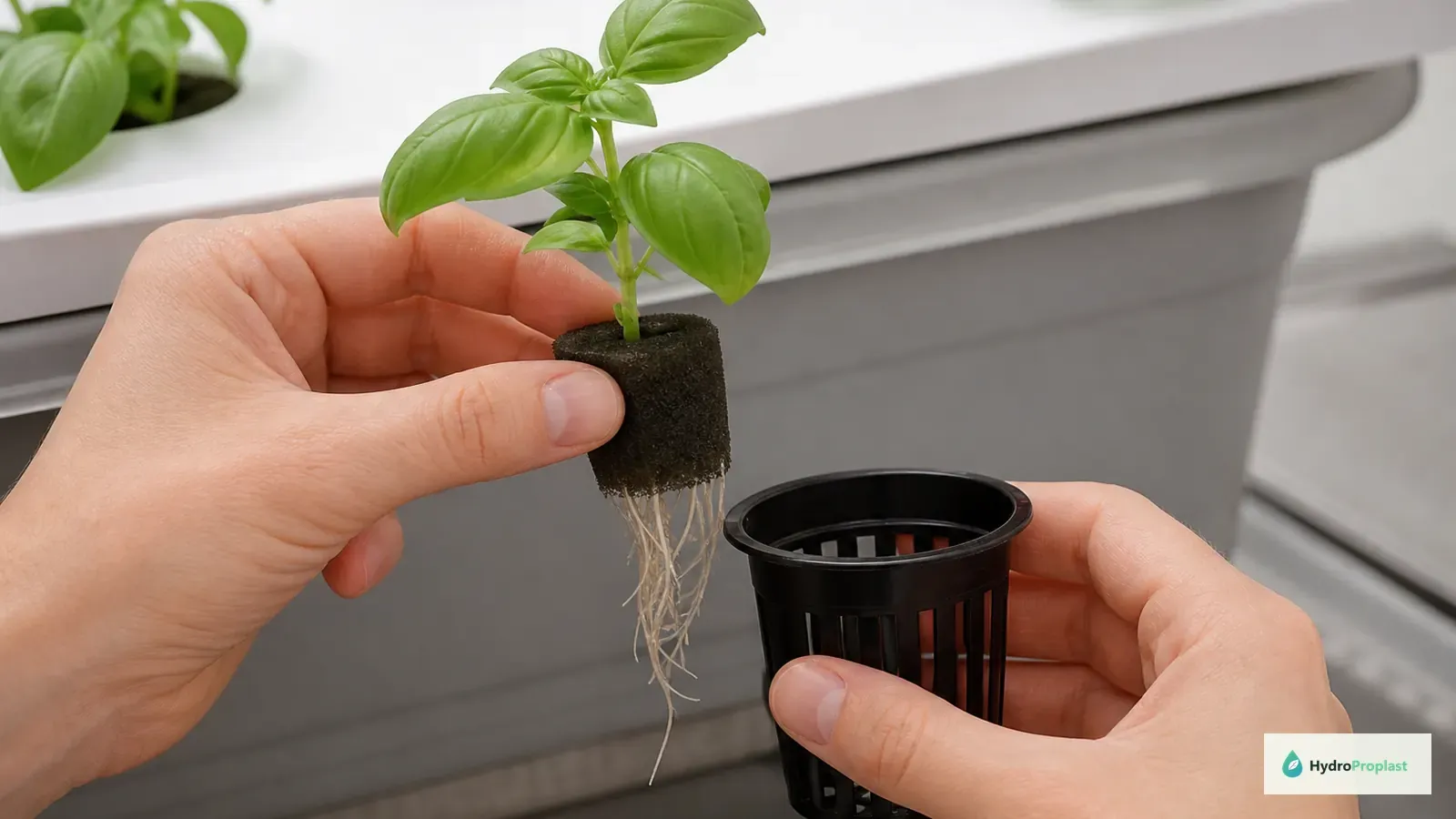
During the first few days, check that the plug is not drying out and is not completely submerged. If roots cannot yet reach the solution, top-water lightly with system water until they extend downward. Once roots are established, stop unnecessary top-watering to improve oxygen around the crown.
Mix the nutrient solution conservatively
Use a complete hydroponic nutrient formulated for leafy or vegetative crops and follow its label for the water volume in your reservoir. Add nutrients to water in the manufacturer’s order, mix thoroughly, then measure. Never combine concentrated parts directly because they can react and form unavailable precipitates.
Young basil generally needs a milder solution than a large, repeatedly harvested plant. Increase strength only after the roots look healthy and new growth is active. EC is a measure of total conductivity, not a guarantee that every nutrient is balanced, so plant appearance and the product instructions still matter.
Manage pH without chasing every small change
Basil commonly performs in a mildly acidic hydroponic root zone. Many growers work around pH 5.5–6.5, but the appropriate operating band depends on water chemistry, nutrient formula, growth stage, and the accuracy of the meter. Measure after the solution is mixed and has settled, then make small adjustments.
A small pH movement is normal as plants take up water and nutrients. Repeatedly correcting tiny changes can create instability. Calibrate the meter on schedule, record readings, and investigate persistent drift instead of reacting to a single number.
Set light and airflow
Basil needs enough light to build dense leaves and short internodes. Indoors, use a white full-spectrum grow light and begin at the manufacturer’s recommended distance. Watch the plant: stretching suggests inadequate light, while bleaching, crisp edges, or excessive heat at the canopy suggest the lamp is too intense or too close.
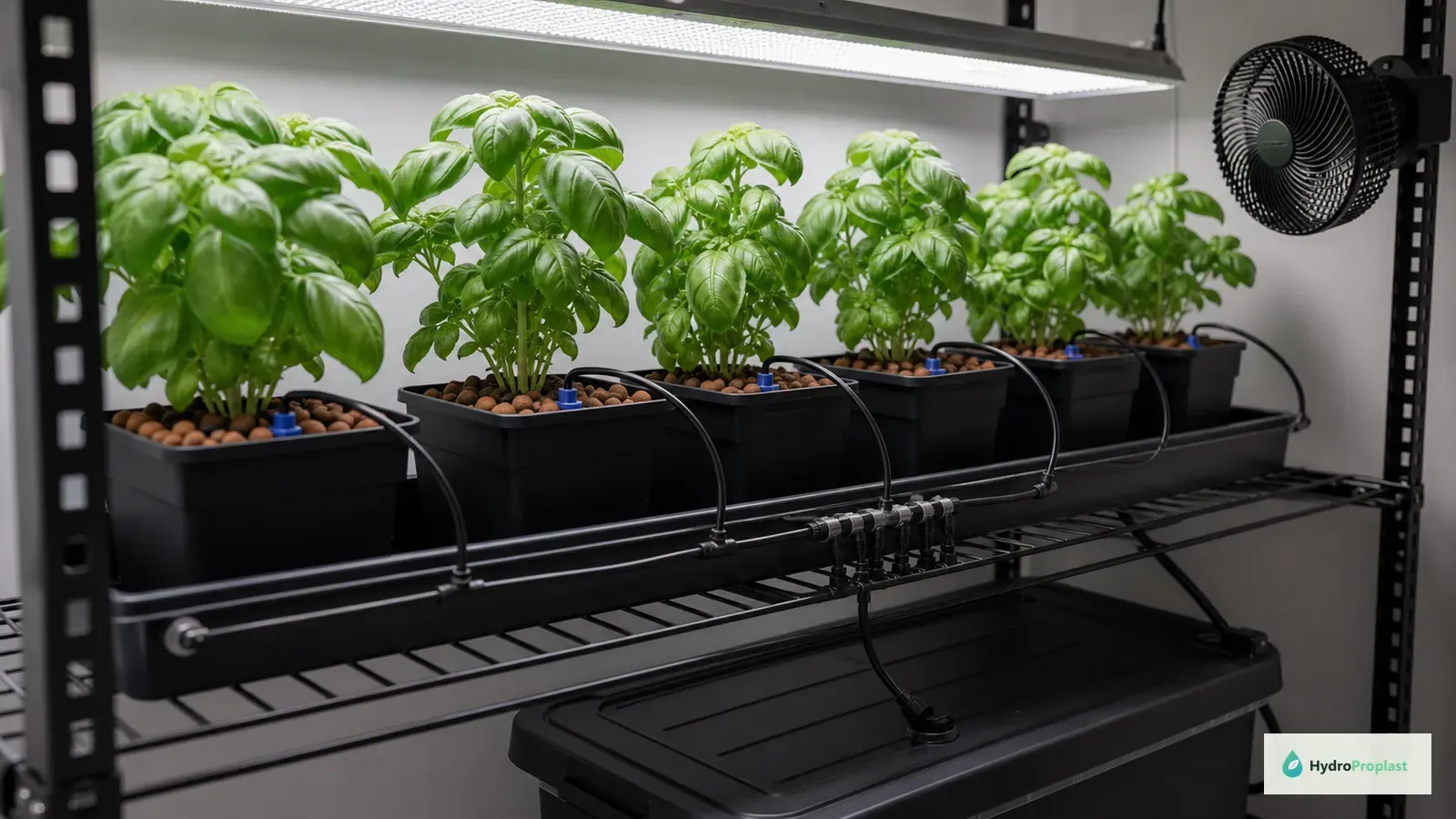
Keep the schedule consistent with a timer and preserve a dark period. A small circulation fan should move air around the leaves gently; it should not bend the stems continuously. Airflow helps moisture leave the canopy and supports stronger growth, but it does not replace root-zone aeration.
Keep temperature and water conditions stable
Basil prefers warmth, but excessively warm nutrient solution holds less dissolved oxygen and can increase root stress. Avoid placing the reservoir on a hot surface or directly beside equipment that releases heat. Sudden cold, hot roots, and large day-to-day swings are usually more disruptive than a stable condition that is slightly outside an ideal target.
Use a lid that blocks light, keep fallen leaves out of the reservoir, and check that air stones or circulation paths remain unobstructed. Healthy roots are usually pale and firm. Brown, slimy roots with an unpleasant smell require immediate attention to temperature, oxygen, sanitation, and damaged tissue.
Use a five-minute daily routine
- Look at the newest leaves for color, shape, and pest damage.
- Check water level before the pump or roots are exposed incorrectly.
- Confirm the air pump, water pump, timer, light, and fan are operating.
- Check for leaks, algae, unusual odor, or debris in the reservoir.
- Record pH and EC often enough to see trends rather than relying on memory.
Top up according to the behavior of your system and the nutrient maker’s guidance. Plants consume water and minerals at different rates, so blindly replacing every lost liter with full-strength solution can drive concentration upward. Periodic solution replacement is useful when readings become difficult to interpret or the reservoir accumulates debris.
Prune for branching instead of height
Begin pruning after the plant is established and has several healthy leaf pairs. Identify a leaf node where two side buds can continue growing, then cut the main stem just above that node with clean scissors. This redirects growth into branches and creates a fuller plant with more future harvest points.
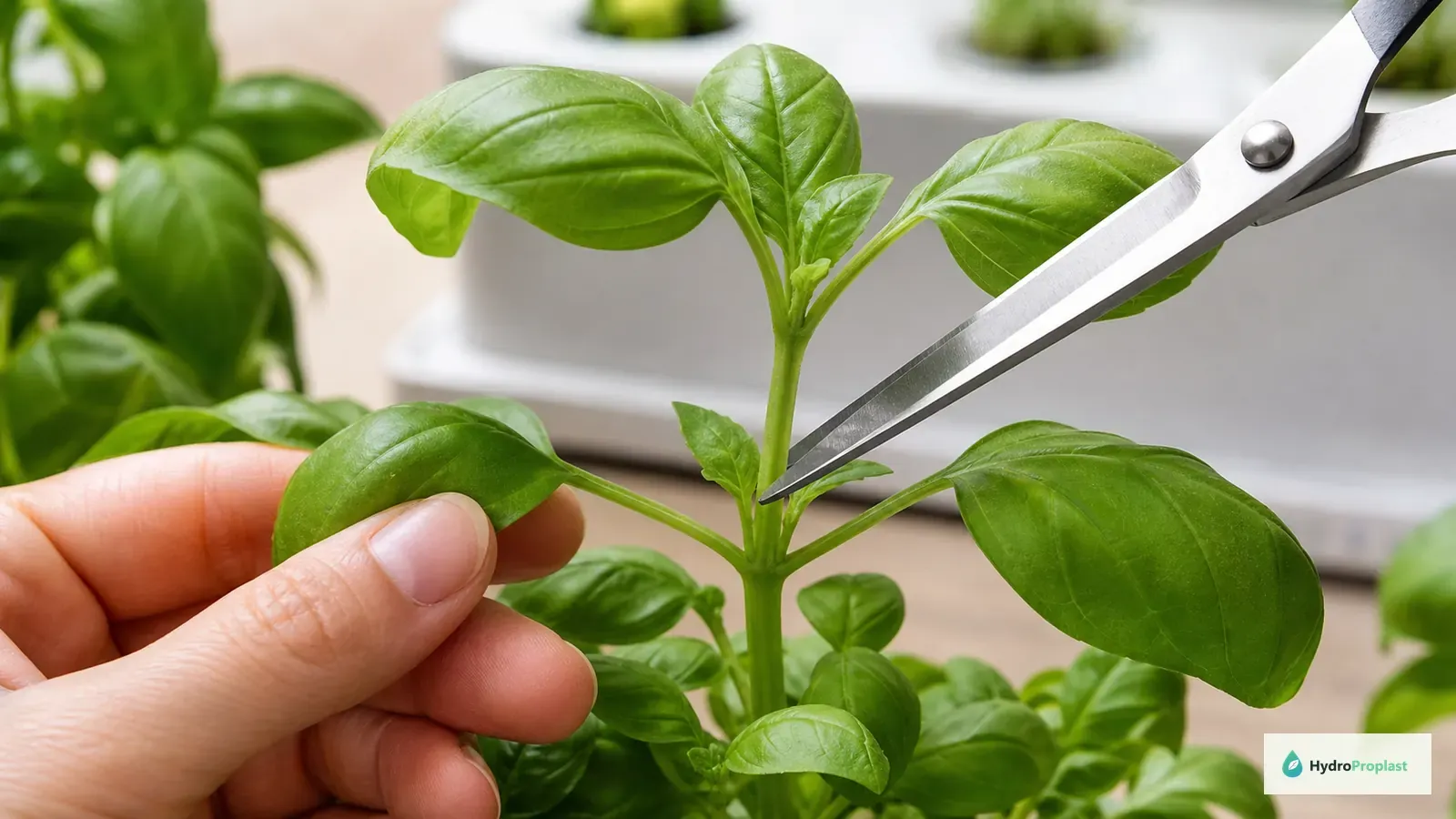
Do not remove most of the canopy at once, especially from a young or stressed plant. Harvest from several branches and leave enough healthy foliage to power regrowth. Remove flower buds early if your goal is tender leaf production, because flowering changes the plant’s priorities and can reduce culinary quality.
Harvest and store basil well
Harvest in the cool part of the light cycle when leaves are hydrated. Use clean scissors and avoid crushing stems. For repeated harvests, cut above nodes rather than stripping every large leaf from the lower plant. Use fresh basil promptly; cold storage can darken leaves, so short-term room-temperature storage with cut stems in clean water may suit small harvests better.
Diagnose common symptoms
- Long, weak stems: light is often too weak, too far away, or blocked by crowding.
- Pale new growth: check root health, pH trend, nutrient mixing, and meter calibration before adding more concentrate.
- Burned tips or margins: review concentration, heat, airflow, and rapid water loss.
- Drooping with a full reservoir: inspect root oxygen, solution temperature, pump operation, and crown depth.
- Algae: block light from the reservoir, plugs, channels, and unused planting holes.
- Small leaves after repeated cutting: allow recovery time and confirm that light, roots, and nutrition can support regrowth.
Symptoms overlap, so change one factor at a time and document the result. Adding nutrients to every yellow plant can make the problem worse when the real cause is damaged roots or unsuitable pH.
A realistic growing timeline
Germination, transplant, first pruning, and harvest timing vary with variety, temperature, light, and plant health. Use plant readiness rather than a rigid calendar: transplant when roots and true leaves are developed, prune only after vigorous establishment, and harvest when enough canopy remains for recovery.
The first cycle is a system test as much as a crop. Record seed date, transplant date, pH and EC trends, light schedule, room and water temperature, pruning dates, and harvest observations. The second basil crop should be easier because those notes reveal how your exact setup behaves.
Final beginner checklist
- Opaque, clean reservoir with safe equipment placement
- Stable net cup and correctly positioned starter plug
- Healthy roots with access to moisture and oxygen
- Complete nutrient mixed according to its label
- Calibrated pH and EC meters used to track trends
- Consistent grow light and gentle canopy airflow
- Regular pruning above nodes with clean scissors
- Simple records for top-ups, adjustments, and harvests
Hydroponic basil rewards consistency. Start with one healthy plant, keep the root zone clean and stable, and let plant growth guide each adjustment. Once you can produce repeated harvests without large pH, EC, or water-level swings, you have a reliable foundation for expanding to other herbs and leafy crops.