Hydroponic cucumbers grow quickly, climb aggressively, and can use a surprising amount of water. They are not a countertop crop. A home system needs vertical space, a load-bearing trellis, reliable irrigation, adequate reservoir capacity, pruning access, and a cultivar whose flower biology matches the room.
Start with one plant and commission the plumbing and support before transplanting it. Cucumbers reveal undersized systems quickly, which makes good planning more valuable than extra accessories.
Choose cultivar and cucumber type
Compact, greenhouse-adapted, or container-suitable cultivars are easier indoors than sprawling field vines. Parthenocarpic cultivars can set fruit without pollination. Other cultivars produce male and female flowers and may need pollen transfer. Some seedless greenhouse cucumbers can become misshapen if pollinated, so follow the breeder’s guidance.
Compare mature vine habit, fruit size, disease resistance, days to harvest, and intended use. A small pickling cucumber may suit a short trellis better than a long slicing type. Plan from mature architecture, not the seedling photograph.
Choose a system with enough capacity
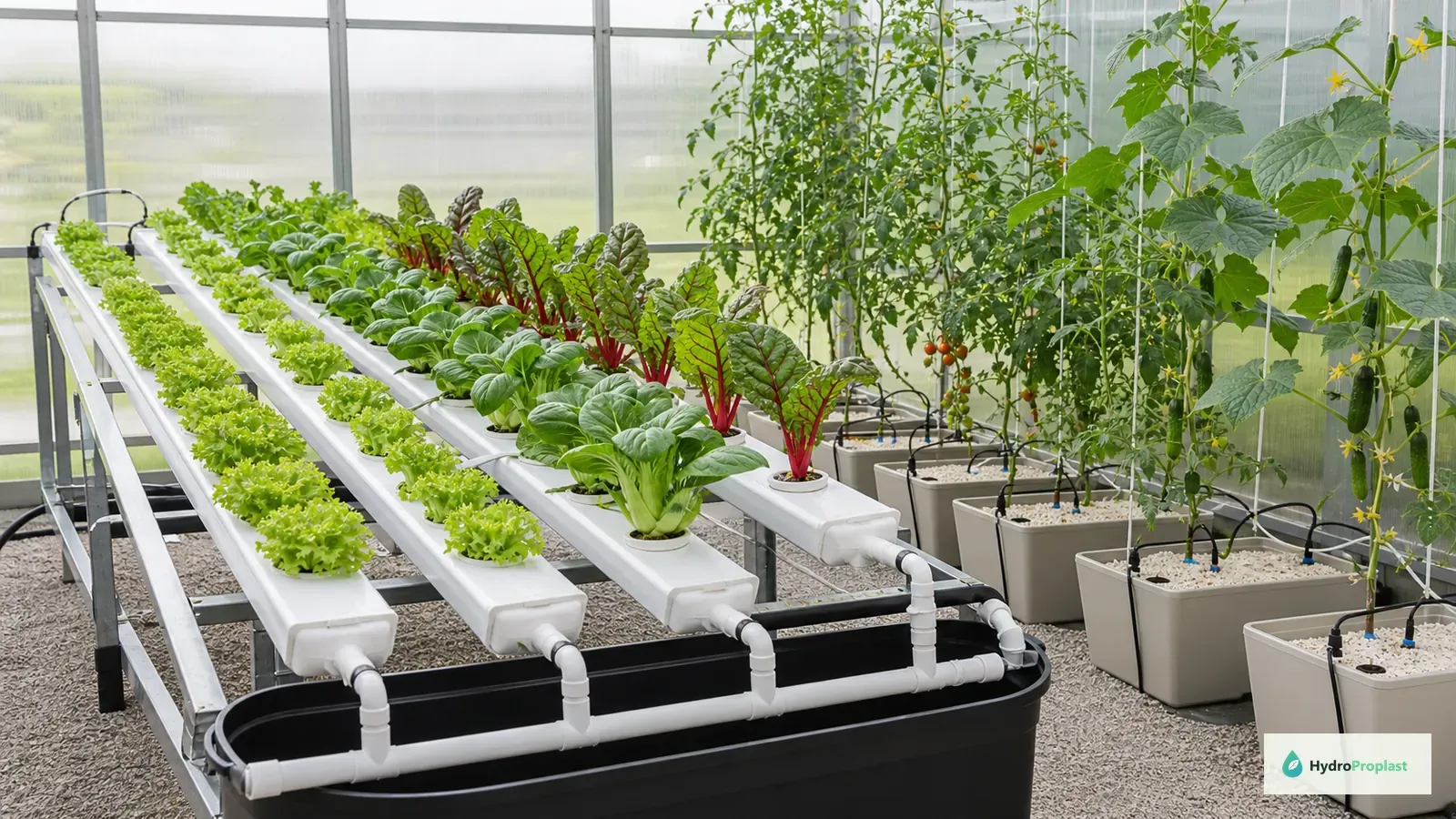
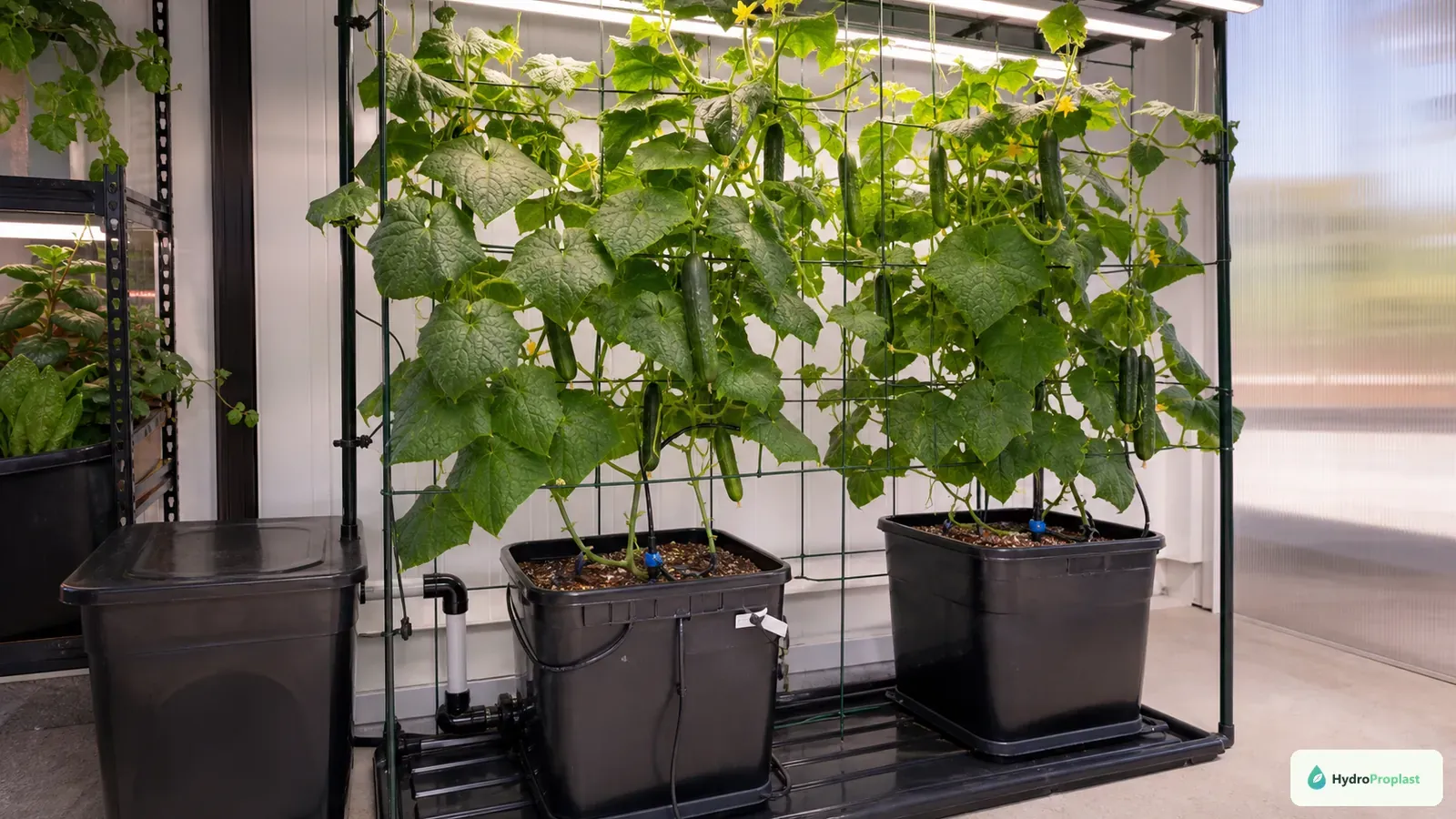
Drip-fed coco-perlite containers and Dutch buckets are practical because they provide root volume, drainage, and individual access. The emitter must wet the root zone evenly, and runoff needs a clear return or collection path. A recirculating reservoir must stay covered and accessible.
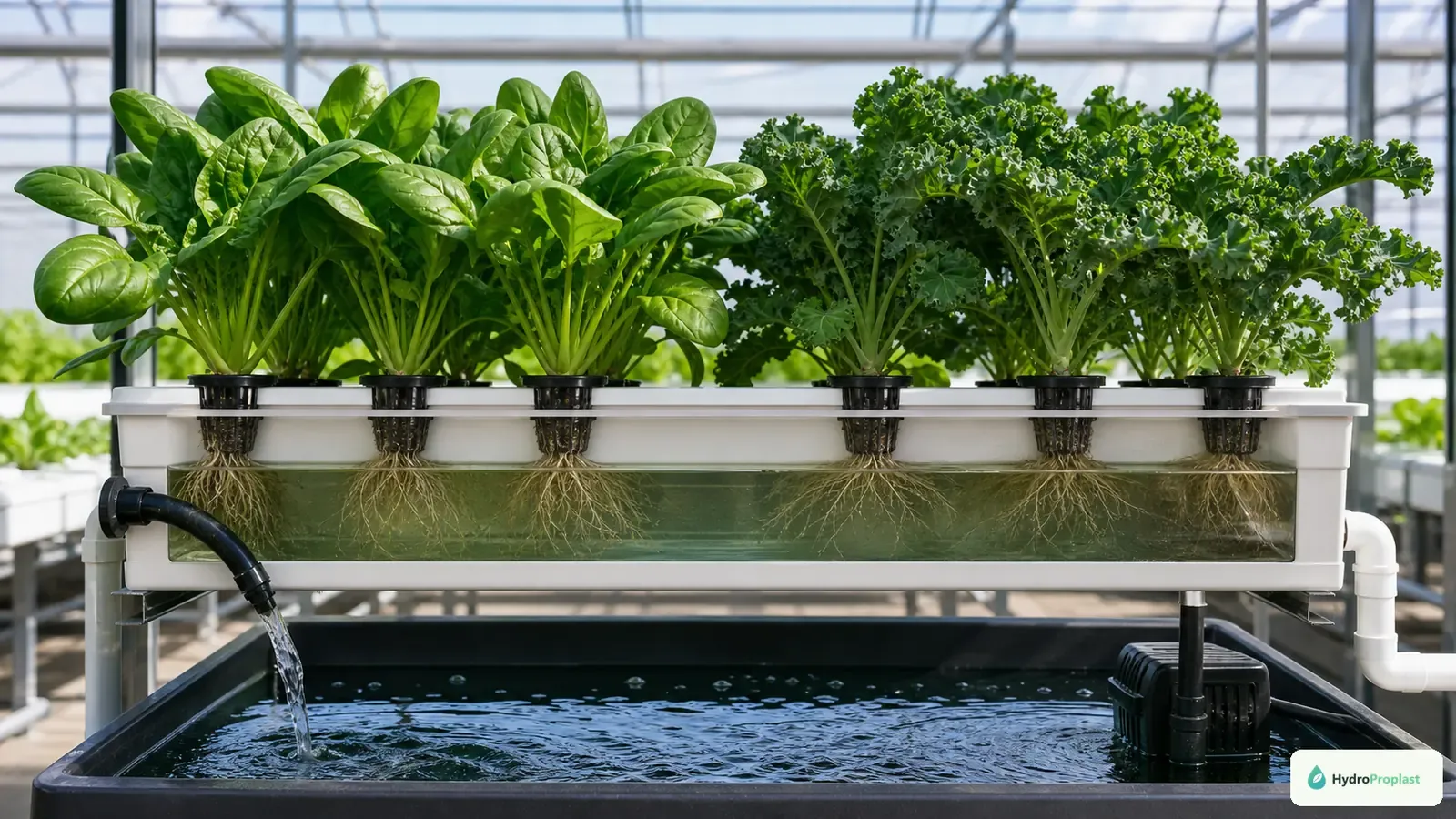
Large DWC or DFT systems can grow cucumbers, but they demand careful aeration, support, and root management. Small NFT channels are vulnerable to blockage by a vigorous cucumber root mass. Choose the system you can inspect and repair while the vine is attached to a trellis.
Germinate and transplant carefully
Use clean seed and an inert starter plug. Provide even warmth, moisture, and light without saturating the stem. Transplant when roots are visible and the plug holds together, before the seedling becomes stretched or root-bound.
Place the crown above the wettest part of the medium. Start emitters close enough to reach young roots, then move or adjust them as the root system expands. Do not bury a weak elongated stem to hide a lighting problem.
Install trellis first
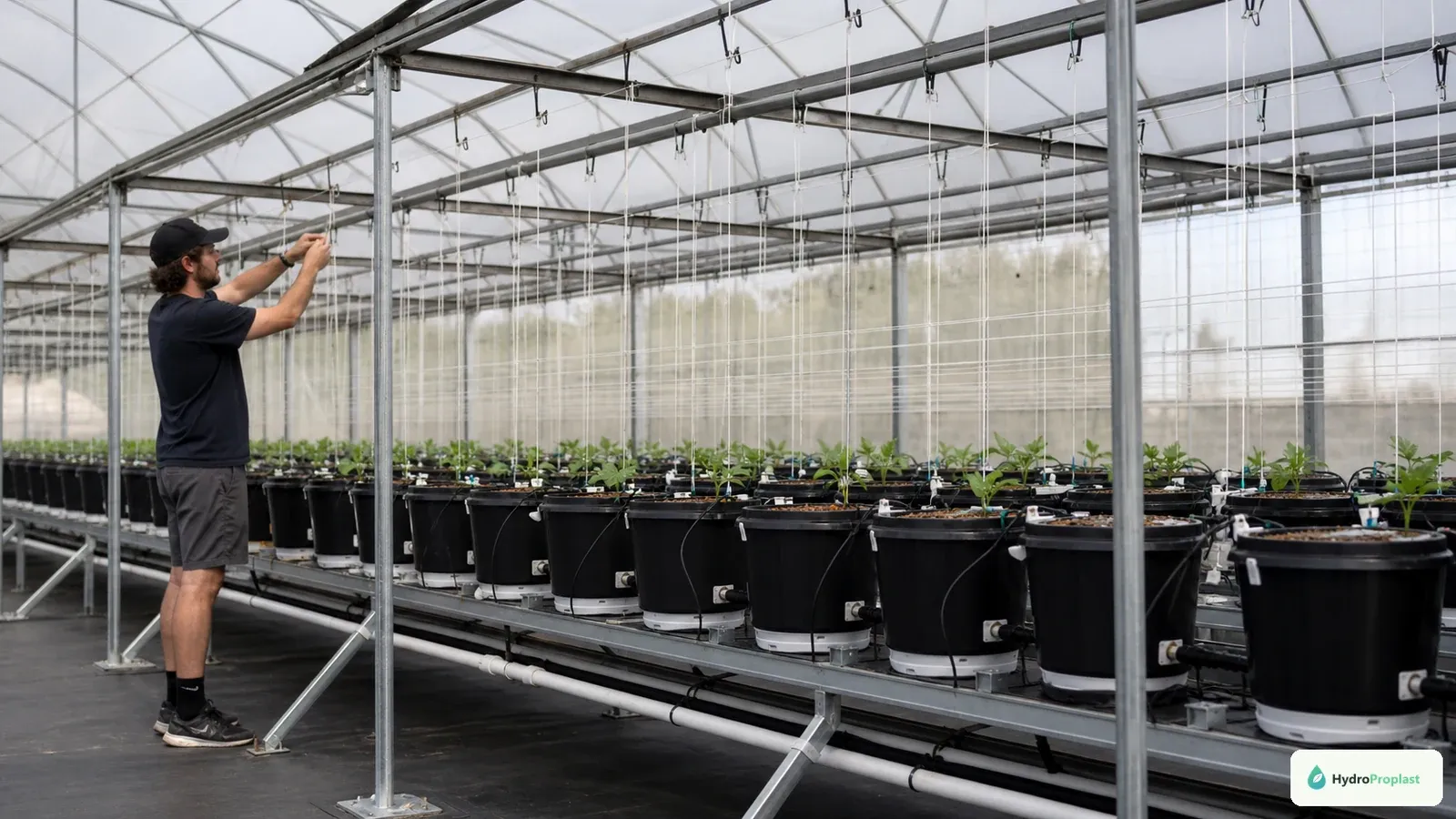
Build and anchor the trellis before transplanting so support work does not disturb established roots or irrigation lines.
Build the support before transplanting. A mature cucumber vine carries leaves, fruit, water, and considerable leverage. Anchor the frame to a stable bench or structure, not to a lightweight grow light. Check that clips and strings will not cut the stem.
Leave room to reach the reservoir, emitters, drains, and lower leaves. A trellis that blocks maintenance turns a small clog into a plant-wide emergency.
Provide uniform strong canopy light
Cucumbers need a broad, even light footprint as the canopy climbs. Measure at several positions and adjust fixture height or dimming rather than trusting an equivalent-watt claim. The LED guide explains coverage, PPFD, daily light, and heat.
Train leaves into the lit area instead of allowing a dense top layer to shade the lower vine. Keep a consistent dark period and watch canopy temperature under the fixture.
Coordinate air and root-zone temperatures
Warm leaves can coexist with an overheated nutrient solution. Measure both. High root-zone temperature can reduce dissolved oxygen and accelerate biological problems, while cold roots can slow water and nutrient uptake.
Use gentle airflow through the canopy and remove heat from lights and drivers. Avoid a strong fan that dries one edge or makes leaves rub against trellis material.
Mix and monitor nutrient solution
Use a complete hydroponic formula suitable for fruiting crops. Add concentrates separately to water, circulate thoroughly, then measure EC and pH. Track trends rather than chasing every small reading with immediate correction.
Cucumber water use can change sharply with leaf area, light, humidity, and fruit load. A falling reservoir with rising EC often calls for a different response from a stable reservoir with falling EC. The nutrient guide explains how to interpret concentration without assuming EC identifies individual nutrients.
Understand cucumber flowers

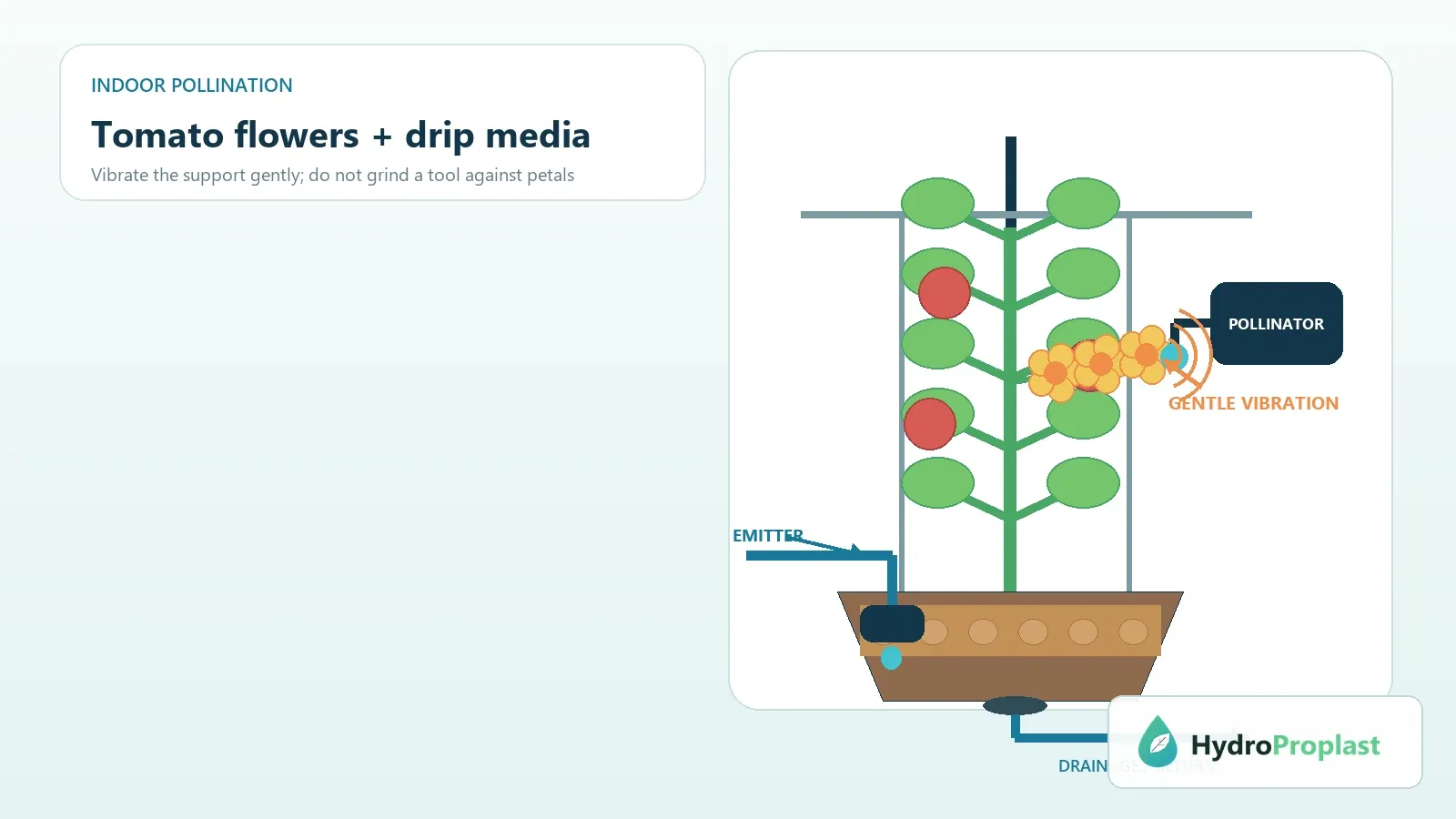
A female cucumber flower has a tiny fruit behind it; cultivars that require pollination may need gentle pollen transfer indoors.
Female flowers have a small immature cucumber behind the petals. Male flowers sit on a thin stem. If the cultivar requires pollination and insects are absent, move pollen with a clean soft brush during the open-flower period.
Do not pollinate a cultivar that the breeder identifies as parthenocarpic and sensitive to pollination. Poor fruit shape can also reflect stress, incomplete pollination, or irregular water supply, so diagnose from the whole system.
Train and prune with a plan
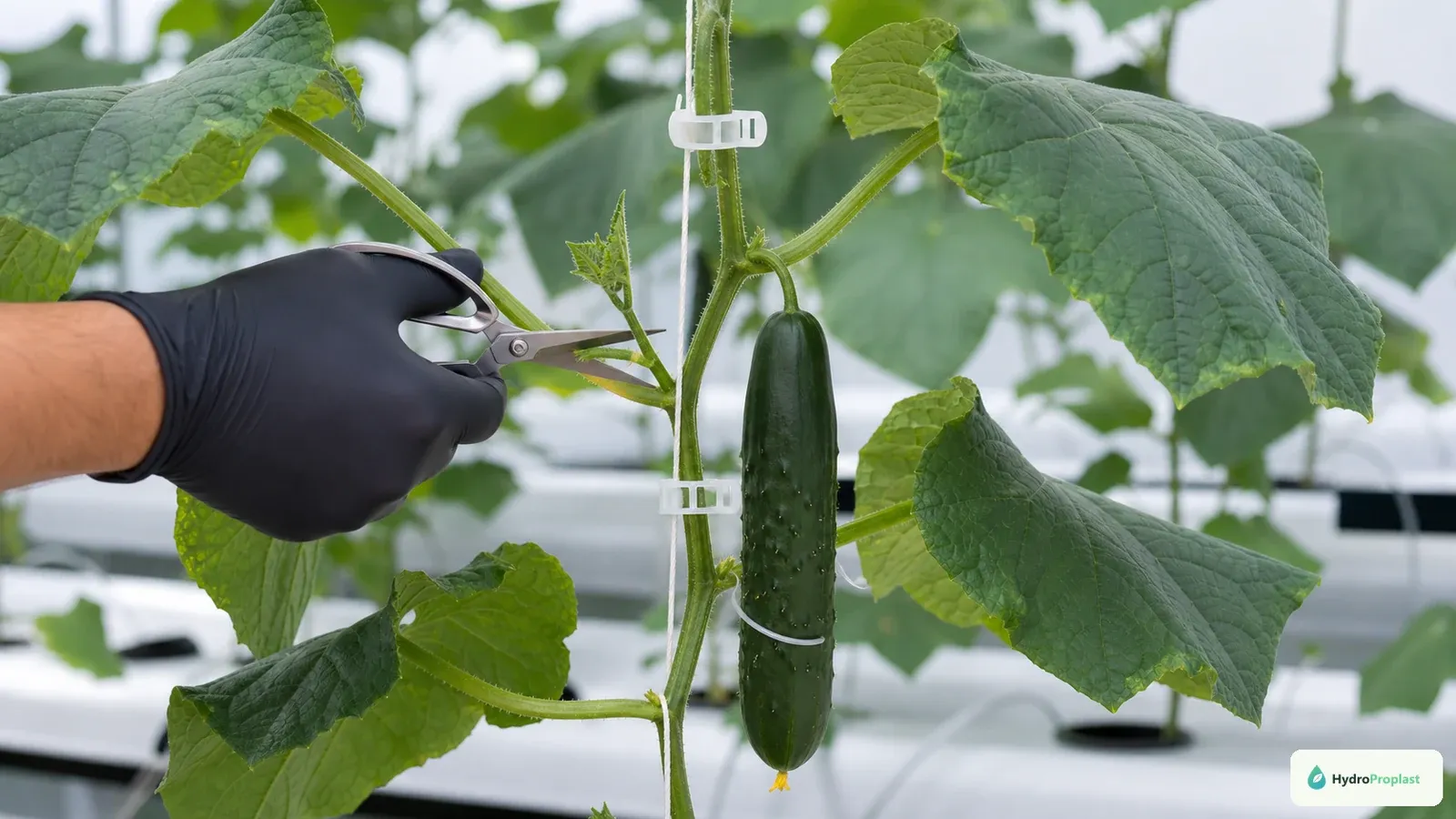
Training one main leader and pruning selected side shoots keeps the canopy accessible for light, inspection, and harvest.
Guide one main leader up the trellis and secure it with soft clips. Remove selected side shoots according to cultivar guidance and available space. Keep pruning tools clean and avoid removing large amounts of healthy leaf area at once.
Clear damaged lower leaves and maintain access around the root zone. A predictable vine is easier to light, pollinate, inspect, and harvest than a tangled canopy.
Manage fruit load
Harvest misshapen or damaged fruit early when it is draining the plant without useful yield. A young plant with weak roots may benefit from carrying fewer cucumbers until the canopy and root zone are established.
Do not thin from a universal number. Evaluate cultivar, trellis strength, new growth, water use, and the rate at which existing fruit is filling.
Troubleshoot wilt immediately
Cucumbers can wilt quickly when an emitter clogs, a pump stops, the reservoir empties, or roots lose oxygen. Check water delivery and root conditions before adding nutrients. Verify pump operation, emitter flow, drain function, reservoir level, and solution temperature.
If only one plant wilts, compare its emitter and roots with the others. If every plant wilts at the same time, investigate shared equipment and room conditions first.
Inspect pests and disease
Check leaf undersides, growing tips, flowers, and trellis contact points. Mites, aphids, thrips, whiteflies, and powdery growth can spread through a dense indoor canopy. Isolate new plants and avoid bringing outdoor soil or unclean tools into the room.
Remove badly affected material carefully and identify the problem before treating an edible crop. Improve spacing and airflow rather than using a fan to compensate for an overcrowded vine.
Harvest frequently
Pick cucumbers at the size recommended for the cultivar. Regular harvest prevents oversized fruit from consuming resources and helps you see hidden damaged fruit. Use clean scissors and support the fruit while cutting.
Record fruit count, usable weight, days to harvest, and plant condition. Yield per week and maintenance time are more useful than the largest single cucumber.
Plan outages and crop end
Provide enough moisture reserve for a short drip interruption and test backup power or alarms before the canopy is mature. Keep spare emitters, tubing, and a pump that matches the installed lift height.
End the crop when root congestion, disease, declining fruit quality, or an unmanageable canopy makes reliable operation unlikely. Remove roots, clean plumbing, and sanitize appropriate surfaces before the next cycle.
Beginner checklist
- Choose a compact cultivar with known pollination requirements.
- Install a sturdy trellis before transplanting.
- Use a root zone and reservoir sized for mature water demand.
- Verify every emitter and return path with plain water.
- Provide even canopy light and gentle airflow.
- Train one understandable vine structure.
- Harvest frequently and keep crop records.
Hydroponic cucumbers reward growers who plan for speed. If the trellis, irrigation, and reservoir are ready before transplanting, the plant’s rapid growth becomes manageable rather than chaotic.