The direction and timing of drift are diagnostic clues
Hydroponic pH changes because the reservoir is active chemistry: plants take up water and ions, roots exchange charged particles, source-water alkalinity buffers the solution, microbes transform compounds, and growers add water and nutrients. Some gradual movement is normal. Rapid, repeated, or extreme movement deserves investigation.
Start by asking four questions: Is pH rising or falling? How quickly? Does it change before or after a specific addition? Are plants and roots healthy? The correct fix for a steady rise from high-alkalinity water is different from the fix for a sudden drop caused by a dosing error or decaying roots.
Do not solve every change by alternating pH-down and pH-up. That treats the display while adding more ions and hiding the pattern. Verify the reading, record the trend, and identify the driver.
First rule out measurement error
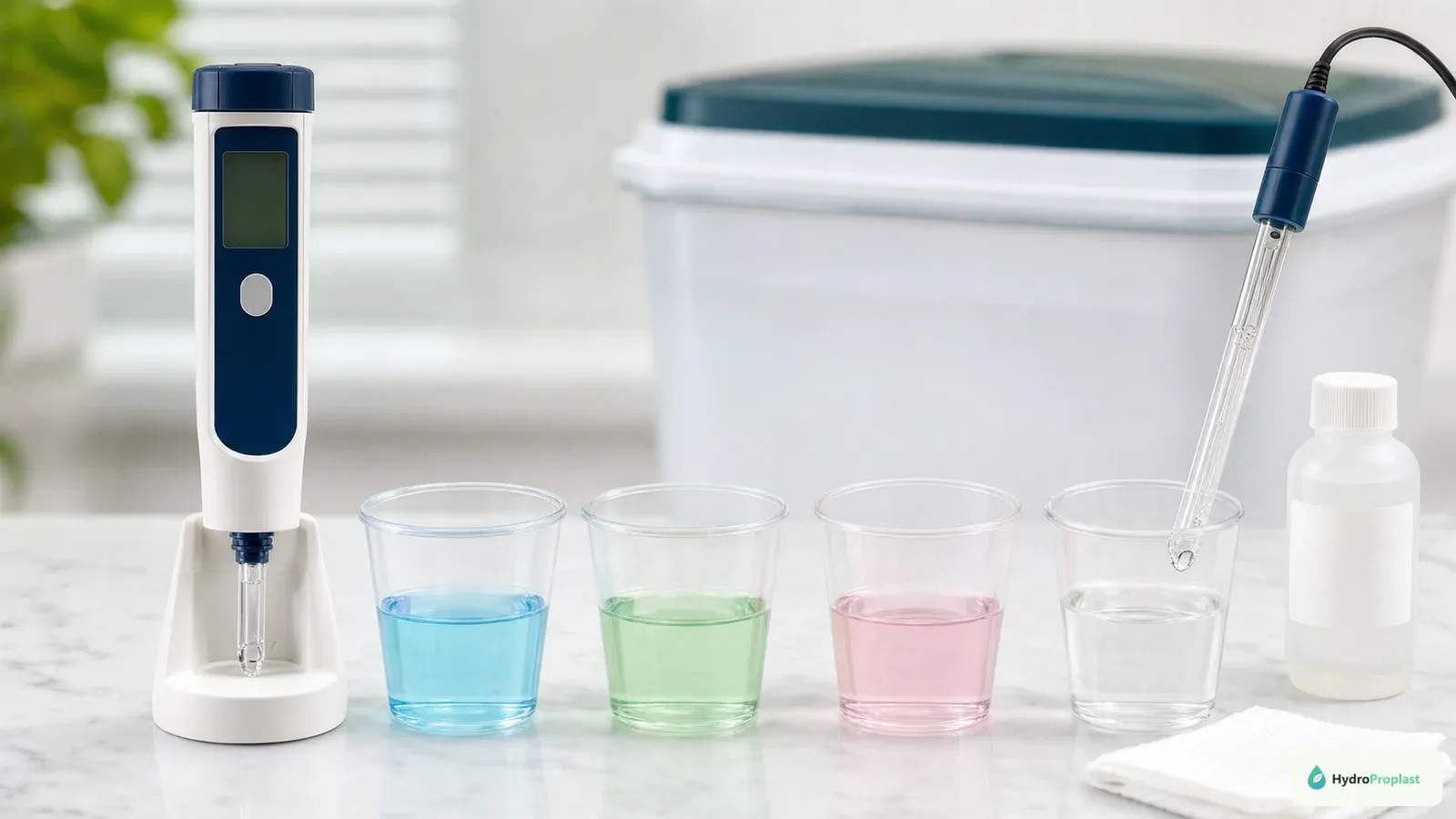
Verify the meter and sampling routine before treating a surprising reading as real drift.
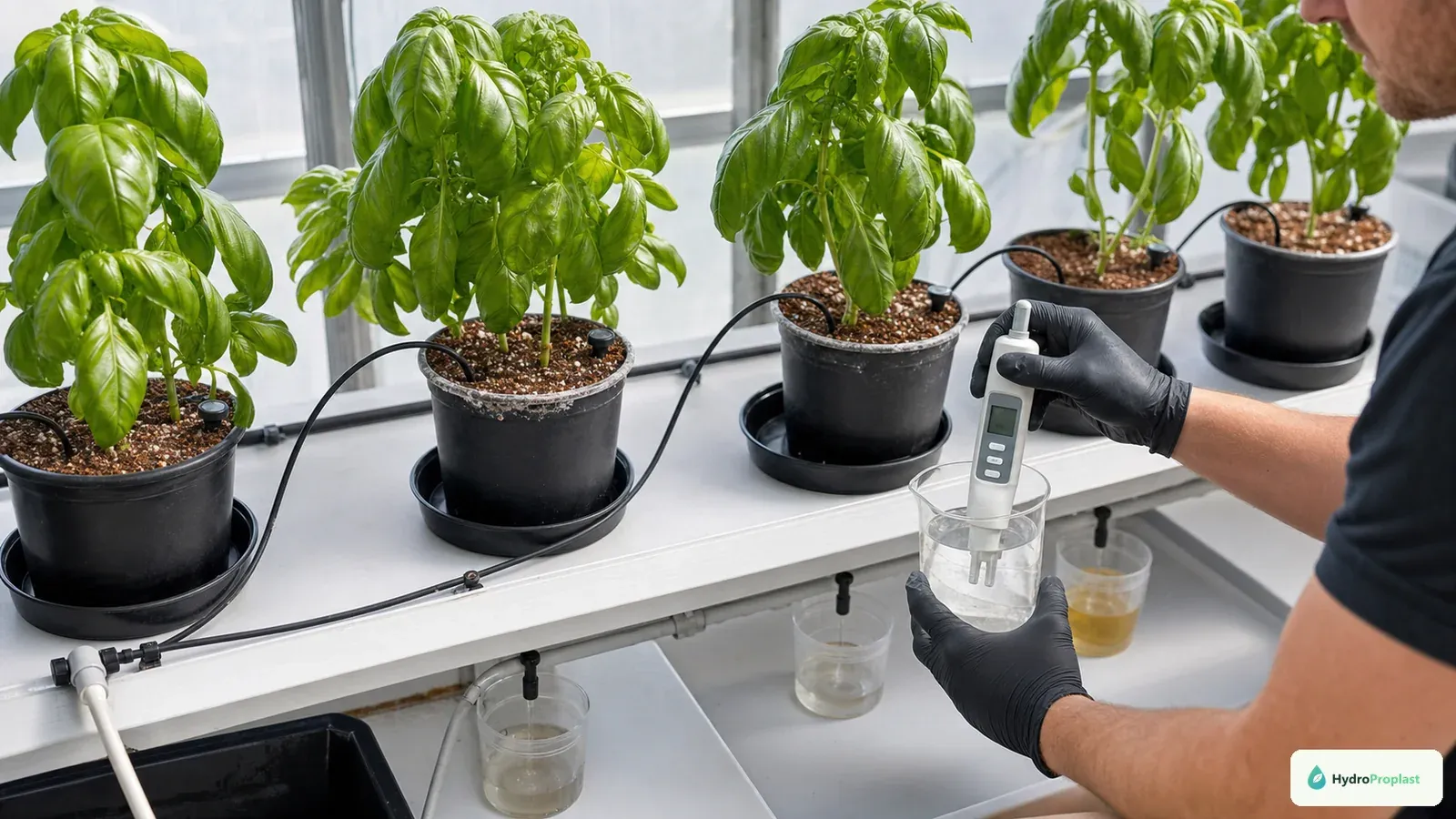
Calibrate the pH meter with fresh appropriate buffers, rinse the probe, and allow the reading to stabilize. Check storage: many glass electrodes must remain hydrated in specified solution and can be damaged by drying or storage in unsuitable water.
Test a known buffer after calibration. If the meter cannot return a stable expected reading, do not adjust the crop reservoir from it. Replace contaminated buffer, clean the probe as directed, check the battery, and inspect for damage.
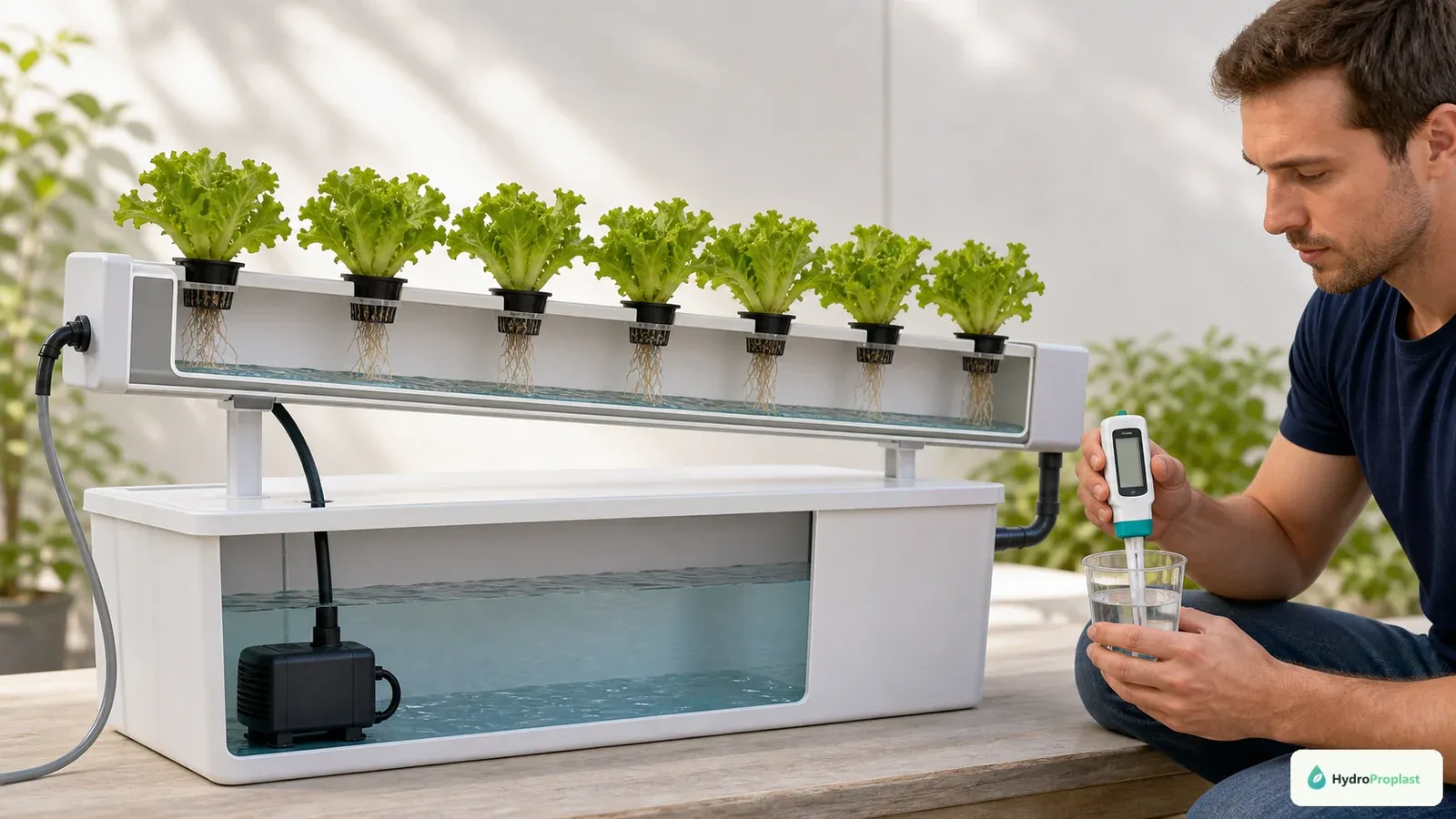
Sample consistently. A reading taken beside a fresh acid addition differs from a well-circulated reservoir. Bubbles, residue, temperature, and a dirty sample cup can influence results. Use a second method as a sanity check when a change is surprising.
Only call the movement drift after the instrument and sampling process are credible.
Rising pH: investigate alkalinity first
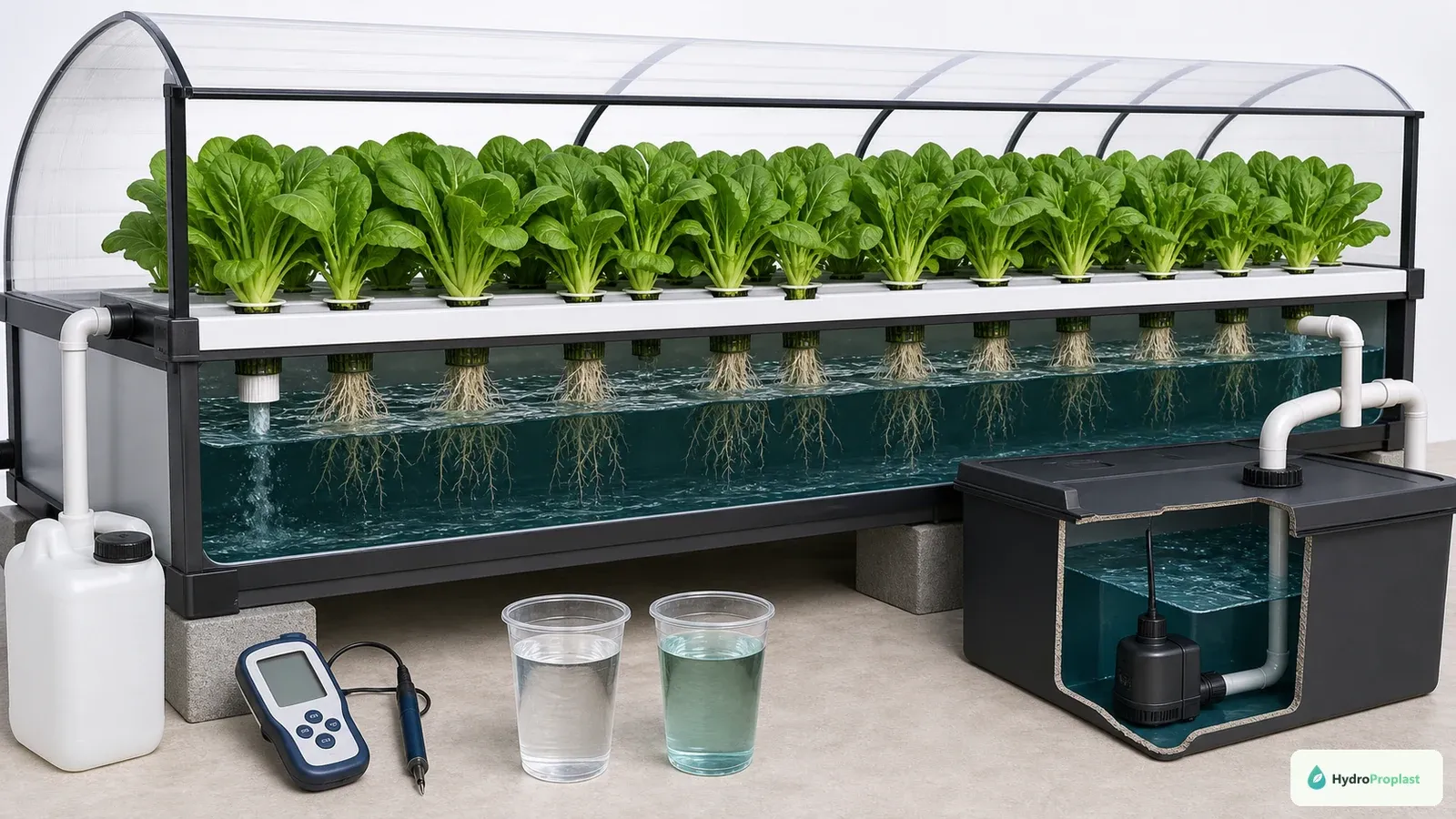
Comparing source and circulated solution helps separate water alkalinity from crop-driven change.
High pH and high alkalinity are not the same. pH is the current acid-base condition; alkalinity describes the water’s capacity to neutralize acid, often because of bicarbonate and carbonate. Water can be corrected into range and then rebound upward as its buffering capacity reasserts itself.
Oklahoma State University’s EC and pH guide notes that high-alkalinity water tends to raise nutrient-solution pH and recommends more frequent monitoring. A laboratory water analysis can quantify alkalinity and dissolved minerals.
If the rise begins in freshly mixed solution before plants have much influence, source water is a strong suspect. Calculate treatment from water analysis and use crop-safe products under authoritative guidance rather than repeatedly guessing with acid. Reverse osmosis or blending may be justified for difficult water, but only after testing.
Plant uptake can move pH in either direction
Roots maintain electrical balance as they absorb nutrient ions. The balance between positively and negatively charged nutrients and the nitrogen forms in the formula can influence whether roots release acidic or basic equivalents. Crop growth stage and uptake rate change the effect.
This means a formula that is stable with seedlings may drift differently under a mature canopy. Water level, EC, and pH should be read together. Rapid water uptake with rising EC suggests concentration, while falling EC suggests different net ion uptake or dilution; neither alone identifies the nutrient balance.
Do not switch fertilizer based on one day. Compare several correctly mixed batches, verify the product is intended for the crop and source water, and discuss persistent problems with the manufacturer or an extension specialist.
Falling pH: check biology and dosing history
A declining pH can be associated with nutrient form and plant uptake, but a sudden fall also calls for inspection of roots, organic debris, microbial activity, and recent additions. Dark, soft roots, unpleasant odor, foam, or decaying plant material indicate a root-zone problem that pH-up will not cure.
Review the log. Was acid added twice? Was a top-up already adjusted? Did concentrate enter a small reservoir directly? Was the working volume estimated incorrectly? Recalculate every dose from actual volume.
Remove dead tissue, restore appropriate root-zone conditions, and clean according to system and crop-safety guidance. Do not pour disinfectants into a planted reservoir without validated instructions. Root disease requires diagnosis, not chemical improvisation.
New media and system materials can create drift
Growing media may carry residual salts or have chemical behavior that influences the root zone. Coir quality, mineral wool preparation, and reused media history matter. Follow supplier and extension preparation guidance and measure drainage where appropriate.
New concrete, some stone, or unsuitable construction material can contribute alkalinity. Unknown metals may corrode. Reservoirs and plumbing should be selected for compatibility rather than adapted from materials with uncertain history.
Run a new system with source water, then with nutrient but no plants, recording pH over time. If it drifts without roots, investigate water, media, and materials. This commissioning test separates equipment chemistry from crop uptake.
The Oklahoma State media guide provides selection criteria for soilless substrates rather than treating them as interchangeable.
Small reservoirs magnify every addition
One milliliter of adjustment product has a much larger effect in a small container than in a large tank. Small volumes also warm, evaporate, and change concentration quickly. Roots and starter media occupy part of the advertised capacity, making the true working volume smaller.
Measure the actual volume and mark operating levels. Dilute adjustment products when the label permits so doses can be made in finer increments. Use accurate syringes or cylinders dedicated to compatible chemicals.
If the system requires daily opposing corrections, increase buffer volume only when the design and crop support it, or reconsider the water and nutrient strategy. A larger reservoir slows change but is not a cure for contamination or wrong chemistry.
Top-ups can manufacture a sawtooth pattern
Adding high-alkalinity tap water may push pH upward. Adding pre-acidified water can push it downward if treatment is excessive. Adding nutrient concentrate changes both EC and acid-base chemistry. Irregular top-ups create irregular readings.
Record the pH and EC before top-up, what was added, its volume, and the stabilized result. Prepare top-up solution consistently. Do not add nutrient concentrate directly to roots or use the same scoop for adjustment products.
A sawtooth chart that changes after each addition points toward procedure rather than plant mystery. Standardizing the process may stabilize the reservoir without changing the formula.
Temperature, aeration, and sampling location
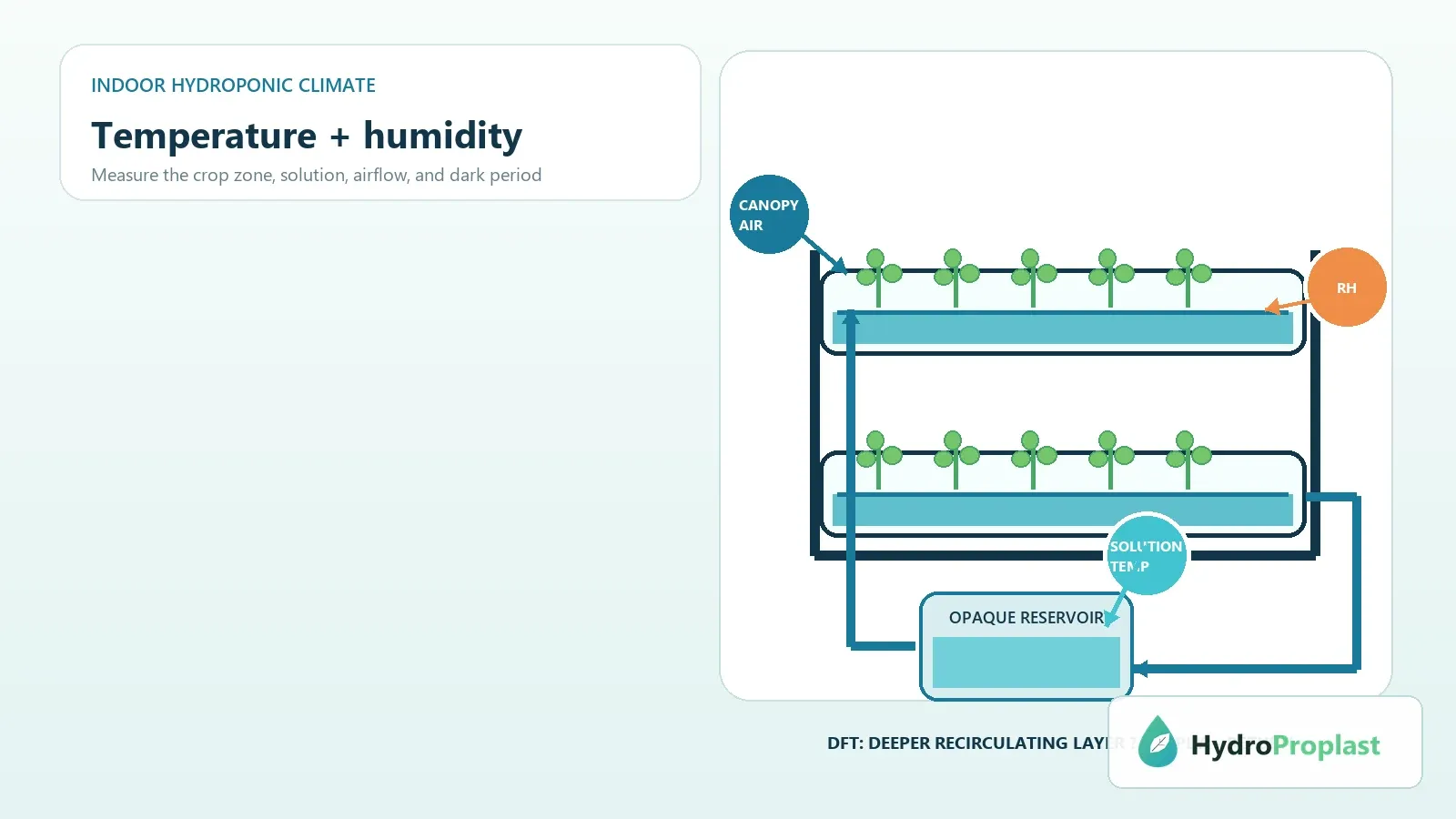
Temperature affects meter response, gas solubility, plant uptake, and biological activity. Automatic temperature compensation helps a meter’s electrode response; it does not make plant chemistry independent of temperature.
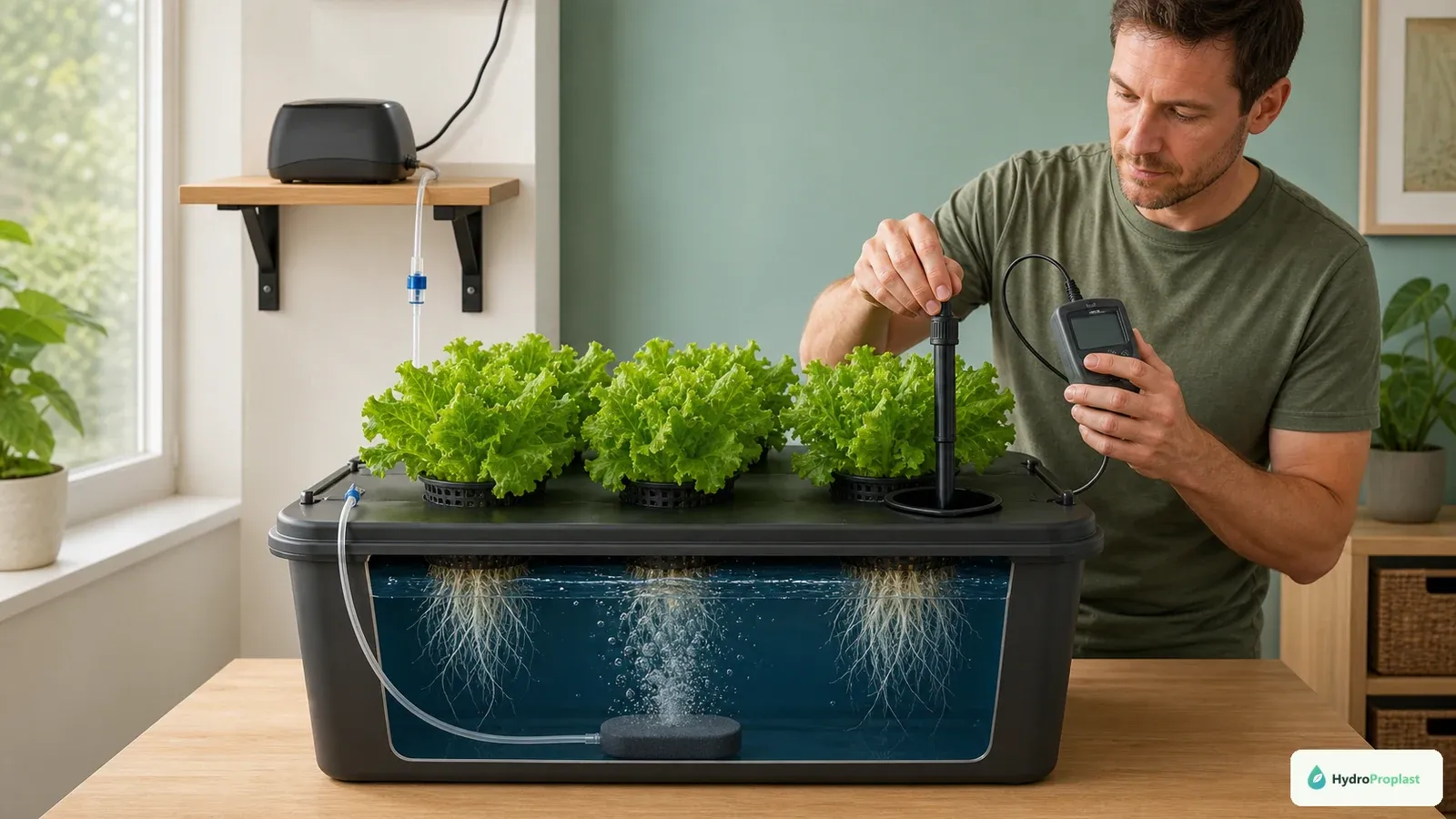
Aeration and circulation influence how representative a sample is. A poorly mixed reservoir may have local pockets after dosing. In a long NFT or drip loop, return solution can differ from the reservoir inlet. Choose a consistent sampling point after adequate circulation.
Warm, oxygen-poor root zones can damage roots and encourage biological problems that subsequently affect pH. Address room heat, reservoir placement, aeration, and flow rather than treating pH as the primary failure.
Read the hydroponic water-temperature guide when temperature and root condition move together.
Algae and microbial activity
Algae grows where light reaches nutrient solution or wet media. It changes solution chemistry through photosynthesis and respiration, contributes organic debris, and can create daily pH patterns. Biofilm and decomposing roots add further microbial processes.
Block light from reservoirs, tubing, channels, and unused plant sites. Remove algae and debris, clean between crops, and correct the light leak. Repeated treatment without exclusion leaves the energy source in place.
If pH differs markedly between morning and evening, record time, light cycle, temperature, and algae presence. Consistent sampling time prevents a normal daily pattern from being mistaken for random drift.
Use a drift worksheet
For seven days, record time, pH, EC, water level, solution temperature, top-up volume and type, adjustment dose, crop stage, root appearance, and equipment events. Plot pH rather than reading isolated numbers.
A rise from immediately after every tap-water top-up suggests alkalinity or procedure. A stable fresh batch that changes only after roots mature suggests uptake. A drop alongside odor and root browning suggests root-zone investigation. Erratic jumps without chemical additions suggest meter or sampling problems.
Change one factor and continue recording. Multiple simultaneous changes erase the evidence.
Correct the cause, then make a small adjustment
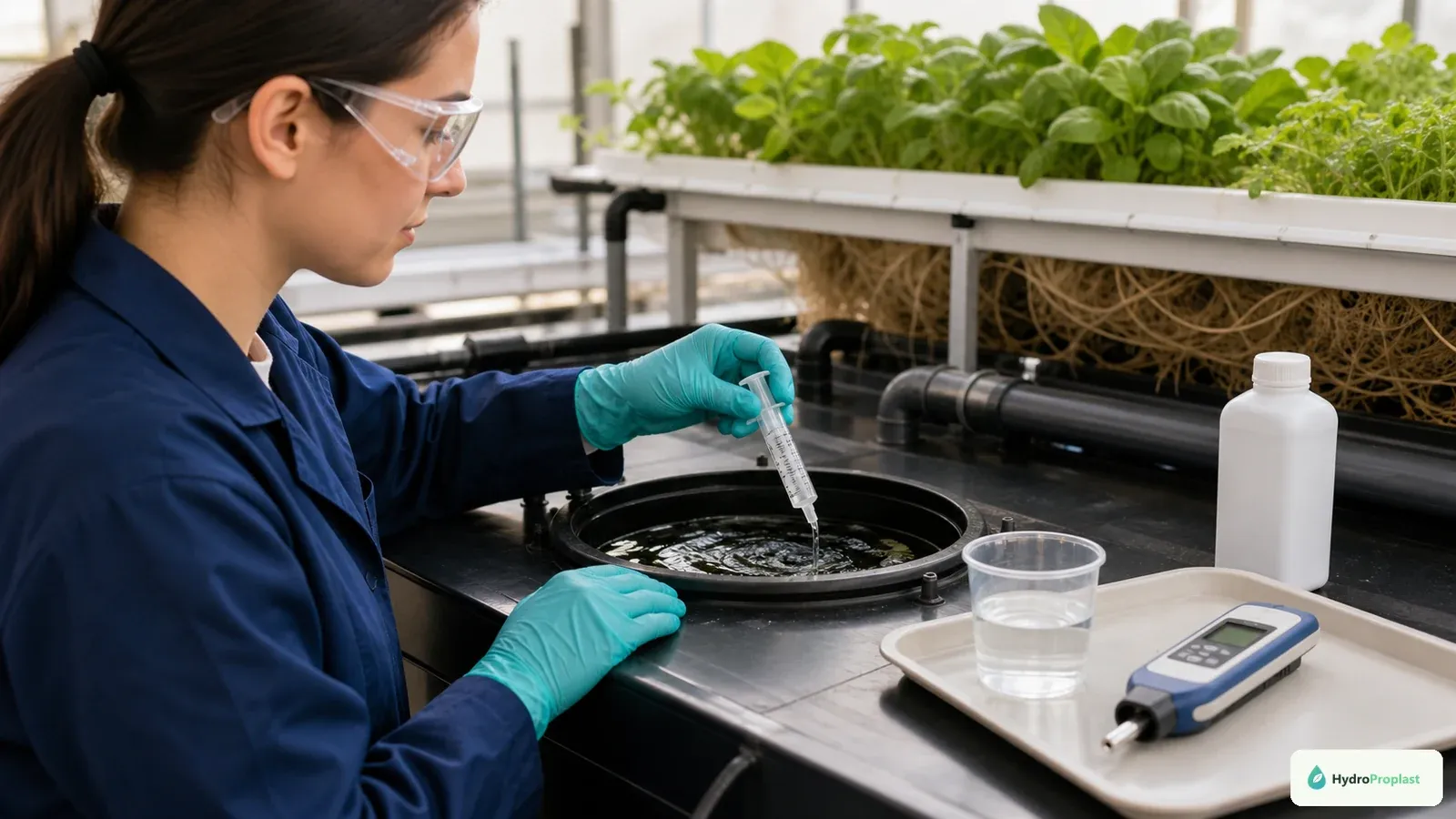
Correct the cause first, then adjust gradually, circulate, wait, and retest.
After verifying measurement, address the driver: treat or blend high-alkalinity source water using validated guidance; standardize mixing; remove light leaks; improve root health and temperature; prepare media correctly; or increase working volume.
Then bring pH back gradually using a labeled food-crop hydroponic product. Mix the complete nutrient and set EC first. Add a small measured dose, circulate, wait, and retest. Record the amount so future corrections are informed.
The companion Hydroponic pH Explained covers target selection and safe adjustment order. This drift guide should not be used as a substitute for product safety directions.
When to replace the solution
Replacement is sensible after a clear mixing error, contamination, extreme repeated adjustment, or accumulated imbalance that cannot be interpreted safely. It also provides a known baseline for comparing whether drift returns.
Do not replace only to avoid investigating the water. If every new batch rebounds upward, repeated disposal wastes nutrient and water while the alkalinity remains. Likewise, a clean new batch will deteriorate again if dead roots and blocked flow remain.
Dispose of nutrient solution responsibly according to local guidance. Never discharge concentrated fertilizer to storm drains or natural waterways.
Common failed fixes:
Adding acid every few hours without testing alkalinity accumulates adjustment ions and hides rebound.
Alternating up and down after overshoot creates a chemical seesaw. A fresh small batch may be safer.
Buying a new nutrient before calibrating the meter changes the system without proving the reading.
Adding supplements for leaf symptoms can raise EC while pH or roots remain the real problem.
Sterilizing a live reservoir with an improvised dose risks roots and does not correct temperature, light leaks, or debris.
Copying a commercial controller’s narrow band leads a small reservoir to constant dosing.
Know when stability is good enough
A reservoir does not need a perfectly flat pH line. If readings move gradually within the crop’s acceptable range, EC and water level behave coherently, roots look healthy, and new growth is normal, observation may be the right action.
Intervene when the trend will leave the range, movement is rapid, roots or plants decline, or corrections become frequent. Verify before dosing and document the result.
Pair the log with the beginner nutrient guide so pH is interpreted alongside formula and EC. The goal is not to force a decimal to stand still; it is to maintain a root environment whose changes you can explain and manage.
A useful escalation threshold is procedural rather than numeric: seek qualified help when calibrated measurements remain extreme after a fresh correctly mixed batch, roots decline across the system, source-water analysis is difficult to interpret, or safe correction requires repeated large chemical additions. Bring the seven-day log, water report, nutrient label, system volume, crop stage, and photographs.
Do not conceal the pattern by remaking solution immediately before every consultation. A specialist needs to know how fast it moves and what additions preceded the change. If food safety, chemical handling, or discharge rules are uncertain, use local extension and regulatory guidance.
For future crops, keep a clean baseline record from a healthy cycle. Normal drift direction and dose response in your own water provide a stronger comparison than a screenshot from another grower. Replace probes and perishable standards according to manufacturer instructions, and date every calibration solution when opened.
The most effective prevention is consistency: one verified water source, measured volume, stable nutrient formula, calibrated instruments, blocked light, clean roots, and documented top-ups. With those variables controlled, unusual drift becomes easier to locate before plants show severe symptoms.