Indoor hydroponic tomatoes are a systems project. A long-lived root zone supports a fruiting canopy that needs strong light, structural trellising, pruning, pollination, and stable irrigation. Choose a cultivar first, then build backward from its mature height, spread, and fruit load.
A single dwarf cherry tomato in a well-sized system is a more realistic first crop than several indeterminate vines in a countertop kit. The goal is not maximum plant count; it is a plant you can keep stable for the whole fruiting cycle.
Choose determinate or indeterminate habit
Micro-dwarf and compact determinate tomatoes fit limited height and concentrate harvest. Indeterminate vines continue growing and can yield over a longer period, but require tall support and ongoing training. Fruit size also changes branch load and time to ripen.
Use breeder information for mature habit, disease resistance, greenhouse suitability, and flavor goal. Do not assume every cherry tomato is compact or every determinate cultivar is small enough for a shelf.
Choose a production system with root-zone volume
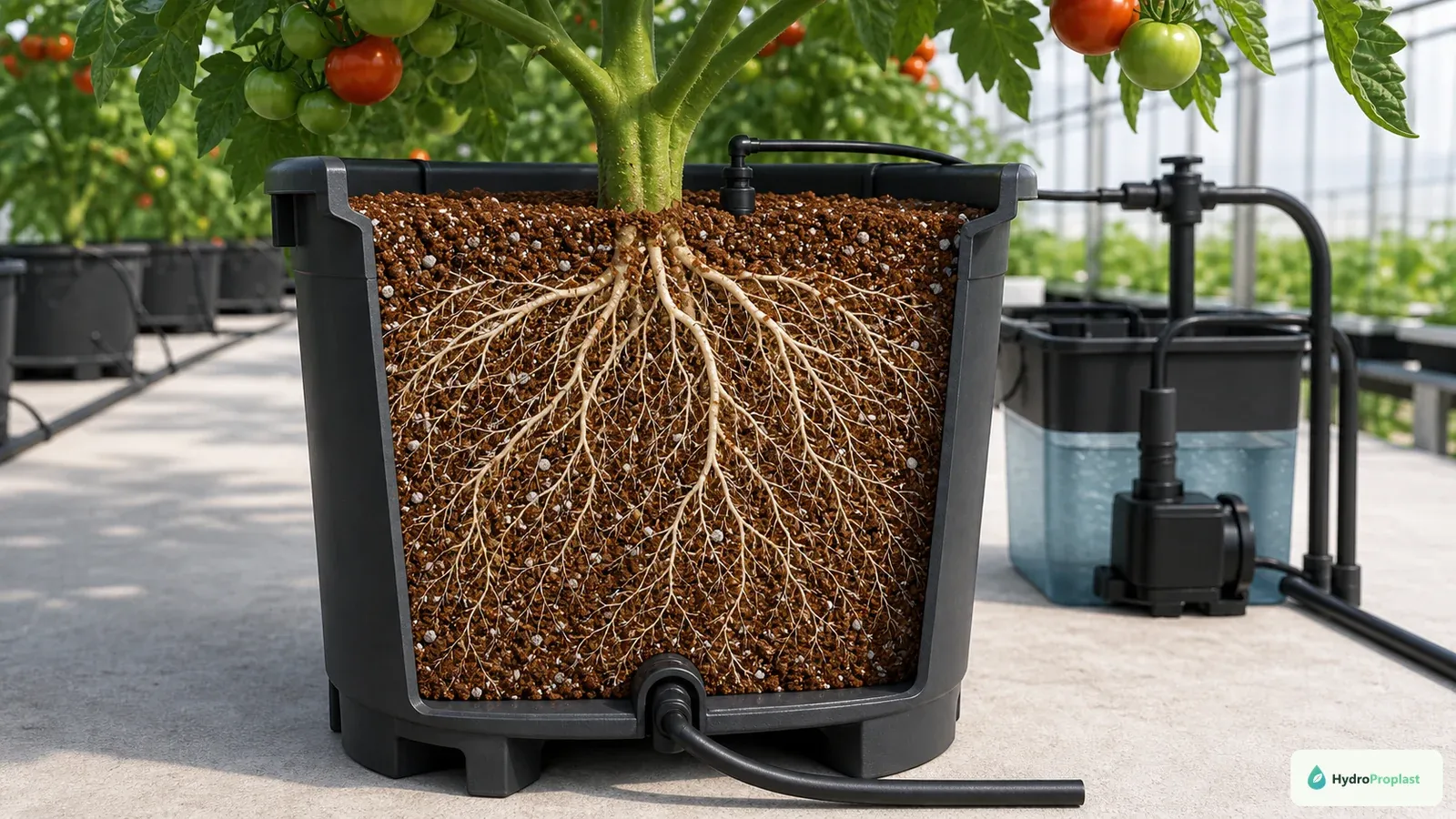
A large free-draining root zone buffers irrigation while the bottom outlet carries runoff back toward the reservoir.
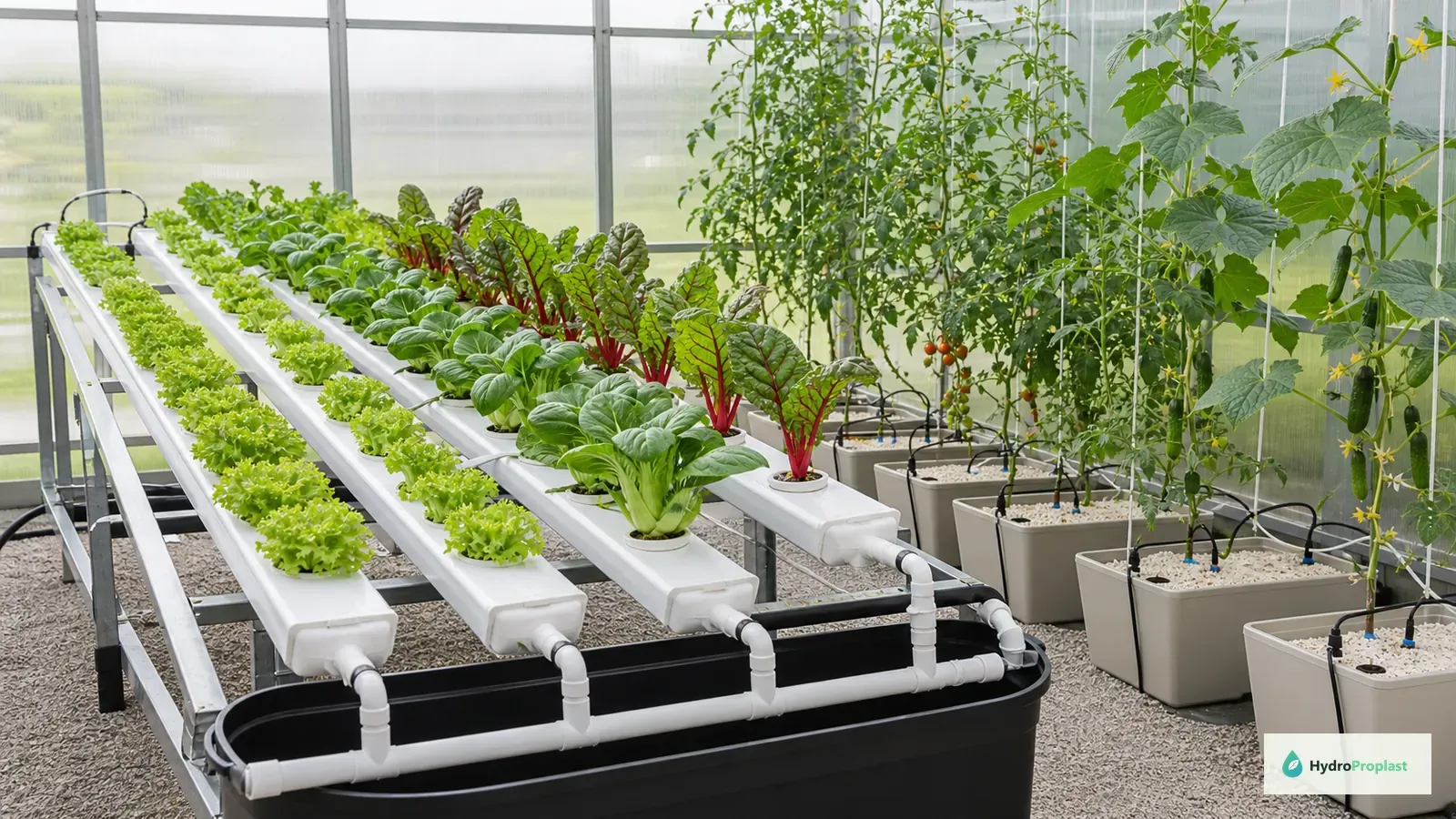
Drip-fed coco-perlite containers and Dutch buckets are common because they provide root volume and individual plant access. Emitters must deliver evenly into the medium, and drainage needs a reliable collection or return path. Test the complete loop with plain water before transplanting.
Large aerated buckets can work, but DWC depends on continuous aeration and stable water temperature. Small NFT channels can become obstructed by mature tomato roots. Size the system for months of growth, not for a compact seedling.
Raise compact transplants
Start clean seed in an inert plug and provide even light as soon as seedlings emerge. A short sturdy transplant with healthy roots adapts more reliably than a tall weak seedling. Keep leaves dry enough for airflow and inspect for pests before the plant enters the main room.
Transplant when the root plug holds together. Keep the crown above saturated media and position the emitter so moisture reaches roots without constantly wetting the stem.
Build a safe trellis
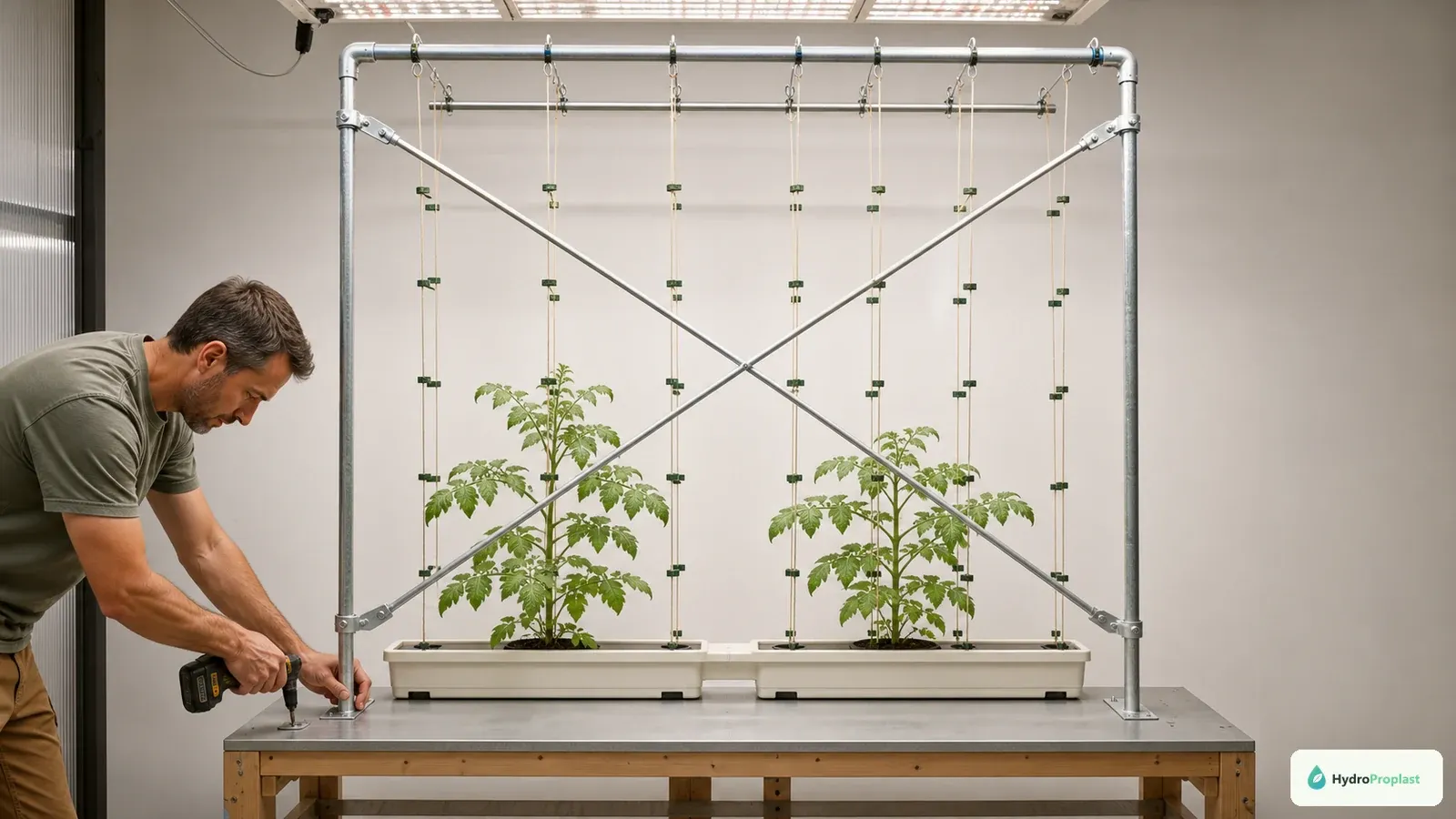
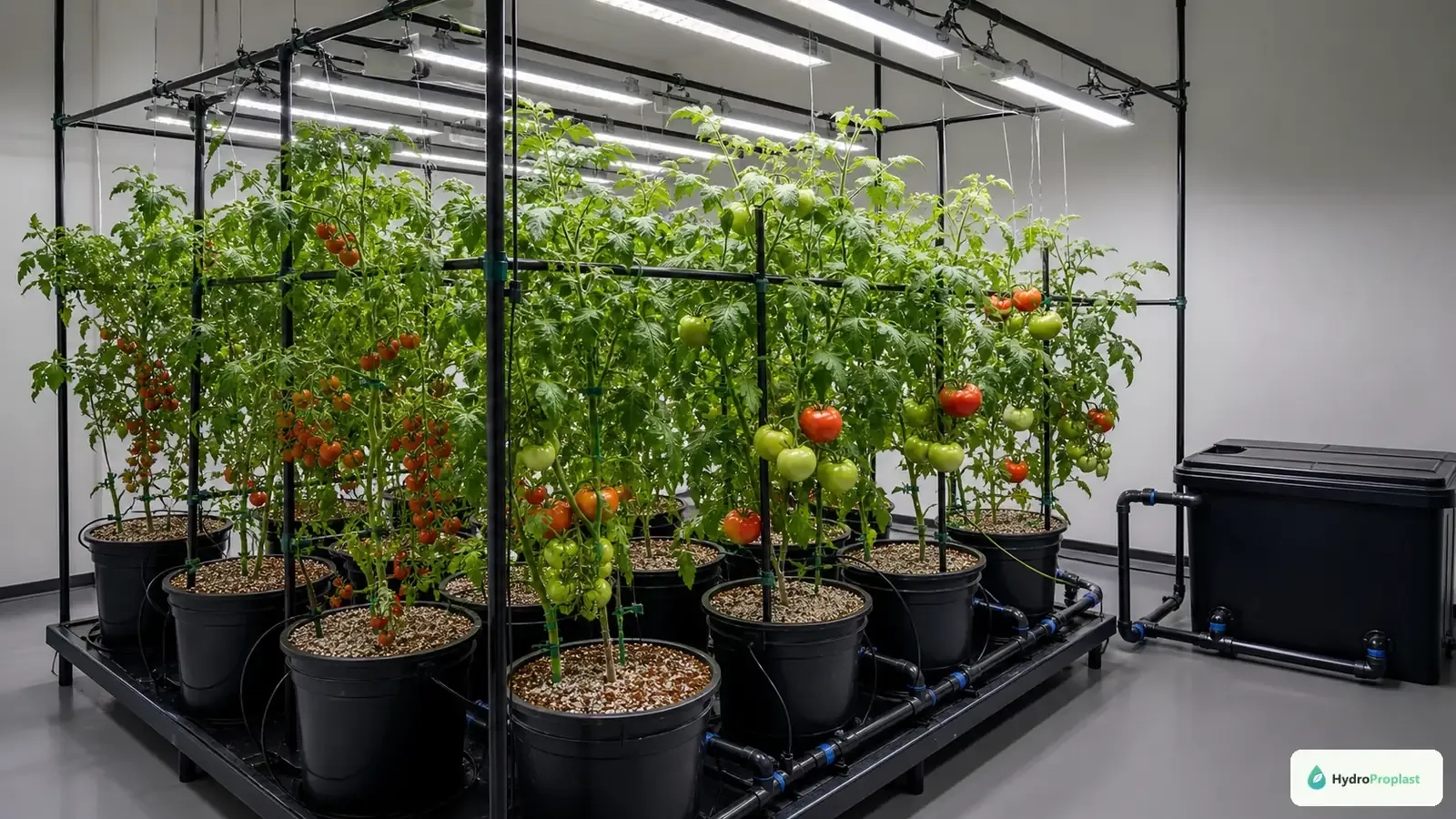
A freestanding cross-braced trellis should carry mature tomato weight independently of the LED fixture.
Install the frame before the plant becomes heavy. Anchor it to a stable bench or wall structure, not to a lightweight LED fixture. Use soft clips or strings that can be adjusted as the stem thickens.
Leave a maintenance path to the reservoir, pump, emitters, and lower canopy. Support individual heavy clusters when needed so their weight does not split a branch.
Deliver fruiting-level light
Tomatoes require a stronger and broader light footprint than leafy greens. Plan from the mature canopy area and measure more than the bright center. Hanging height and dimming change both intensity and uniformity.
The LED grow-light guide explains PPF, PPFD, daily light, spectrum, and heat. Increase intensity gradually after transplant and watch leaf angle, color, internode length, and canopy temperature.
Regulate air and root-zone temperatures
Tomato leaves, flowers, and roots respond to different parts of the environment. Measure air temperature near the canopy and nutrient-solution temperature in the reservoir. High heat can affect flower performance, water use, and dissolved oxygen.
Move air gently through the canopy and remove heat from LED drivers. Avoid blowing a strong fan continuously at one side of the plant.
Use a complete staged nutrient program
Choose a complete hydroponic formula suitable for fruiting crops. Add separated concentrates to water one at a time, circulate thoroughly, and measure EC and pH after mixing. Follow crop and product guidance rather than inventing a universal target.
As fruit load increases, water use and nutrient uptake may change at different rates. Track reservoir level, EC, pH, root appearance, and leaf pattern together. The nutrient guide explains a reliable mixing and monitoring routine.
Train and prune by vine type
Indeterminate tomatoes are often trained to one or a small number of leaders, while compact determinate plants usually need lighter pruning. Remove selected suckers only when the training plan calls for it. Do not strip healthy leaves simply to make the plant look tidy.
Keep the lower canopy accessible and remove damaged leaves with sanitized tools. Make changes gradually so the plant retains enough leaf area to support fruit.
Support pollination
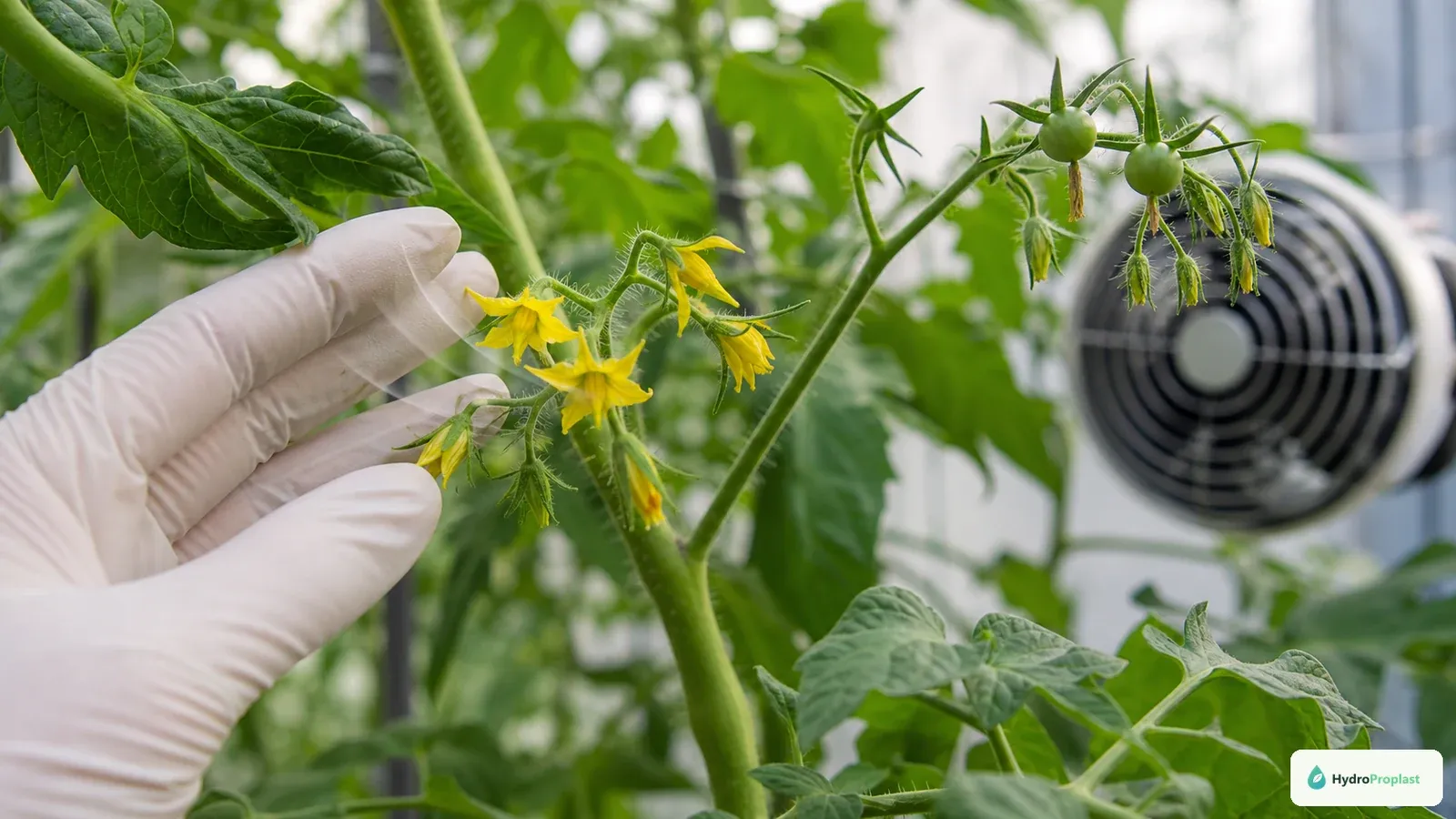
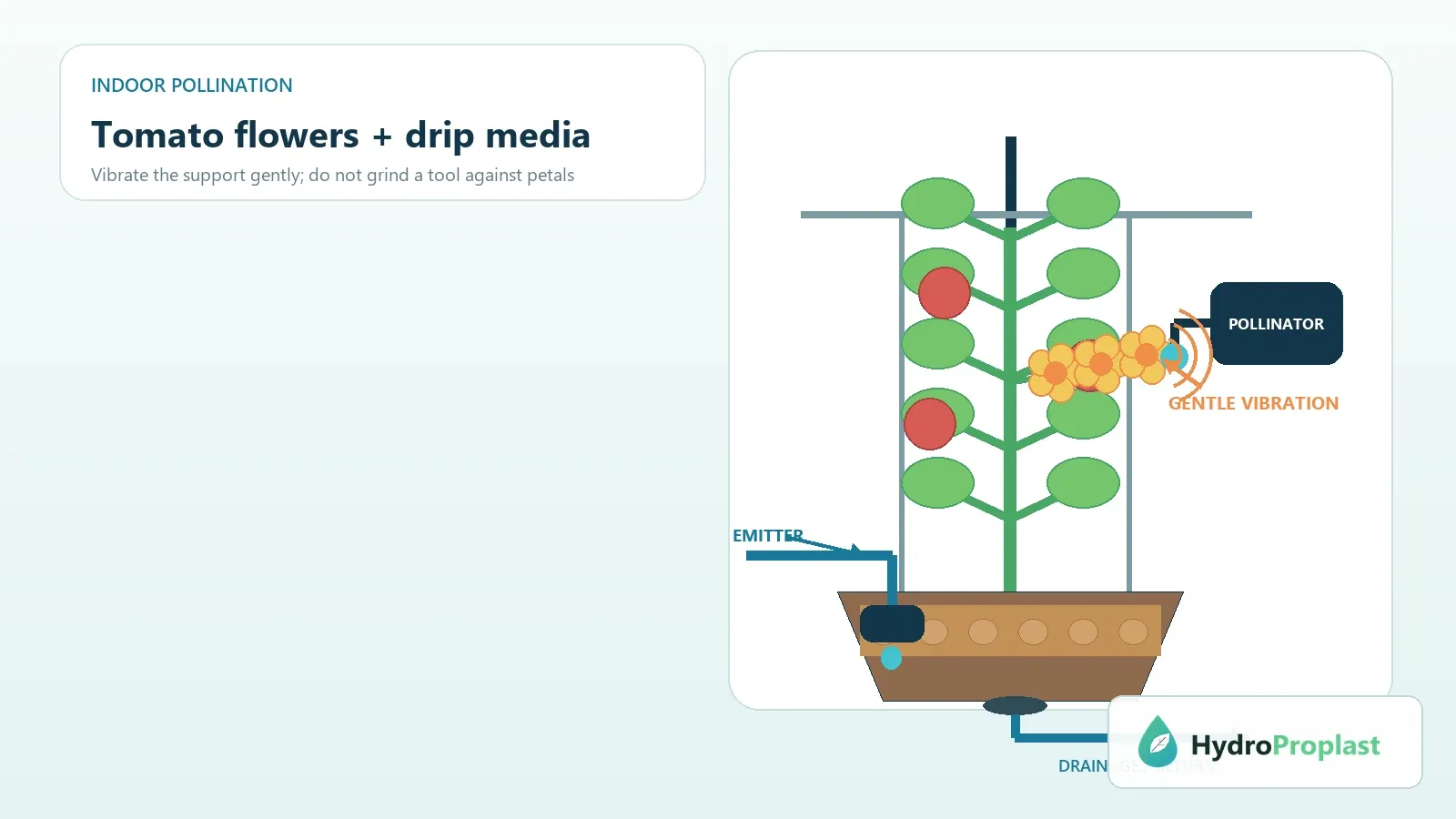
Gentle vibration and mild airflow can help self-pollinating tomato flowers set fruit in still indoor conditions.
Tomato flowers can self-pollinate, but still indoor air may reduce vibration. Gently tap the flower truss, move air lightly through the canopy, or use a clean vibration tool without damaging stems. Work while flowers are dry.
If flowers repeatedly drop, review light, heat, humidity, water stability, and overall plant stress. Adding nutrients without evidence can make diagnosis harder.
Diagnose blossom-end rot carefully
Blossom-end rot appears at the end of developing fruit and is associated with calcium failing to reach that tissue. The cause can involve irregular water supply, root stress, salinity, rapid growth, or environmental conditions even when calcium exists in the reservoir.
Check emitter consistency, roots, reservoir trend, EC, and temperature before adding a supplement. Remove badly affected fruit and correct the operating problem rather than treating the symptom alone.
Manage fruit load and clusters
Support heavy clusters and remove damaged fruit early. A young or recovering plant may not fill every flower it sets. Judge load from branch strength, new growth, fruit development, and water demand.
Do not use one thinning rule for every cultivar. Small cherry clusters and large slicing tomatoes create very different loads.
Watch roots and irrigation delivery
Inspect emitters, drains, return lines, pumps, and roots on a schedule. A plant can remain green for a while after delivery begins to fail, so equipment checks often reveal trouble before the canopy does.
Healthy roots are firm and generally light colored, though nutrients may stain them. Slime, odor, severe browning, low aeration, or a warm reservoir require investigation. Use the root-rot guide for a structured diagnosis.
Inspect pests and disease
Look under leaves, around growing tips, and near clips and flowers. Quarantine new plants. Keep outdoor soil, weeds, and dirty pruning tools away from the grow space.
Identify the problem before treatment and follow local rules and product labels for edible crops. Spacing, sanitation, and airflow are part of prevention, not substitutes for diagnosis.
Harvest by cultivar and use
Harvest when fruit reaches the color and firmness expected for the cultivar and intended use. Cut clusters or fruit with clean tools and avoid tearing the vine. Tomatoes can continue changing after harvest, but quality depends on cultivar and harvest stage.
Record first flower, first fruit set, harvest dates, usable weight, and rejected fruit. This reveals whether the system is improving across cycles.
Plan outages and crop turnover
Drip systems need a plan for pump failure, and DWC needs backup aeration. Test alarms and spare equipment before roots and vines are large. Keep access to shutoffs and power connections dry and unobstructed.
End the crop when disease, root congestion, canopy decline, or maintenance cost outweighs useful harvest. Remove old roots and clean the system before starting again.
Beginner checklist
- Pick a dwarf or determinate cultivar for limited indoor space.
- Size root volume, reservoir, light, and trellis for maturity.
- Commission emitters and drains before transplanting.
- Train the vine according to cultivar habit.
- Monitor solution trends and root condition together.
- Assist pollination gently when indoor air is still.
- Support clusters and document usable yield.
Hydroponic tomatoes become much easier when the cultivar, container, light, and trellis all describe the same mature plant. Build one coherent system before adding more vines.