Two problems frustrate home hydroponic lettuce growers more than any others: tipburn—brown, crispy spots along the margins of the newest inner leaves—and bolting, when a compact rosette suddenly stretches upward into a tall central stem and turns bitter.
Both issues often show up right when your lettuce looks largest and fastest-growing. Fortunately, neither problem is a disease, and neither requires dumping extra fertilizer into your reservoir. Here is how to tell tipburn, outer-leaf nutrient burn, and bolting apart—and how to prevent each one.
Inner leaf tipburn vs. outer leaf nutrient burn
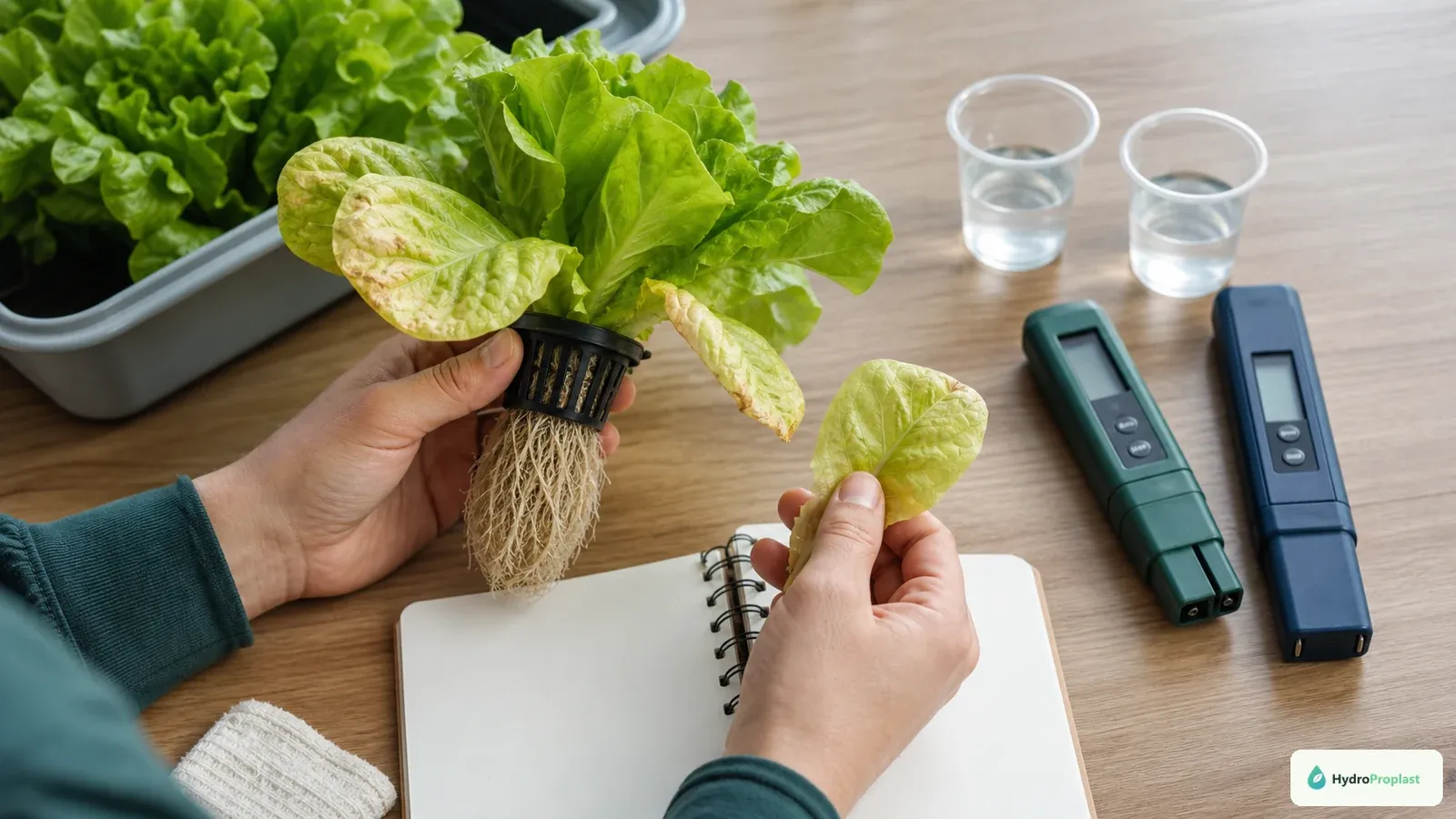
Before changing your nutrient concentration, look closely at which leaves have brown edges:
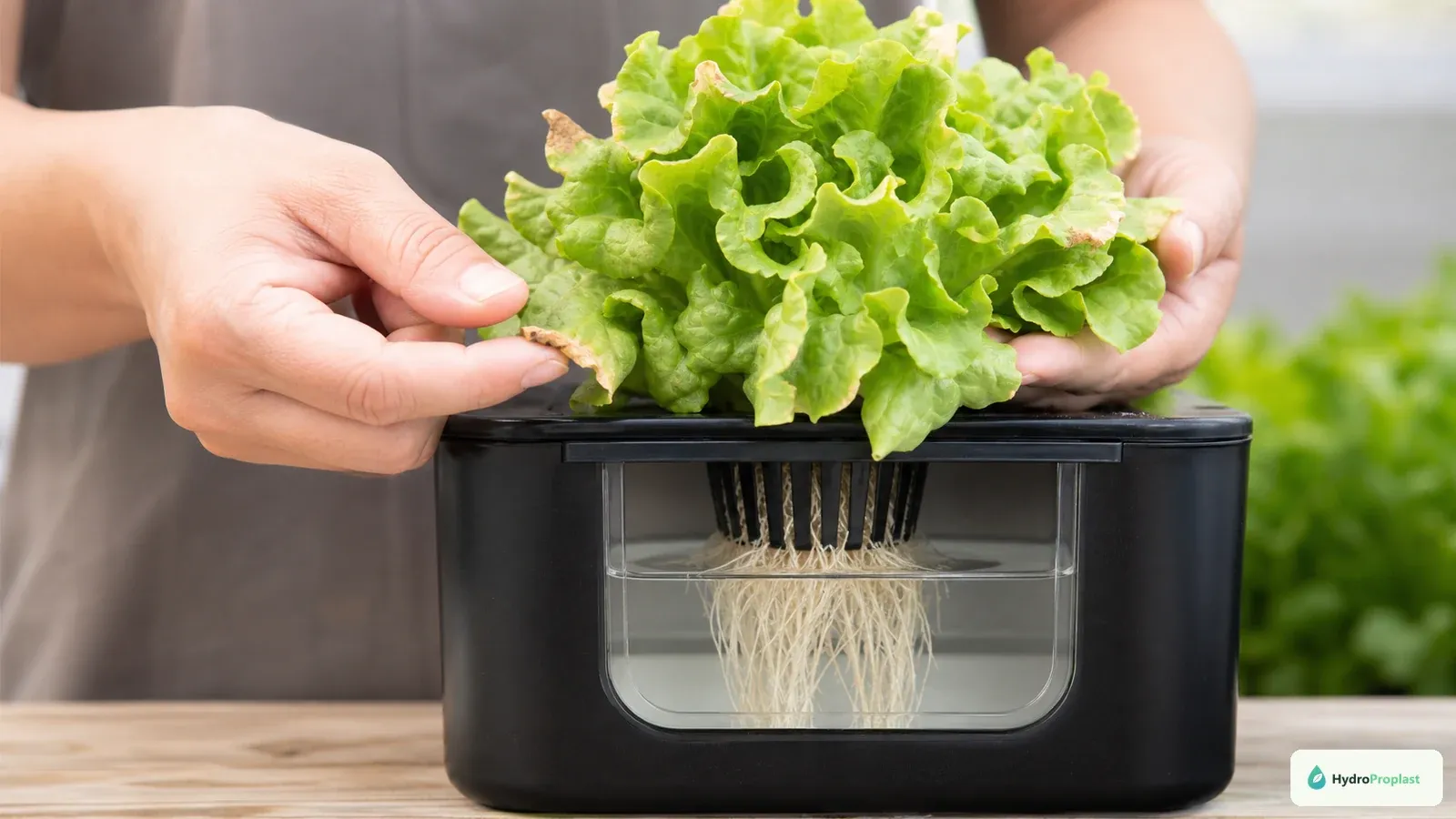 Inner leaf tipburn appears on rapidly expanding young leaves near the center of the head when calcium transport cannot keep pace with growth.
- Inner leaf tipburn (youngest center leaves): Small dark spots or papery brown edges on the fast-growing inner leaves near the heart of the plant. This is a localized calcium transport shortage inside the leaf tissue—almost always caused by stagnant air, high humidity, or pushing growth too fast under intense light, not a lack of calcium in the reservoir.
- Outer leaf nutrient burn (oldest bottom leaves): Dry brown tips around the outer perimeter of older leaves, accompanied by a rising reservoir EC. That indicates an overly concentrated solution or salt buildup.
Why inner tipburn happens even when your nutrient solution has plenty of calcium
Calcium moves through a plant exclusively in the xylem water stream driven by transpiration—the evaporation of water from leaf surfaces. Unlike nitrogen or phosphorus, calcium cannot be redistributed from older leaves to newer leaves once it is deposited.
When lettuce grows rapidly under strong LED grow lights, the outer leaves transpire freely, but the tightly cupped inner leaves sit in a pocket of still, humid air. Because those inner leaves barely transpire, they receive too little xylem flow to supply calcium to their expanding cell walls, and the leaf margins collapse.
How to prevent lettuce tipburn
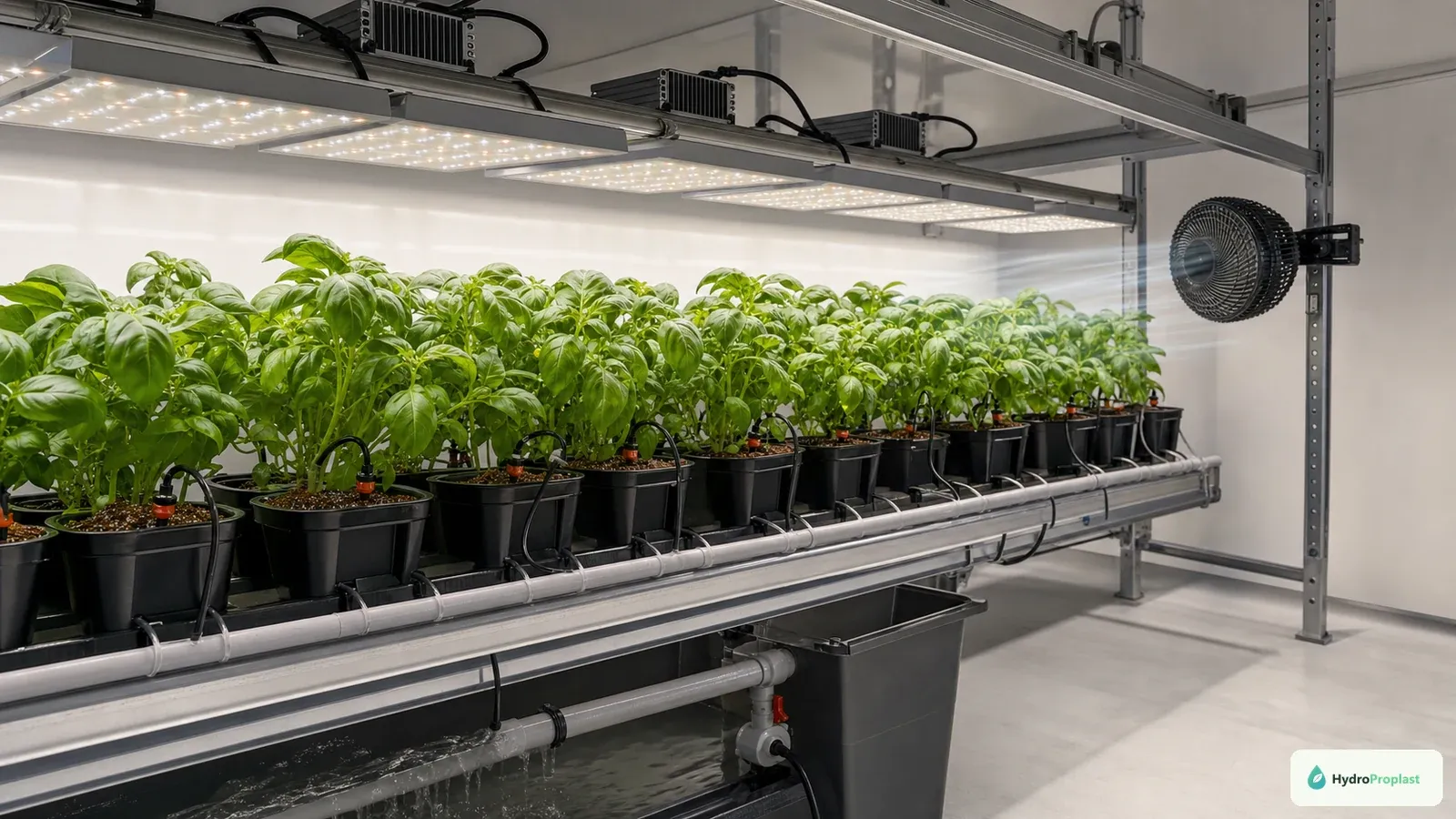 Gentle air movement across the center of the lettuce head increases transpiration and pulls calcium into young inner leaves.
- Add gentle airflow across the canopy: Point a small clip-on fan so air moves gently across the tops and centers of the lettuce heads (enough to make leaves barely flutter). Breaking up the stagnant boundary layer inside the rosette is the single most effective fix for tipburn.
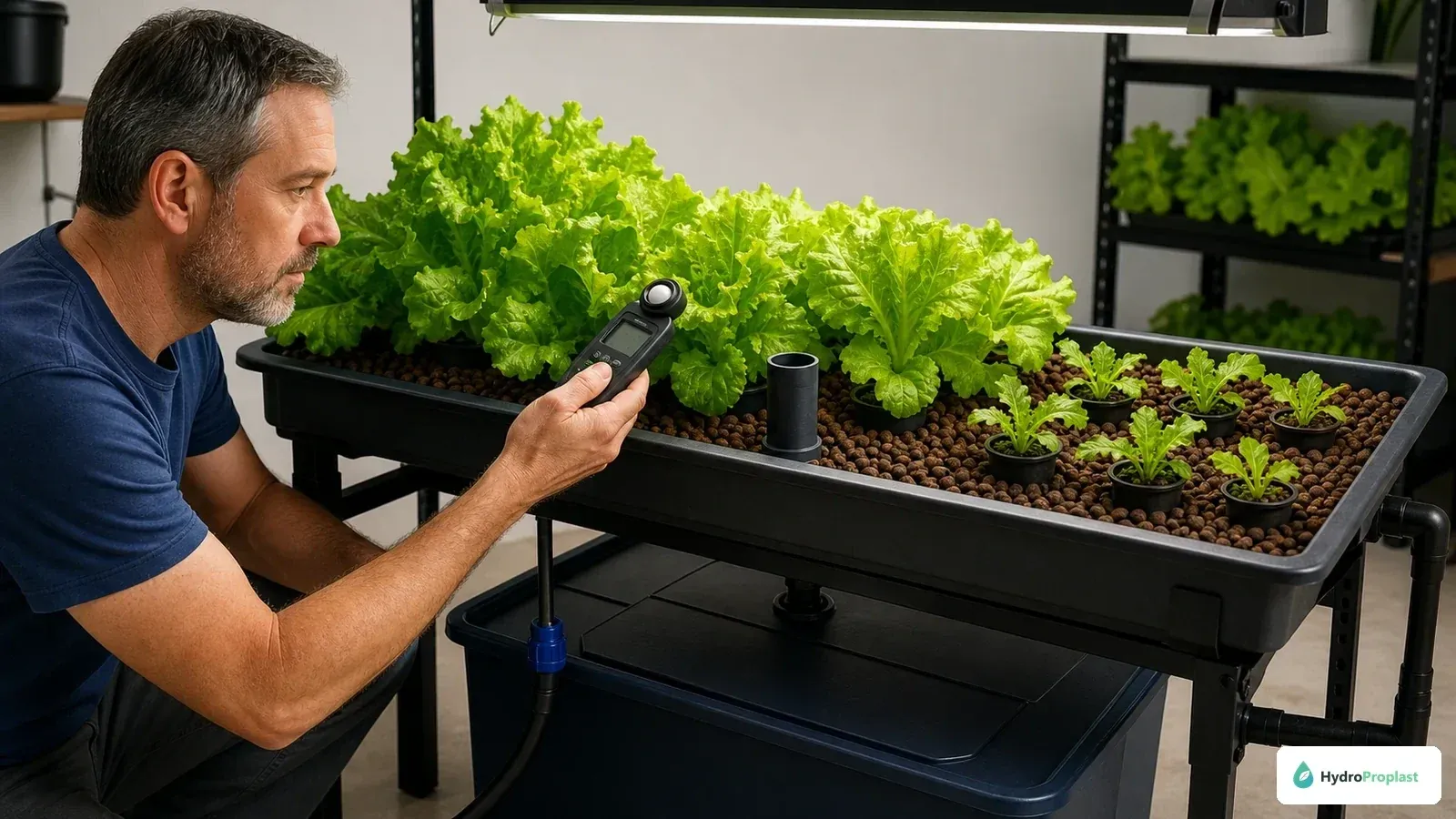
- Moderate your light intensity and schedule: Controlled-environment research at Cornell University shows that lettuce tipburn rises sharply when Daily Light Integral (DLI) exceeds 14–17 mol/m²/day without matching airflow. If your leaves are thick, blistered, and burning at the center, dim your LED slightly or shorten your light schedule from 18 hours to 14–16 hours.
- Avoid overly high EC and humidity: High EC makes water harder for roots to absorb, and high relative humidity (>75%) slows transpiration. Keep lettuce EC in a comfortable 1.0–1.4 mS/cm range and check indoor temperature and humidity.
- Choose loose-leaf or tipburn-tolerant varieties: Loose-leaf, oakleaf, and romaine cultivars allow much better air exchange around young leaves than tightly folded crisphead or butterhead varieties.
Why hydroponic lettuce bolts and turns bitter
Bolting is lettuce’s natural transition from leafy growth to flowering and seed production. Once triggered, the stem elongates rapidly and the leaves accumulate bitter sesquiterpene lactones.
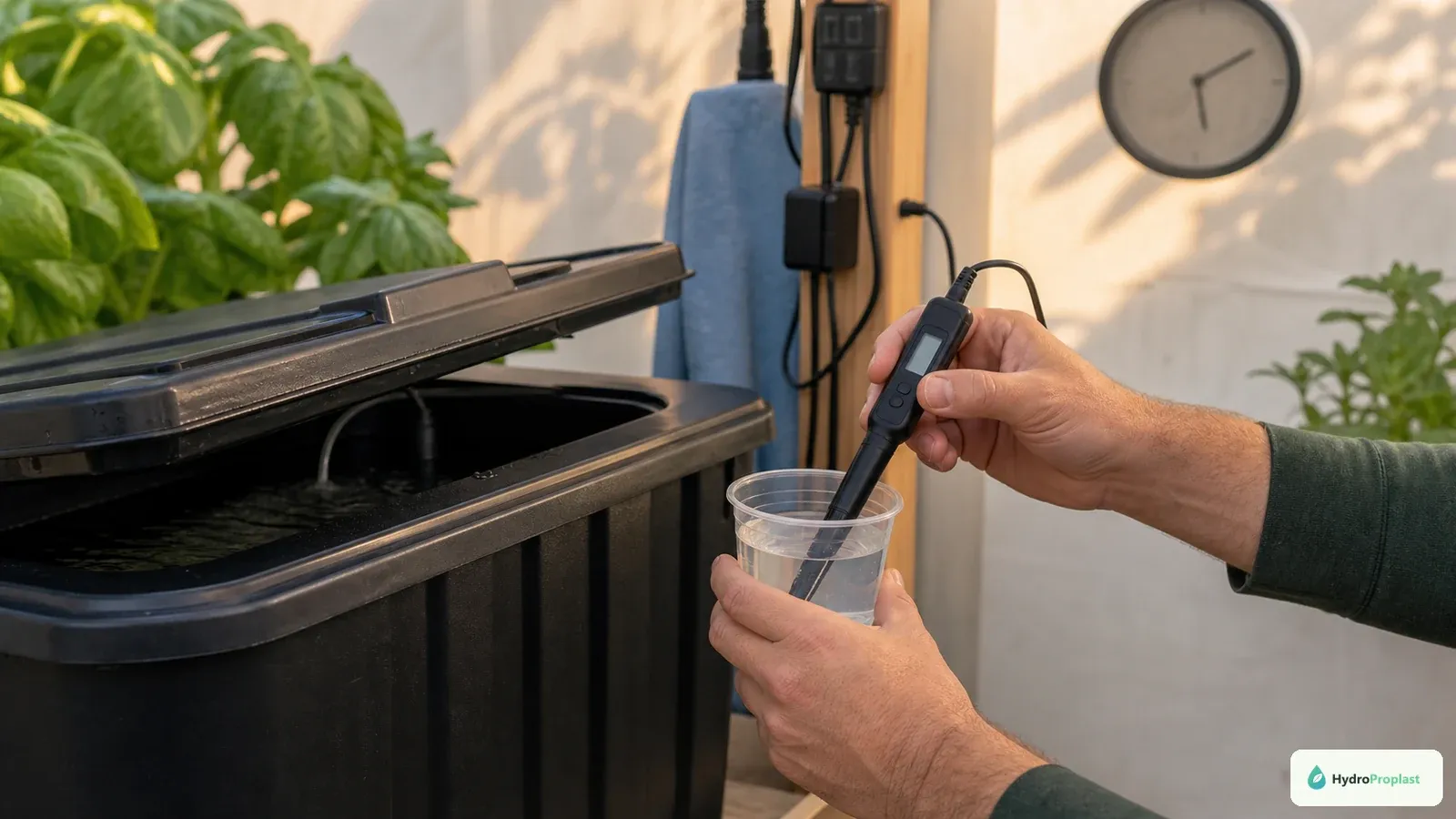 High canopy and root-zone temperatures trigger premature bolting and bitter latex compounds in lettuce.
The primary triggers in home hydroponics are:
- Warm air temperatures above 75–78°F (24–26°C): Lettuce is a cool-season crop that stays sweetest at 60–70°F (16–21°C).
- Warm nutrient solution above 72–75°F (22–24°C): Root-zone heat stresses plants and accelerates bolting even if room air feels moderate. Keep your reservoir cool using our water temperature guide.
- Root stress or low water levels: Allowing a reservoir to run dry or letting root rot damage roots signals survival stress to the plant.
- Holding mature heads past their harvest window: Once a lettuce head reaches full size (typically day 30–38 from transplant), harvest promptly or use cut-and-come-again outer-leaf harvesting before the central meristem begins to stretch.