Hydroponics in one clear definition
Hydroponics is a way to grow plants without field or garden soil. The roots receive water, dissolved mineral nutrients, and oxygen directly. Some systems suspend roots in nutrient solution; others support them in an inert or lightly reactive medium such as coconut coir, perlite, mineral wool, or expanded clay. The medium holds the plant and manages moisture, but the grower supplies the nutrition through water.
That definition is more useful than saying hydroponics means “plants grown in water.” A basil plant in a pot of coir fed with nutrient solution is hydroponic even though its roots are not floating. A cutting kept in a glass of plain water is not yet a productive hydroponic system, because it lacks deliberate nutrition, root-zone management, and a plan for supporting continued growth.
For a beginner, the practical idea is simple: soil normally buffers water, air, and nutrients around roots. In hydroponics, the system and the grower perform those jobs. This creates more control, but also makes neglected problems visible sooner. The USDA National Agricultural Library uses the same broad definition and notes that hydroponics may include aggregate growing media.
What a plant still needs when soil is removed
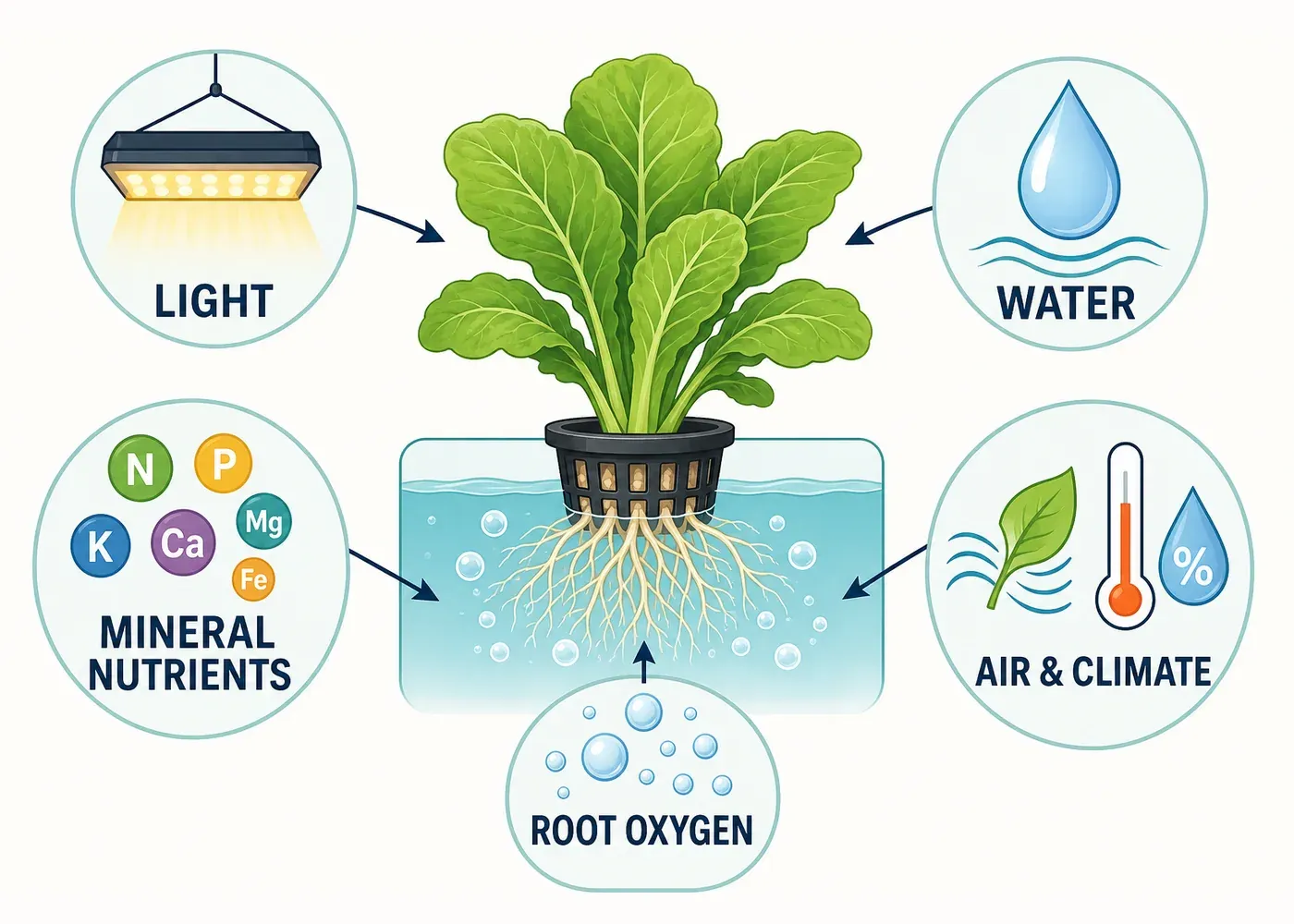
Hydroponics changes how resources reach a plant; it does not change basic plant biology. A healthy setup must provide five things at the same time:
- Light for photosynthesis, from the sun or a suitable grow light.
- Water that roots can absorb without remaining oxygen-starved.
- Essential mineral nutrients in usable proportions.
- Oxygen around the roots as well as carbon dioxide around the leaves.
- A temperature, humidity, and physical support appropriate for the crop.
Soil can store nutrients and water while leaving air spaces between particles. A hydroponic reservoir stores water and nutrients, while an air pump, falling return flow, exposed root zone, porous medium, or irrigation cycle helps provide oxygen. The exact method depends on the system.
Plants do not absorb “soil” as food. Roots take up water and mineral ions from the solution surrounding them. Oklahoma State University’s hydroponics overview explains that mineral uptake proceeds through the same plant processes whether those elements first enter the root zone from soil or from a prepared nutrient solution. This is why a well-managed soilless system can support normal plant growth—and why plain water alone is insufficient after a seedling has used its stored reserves.
The journey from reservoir to root
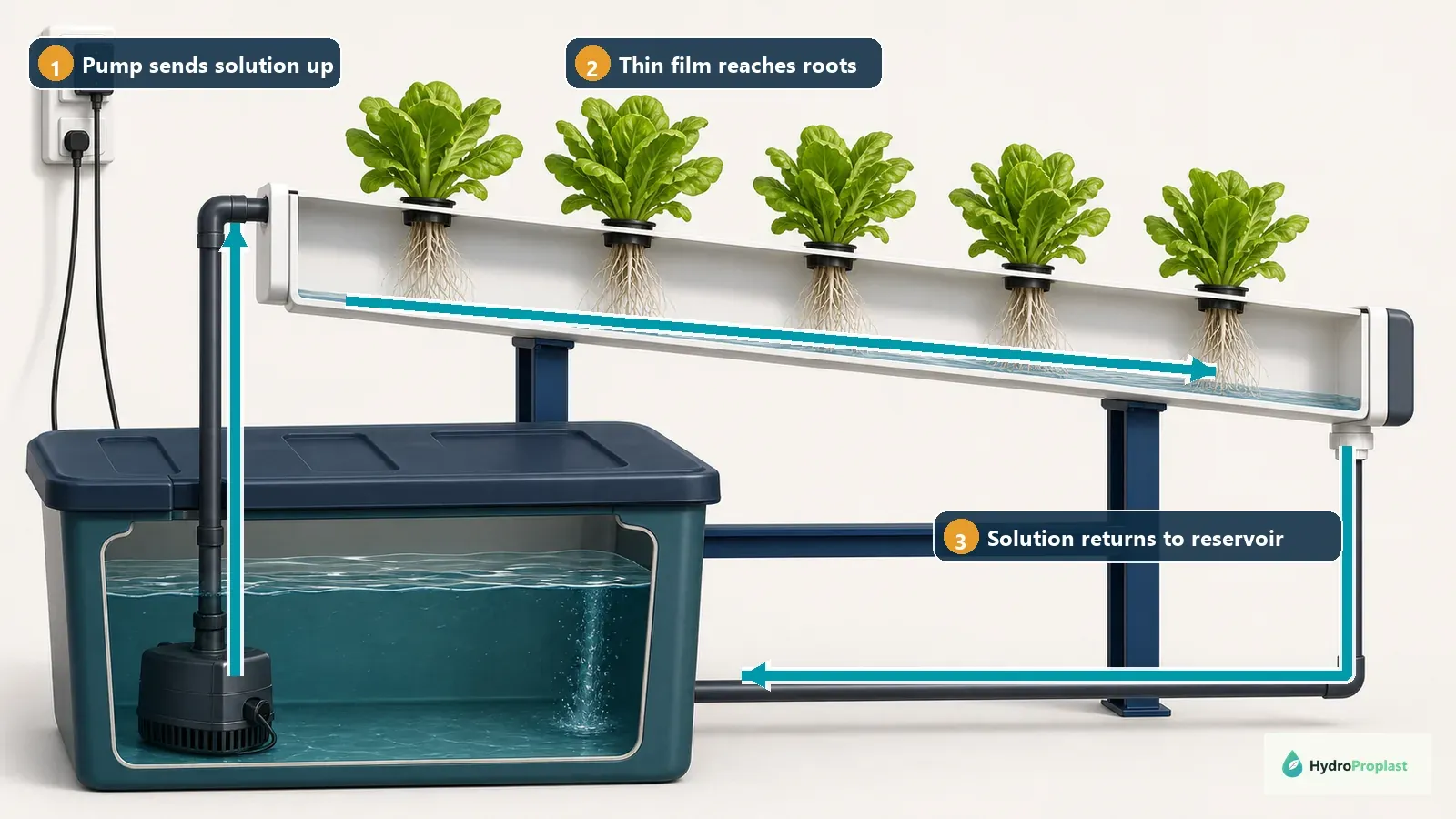
A basic hydroponic loop has a reservoir, a way to deliver or expose nutrient solution to roots, and a way to keep enough oxygen in the root zone. In a recirculating system, a pump moves solution to the plants and excess returns to the reservoir. In deep water culture, roots remain in an aerated reservoir. In a passive Kratky container, part of the root mass reaches solution while an expanding air gap supplies oxygen. In a media bed, irrigation wets the medium and drainage draws fresh air back into its pores.
The reservoir is not just a bucket of fertilizer. It is a changing root environment. Plants remove water and individual nutrients at different rates. Evaporation can concentrate salts. Added water can dilute them. Root activity and water chemistry can shift pH. Warm solution holds less dissolved oxygen than cool solution, while light entering the reservoir encourages algae.
This is why growers monitor rather than merely refill. At minimum, check the water level, root appearance, plant growth, leaks, and pump operation. A pH meter helps show whether nutrients remain chemically available; an electrical conductivity meter provides a rough indication of dissolved salt concentration. Our guide to whether beginners need pH and EC meters explains when those instruments become worthwhile.
Six common system families and what changes between them
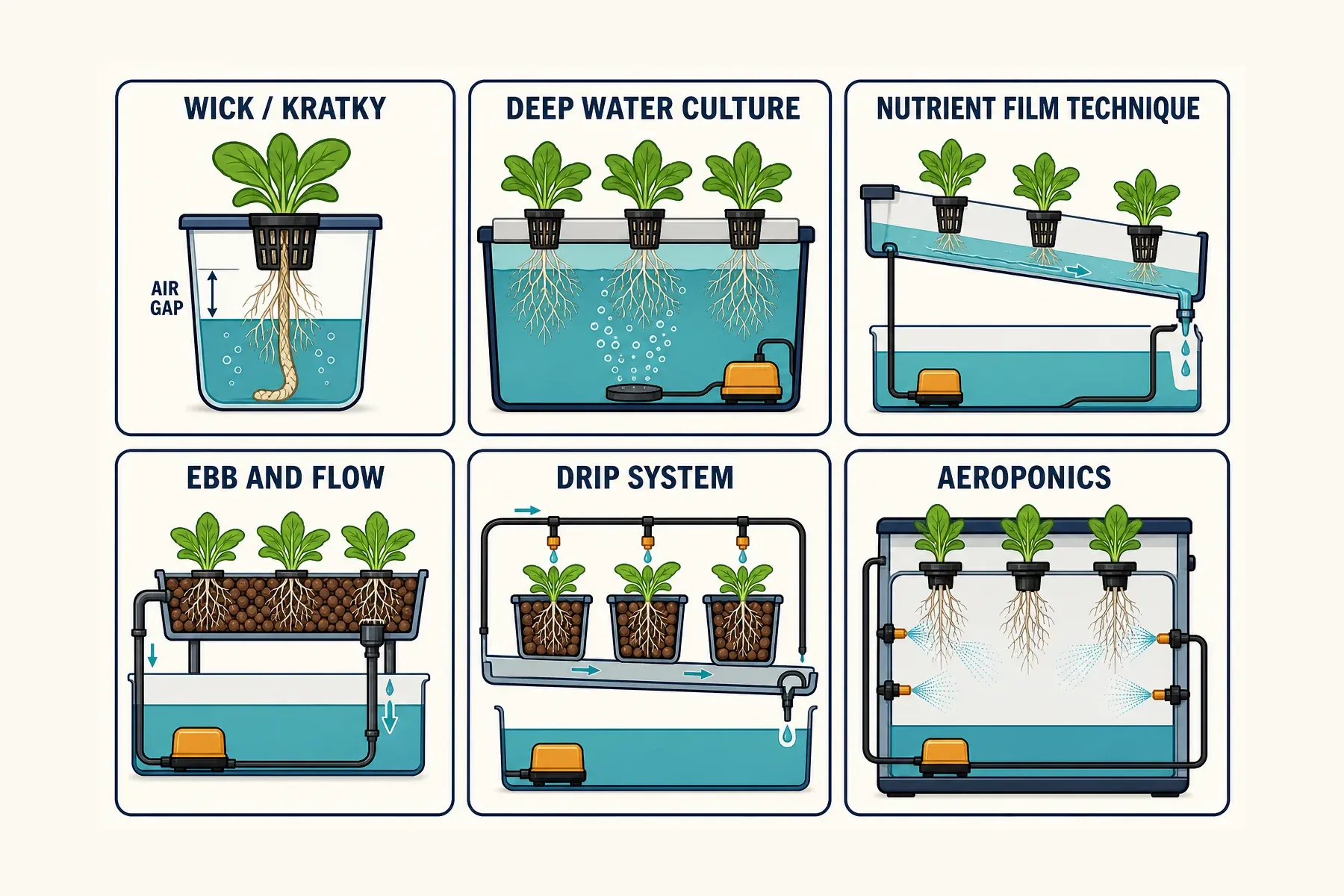
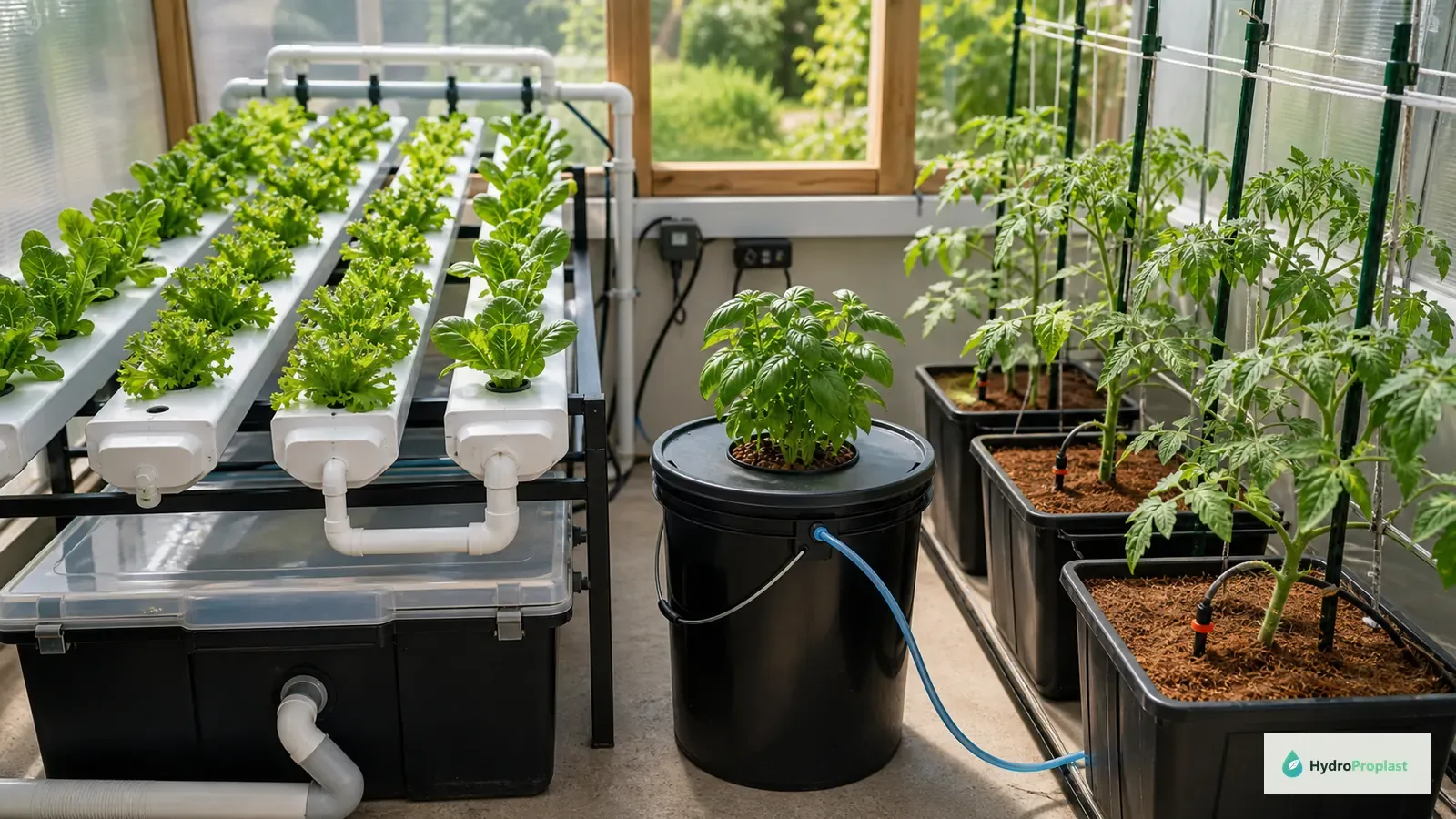
Most home systems are variations of a few delivery methods. The USDA Economic Research Service’s controlled-environment agriculture appendix identifies drip irrigation, deep-water culture, nutrient film technique, flood and drain, high-pressure atomization, and related aero-hydro approaches. For a home grower, they can be understood as follows.
Passive wick and Kratky systems
A wick draws solution into a moist medium by capillary action. A Kratky container holds a plant above a reservoir and develops an air gap as the level falls. Both can operate without a water pump, making them quiet and approachable. Their weakness is limited control and oxygen delivery, especially for large or thirsty crops.
Deep water culture
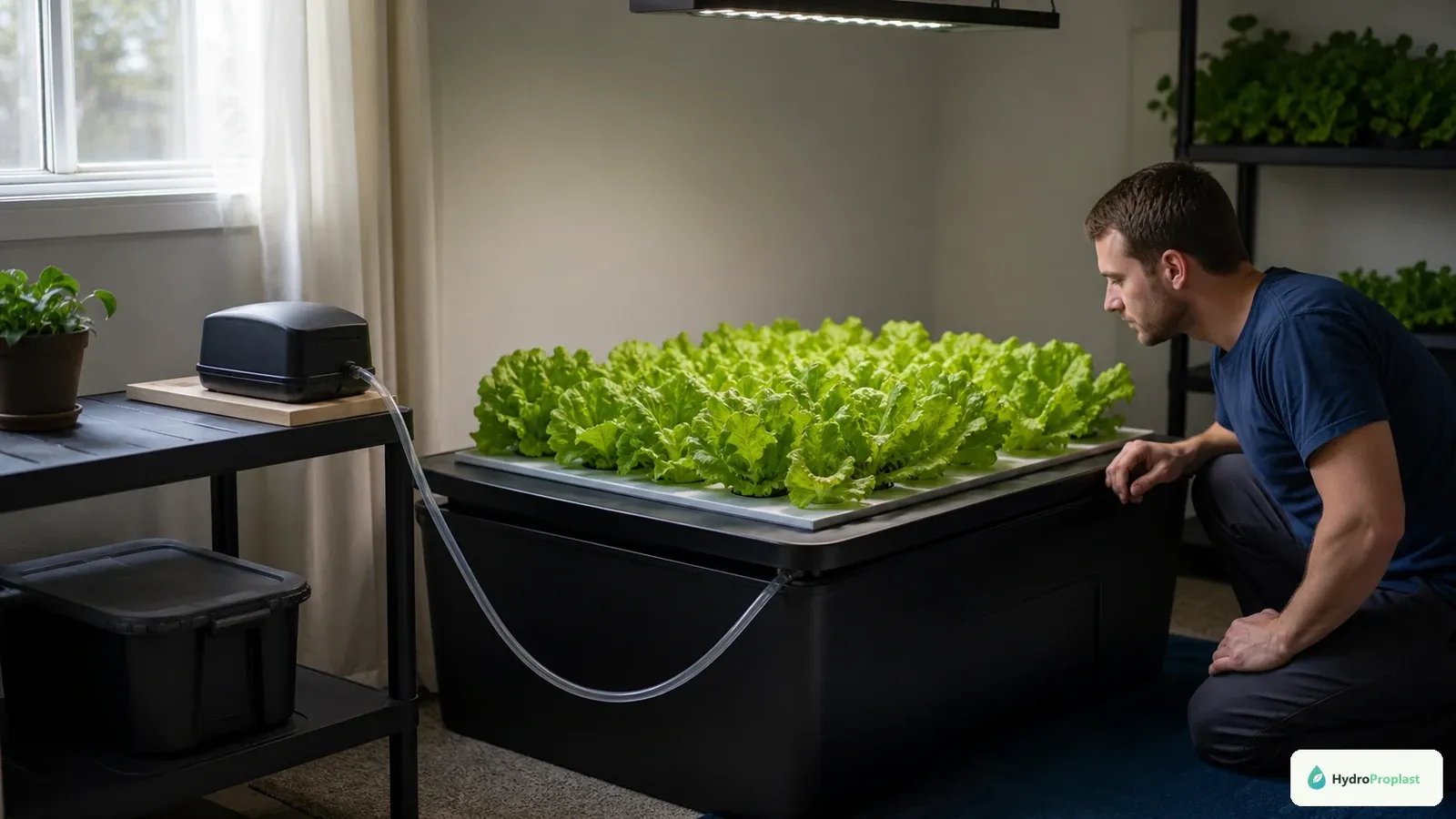
In DWC, roots hang in nutrient solution and an air pump usually feeds an air stone. It is mechanically simple and gives beginners a clear view of roots and water. Power loss, warm water, or failed aeration can affect roots quickly. Leafy greens and herbs are easier candidates than a large fruiting plant.
Nutrient film technique
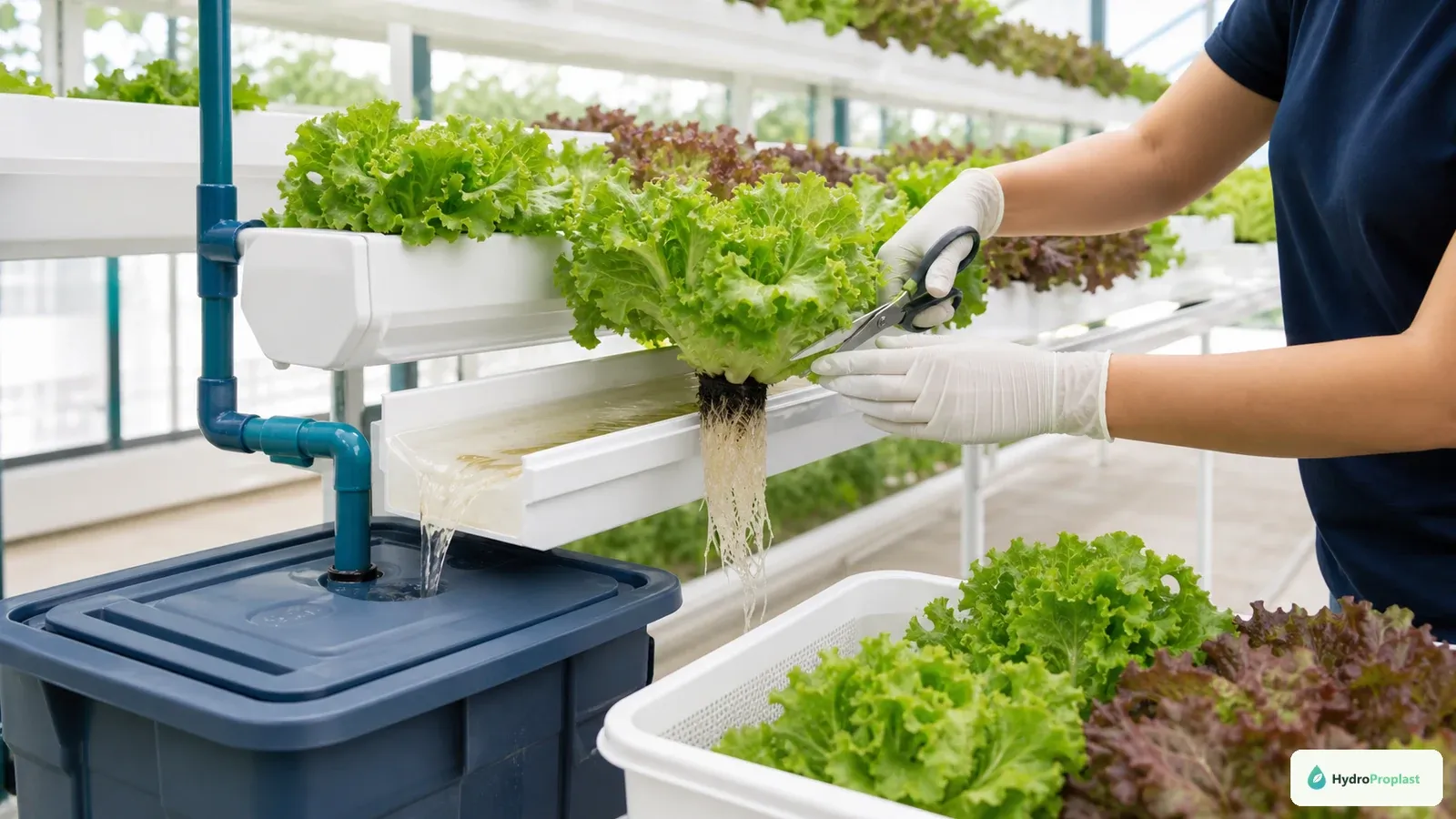
NFT sends a shallow, continuous flow through sloped channels. It uses a relatively small solution volume around each root and is widely associated with leafy greens. Correct channel slope, even flow, and reliable pumping matter. A blocked line or stopped pump leaves little moisture reserve.
Ebb and flow
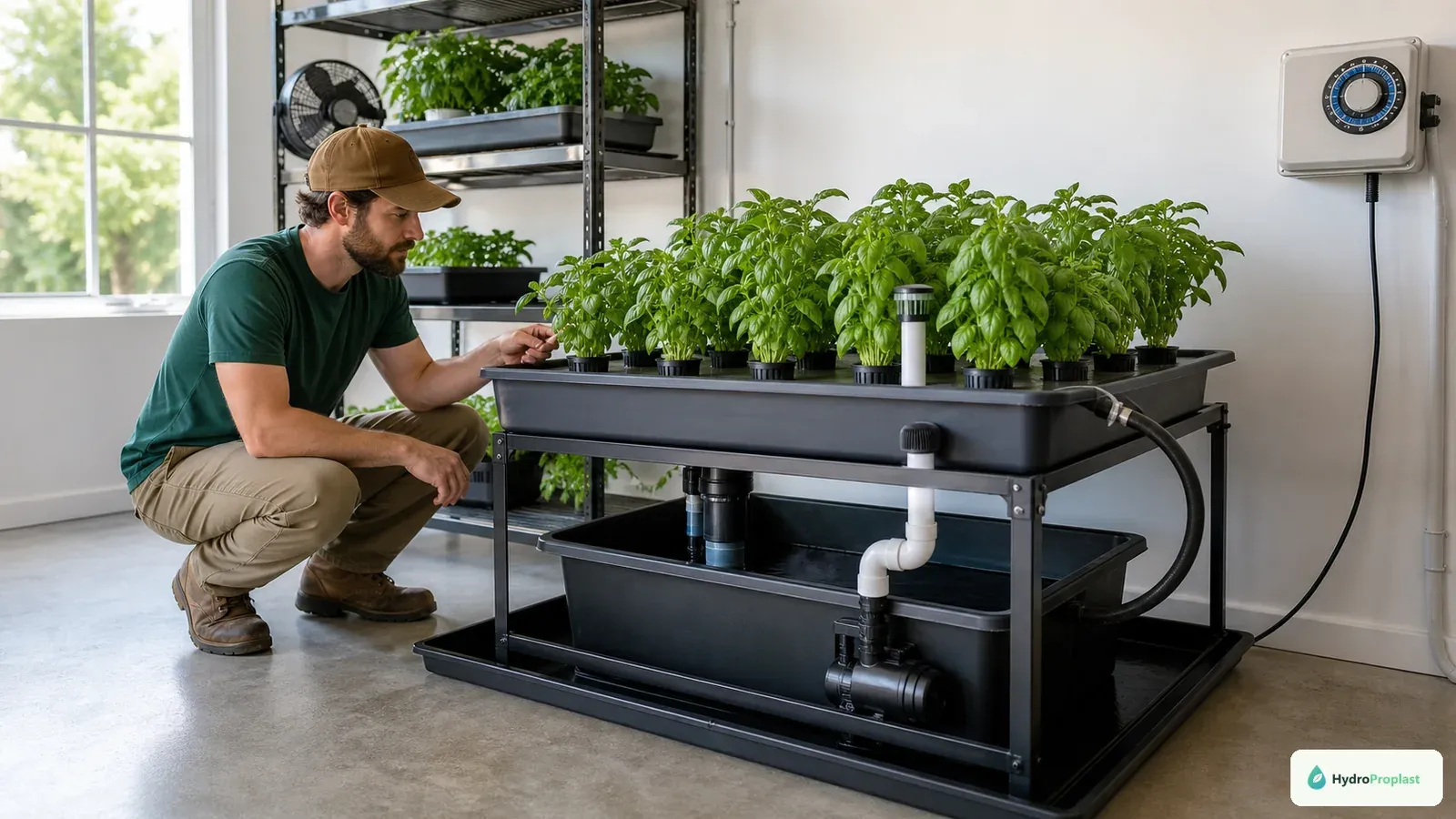
A timer periodically floods a tray or bed and then drains it. This alternation can wet roots thoroughly and draw air into the medium. It handles a range of pots and crops, but plumbing volume, timer settings, and overflow protection require planning.
Drip systems
Individual emitters deliver solution to each plant, often in coir, perlite, or another substrate. Drip is flexible and suits larger fruiting crops, but emitters can clog and runoff must be collected, reused, or managed responsibly.
Aeroponics
Roots hang in a chamber and receive a fine spray or mist. Excellent oxygen exposure is possible, but nozzles, pressure, filtration, and short irrigation cycles add failure points. It is rarely the least stressful first system.
Use the comparison in Best Hydroponic System for Beginners to match these methods to space, crop, noise tolerance, and maintenance time.
Nutrients, pH, and EC without the jargon
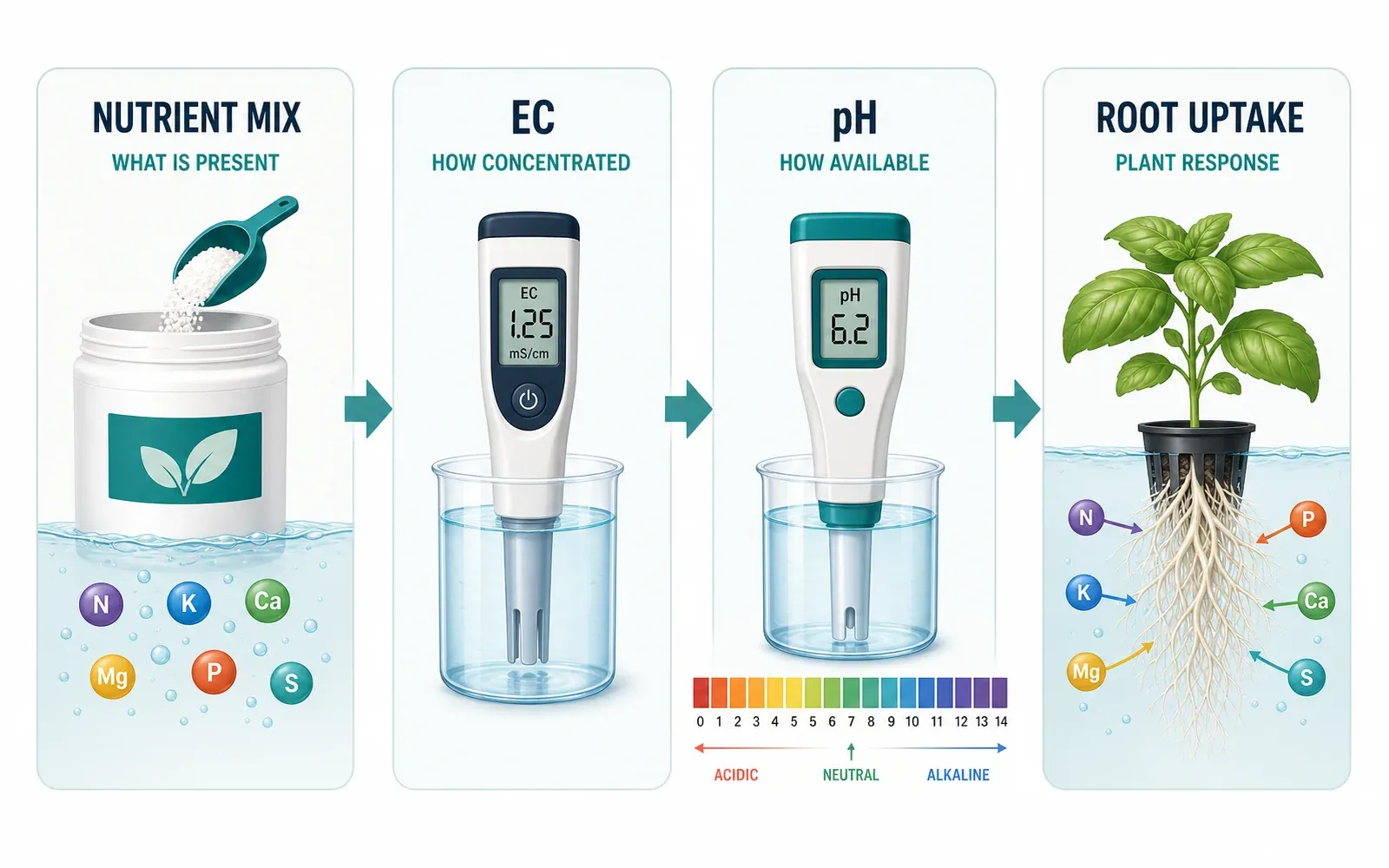
A complete hydroponic nutrient contains macronutrients, including nitrogen, phosphorus, potassium, calcium, magnesium, and sulfur, plus much smaller quantities of micronutrients. A product formulated for hydroponics is easier for a beginner than combining individual fertilizer salts. Follow its crop and growth-stage directions rather than assuming stronger solution produces faster growth.
pH describes acidity or alkalinity. It matters because nutrient availability changes with pH. There is no universal perfect number for every crop and medium; many hydroponic crops are managed in a mildly acidic range, with crop-specific targets. Measure after nutrients are mixed, make small corrections, circulate or stir, and measure again. Never improvise with hazardous concentrates or combine adjustment chemicals.
EC measures how readily the solution conducts electricity and serves as a proxy for total dissolved ions. It cannot identify which nutrient is missing or excessive. An EC increase may mean water was removed faster than minerals; a decrease may mean plants absorbed ions or the solution was diluted. Read EC together with water level, pH, crop stage, and leaf symptoms. Oklahoma State’s EC and pH guide provides a sound technical introduction.
Beginners do not need to chase every tiny reading. Consistent measurement, calibrated tools, clean mixing containers, and gradual adjustments are more valuable than constant intervention.
What hydroponics can do well—and what it cannot promise
Hydroponics can place production where usable soil is scarce, keep roots physically accessible, reduce weeding, and recirculate water and nutrients in closed systems. Indoor growing can make season and weather less dominant. A compact system may fit a shelf, balcony, spare room, or greenhouse bench.
Those benefits are conditional. Indoor crops still require enough light, and electric lighting can become the largest operating cost. Pumps, meters, replacement nutrients, and climate control add expense. Recirculating water can improve resource use, but a leak, contaminated reservoir, or root disease can affect connected plants. Hydroponics avoids soil-borne weeds and some soil problems; it does not eliminate pests, pathogens, algae, nutrient disorders, or daily observation.
Claims that hydroponics always uses less water, grows twice as fast, or produces more nutritious food are too broad. System design, crop, climate, energy source, operator skill, and the soil-growing comparison all matter. The USDA’s controlled-environment agriculture report describes potential reductions in water and agricultural chemical use alongside likely higher energy requirements. Treat hydroponics as a set of tradeoffs, not an automatic upgrade.
A realistic first setup
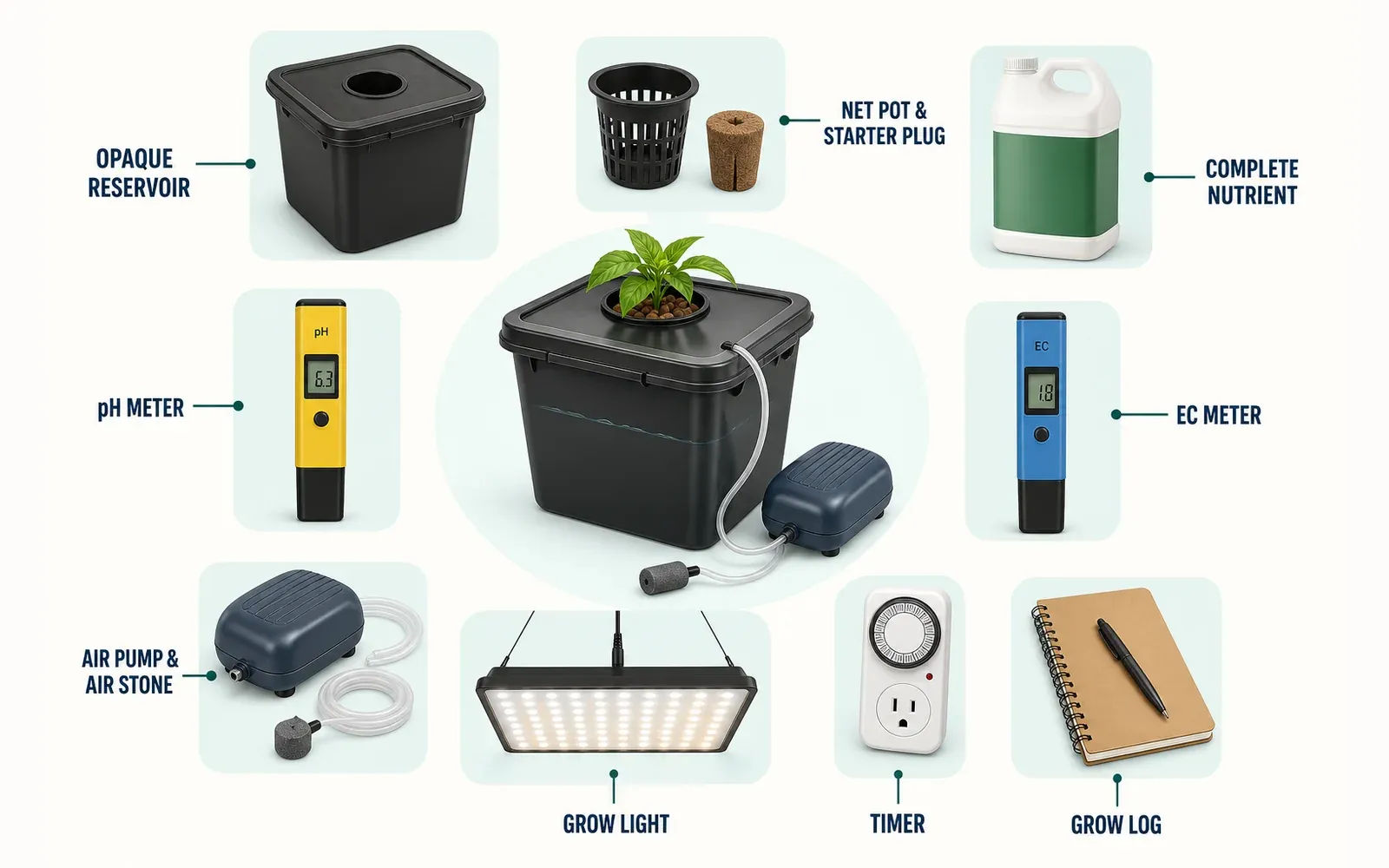
For a first crop, choose one fast leafy green or herb and a system with few hidden failure points. A small DWC unit, opaque Kratky container, or complete countertop kit can all teach the essential routine. Start with one reservoir rather than a wall of connected channels.
A functional setup normally includes:
- An opaque, cleanable reservoir or container with a secure plant support.
- A crop-appropriate net pot or starter plug.
- A complete hydroponic nutrient and accurate measuring tools.
- Adequate light for the crop and growing area.
- Aeration or irrigation hardware if the chosen method requires it.
- A pH test method; an EC meter becomes more useful as the reservoir, crop value, or system complexity grows.
- A safe location with spill protection and electrical connections kept above water.
Germinate seedlings separately, introduce nutrients at an appropriate strength, and record what you add. Check the system at roughly the same time each day. Look for white or cream-colored new roots, steady leaf development, unobstructed flow, and stable equipment. Do not diagnose from one leaf spot or one meter reading; look for a pattern.
If you are deciding between a packaged unit and choosing every component, read Hydroponic Kits vs DIY Systems. The right choice is the one you can understand, clean, and maintain—not the one with the longest feature list.
Common beginner misunderstandings
“No soil” does not mean “no medium.” Media can anchor roots and balance water with air even when it contributes little nutrition.
“Automatic” does not mean unattended. Timers automate events; they do not notice a blocked tube, failed pump, empty reservoir, drifting pH, or lamp set too close.
“More nutrients” does not mean more food for the plant. Excess dissolved salts can make water harder for roots to absorb and can create toxicity or imbalance. Begin with crop-appropriate guidance and adjust based on evidence.
“Clear water” is not proof of a healthy reservoir. Dissolved salts are invisible, early root stress may be subtle, and pathogens do not need cloudy water.
“Hydroponic” does not automatically mean organic, pesticide-free, sustainable, or nutritionally superior. Those are separate questions involving inputs, pest management, energy, water handling, and certification rules.
Finally, hydroponics is not one fixed recipe. A method that keeps lettuce comfortable may be undersized for a tomato plant. A sunny greenhouse in a cool region has different constraints from an air-conditioned apartment under LEDs. Crop and environment must drive the design.
Decide whether it fits your life
Hydroponics is a good match if you enjoy observing a system, measuring inputs, and learning from small changes. It is especially attractive when clean indoor production, limited space, accessible working height, or control over the root environment matters. It may be a poor match if you want plants to tolerate long periods without attention, have inexpensive productive garden soil, or cannot safely manage water near electricity.
Before buying anything, choose the crop, measure the available space, identify the light source, and decide how often you can inspect the reservoir. Then select the simplest system that meets those conditions. If cost is the deciding factor, build a complete list—not only the container—using How Much Does It Cost to Start Hydroponics at Home?. A modest, understandable first grow teaches more than an oversized system that is difficult to troubleshoot.