Aeroponics can deliver exceptional root-zone oxygen, but it gives home growers less time to react when a pump, timer, filter, or nozzle fails. This guide compares it with more buffered hydroponic methods so you can choose based on reliability, maintenance, crop goals, and budget—not mist alone.
Aeroponics is hydroponics with a narrower safety margin
Aeroponics is not an alternative to hydroponics in the broad sense; it is a specialized soilless method. Plant roots hang in a dark chamber and receive nutrient solution as a spray or mist. In common hydroponic systems, roots instead contact a flowing film, an aerated reservoir, or an irrigated growing medium.
For most home growers, DWC, Kratky, ebb and flow, or drip is the more practical first choice. Aeroponics makes sense when high root-zone oxygen, compact root chambers, propagation, or technical experimentation justifies precise pumps, filtration, nozzles, and short irrigation intervals. Its roots have little stored water when delivery stops, so reliability matters more than impressive mist.
The fair comparison is therefore not “advanced versus old.” It is rapid, precisely delivered spray versus systems with larger moisture buffers and fewer fine passages.
How aeroponic delivery works
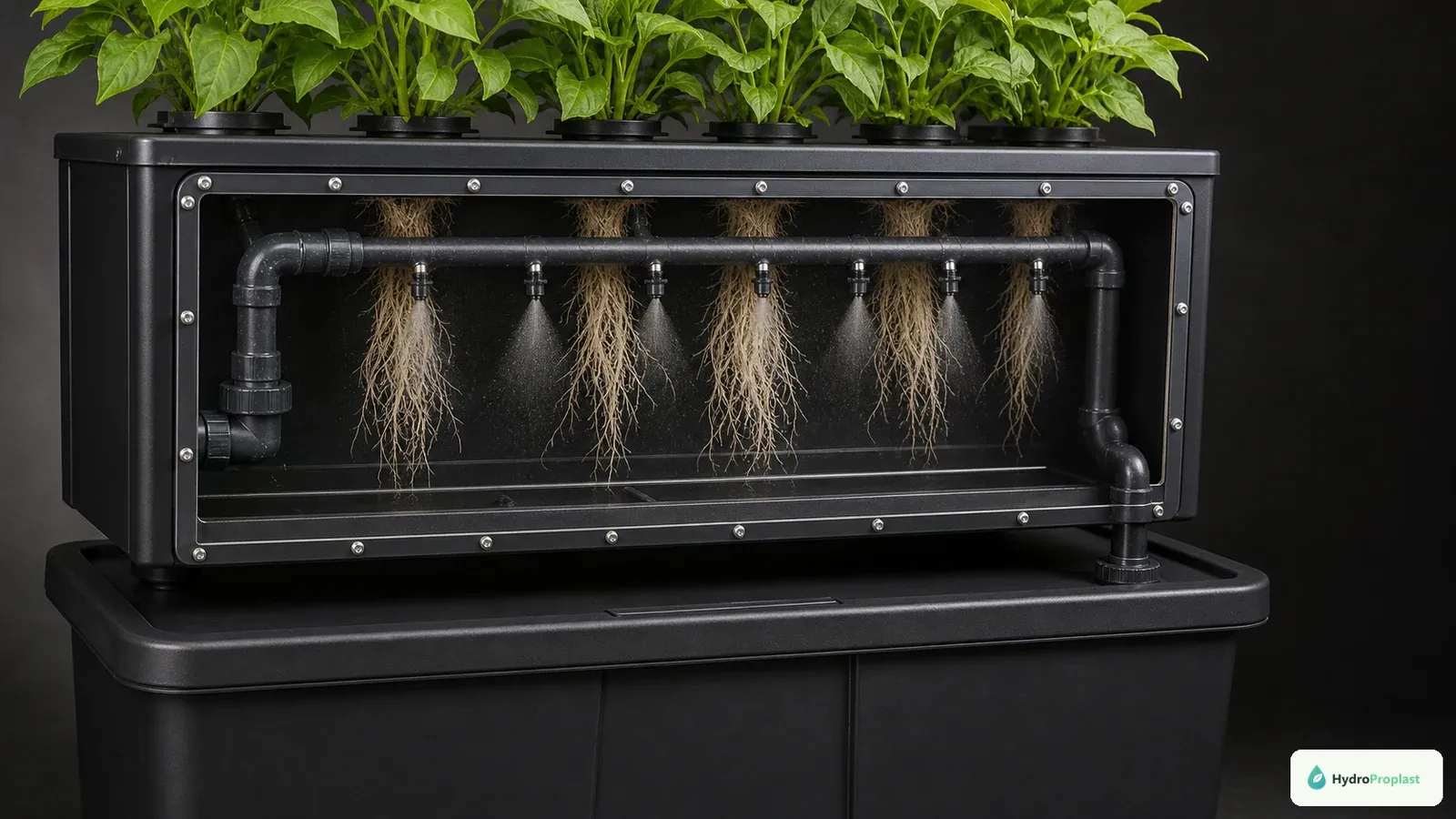
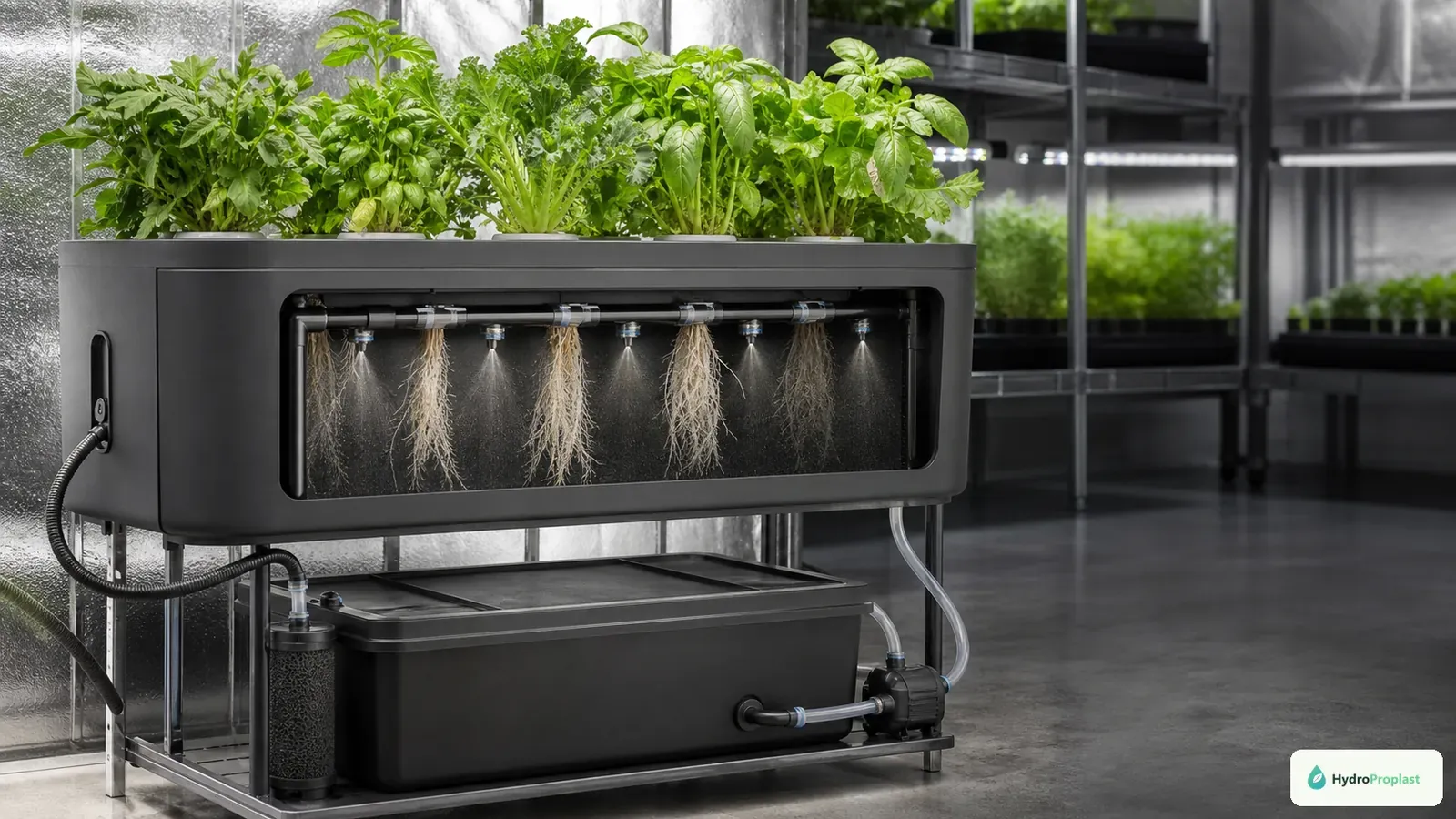
A serviceable aeroponic chamber makes the sealed nozzle manifold and suspended root zone visible enough to verify complete spray coverage.
Plants sit in collars or supports above an enclosed chamber. A pump moves nutrient solution through lines to spray heads or misting nozzles. Droplets wet exposed roots, then excess drains to a reservoir for recirculation or collection. A short-cycle timer may repeat events frequently.
Oklahoma State University’s hydroponics overview describes roots suspended in an enclosed chamber and sprayed at short intervals, and calls aeroponics the most high-tech of the common systems. The USDA Economic Research Service includes high-pressure atomization and aero-hydro approaches in its system classification.
Droplet size, pressure, nozzle design, chamber geometry, root density, and interval interact. “Aeroponic” products range from low-pressure sprayers producing coarse droplets to high-pressure systems designed for fine mist. Do not transfer specifications between them without manufacturer or research support.
What conventional systems do differently
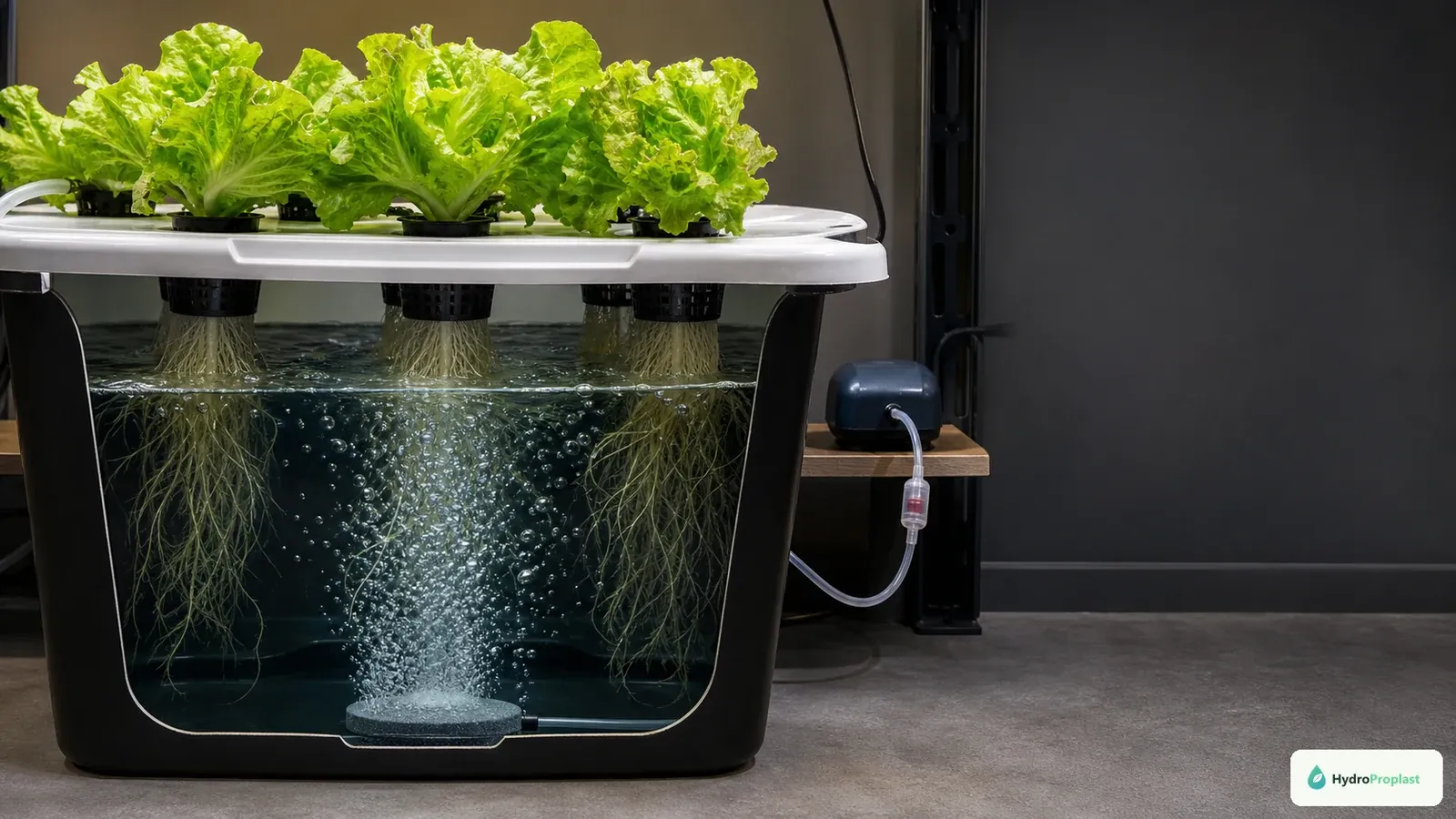
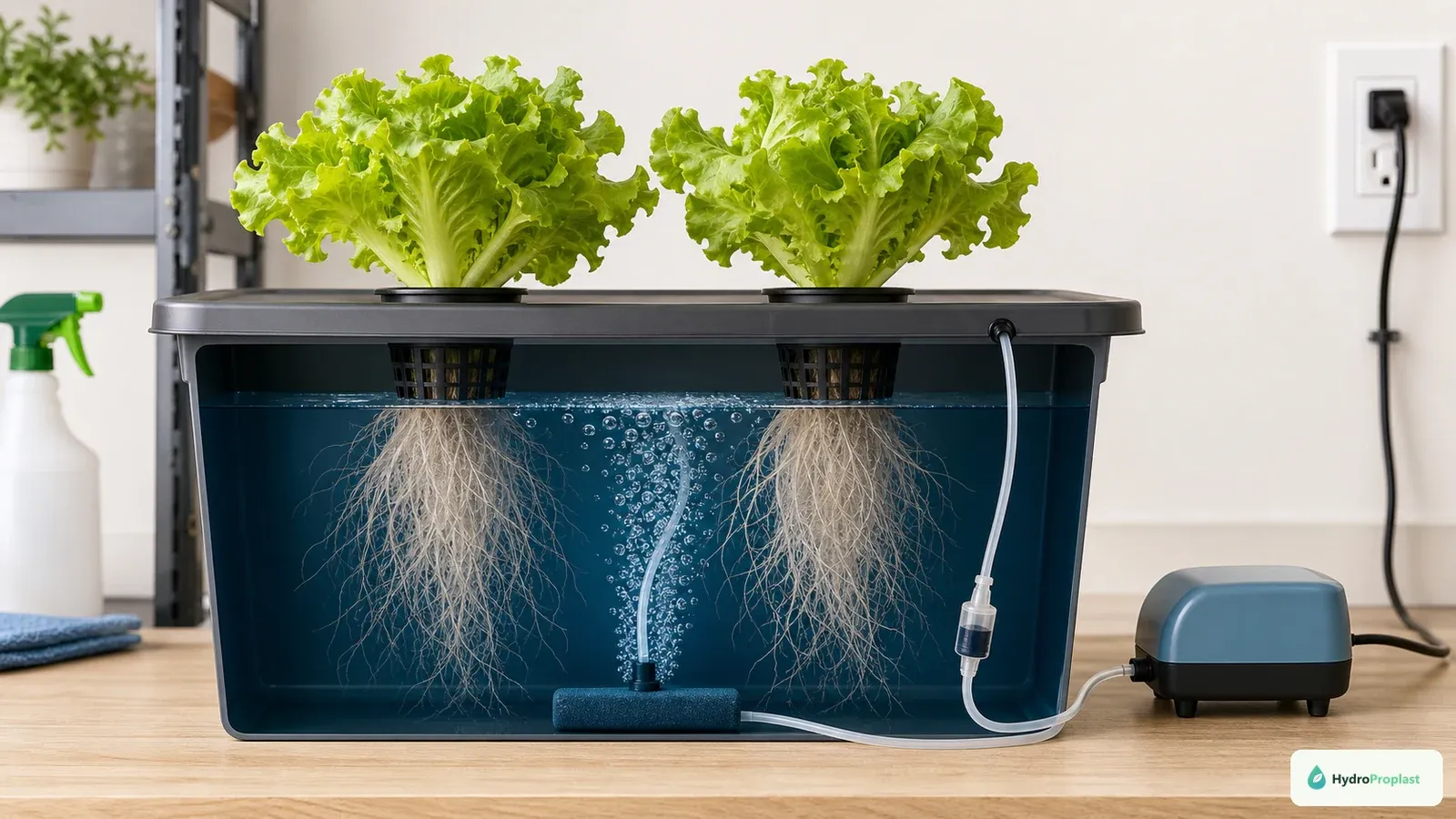
DWC keeps roots in a deep nutrient reservoir and uses an external air pump and air stone, giving plants a larger water buffer than aeroponics.
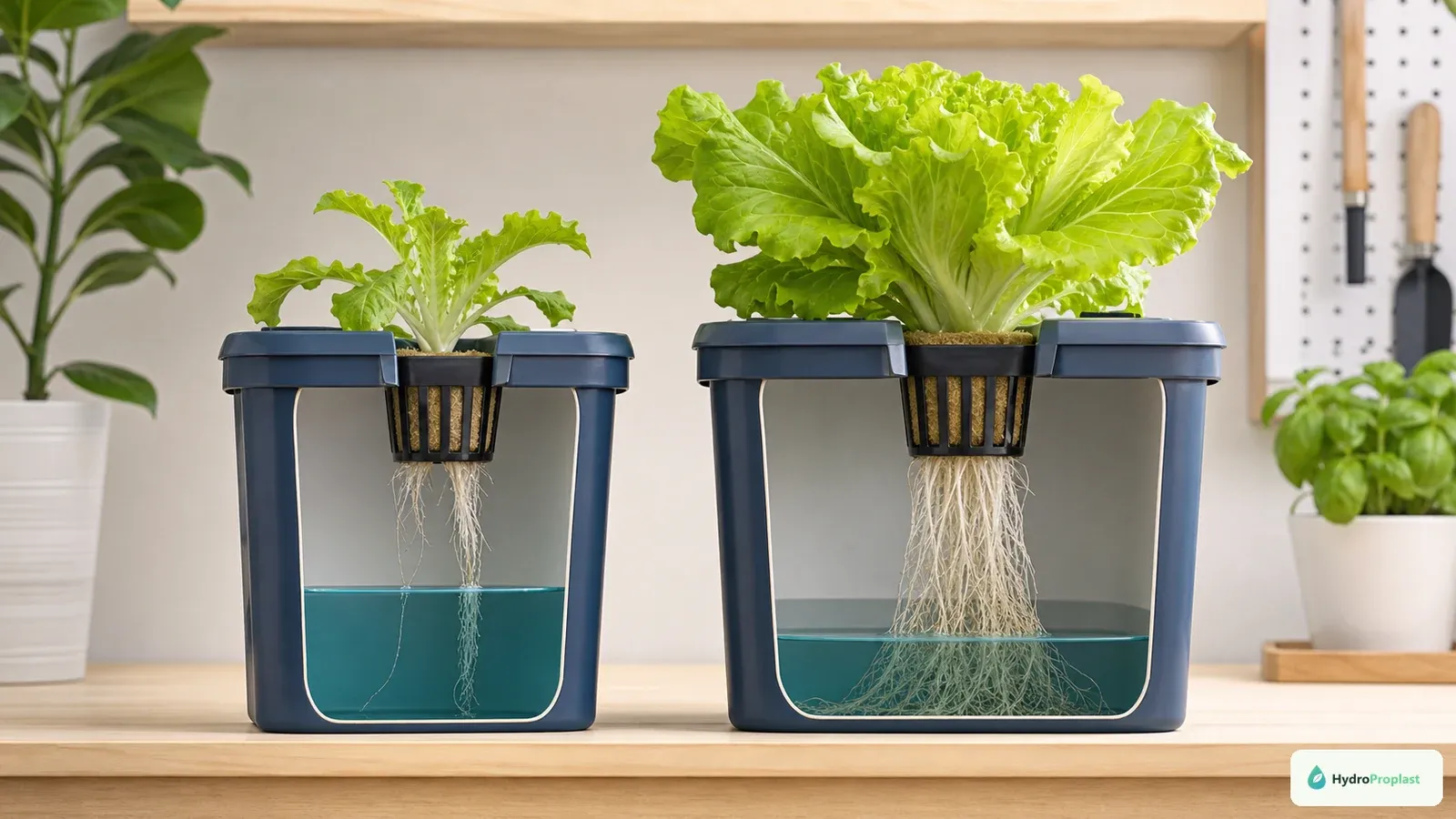
DWC holds roots in oxygenated nutrient solution and uses an air pump. It has a large water reserve but depends on aeration and temperature control. Kratky uses a falling solution level and humid air gap without a pump. NFT continuously flows a shallow film through channels. Ebb and flow wets media periodically, while drip targets media-filled containers.
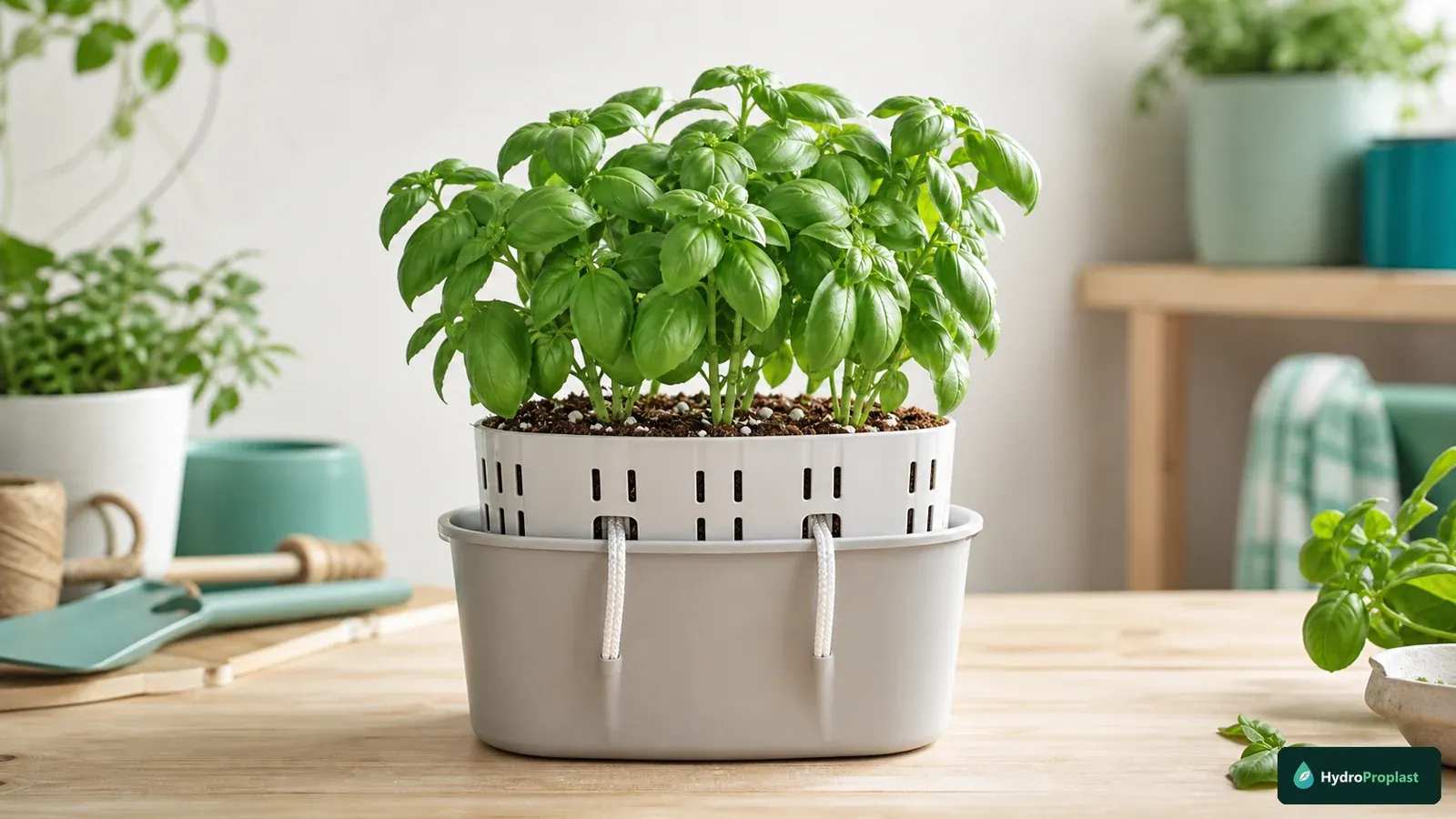
These methods give roots more residual moisture during a brief delivery interruption. Media retains water; DWC surrounds roots with solution; NFT channels may remain wet temporarily. Aeroponic roots can dry quickly because little solution remains on them and the chamber holds no substantial buffer.
That does not make one method universally safer. DWC aeration can fail, NFT can dry, and a flood tray can overflow. Conventional methods simply have failure modes that beginners can often see and repair with more common parts.
Why growers are interested in aeroponics
Exposed roots can receive abundant oxygen between sprays while still obtaining water and dissolved nutrients. The chamber can use little growing medium, and roots remain visible for inspection when access is designed safely. Propagation systems can place many cuttings in a compact chamber.
Delivery can be controlled in short events rather than keeping a large root mass submerged. Recirculation can recover runoff. Modular plant sites can make transplant handling clean when roots are not tangled.
Aeroponics also attracts experimenters because pressure, interval, nozzle, filtration, nutrient, and chamber conditions are measurable. That is an advantage only if the grower wants to manage those variables. Automation does not remove work; it moves work toward equipment verification and preventive maintenance.
Costs and components that are easy to miss
A dependable build may need a pressure-appropriate pump, rated tubing and fittings, filter, nozzles, short-cycle timer or controller, opaque chamber, reservoir, drain, and access for cleaning. High-pressure designs may add an accumulator, pressure switch, regulator, and specialized nozzles. Components must be compatible with working pressure.
Add a suitable light, nutrient, pH and EC measurement, spare nozzles, replacement filters, seals, and backup delivery plan. A cheap decorative mister is not automatically suitable for feeding roots continuously over a crop cycle.
Compare complete cost with a DWC or drip system capable of growing the same crop. The home startup cost guide helps separate reusable equipment, crop consumables, and electricity.
Reliability and outage planning
Nozzle blockage is the signature risk. Mineral deposits, debris, roots, biofilm, or incompatible nutrient particles can change the spray pattern before flow stops completely. Inspect actual coverage, not only pump sound or line pressure.
A failed timer can leave roots dry or keep the pump running. A leaking pressure fitting can empty the reservoir. A power outage stops delivery. Warm, dry air and a large canopy shorten the response window, so no universal safe outage time should be promised.
Use filtration designed for the nozzle passages, keep spare delivery parts, and test how the controller restarts after power loss. Consider correctly rated backup power for valuable plants. Divide large projects into independent zones so one failure does not affect everything.
Keep water away from electrical connections, use drip loops and containment, and never open pressurized fittings before safely releasing pressure according to equipment instructions.
Root chamber design
The chamber must exclude light to reduce algae while allowing complete spray coverage and drainage. Roots should not sit in stagnant pooled solution unless the system intentionally provides a hybrid backup reservoir. Internal supports, corners, and drains should not create dry shadows.
As roots grow, they can intercept spray, surround nozzles, enter drains, and make access difficult. A chamber tested with empty plant collars may behave differently near harvest. Space sites for mature roots and canopy, not propagation plugs.
Collars should support stems without remaining waterlogged or constricting growth. Heavy crops need an external trellis; the chamber lid should not carry a mature tomato or cucumber unsupported.
Design removable panels and reachable drains. If inspection requires destroying the root system, early coverage problems will remain hidden.
Crop fit and realistic use cases
Aeroponic cloners and propagation units are a manageable home use because cuttings occupy the chamber for a limited period. Cleanliness, temperature, and spray coverage remain important, and plant-disease risks can spread through the shared reservoir.
Leafy greens and herbs can grow aeroponically, but the method may add complexity without solving a problem that DWC or NFT handles more simply. Fruiting crops require long reliability, structural support, strong light, and large root chambers.
Choose aeroponics because its delivery method benefits the project, not because it is marketed as faster or more efficient. Growth and water-use claims depend on system, crop, environment, and comparison. The USDA report treats atomization as one option among several, not a universal upgrade.
Nutrient and spray management
Use a complete hydroponic nutrient compatible with the equipment and follow crop-stage guidance. Excess concentration can stress roots and contribute to deposits; unfiltered additives may clog fine passages. Never combine concentrated nutrient parts directly.
Monitor reservoir volume, pH, EC, temperature, odor, roots, and spray pattern. EC indicates total ionic concentration but not each nutrient. Fine roots can respond quickly to a poor mix, so verify calibration and change one variable at a time.
Do not select intervals from an unrelated system. Low-pressure spray, high-pressure mist, root age, chamber humidity, temperature, and nozzle output all matter. Begin from validated equipment and crop guidance, then document coverage and root condition.
Sanitation is part of uptime
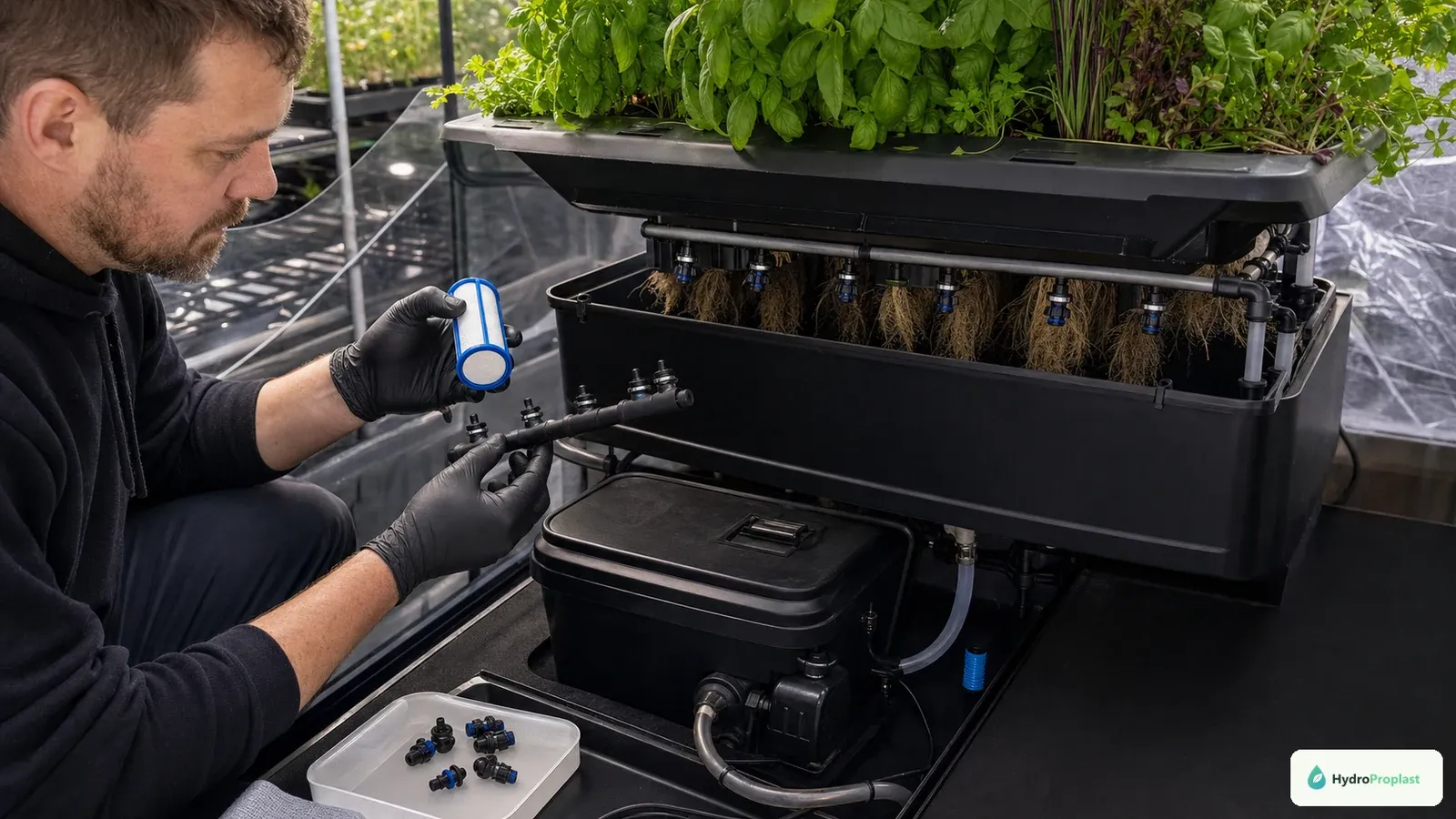
Clean filters and inspect every nozzle pattern on schedule; partial blockage can create dry root zones before the pump appears to fail.
Filters, nozzles, pump parts, reservoir, lines, and chamber need a cleaning schedule. Between crops, remove all roots and biofilm, inspect seals, flush passages using compatible procedures, and test each nozzle with plain water. Replace damaged or inconsistent nozzles rather than enlarging openings manually.
During a crop, keep fallen tissue out of the reservoir and check the filter before flow is visibly reduced. Avoid moving tools between a suspect root chamber and healthy systems. Follow cleaning labels, wear appropriate protection, rinse thoroughly, and never mix chemicals.
A complex chamber that cannot be disassembled is not low maintenance. Service access is more valuable than decorative automation.
Aeroponics versus NFT, DWC, and drip
Compared with NFT, aeroponics uses intermittent spray rather than a continuous channel film. Both can expose roots to air and both are pump-dependent, but fine nozzles add clog risk. Read NFT Hydroponics Pros and Cons for the channel option.
Compared with DWC, aeroponics uses much less standing solution around roots and may offer more oxygen exposure, but DWC provides a water buffer and simpler hardware. Kratky vs DWC explains the two simpler suspended-root approaches.
Compared with drip, both deliver solution through lines, but drip wets a substrate that stores moisture. Drip is usually more practical for large fruiting crops; see Drip Hydroponics for Beginners.
A decision checklist for home growers
Choose aeroponics if you specifically want propagation or exposed-root experimentation, can source pressure-compatible replaceable parts, will inspect spray daily, can clean fine passages, and have a tested outage response.
Choose a conventional system if your goal is simply a dependable first harvest, replacement parts are limited, power is unreliable, pump noise or pressure is undesirable, or you cannot inspect the chamber easily. The beginner system guide matches common goals to simpler methods.
If aeroponics remains the right project, start with a small independent chamber. Map spray coverage, run failure tests, measure every nozzle, and complete one cleaning cycle before scaling. The best evidence that the design works is not a cloud of mist on day one; it is uniformly healthy roots after weeks of serviceable, repeatable operation.
Validate spray coverage before roots hide the evidence
Map every nozzle with plain water before transplanting. Place water-sensitive paper or clean collection surfaces at several positions in the empty chamber, then run the normal interval. Look for dry corners, excessive impact directly beneath one nozzle, and spray blocked by collars or internal supports. Test at the lowest reservoir level because pump intake and pressure may differ from a full tank.
Repeat the inspection with temporary strands or a non-shedding model that approximates mature root obstruction. Do not place loose fibers where they can enter nozzles. Confirm that drainage keeps up with the longest credible run and that stopped spray cannot siphon the reservoir onto the floor.
Record normal pressure if the design includes a rated gauge, spray duration, refill time, and nozzle pattern. A pressure reading alone cannot prove coverage, but a changed reading can help locate a restriction or leak.
Set a clear fallback method
Before growing valuable plants, decide what happens when the primary pump, timer, or nozzle circuit fails. A second correctly rated pump may be appropriate; a small independent backup sprayer can protect one chamber; young plants may be moved to DWC temporarily if supports and roots permit. The fallback must be tested, not imagined during an outage.
Keep the parts required to activate it beside the system, label connections, and write a short instruction that another person can follow. Avoid an improvised pressure connection or unverified power adapter. If safe backup is unaffordable or too complex, use a more buffered hydroponic method.
This planning changes the buying decision. Aeroponics is reasonable when its benefits justify both the primary hardware and the recovery path. Without that path, the apparent efficiency is purchased by transferring risk to exposed roots.