Few sights are more disappointing when growing hydroponic tomatoes or peppers indoors than watching your first green fruits develop a water-soaked tan spot at the bottom that quickly turns dark, leathery, and sunken. This disorder is blossom end rot (BER).
Because blossom end rot is caused by a calcium deficiency inside the distal (blossom) end of the fruit, many beginners immediately reach for a bottle of Cal-Mag. In hydroponics, however, complete two-part formulas with calcium nitrate already contain ample calcium—and adding more fertilizer often raises EC and makes blossom end rot worse. Here is what actually causes BER in hydroponic setups and how to stop it on the next fruit cluster.
What blossom end rot is (and why damaged fruit cannot heal)
Blossom end rot is a physiological disorder, not a fungal infection (though secondary mold may colonize the dead tissue later). During the first two to three weeks after flower pollination, young fruit cells divide and expand rapidly. If calcium delivery through the xylem falters even briefly during that window, cell membranes at the far end of the fruit break down.
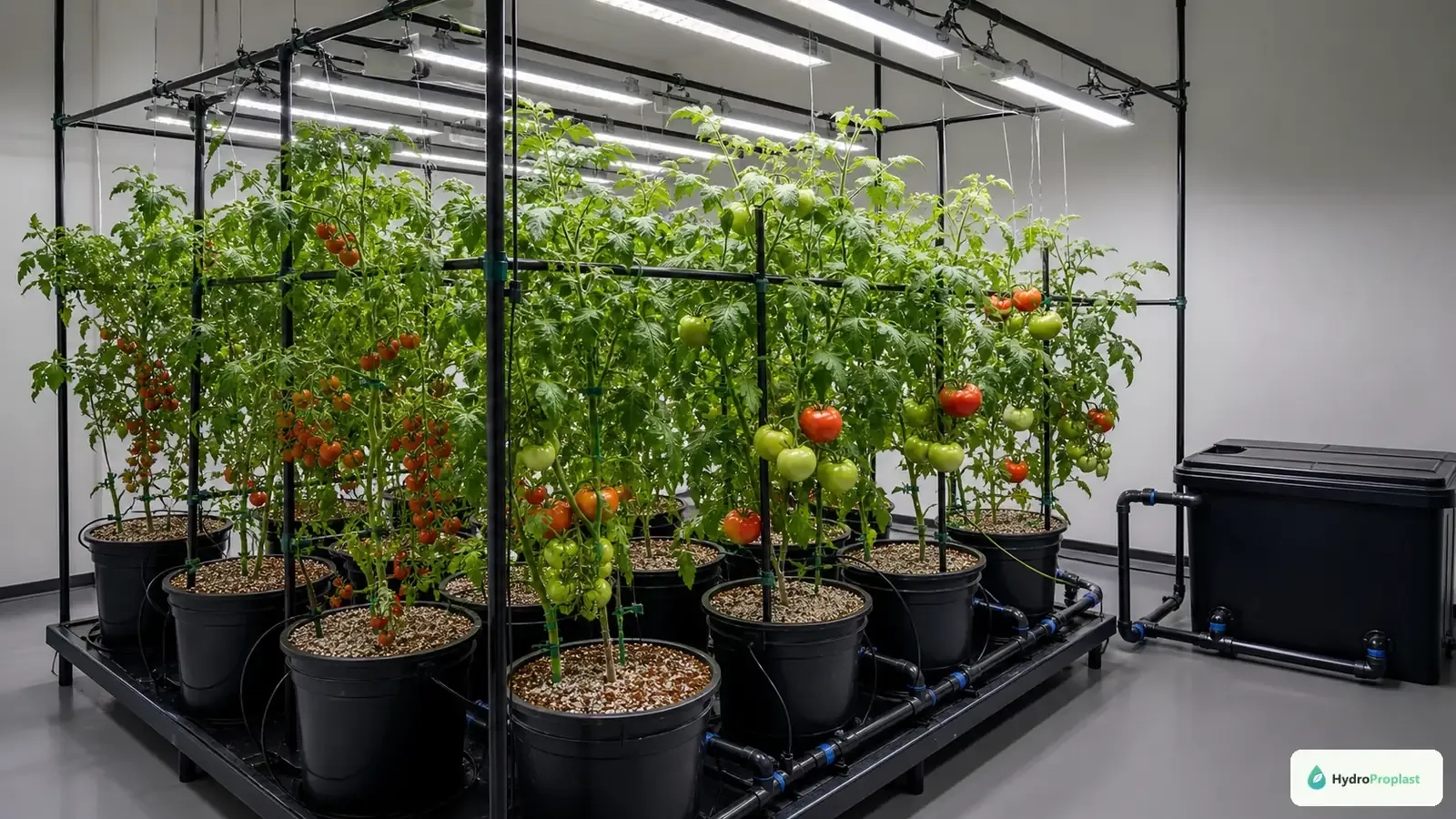 Rapidly expanding young tomato and pepper fruits require steady water and calcium transport during the first two to three weeks after pollination.
Once a dark sunken patch forms on a fruit, that tissue cannot recover. Remove affected fruits promptly so the plant directs energy and calcium toward healthy new blossoms while you correct the root-zone or environmental trigger.
Five real causes of blossom end rot in hydroponics
1. Uneven moisture or clogged emitters in drip and media systems
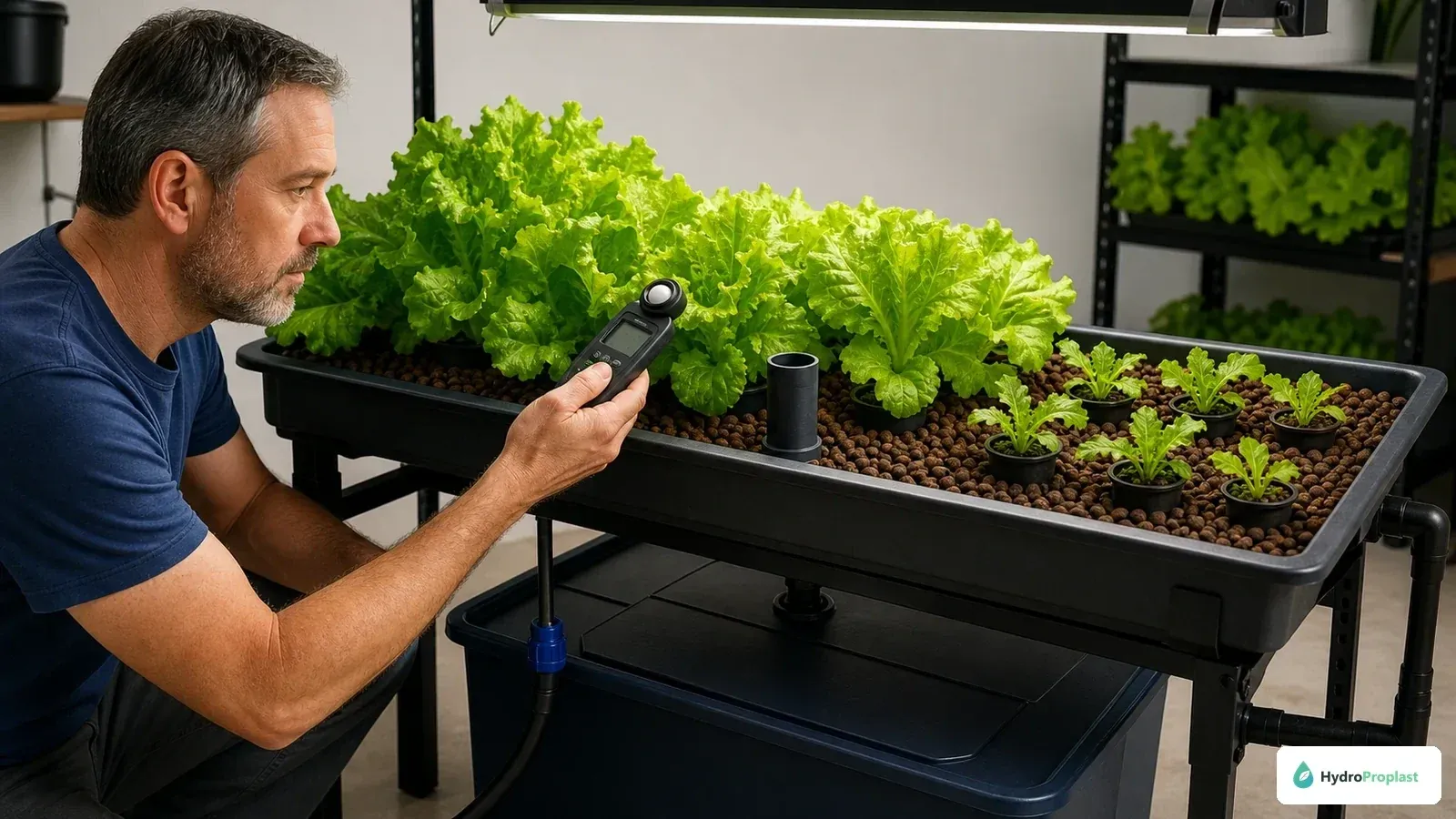
In drip hydroponics, coco coir, rockwool, or Dutch buckets, allowing the substrate to dry out between irrigation cycles spikes root-zone osmotic pressure and halts water and calcium flow into the fruit.
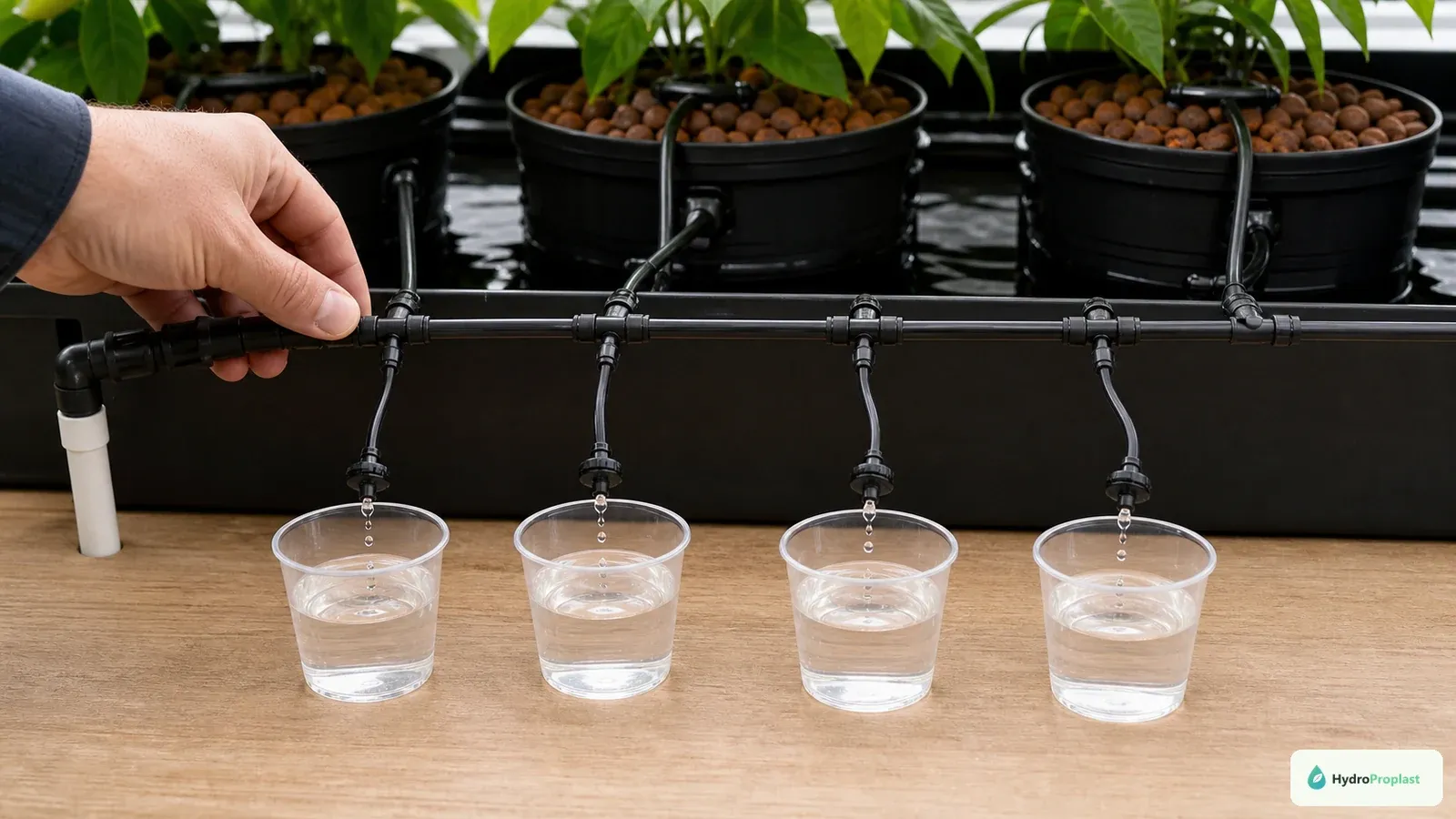 Blocked or uneven drip emitters cause dry-back spikes in substrate pots, interrupting calcium flow to developing fruit.
- Fix: Check every emitter weekly to confirm uniform flow, and increase irrigation frequency as fruiting plants grow larger and drink faster.
2. Reservoir EC that is too high (or salt buildup in media)
When EC climbs too high, roots face stronger osmotic resistance. The plant pulls in less water overall, and whatever water moves upward goes preferentially to high-transpiring leaves rather than low-transpiring fruits.
- Fix: Check reservoir and runoff EC. If runoff EC is significantly higher than input EC, flush the medium following our salt buildup prevention guide and keep fruiting tomato/pepper EC in a steady 2.0–2.8 mS/cm range rather than pushing above 3.2 mS/cm.
3. Ion competition from excess potassium, magnesium, or ammonium
Positively charged ions (cations) such as ammonium, potassium, and magnesium compete directly with calcium for uptake at the root surface. Using a general-purpose soil fertilizer high in urea/ammonium—or overdosing bloom boosters and Epsom salt—readily blocks calcium absorption.
- Fix: Use a true hydroponic two-part nutrient formula where nitrogen comes primarily from nitrate paired with calcium nitrate, and never mix Part A and Part B concentrated stock solutions together before diluting in water.
4. Root damage or warm, low-oxygen water in DWC
Active calcium uptake requires healthy white root tips and adequate dissolved oxygen. If reservoir water warms above 75°F (24°C) or root rot damages young root tips, calcium absorption drops immediately.
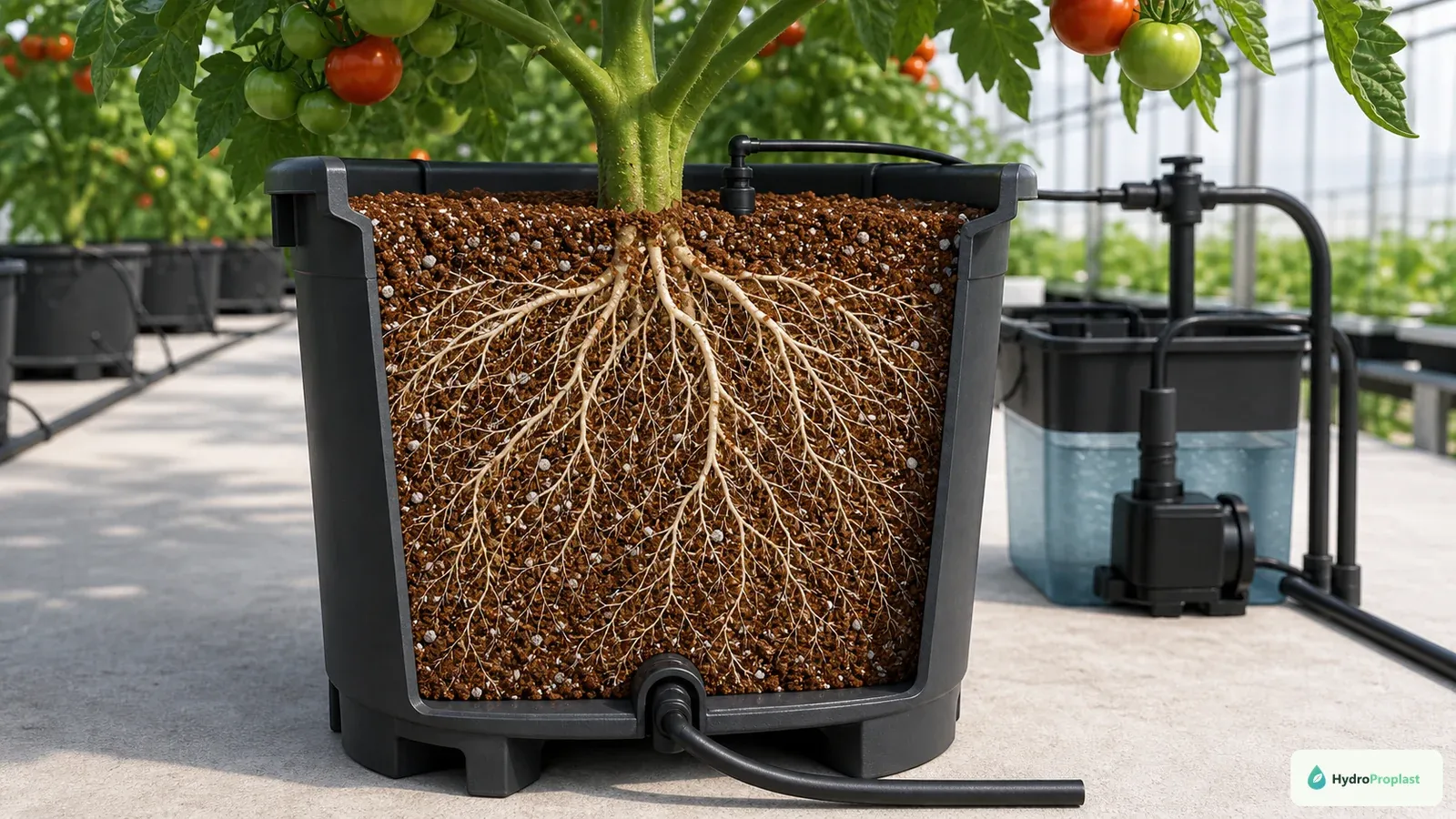 Healthy white roots and stable reservoir EC allow continuous calcium uptake without ion competition.
5. Extreme humidity swings or stagnant indoor air
Very high humidity shuts down plant transpiration, while hot, bone-dry air under intense lights pulls nearly all xylem water into the leaves instead of the developing fruit. Maintain balanced indoor temperature, humidity, and gentle airflow so the plant transpires steadily throughout the day.