Indoor hydroponics prevents many soil problems but does not exclude insects. Aphids arrive on plants and clothing, fungus gnats exploit wet organic surfaces, and spider mites thrive unnoticed on leaf undersides. Effective control begins with identification, quarantine, sanitation, and environmental correction before any pesticide decision.
Quarantine incoming plants
Keep nursery plants, outdoor cuttings, used media, and borrowed tools away from production. Inspect leaf undersides, nodes, crowns, plugs, and roots under bright neutral light. Hold new plants long enough to detect emerging pests according to a written facility plan.
Starting from clean seed reduces introduction risk but does not eliminate pests entering through doors, vents, clothing, or produce.
Monitor with a fixed route
Inspect the same representative plants weekly and high-risk crops more often. Use a hand lens. Record pest, life stage, plant position, count or severity, and date.
Yellow sticky cards can help detect flying adult fungus gnats and some aphids, but they do not measure larvae or spider mites reliably. Number cards, keep height consistent, and replace them on schedule.
Identify aphids
Aphids are soft-bodied insects found on tender tips, stems, and leaf undersides. They may be green, black, yellow, or other colors. Cast skins, sticky honeydew, distorted new growth, and ants can support identification.
Winged aphids indicate dispersal but do not reveal the size of the hidden colony. Inspect curled leaves carefully.
Respond to aphids first with containment
Isolate heavily affected plants when practical. Remove severely colonized tips only when the crop tolerates pruning, bagging material before carrying it through the room. Clean tools between plants.
A strong water spray sometimes dislodges aphids on sturdy plants, but protect electrical equipment and keep wash water out of reservoirs. This is unsuitable for delicate seedlings or disease-prone wet foliage.
The University of Minnesota Extension’s aphid guidance provides identification and management context.
Identify fungus gnats
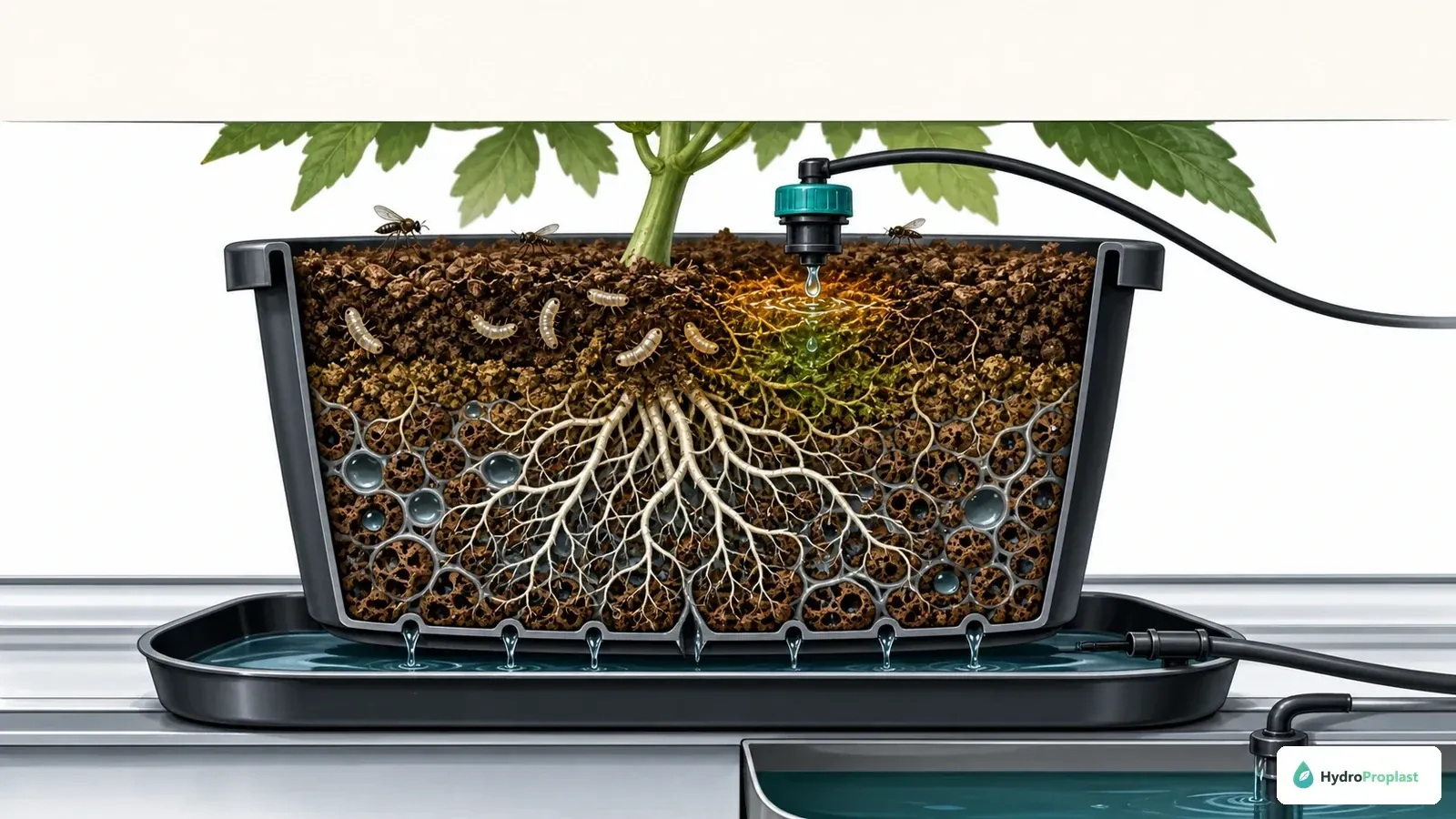
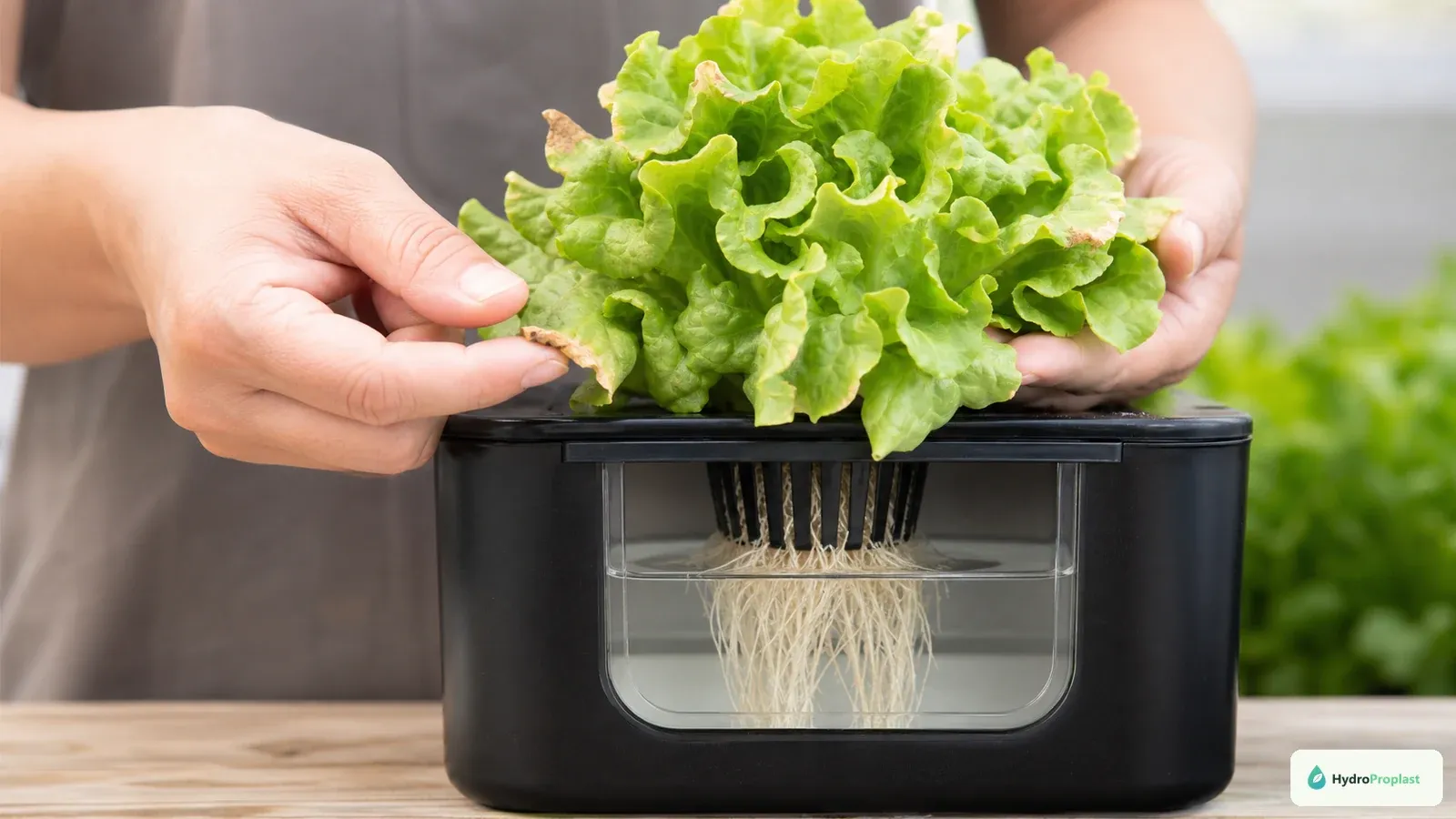
Fungus-gnat control starts by locating persistent surface wetness, algae, decaying roots, and leaking emitters.
Adults are small dark flies commonly seen near wet media. Larvae live in moist organic material and feed on fungi, algae, and sometimes tender roots. Sticky cards detect adults; potato slices or direct media inspection may help observe larvae under appropriate guidance.
Do not diagnose every small fly as a fungus gnat. Shore flies and other insects require different interpretation.
Correct fungus-gnat habitat
Reduce persistent surface wetness without drying crop roots. Improve drainage, remove algae and decaying roots, clean spills, cover exposed wet media where crop-safe, and fix leaking emitters.
The algae prevention guide addresses light and wet surfaces. Sanitation interrupts habitat but does not instantly remove every life stage.
Identify spider mites
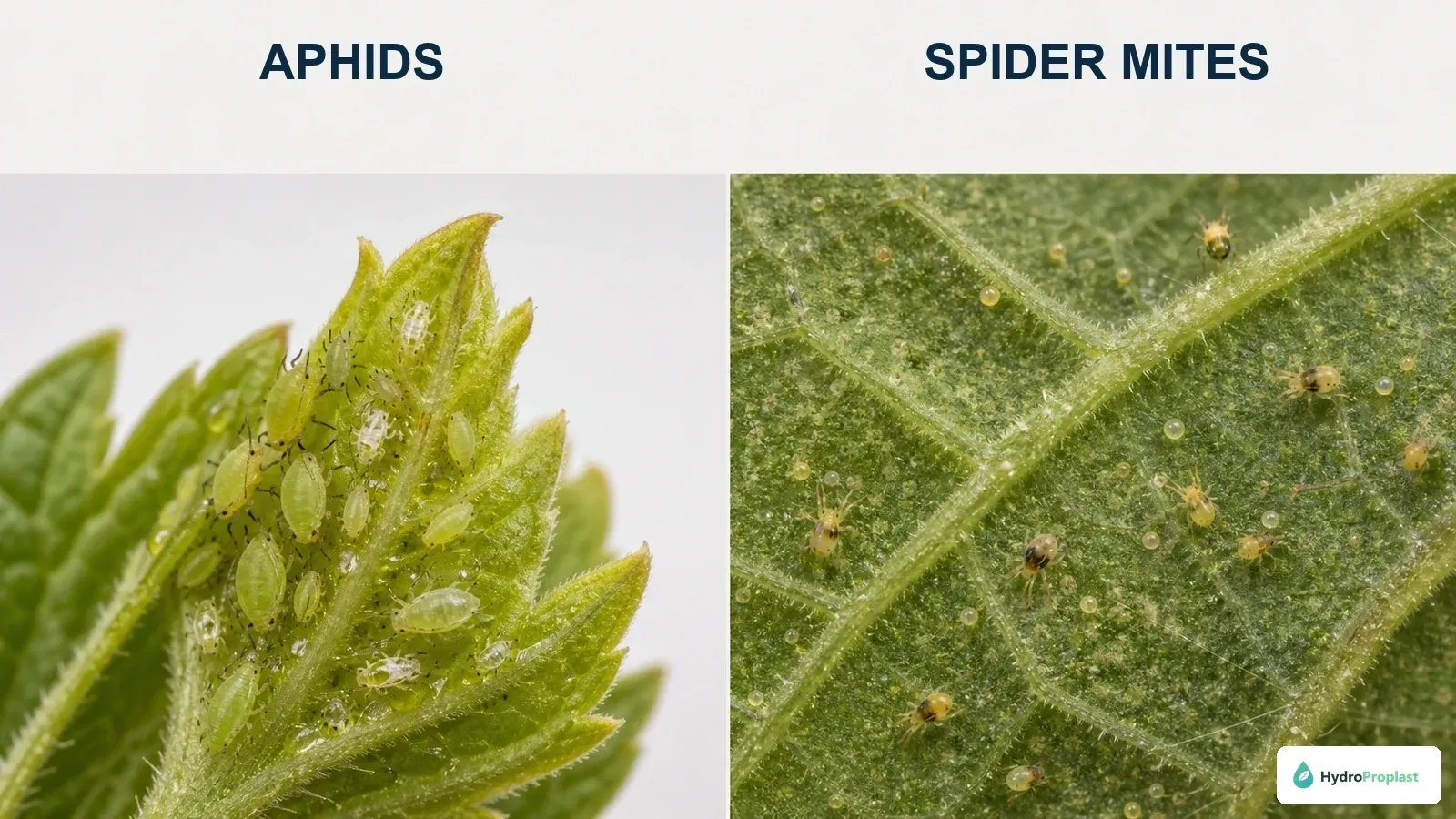
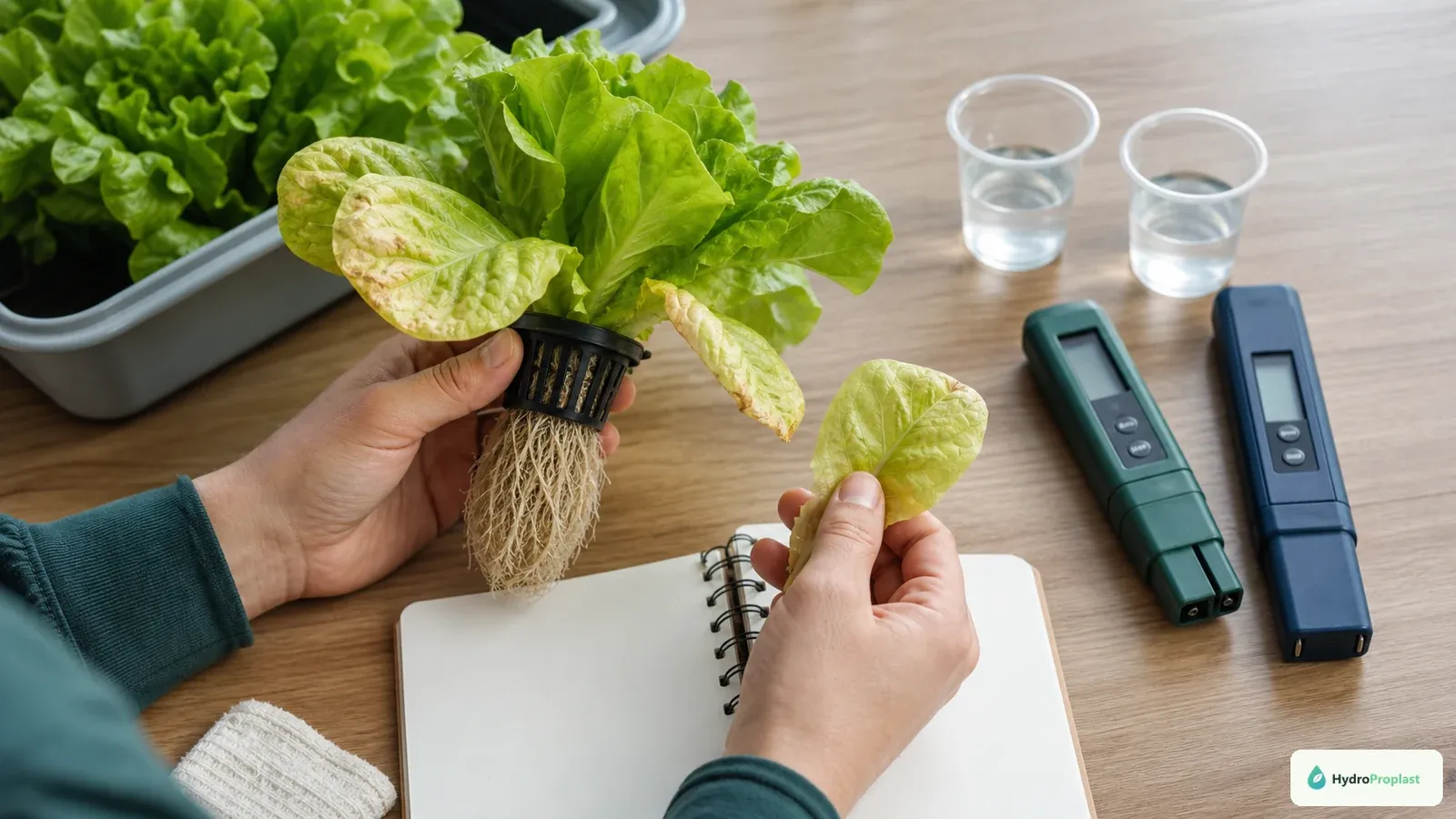
Aphids cluster on tender growth, while spider mites and eggs are usually detected first beneath leaves.
Spider mites are tiny arachnids, not insects. Early signs include fine stippling, dull leaves, and mites or eggs beneath foliage. Fine webbing often appears after populations increase.
Tap a suspect leaf over white paper and inspect moving specks with magnification. Distinguish mites from dust and beneficial predatory mites.
University of Minnesota Extension’s spider mite guidance explains identification and plant injury.
Contain mite spread
Mites move on plants, hands, tools, and airflow. Work from clean zones toward suspect zones. Bag discarded foliage and avoid brushing infested leaves against neighbors.
Do not move fans through an infested canopy without considering dispersal. Clean room edges, stakes, clips, and supports during crop turnover.
Use integrated pest management
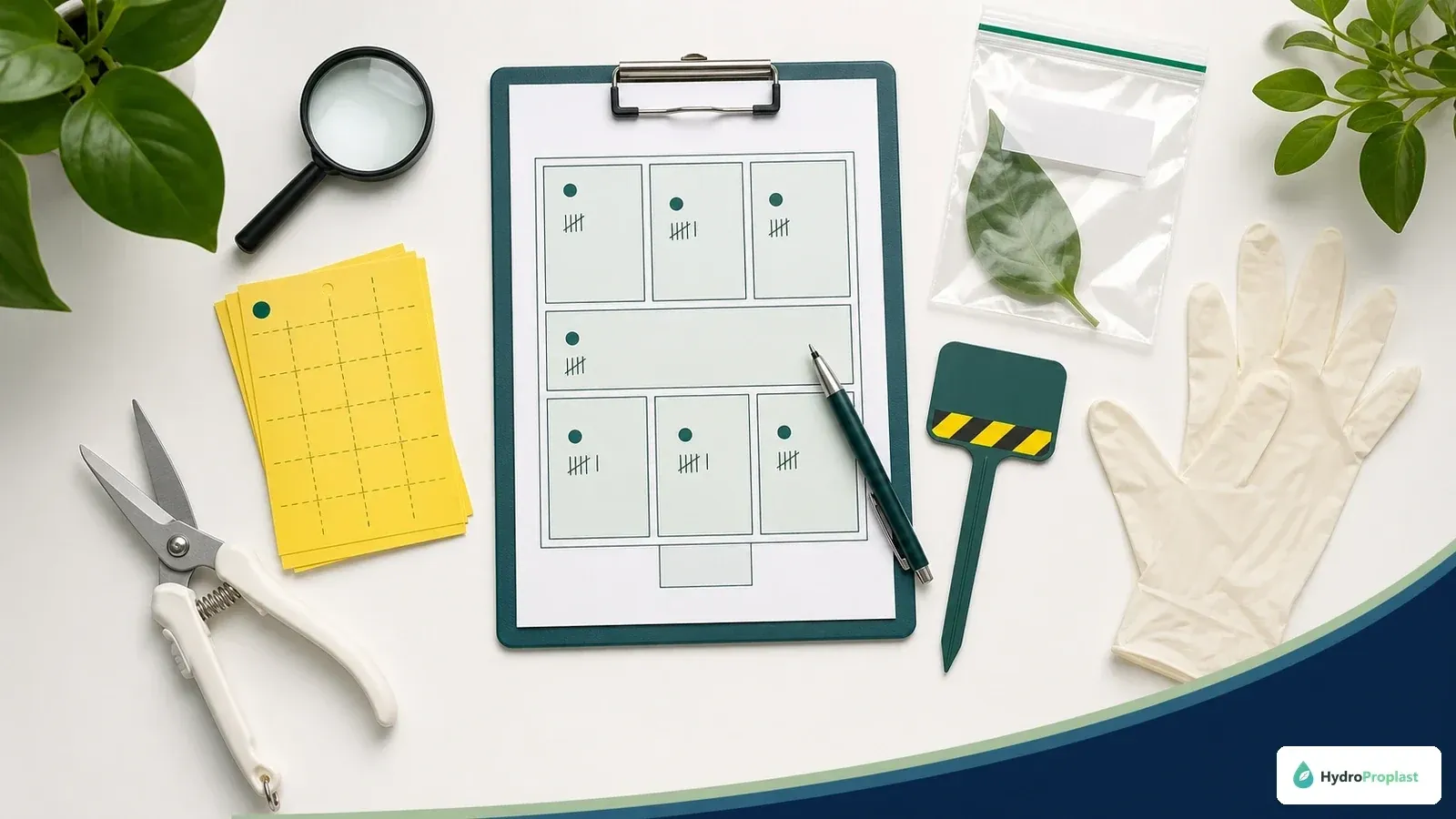
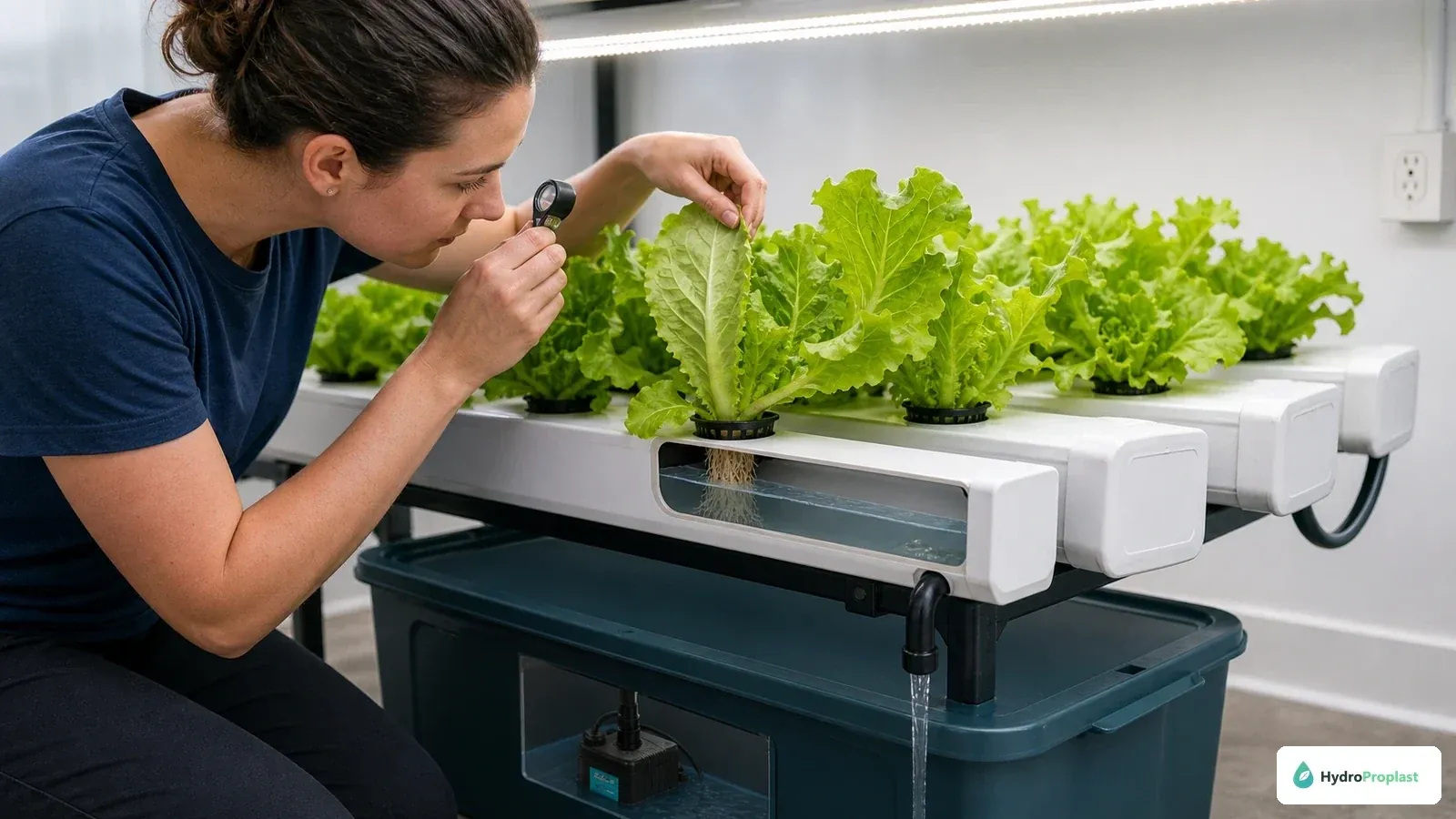
A repeatable IPM route uses numbered traps, magnification, clean tools, samples, and written counts.
IPM combines prevention, monitoring, thresholds, cultural controls, physical removal, biological control, and carefully selected pesticides when necessary. The objective is acceptable crop protection with documented decisions, not routine spraying.
Set an action threshold suitable to crop stage and value. A single aphid on a young mother plant may justify a different response from one adult gnat on a card.
Consider biological controls professionally
Predatory mites, parasitoid wasps, and beneficial nematodes can be effective when matched to the pest, climate, crop, and pesticide history. They are living organisms with storage, release, and compatibility requirements.
Buy from reputable suppliers and obtain a release plan. Do not release organisms outdoors or in shared buildings without authorization. Previous pesticide residues can kill beneficials.
Follow pesticide labels exactly
Use only products labeled for the identified pest, edible crop, indoor or greenhouse site, and intended application method. Read the entire current label for dose, PPE, re-entry interval, preharvest interval, ventilation, maximum applications, resistance group, and pollinator precautions.
A product described online as natural or organic is not automatically safe for edible hydroponics. Soap, oil, botanical, microbial, and conventional products can injure plants or leave residues when misused.
The U.S. EPA explains why pesticide labels are legally enforceable directions.
Protect reservoirs and workers
Cover nutrient reservoirs and isolate pumps, sensors, and electrical equipment before any permitted foliar application. Never add a foliar pesticide to nutrient solution unless its label explicitly directs that exact use.
Wear label-required PPE. Post treatment and re-entry information. Keep unprotected people, pets, food, and harvest containers away.
Never mix pesticides, fertilizers, bleach, acids, ammonia, peroxide, or cleaners unless the product labels explicitly permit the exact combination. Do not improvise tank mixes.
Prevent resistance
Repeated use of one mode of action can select resistant pest populations. Follow label limits and a qualified IPM rotation plan. Do not apply below-label rates or shorten intervals.
Failure after treatment may reflect poor identification, coverage, life stage, application timing, resistance, or an untreated reservoir of pests. Diagnose before repeating.
Verify control
Continue counts after intervention. For aphids, inspect new tips and honeydew. For fungus gnats, track card catches and larvae while monitoring roots. For mites, examine undersides and stippling on newly expanded leaves.
Old damage will remain. Success means declining live pests and healthy new growth, not disappearance of every spotted leaf.
Clean between crops
Remove plants, roots, algae, media, and debris. Wash surfaces before any label-approved sanitizer. Replace porous components that cannot be cleaned.
Use the between-crop cleaning guide. Cleaning chemicals are not pest treatments for occupied edible crops and must never be mixed.
Escalate when needed
Contact a local extension service or licensed pest professional when identification is uncertain, the crop is commercial, pests persist, biological controls are planned, or pesticide labels do not clearly cover the use.
Provide photographs, samples packaged as instructed, crop and stage, room conditions, monitoring history, and every product applied. The yellow-leaf guide helps prevent pest damage from being confused with nutrition or roots.
A safe program knows what pest is present, where it is increasing, what nonchemical conditions support it, and exactly which labeled intervention is allowed. If those answers are missing, pause treatment and improve diagnosis.
Build a room-level scouting map
Divide the growing area into numbered zones: propagation, mature canopy, doors, vents, drains, storage, and waste route. Select sentinel plants in every crop and stage. Inspect them in the same sequence, beginning with the cleanest area and ending with suspect zones.
For aphids, count live individuals on a defined number of tips or leaves. For spider mites, count affected leaves or mites within a magnified sample. For fungus gnats, record adults per numbered sticky card over a fixed interval and inspect media for larvae. Severity words such as light or bad are difficult to compare; use a repeatable unit.
Plot counts weekly. A stable low catch differs from a rapidly increasing cluster around one wet bench. Mark introductions, pruning, biological releases, pesticide applications, harvest, and sanitation on the graph.
Follow an aphid decision sequence
Confirm live aphids rather than cast skins alone. Determine whether colonies are restricted to removable tips or distributed through the canopy. Check for winged individuals and honeydew on equipment. Quarantine or remove the worst source before handling neighboring plants.
If physical removal or a crop-labeled treatment is chosen, verify that it reaches the protected leaf and node surfaces where aphids feed. Avoid runoff into nutrient water. Reinspect newly expanding tips because surviving aphids can rebuild colonies quickly.
Follow a fungus-gnat decision sequence
Confirm that adults and larvae match fungus-gnat characteristics. Find the breeding material: saturated plugs, algae, spilled media, dead roots, floor drains, or stored organic material. Correct the moisture or sanitation source without depriving live crop roots of required water.
Sticky cards reduce and monitor adults but do not control larvae alone. A biological larvicide, beneficial nematode, or other treatment must be labeled or professionally specified for the exact crop and setting. Follow storage and water-quality requirements for living or microbial products.
Follow a spider-mite decision sequence
Use magnification before webbing becomes extensive. Map whether mites begin near a hot dry edge, incoming plant, or doorway. Remove heavily infested plants in sealed bags when their recovery would threaten the room.
Some broad-spectrum pesticides can disrupt predatory mites and worsen rebound. Oils and soaps require direct coverage and can injure heat- or light-stressed foliage. Apply only within label conditions, test crop sensitivity when the label advises it, and keep treated plants out of intense heat until directions permit.
Plan applications for edible crops
Before opening a product, write the target pest, crop, site, formulation, application method, dose, required PPE, restricted-entry interval, preharvest interval, maximum frequency, and disposal method. If any field is absent or does not match the room, do not apply.
The crop name on a label matters. A product permitted on ornamental plants is not thereby permitted on basil, lettuce, tomato, or microgreens. Hydroponic use can create reservoir-contamination routes that field instructions do not address. Obtain manufacturer or regulatory clarification rather than interpreting silence as permission.
Never transfer pesticides into beverage containers. Keep them locked, labeled, and separated from nutrients, food, seed, and cleaning chemicals. Use dedicated measuring tools and maintain application records.
Handle microgreens and near-harvest crops cautiously
Microgreens are dense, short-cycle, ready-to-eat seedlings. Their limited interval between treatment and harvest makes many products unsuitable even when a related mature crop appears on a label. Do not assume that washing removes residues or makes an unapproved application acceptable.
When pests occur close to harvest, discarding the affected tray and correcting the introduction route may be safer than treatment. Commercial growers should use a food-safety and licensed pest-management plan appropriate to local regulation.
Protect workers and pollinators
Post application areas and re-entry times. Train workers to recognize treated zones, PPE, symptoms of exposure, spill response, and emergency contacts. Launder or dispose of PPE as directed and keep contaminated clothing away from homes and food.
Flowering tomatoes, peppers, cucumbers, and strawberries may receive hand pollination or managed pollinators. Read pollinator hazard statements before any application. Coordinate biological and chemical controls so a residue does not kill beneficial organisms after release.
Run a post-treatment audit
Record weather or room conditions, start and finish time, product lot, concentration, volume, applicator, zones, and any spill. Recount pests at label-appropriate intervals. Inspect for phytotoxicity on new and exposed leaves.
If live pests remain, do not immediately repeat or increase the dose. Review identification, coverage, life stage, resistance group, reservoir sources, and label limits. Contact a licensed adviser when the cause is unclear.
Prevent reinfestation at crop turnover
Move crop waste through a route that does not pass clean propagation. Vacuum or physically remove insects and webbing where equipment permits, wash organic residue, and inspect hidden clips, trellis joints, fan guards, and bench undersides.
Service screens and door seals, eliminate standing water, cover wet nutrient surfaces, and store media dry. Restart only with inspected plants and clean tools. Keep a gap or clearly separated sanitation zone when pest pressure warrants it.
Use a final IPM release checklist
- Pest and life stage are confirmed.
- Counts and locations are recorded.
- Introduction and habitat sources are addressed.
- Nonchemical options have been evaluated.
- Biological controls are matched and compatible.
- Any pesticide is labeled for pest, edible crop, site, and method.
- PPE, re-entry, harvest interval, pollinator, and disposal rules are documented.
- Reservoirs and electrical systems are protected.
- Follow-up counts determine whether the action worked.
Indoor pest control succeeds when fewer pests appear on new growth and the intervention leaves the edible crop, workers, beneficial organisms, and nutrient system protected. A spray without identification and follow-up is not an IPM program.