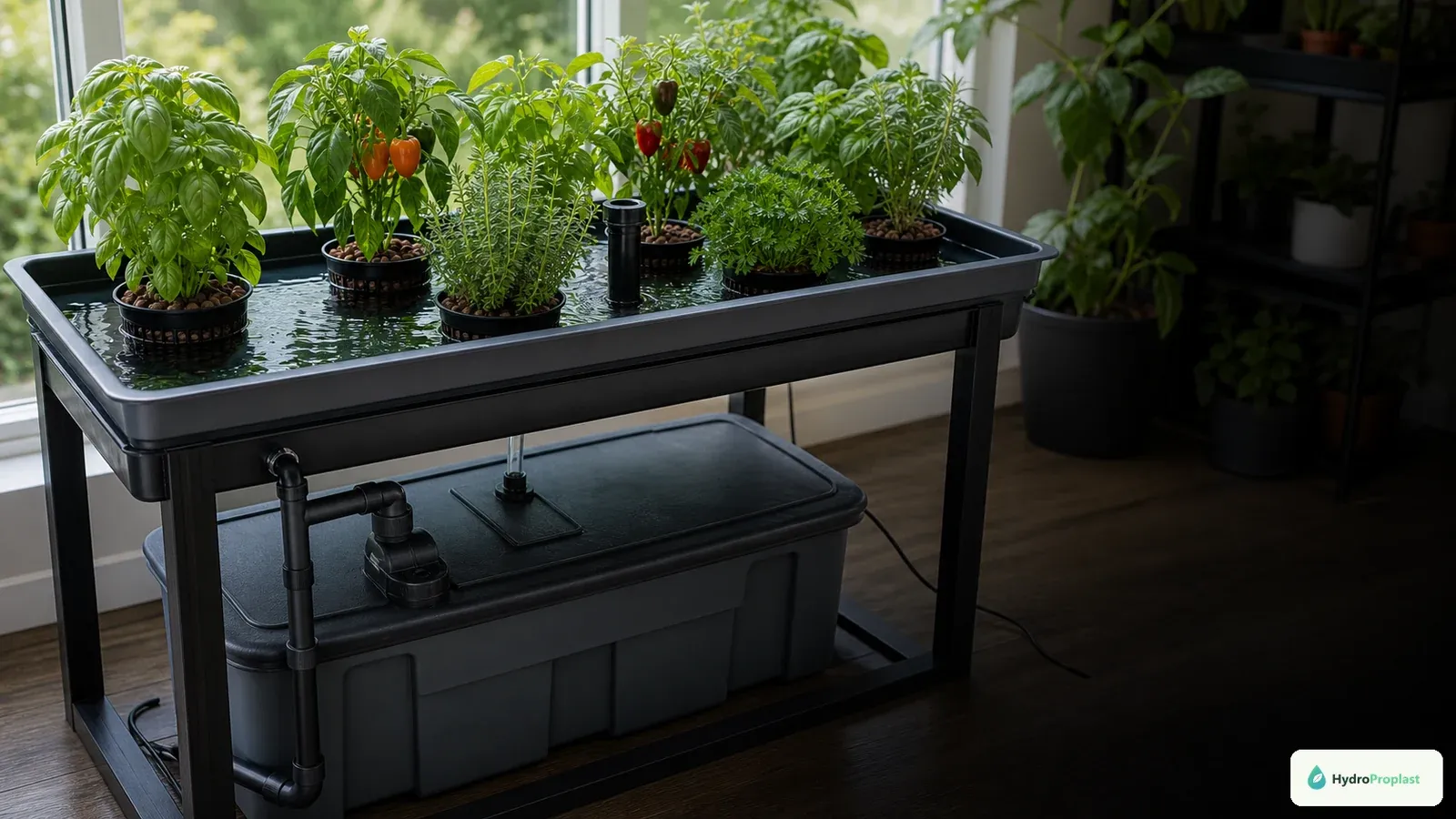
Ebb and flow hydroponics irrigates several media-filled pots through one shared tray. The tray floods to a controlled height, wets the root zone, and then drains back to a reservoir so air can return to the medium. Reliability depends on treating the pump, timer, standpipe, drain capacity, and reservoir freeboard as one complete hydraulic cycle.
Ebb and flow in plain language
Ebb and flow hydroponics—also called flood and drain—periodically pumps nutrient solution into a grow tray or media bed, then lets it drain back to a reservoir. Flooding wets the root zone and delivers minerals; draining replaces much of that water with air in the pores of the growing medium.
It makes sense for home growers who want several media-filled pots on one tray, flexibility to move plants, and less continuous pump operation than NFT. It is less suitable when the floor cannot tolerate a spill, the tray cannot be leveled, drainage is hard to inspect, or the grower wants the fewest plumbing and timer decisions.
The method is forgiving across plant sizes only when the medium, flood depth, cycle, reservoir, and drain capacity work together. A timer copied from another setup is not a complete design. Crop water use, root development, temperature, humidity, and medium water retention all change how often irrigation is needed.
What happens during one cycle
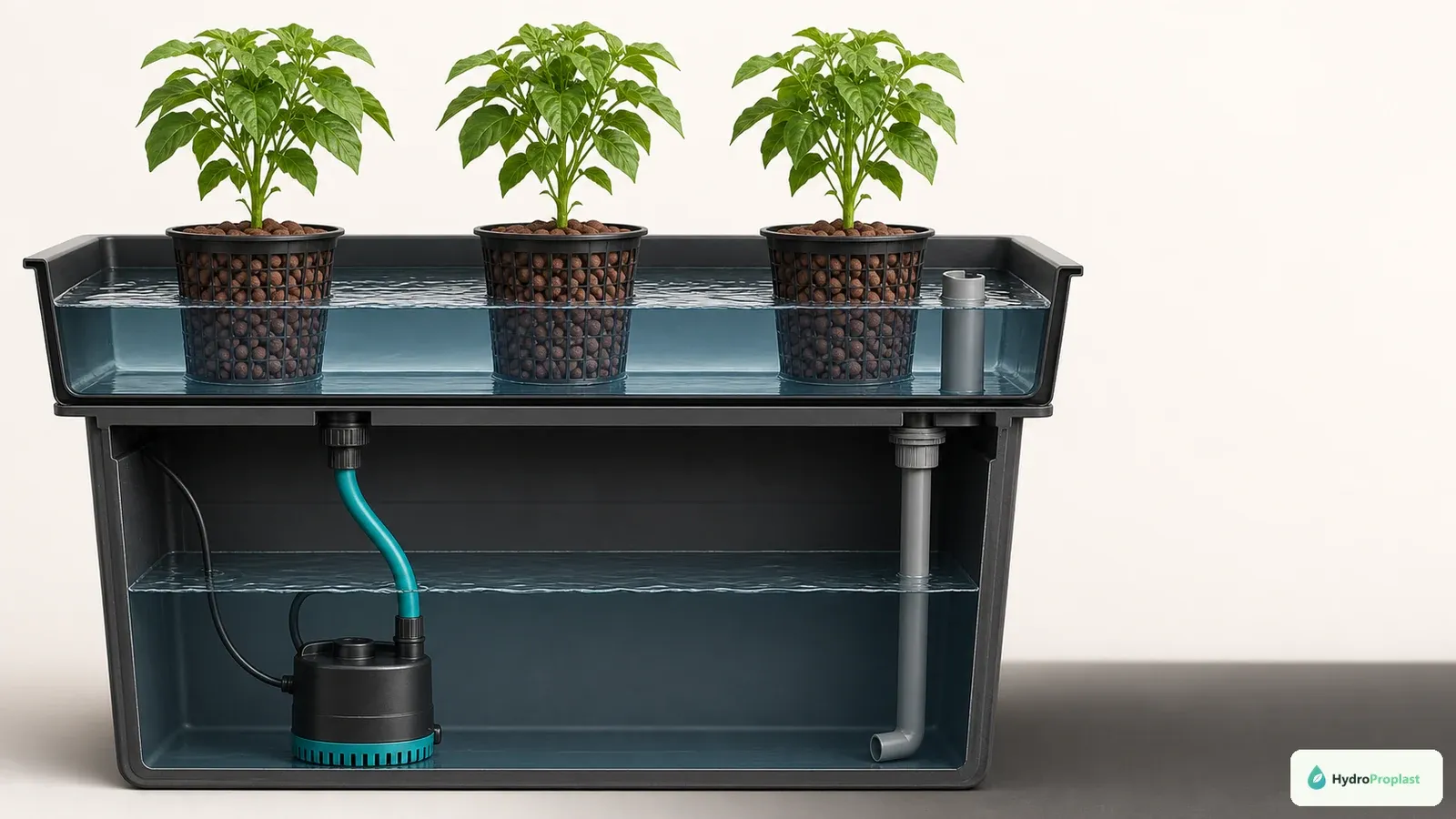
The standpipe limits maximum flood depth while the fill and drain path lets media wet from below without leaving crowns submerged.
A submersible pump starts and sends solution from the reservoir into the tray. The liquid rises to a designed maximum set by an overflow fitting or standpipe. Pots or a bed of medium become wet from below and around the roots. When the timer stops the pump, gravity returns solution through the fill/drain line or a separate drain.
Oklahoma State University’s hydroponics guide defines ebb and flow by this temporary flooding and drainage and notes that cycle timing depends on plant size and type, temperature, humidity, and medium. That dependency is why “flood four times daily” should be treated as an example, not a universal rule.
Drainage is as important as delivery. If the tray remains flooded, roots lose the air-filled pore space the method is intended to create. If it drains too quickly for a coarse medium to wet, plants may receive little water. Observe moisture and roots rather than optimizing only for a dramatic flood.
The parts that make a reliable system
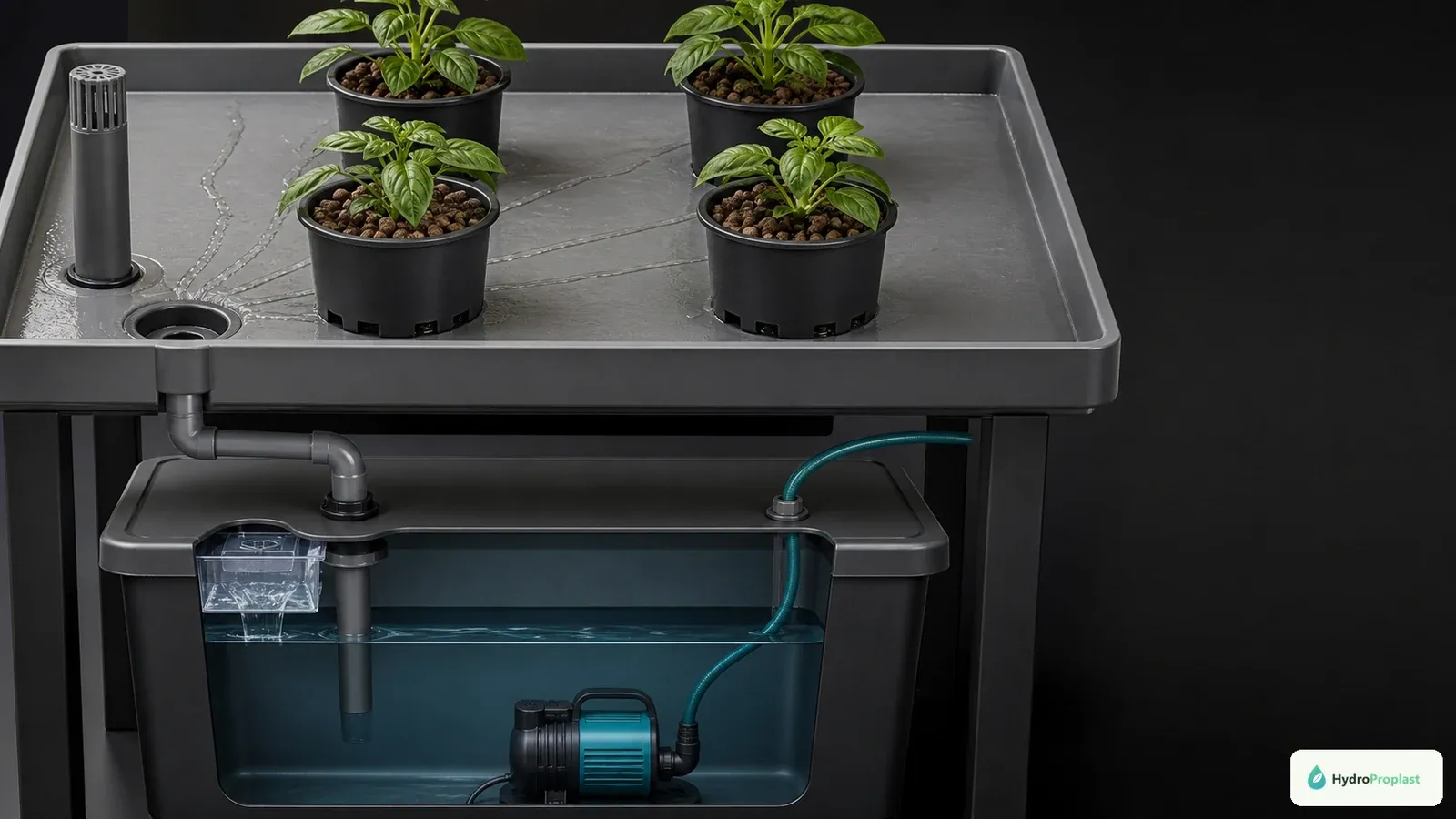
After the pump stops, gravity must return the entire tray volume to a reservoir sized to accept drain-back without overflowing.
A basic setup includes an opaque reservoir, flood tray or bed, plant pots or medium, submersible pump, timer, tubing, fill fitting, drain or overflow, and supports that hold the full wet weight. Add a screen or guard only where it can be removed and cleaned before roots block it.
The tray must be suitable for repeated wet use and deep enough to reach the intended portion of the pots without submerging stems or crowns. Its stand must remain level and stable. Water is heavy; include solution, saturated medium, plants, lights, and trellis loads when evaluating furniture or shelving.
The reservoir needs working volume for the pump and enough spare capacity to accept all returning water after shutdown. Mark operating and shutdown levels during a plain-water test. Keep the pump submerged at the lowest operating level, but do not fill so high that drainage causes an overflow.
Use safe electrical routing, drip loops, and spill containment. A water alarm can be valuable indoors. Components should be accessible without moving mature plants.
Media choice controls the irrigation rhythm
Expanded clay drains quickly and leaves substantial air space, so it may need more frequent flooding than a water-retentive coir blend. Perlite, coir, mineral wool, and mixed substrates differ in capillary behavior, pore size, stability, and reuse. The Oklahoma State guide to soilless media recommends selecting medium for plant, irrigation water, cost, lifespan, and system.
Do not fill a tray with fine material that washes into pumps and drains. Use pots, liners, or screens appropriate to the particle size without creating a clog point. New media may need preparation according to manufacturer or extension guidance; coir quality and initial salt content can vary.
Place starter roots where moisture reaches them. A flood level below a dry young plug can leave the seedling stranded even while the lower pot is wet. As roots extend, the system becomes less sensitive to this gap.
Crops that benefit from flood and drain
Ebb and flow is useful when individual pots and a shared irrigation tray are desirable. Herbs, leafy greens, ornamentals, and compact fruiting plants can be accommodated with suitable spacing and support. Pots can be rearranged more easily than planting sites in fixed NFT channels.
Larger tomatoes, peppers, or cucumbers need adequate substrate volume, independent trellising, strong light, and longer-term nutrient management. Their weight should not be carried by thin tray lids. A media-based drip system may deliver water more precisely to large individual containers; compare Drip Hydroponics for Beginners.
Avoid mixing crops with radically different water use and maturity on one tray unless the medium and pot sizes compensate. A small herb and a fruiting tomato share the same flood event but not the same demand.
Set cycles by observation
Begin conservatively using guidance appropriate to the medium and crop, then inspect moisture before and after irrigation. Look at pot weight, root condition, leaf posture, room temperature, and how long the medium remains wet. Adjust one variable at a time.
Too few cycles can produce dry upper root zones, wilting, salt concentration, and uneven growth. Too many can keep the medium saturated, reduce root oxygen, encourage algae, and waste pump life. Symptoms overlap with nutrient and disease problems, so verify moisture rather than diagnosing from leaves alone.
Day and night demand may differ. Timers should support the schedule you actually need, retain settings reliably, and fail safely after power loss. Mechanical and digital models each have limitations. Do not use a timer with a load beyond its rating.
Reservoir and nutrient management
Because solution returns, ebb and flow is often a closed recirculating system. Plants remove water and ions at different rates, evaporation changes concentration, and media can retain salts. Monitor reservoir level, pH, EC, temperature, clarity, odor, and roots. EC is a trend for total dissolved ions, not a nutrient-by-nutrient analysis.
Mix a complete hydroponic nutrient using measured working volume. Top up based on water level and concentration trends. Periodic replacement can reset imbalance, but there is no single correct calendar for every reservoir, crop, and source water.
Keep the reservoir and tray protected from light where possible. Cover unused openings and clean algae rather than letting it enter drains and pump parts. Read Hydroponic pH Explained before making measured corrections.
Prevent floods before adding plants
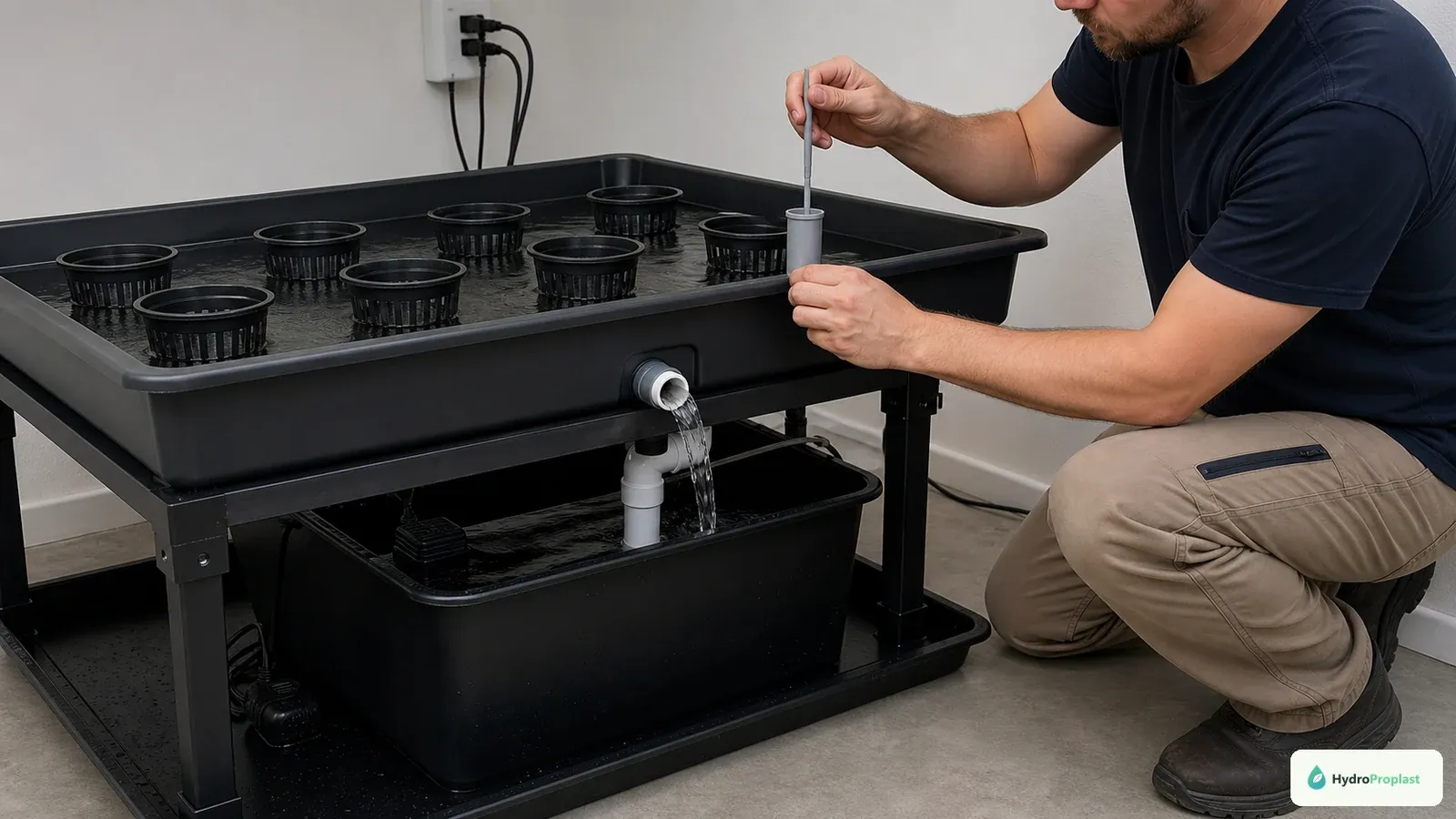
Plain-water testing should verify the highest flood level, overflow protection, complete drainage, and both dynamic reservoir levels.
Run repeated plain-water cycles. Watch the first fill, the maximum level, the moment the pump stops, and the complete return. Simulate a partly blocked drain and decide where water would go. Confirm that the reservoir can accept drain-back without overflowing.
Use an overflow independent of timer accuracy. A stuck-on pump should not raise water indefinitely. Size drain paths for the actual pump flow and keep roots away. Check hose connections under pressure and after movement.
Avoid placing a reservoir where a small leak reaches outlets, finished floors, or lower apartments. A tray beneath the entire system is useful only if it can hold a meaningful spill. Expansion should wait until one tray completes a crop without drainage surprises.
Common mistakes and their signals
An undersized reservoir exposes the pump during operation or overflows during return. Record both dynamic levels.
An uneven tray floods some pots deeply while leaving others dry. Level the structure rather than increasing flow.
A blocked standpipe causes a rising tray; root guards and inspection reduce risk. A partially blocked fill line may create slow irrigation that never reaches the set level before the timer ends.
Inappropriate medium stays saturated or dries too fast. Change cycle and medium deliberately, not both at once.
Light reaching wet media encourages algae. Cover exposed surfaces without sealing the stem or eliminating airflow.
Plants too large for the tray crowd airflow and make service impossible. Plan mature spacing and support before planting every available pot.
Maintenance and cleaning
Check pump output, fittings, flood height, complete drainage, roots, and reservoir level routinely. Remove fallen leaves before they enter plumbing. Listen for pump changes but confirm flow visually.
Between crops, remove roots and media debris, disassemble serviceable fittings, clean tray and reservoir, flush tubing, and inspect seals and the pump impeller. Reuse media only when the material permits and the previous crop was healthy; cleaning a porous substrate may not be worth the disease risk.
Follow cleaning-product labels, wear appropriate protection, rinse thoroughly, and never mix chemicals. Design for cleaning from the beginning: unions, removable standpipes, and reachable corners often save more time than decorative features.
Ebb and flow versus nearby alternatives
Compared with NFT, ebb and flow uses media as a moisture buffer and runs intermittently. It can tolerate a brief pump pause better, but a failed timer or blocked drain introduces different risks. See NFT Hydroponics Pros and Cons for the channel-based tradeoff.
Compared with DWC, roots are not continuously submerged; pots drain and re-aerate. DWC has fewer tray fittings but needs ongoing aeration. Compared with drip, ebb and flow irrigates a shared tray uniformly while drip can target individual containers but adds emitters that may clog.
The USDA Economic Research Service lists flood and drain alongside DWC, NFT, drip, and atomization in its hydroponic system classification. None is a hierarchy. Each moves solution differently and shifts the likely failure points.
A sensible first build
Start with one shallow tray holding a few identical pots of the same crop and medium. Keep the reservoir visible and accessible. Water-test the full cycle, transplant evenly developed seedlings, and record times, moisture observations, reservoir changes, and plant response.
Choose ebb and flow if movable media pots, periodic irrigation, and a shared reservoir solve a real need. Choose a simpler DWC or Kratky container if your main goal is learning nutrients with minimal plumbing. The beginner system guide can help make that choice.
The first successful crop should end with a complete drain and clean reset. If the tray cannot be emptied, opened, and scrubbed easily, improve the design before expanding it.
Tune the first week without chasing leaf symptoms
During the first week after transplanting, verify that the flood actually reaches each young root zone. Mark the maximum tray depth, time the rise and complete drain, and weigh or feel representative pots before irrigation and after drainage. Record room conditions and medium moisture before changing the timer.
If one pot stays dry while others are wet, inspect its placement, medium packing, and contact with flood water. If every pot remains saturated, confirm complete drainage and reassess the medium before adding more cycles. Seedling wilt immediately after transplant can also reflect root damage or poor light acclimation, so do not assume the timer is always responsible.
Use evenly developed plants of one crop for the first run. Mixed pot sizes and media make observations ambiguous. Once a stable wet-dry rhythm is established, changes in canopy size and weather can be handled deliberately. This short tuning period is more reliable than copying a schedule from a system with different pots, substrate, and climate.