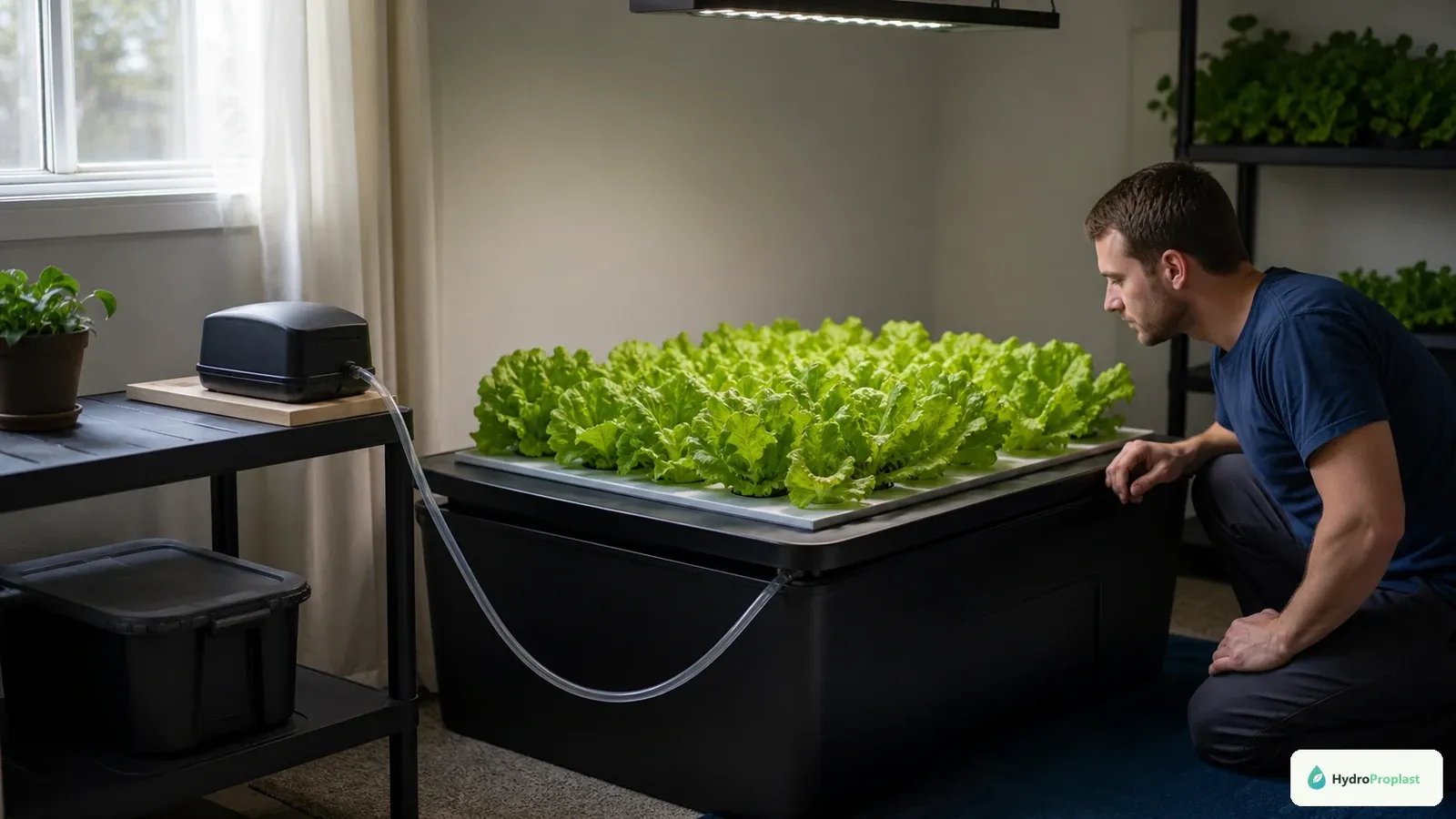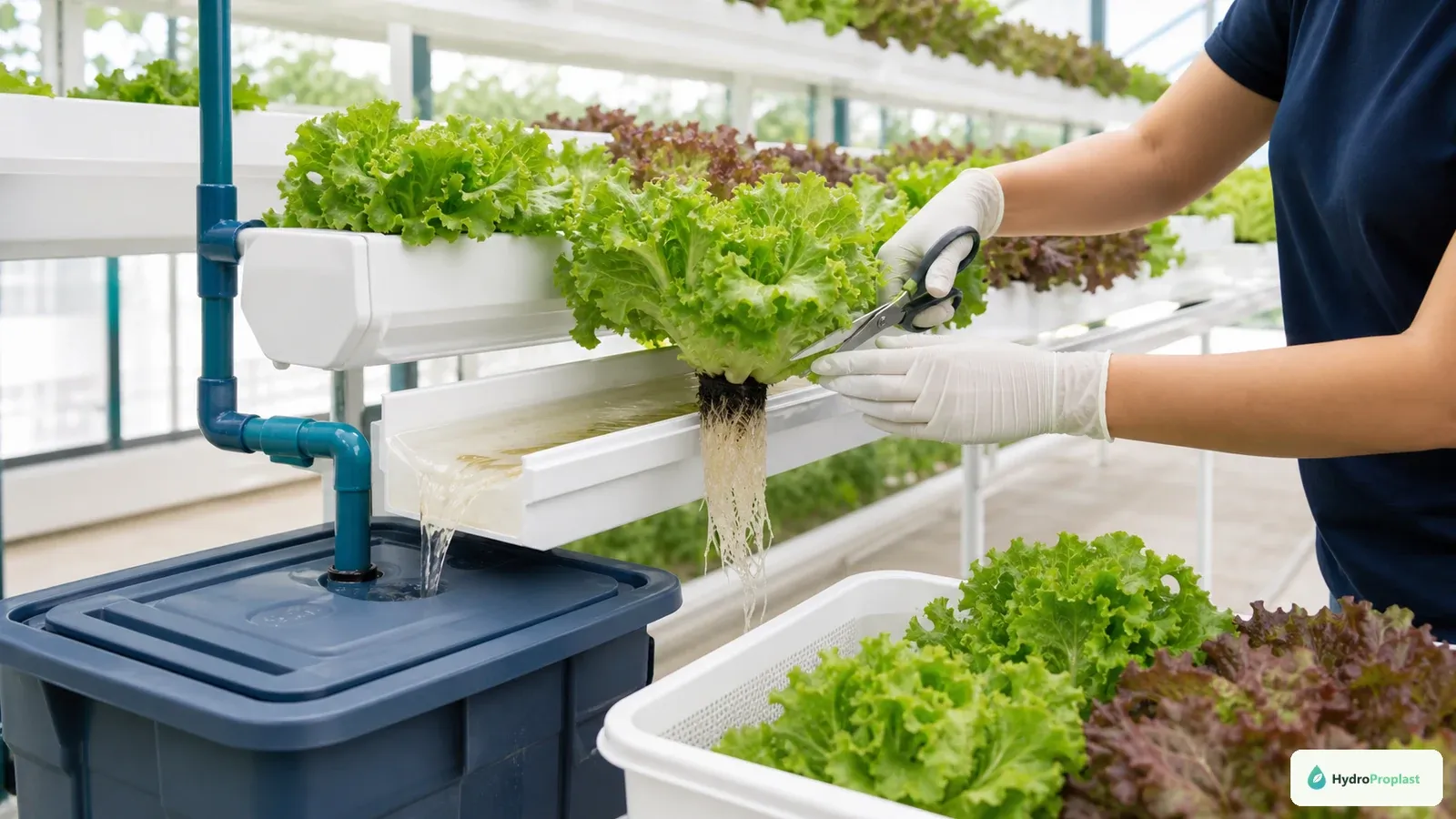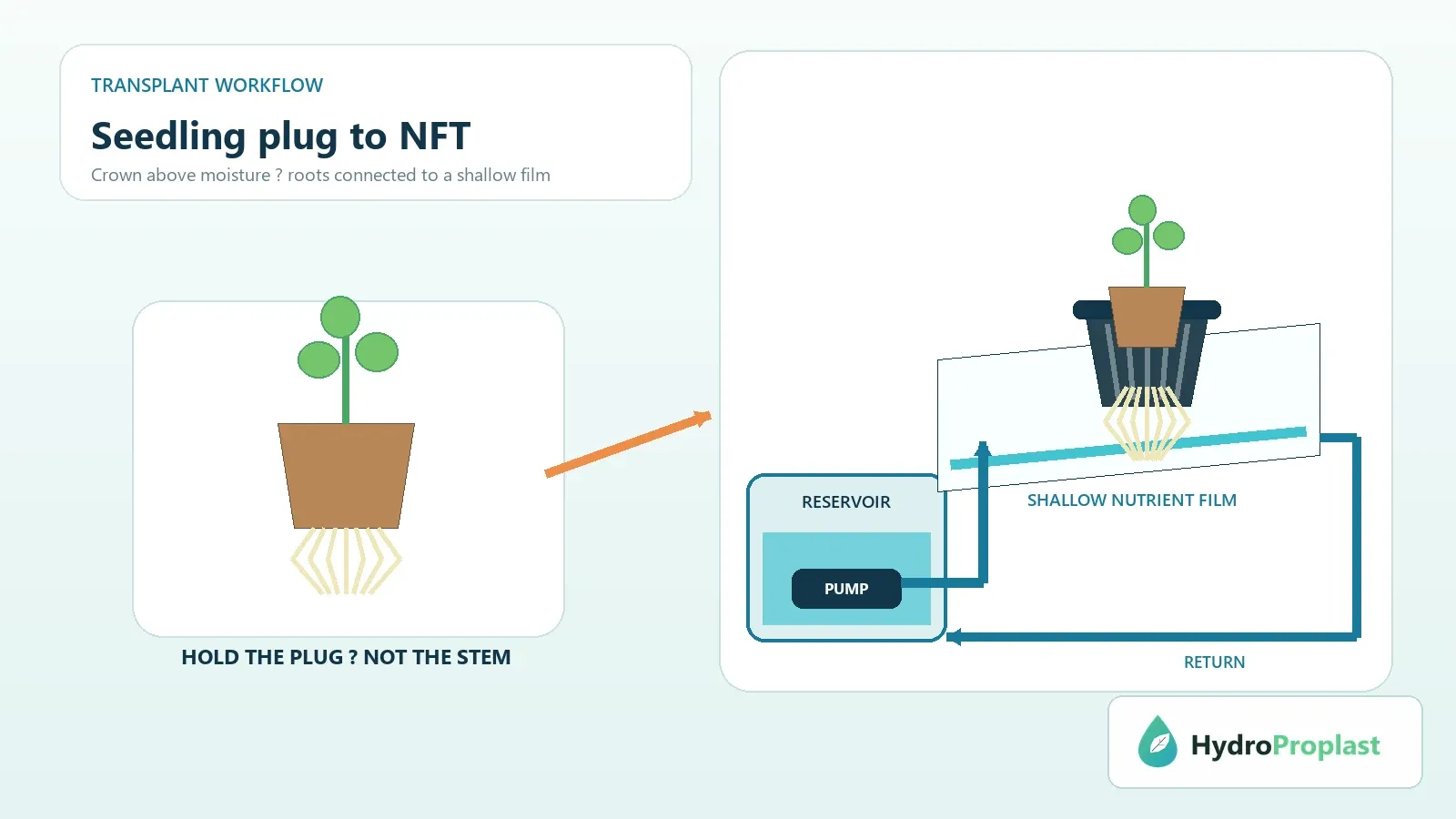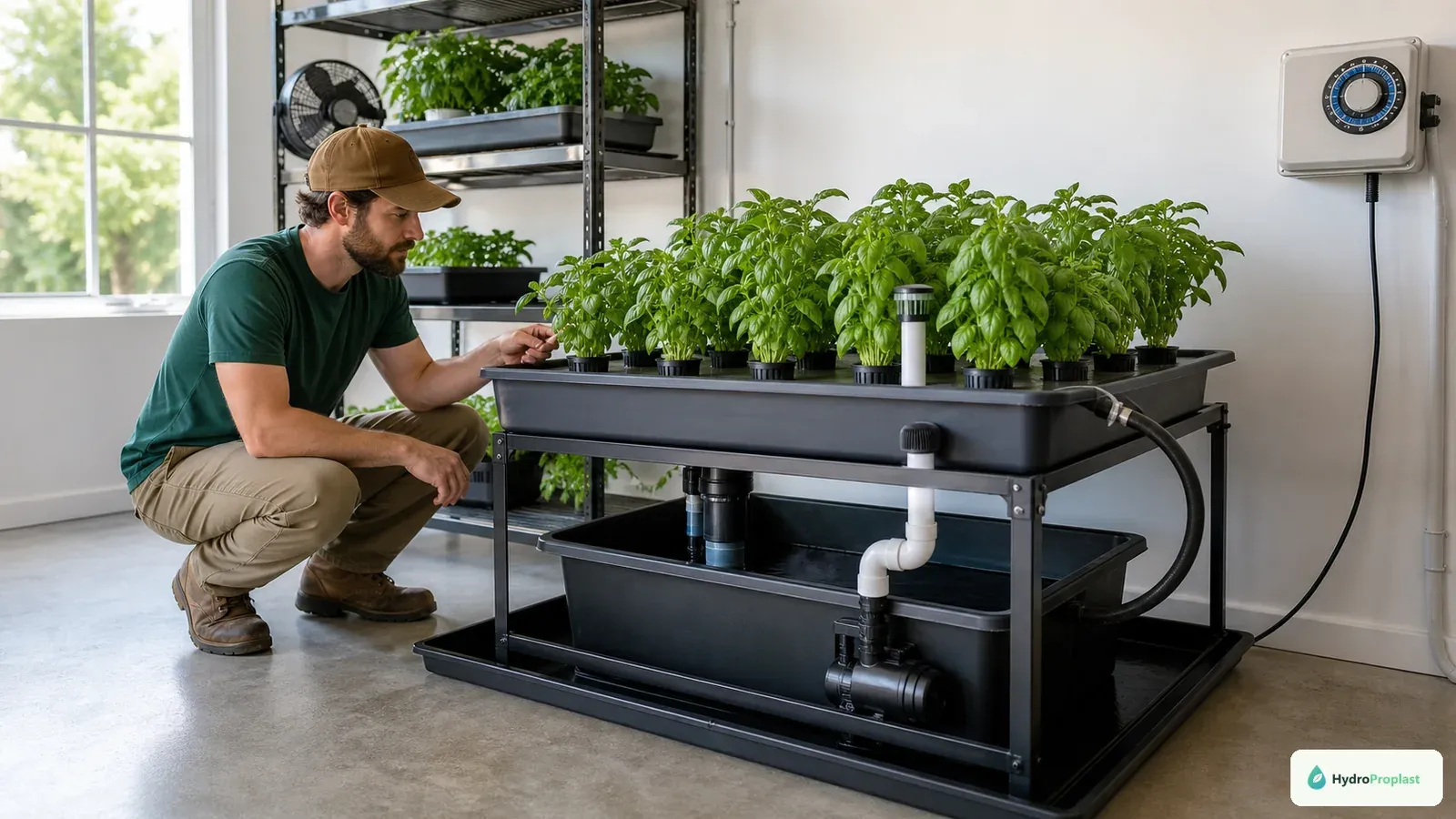
Leaving a hydroponic system unattended is a reliability test, not a request for one oversized top-up. A safe vacation plan must cover water demand, pump and air operation, solution stability, lighting, climate, leaks, power failure, alarms, and a person who can respond. Prepare early enough to observe the system under the planned configuration.
Decide whether the crop should remain
Young seedlings, newly transplanted plants, flowering fruiting crops, and mature plants with high water demand carry different risks. Harvest short-cycle greens before leaving when keeping them offers little value. Remove diseased or weak plants that could deteriorate in a shared reservoir.
Prune or train only according to crop guidance, and do it several days before departure so the response can be observed. Do not perform a major transplant or nutrient change the night before travel.
Estimate real daily water use
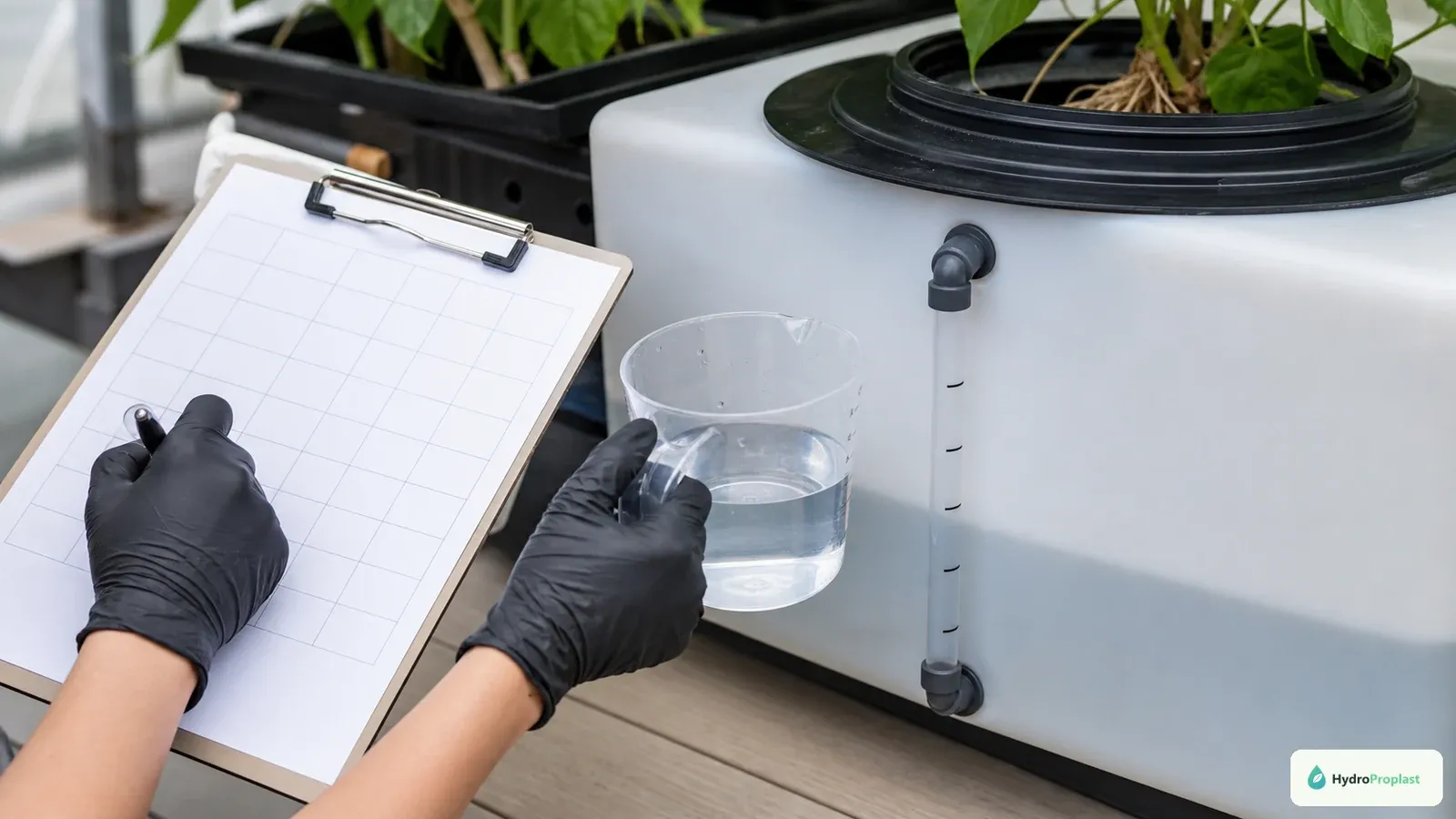
Measure real daily demand under current crop and climate conditions, then add a safety margin.
Mark the reservoir and measure daily loss during conditions similar to the expected absence. Include mature crop stage, light schedule, room temperature, and recent weather. Separate plant use from known leaks.
Multiply the highest credible daily demand by the number of unattended days, then add a reasonable safety margin while respecting reservoir freeboard, pump minimum, structural load, and passive-system air gaps.
The reservoir sizing guide explains usable volume and drain-back.
Do not simply overfill
Overfilling can submerge crowns, remove a Kratky air gap, overflow during pump shutdown, flood a floor, or place excessive weight on a shelf. Determine maximum operating level with pumps on and off.
In recirculating systems, account for water held in channels and containers. Test drain-back after power loss. Mark maximum, normal, and minimum safe levels.
Choose a top-up method carefully
A larger reservoir can reduce fluctuation when structurally supported. An automatic top-off using a float valve or pump can maintain level, but it creates failure modes: stuck valves, siphons, empty source tanks, sensor faults, and dilution.
Use a clean opaque top-up container, secure tubing, backflow or siphon protection, and an overflow path that does not reach electricity. Test the exact setup for several days.
A top-off replaces water, not the complete balance of nutrients removed by plants.
Stabilize nutrient solution before departure
Review pH and EC trends for at least a week. If the solution history is uncertain or a scheduled change falls during the trip, replace it early enough to confirm stability.
Mix by measured final volume. Do not add extra fertilizer “to last longer.” High concentration can injure roots as water falls. Follow the water-change guide.
Calibrate meters and leave clear instructions for any caretaker measurement.
Service pumps and aeration
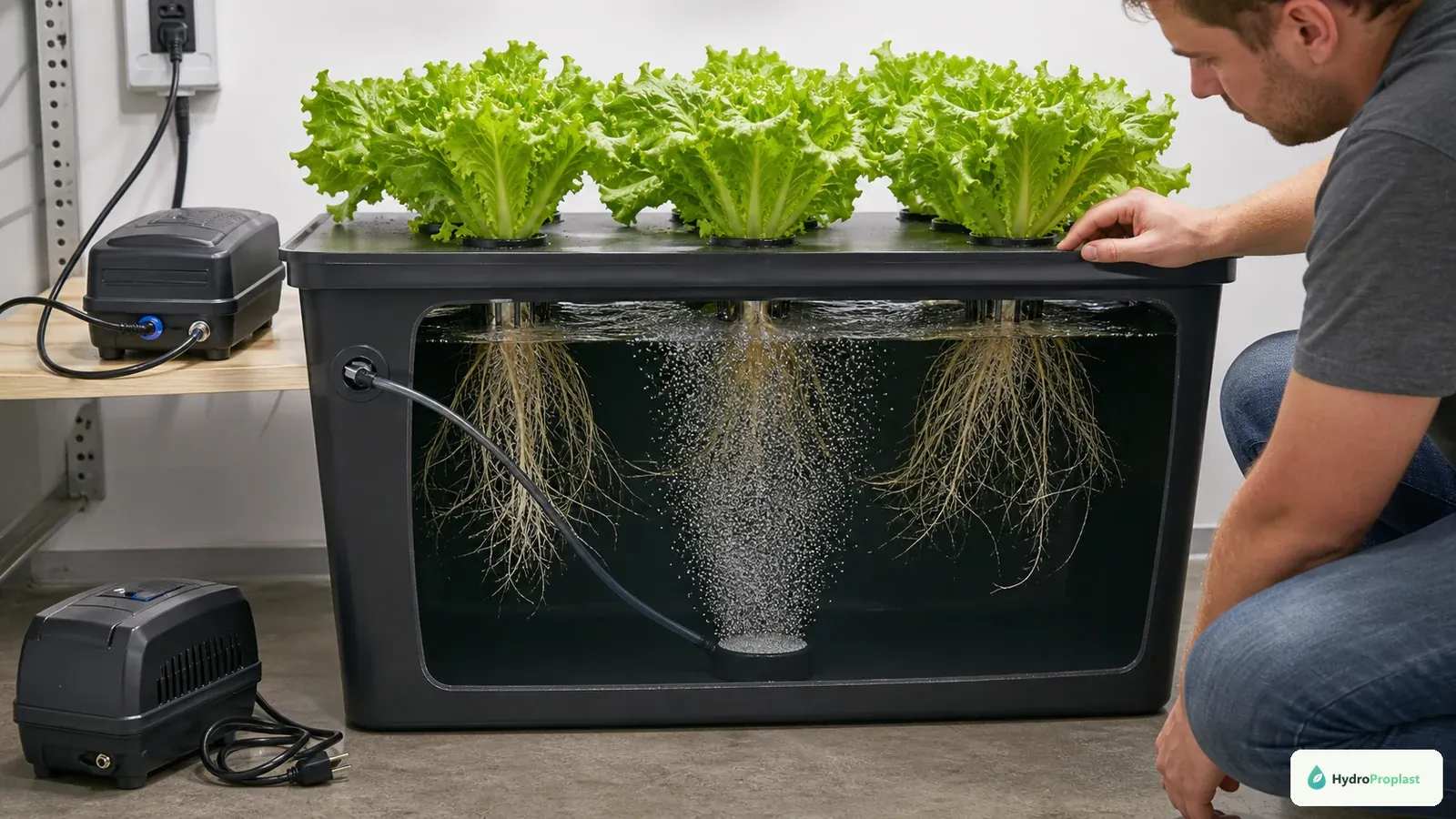
Confirm pumps, air lines, stones, and backup equipment work before departure.
Inspect pump intakes, filters, impellers, air stones, tubing, check valves, emitters, and return lines. Remove debris and roots that could block flow, but avoid a disruptive deep cleaning immediately before departure.
Keep tested spare pumps, air pumps, tubing, and fittings labeled. A spare in a sealed box is useful only if the caretaker can install it safely.
The air-pump versus water-pump guide clarifies each role.
Test power-failure behavior
Switch off system power under supervision. Confirm the reservoir accepts drain-back without overflowing, air lines do not siphon, and plants remain physically supported. Restore power and verify that pumps, timers, controllers, and lights restart correctly.
Some smart devices remain off after an outage or lose schedules. Test them rather than relying on specifications.
Use only appropriately rated backup power equipment installed according to electrical and fire-safety guidance.
Verify the light schedule
Observe an actual on and off cycle. Confirm timer time zone, load rating, dimmer, fixture height, and canopy clearance. Remove leaves that could contact hot fixtures through normal growth only according to crop training practices.
Do not extend the photoperiod before vacation to accelerate growth. A stable known schedule is safer.
Keep lights, drivers, plugs, and extensions protected from potential leaks.
Control climate without opening new risks
Service HVAC filters and verify fans, exhaust, dehumidification, heaters, or chillers. Check lights-on peaks and dark-period humidity. Do not introduce an untested portable heater, humidifier, or fan just before leaving.
Keep reservoirs shaded and lids secured. Direct sun can create unexpected heat and algae.
Set safe alarm thresholds based on crop guidance and sensor accuracy, not personal comfort alone.
Use remote monitoring thoughtfully
Useful sensors may include water level, leak detection, air and solution temperature, humidity, power status, pump current, and camera views. Alerts must reach someone authorized to act.
Test notifications by creating safe simulated events. Confirm internet recovery after router or power restart. A camera cannot measure root oxygen or repair a pump.
Avoid exposing controllers to the public internet with default passwords; update and secure devices according to manufacturer guidance.
Prepare a caretaker guide
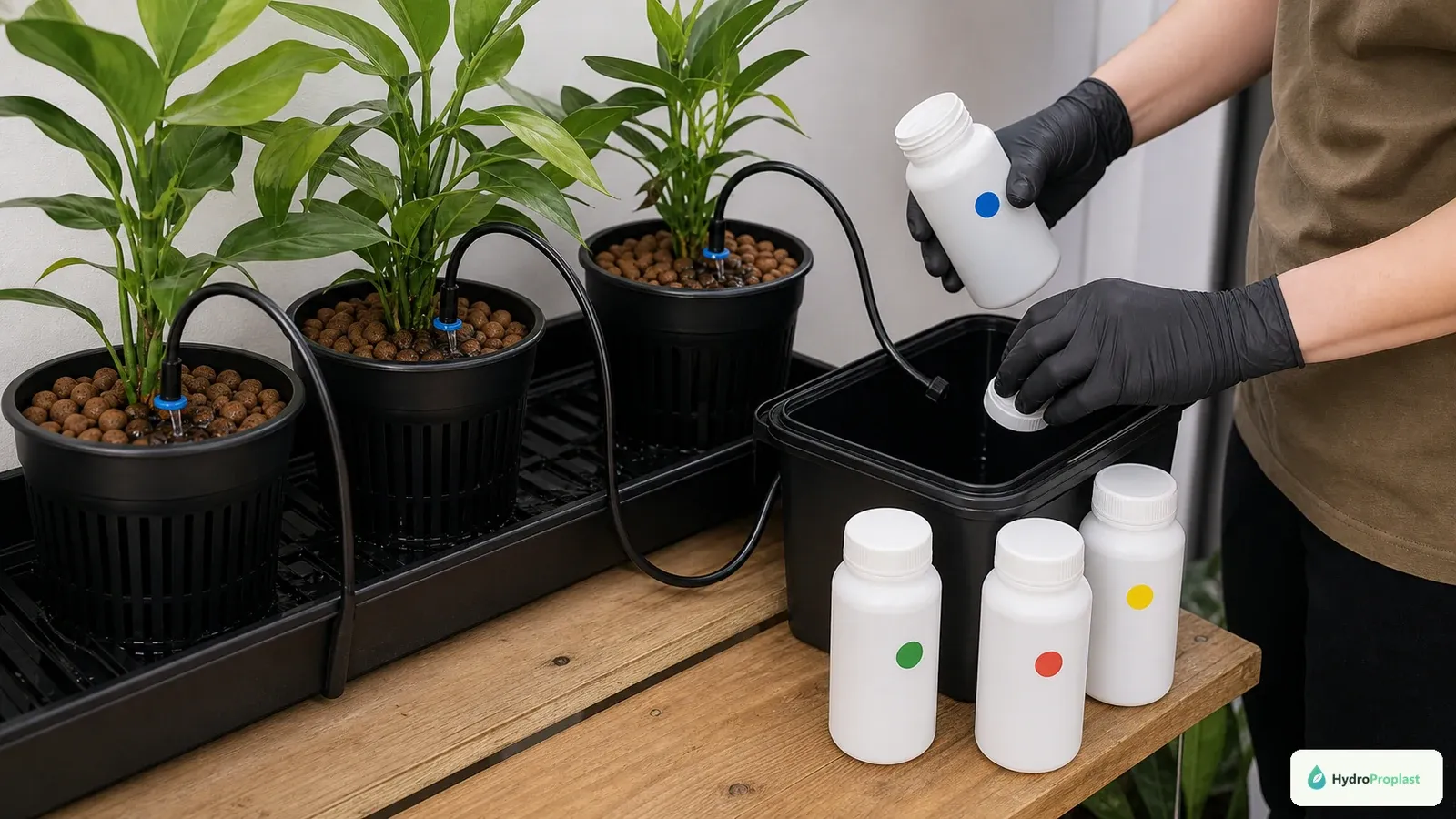
Limit caretaker actions to clear checks and premeasured additions that have already been tested.
Choose a person who can visit physically. Walk through the room before departure. Provide contact information, safe access, emergency shutoff, normal readings, alarm thresholds, and exact allowed actions.
Use photographs and labeled equipment. Instructions should say what not to do: no unrecorded nutrient, no concentrated pH adjuster, no pesticide, no rewiring, and no mixing chemicals.
A caretaker should stop and call when the situation exceeds the written plan.
Premeasure permitted additions
If a nutrient or pH action is genuinely likely and safe for the caretaker, premeasure or provide a written product-specific procedure with PPE and verification. Often the safer instruction is to add only a marked volume of suitable water and contact the owner for any chemistry change.
Never leave unlabelled cups of concentrate. Store acids, alkalis, nutrients, and cleaners separately and securely.
Record every caretaker addition with date, time, amount, and readings before and after mixing.
Prevent leaks and spills
Inspect tubing connections, clamps, bulkheads, drains, reservoir cracks, and floor protection. Route hoses so they cannot be pulled. Provide a leak sensor and a safe catch tray where appropriate, but do not rely on a tray smaller than the credible spill.
Keep water away from electrical connections. Label the correct shutoff sequence.
Do not leave a drain or hose positioned where it could siphon an entire reservoir.
Plan for pests and sanitation
Remove dead leaves, algae, spills, standing runoff, and ripe produce. Inspect pests before leaving. Do not apply a new pesticide immediately before travel; labels may require re-entry, ventilation, follow-up, or harvest restrictions.
Bag crop waste and empty bins. Keep doors and screens secure. A clean room is easier for a caretaker to inspect.
The algae prevention guide helps remove wet illuminated habitats.
Run a vacation simulation
Operate the system for the planned interval or at least several representative days using the vacation reservoir, top-off, timers, alarms, and caretaker checklist. Avoid routine intervention unless an alert requires it.
Record water level, temperature, pH, EC, and equipment status. Correct discovered weaknesses, then repeat enough of the test to verify the change.
A simulation is more valuable than buying untested automation the day before departure.
Use a departure checklist
Harvest ready crops; remove weak plants; confirm roots and flow; set verified levels; inspect pumps; test power recovery; observe lights; check climate; arm leak and level alarms; secure lids; photograph baseline readings; place spare parts; and give the caretaker written instructions.
Leave the workspace uncluttered and emergency access clear. Put contact numbers near the entrance.
Return and inspect before correcting
On return, check leaks, power, pump or air operation, water level, temperature, roots, and plant condition before adding anything. Review alert and caretaker records.
Calibrate meters if readings are suspicious. Correct one supported issue and evaluate new growth. Do not compensate for an undocumented absence with a large nutrient dose.
A reliable vacation setup uses tested capacity, redundant critical equipment, a physical responder, and narrowly defined actions. Automation extends observation and stability; it does not make a living system maintenance-free.
Trip-length risk tiers:
For an overnight absence, normal operating capacity and alerts may be enough. For several days, measured water demand, physical backup, and a responder become important. For a week or longer, crop selection, tested top-off capacity, spare equipment, and scheduled visits are essential. These are planning tiers, not guarantees; system and climate determine the actual risk.
Create a failure-mode table:
| Failure | Early evidence | Automatic response | Caretaker action |
|---|---|---|---|
| Low water | level alert, pump noise | shutoff if designed | add marked water only |
| Pump stopped | flow or current alarm | backup if installed | verify power, swap labeled pump |
| Air stopped | no bubbles, alarm | battery air where tested | replace pump or line |
| Leak | floor sensor, falling level | close valve or power | use written shutoff |
| Heat | temperature alert | HVAC or dimming rule | inspect room and reservoir |
| Power outage | offline or power alert | UPS for critical loads | visit and confirm restart |
Every action must match the actual equipment and caretaker competence.
Caretaker visit sheet:
At each visit, record time, room and solution temperature, water level, visible leaks, pump and air operation, light status, plant posture, and alarms. Photograph the reservoir marks and canopy. Add only the preauthorized volume and document it.
If roots smell foul, water is on the floor, electrical equipment is wet, or plants are collapsing, the caretaker should stop at the safe shutdown step and call. They should not diagnose pH, apply pesticide, or mix concentrate without training and authorization.
Food and harvest planning:
Harvest ripe cucumbers, tomatoes, peppers, strawberries, lettuce, and herbs before departure when they would overmature. Remove fallen fruit and leaves. Arrange a caretaker harvest only with clean tools, food-safe containers, and clear crop-specific instructions.
Do not leave harvested produce in a warm grow room. Either store it correctly or let the caretaker take or discard it according to the plan.
Insurance and property constraints:
A hydroponic leak can affect floors, neighboring units, and electrical systems. Confirm landlord, building, or insurance requirements. Large reservoirs need structural support and containment designed for their credible failure volume.
Do not place a system above valuable equipment or an occupied lower unit without appropriate engineering and permission. Vacation automation does not reduce legal responsibility.
Cyber and alarm test:
Change default passwords, enable supported updates, and restrict controller access. Create a safe test for every alarm, then confirm the alert reaches both owner and responder. Test loss of internet separately from loss of power.
Keep essential operation local when possible so a cloud outage does not stop pumps or lights. Document manual overrides.
University of Minnesota Extension’s small-scale hydroponics guide provides home-system monitoring context. The system-cleaning guide supports preparing a clean crop area before travel.
Final go-or-cancel decision:
Do not leave the system operating unattended when an active leak, unstable pH, recurring pump fault, severe pest, root disease, overheating, or untested controller remains. Harvest or safely shut down the crop instead.
A departure is approved only when the simulation passes, water and drain-back fit marked limits, critical equipment has a response, alerts reach a trained person, and written instructions restrict unsafe actions. The best vacation system is boring: stable, observed, and easy for someone else to understand.
Emergency contact information should include the equipment manufacturer, building manager where relevant, electrician or plumber if prearranged, and local emergency services. A caretaker should never enter standing water near energized equipment. The written first step for an electrical-water incident is to keep clear and use the approved upstream disconnect only when safely accessible.
The U.S. Consumer Product Safety Commission’s home electrical safety information provides general household context; permanent wiring and wet-area installations require qualified local guidance.
After every trip, conduct a short postmortem. Compare predicted and actual water use, alert frequency, caretaker actions, crop loss, and equipment behavior after any outage. Update reservoir margin, visit schedule, spare parts, and instructions before the next absence.
Do not treat one successful trip as proof that the system can be left longer. Crop size, season, weather, root mass, and equipment age change risk. Re-run the vacation simulation when any of those conditions changes.