Hydroponic strawberries combine a compact canopy with a long production cycle, exposed crowns, flowers, runners, and fruit that must stay clean and dry. They can fit a home system, but planting material, cultivar, pollination, crown position, and disease prevention matter more than novelty.
Begin with a small number of healthy plants and a system that leaves every crown, root zone, and return path visible. Strawberries are easier to manage when the grower can inspect them without dismantling the installation.
Choose cultivar and planting material
Day-neutral cultivars can flower over an extended period under suitable conditions, while short-day and June-bearing types behave differently. Select for container or protected production, flavor, disease resistance, and local availability.
Use clean crowns, plugs, or tissue-cultured starts from a reputable source. Outdoor runners can carry mites, insects, and pathogens into the room. Quarantine and inspect all plants before placing them beside an established crop.
Select a system that protects crowns
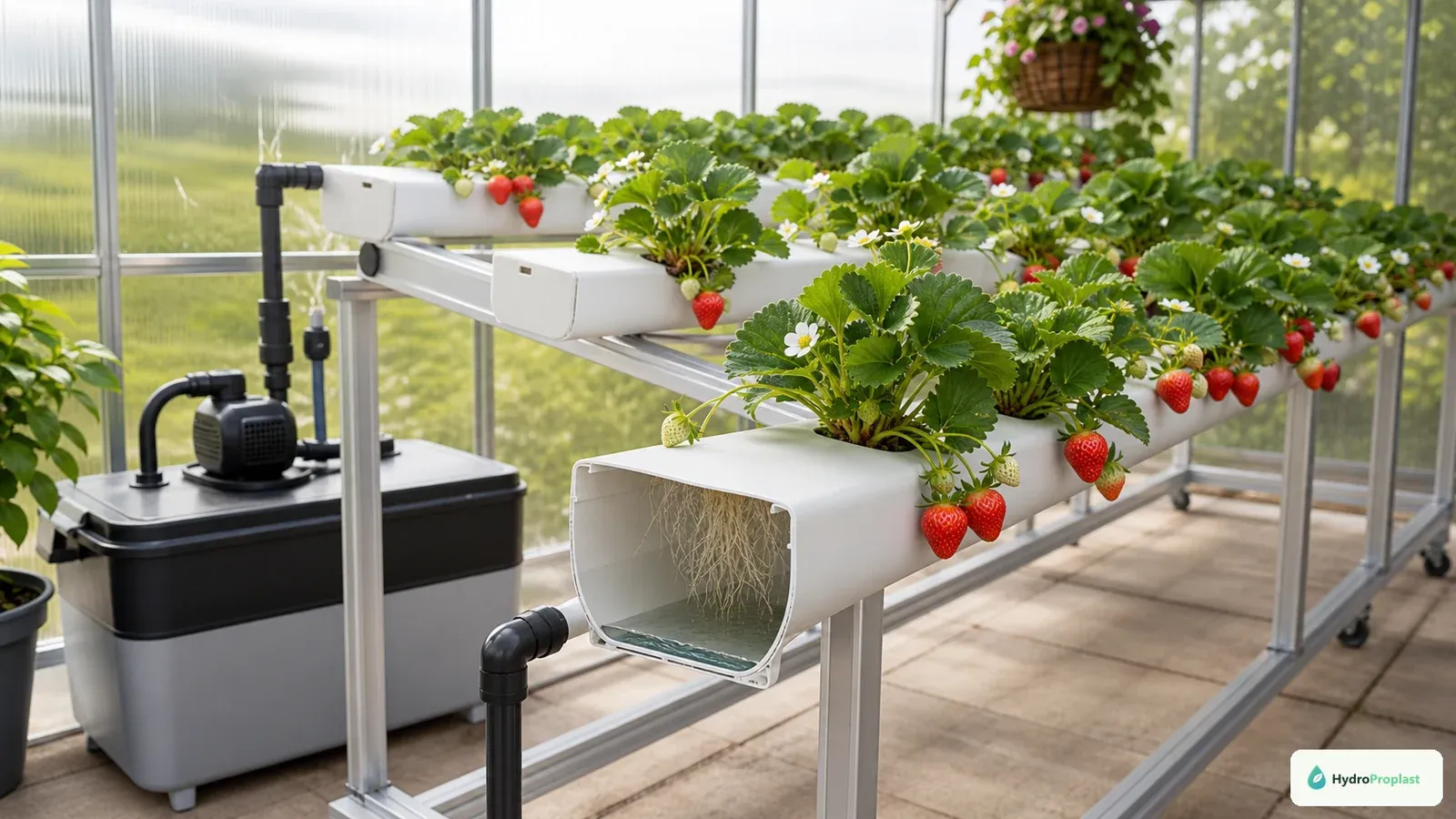
NFT channels, drip-fed gutters, towers, and individual containers can all work when the crown stays above persistent moisture and roots receive water and oxygen. NFT must have a shallow moving film, a gentle slope, closed ends, and a visible supply and return path. It must not hold a deep static pool.
Drip systems need even delivery and complete drainage. Crowded towers can create uneven light and irrigation from top to bottom. Choose a layout that lets you see every crown and remove a plant without damaging its neighbors.
Plant at correct crown height
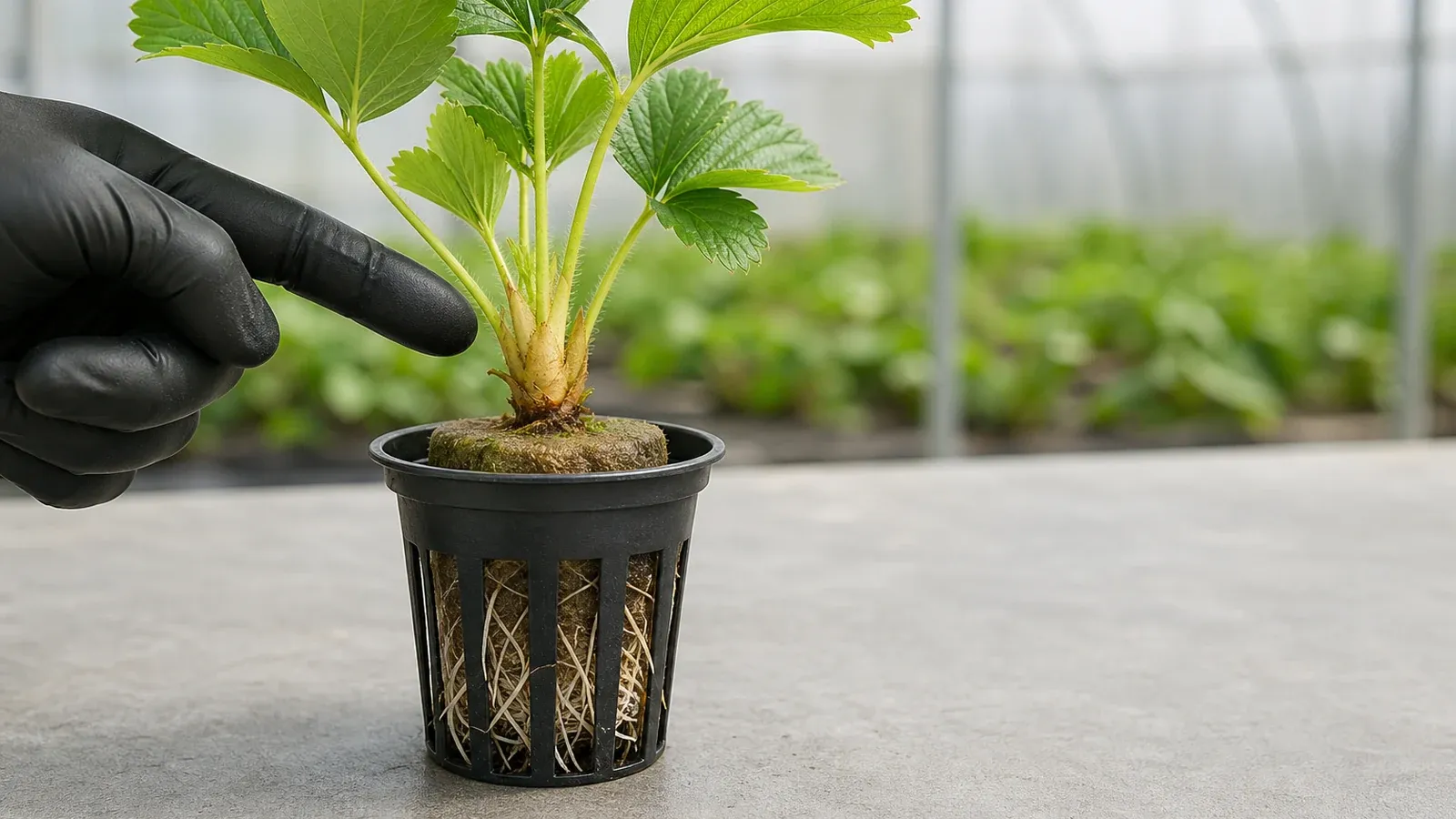
Place the strawberry crown above persistent moisture while roots extend downward into the moist support zone.
The crown is the short central section where leaves and roots meet. Set it at or just above the support surface according to the planting material and system. Burying or continuously wetting the crown increases risk, while leaving roots dry prevents establishment.
After planting, check that roots contact moisture but the crown remains exposed to air. Recheck after media settles or roots pull the plug downward.
Establish roots before heavy flowering
New plants need time to produce functional roots and leaves. Remove damaged material and consider limiting early flowers on a weak transplant so the plant can establish. Follow cultivar and supplier guidance rather than stripping every flower by habit.
Inspect new white root tips, stable leaf growth, and consistent water uptake. Do not judge establishment from leaf color alone.
Provide uniform canopy light
Strawberries need even light across a low canopy. Place fixtures so the center does not receive excessive intensity while edges remain weak. Adjust hanging height or dimming as leaf area changes.
Use the LED guide to compare canopy coverage, PPFD, daily light, efficiency, and heat. Keep fruit and flowers from touching hot fixtures or dark wet surfaces.
Manage air and root-zone temperatures
Measure air near the flowers and solution temperature in the reservoir. Warm stagnant air can reduce fruit quality and encourage biological problems, while overheated nutrient solution carries less dissolved oxygen.
Provide gentle circulation through the canopy without continuously blasting flowers and leaves. Leave space for moisture to evaporate after normal handling.
Mix nutrients and monitor trends
Use a complete hydroponic nutrient formula appropriate for strawberries or fruiting crops and follow the product’s mixing order. Add concentrated parts separately to water, circulate, and measure EC and pH after mixing.
Track reservoir level, EC, pH, solution temperature, leaf pattern, and root condition. Avoid treating a leaf symptom with one nutrient before checking crown moisture and root health. The nutrient guide explains how to mix and interpret trends.
Pollinate flowers indoors
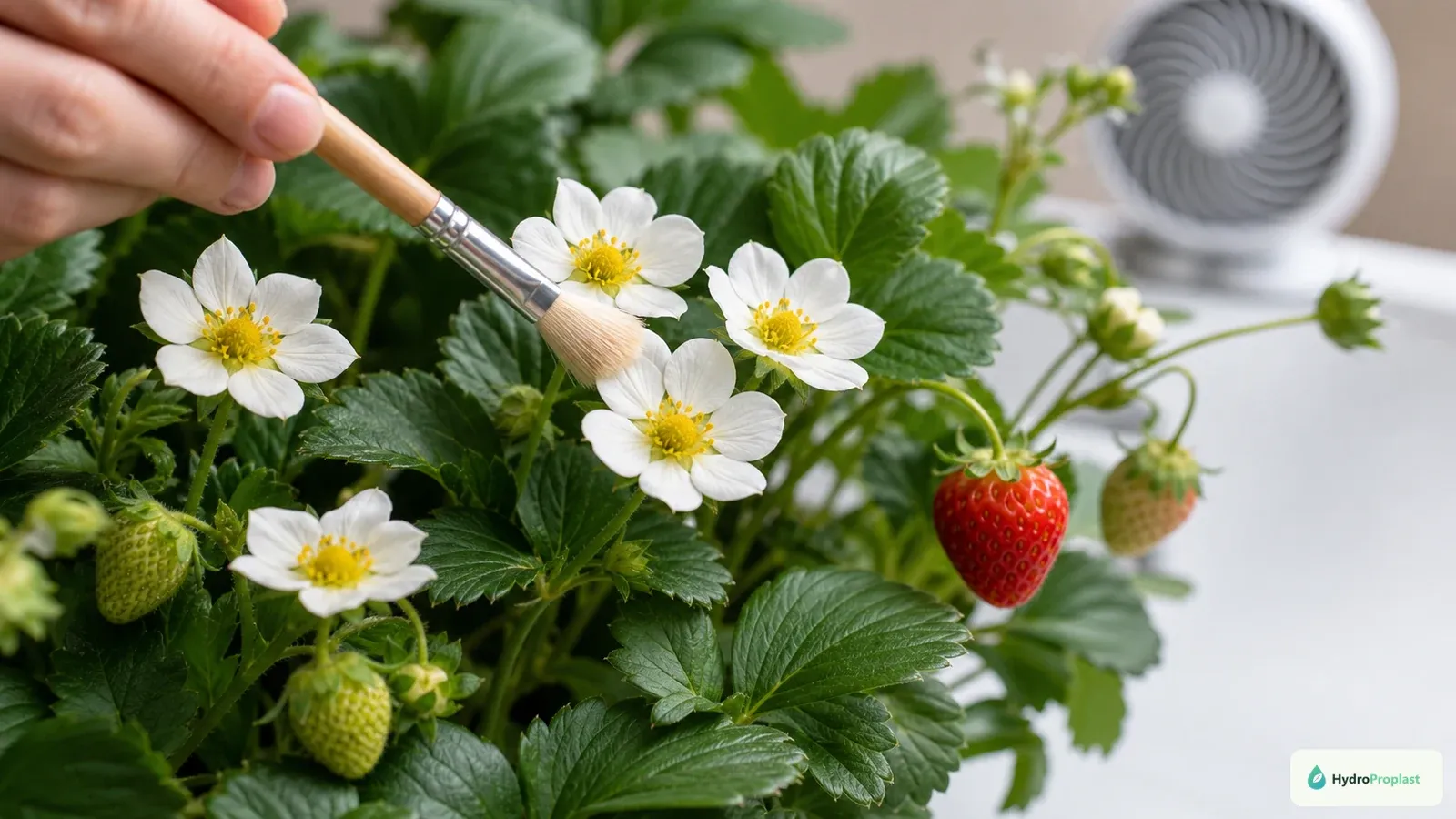
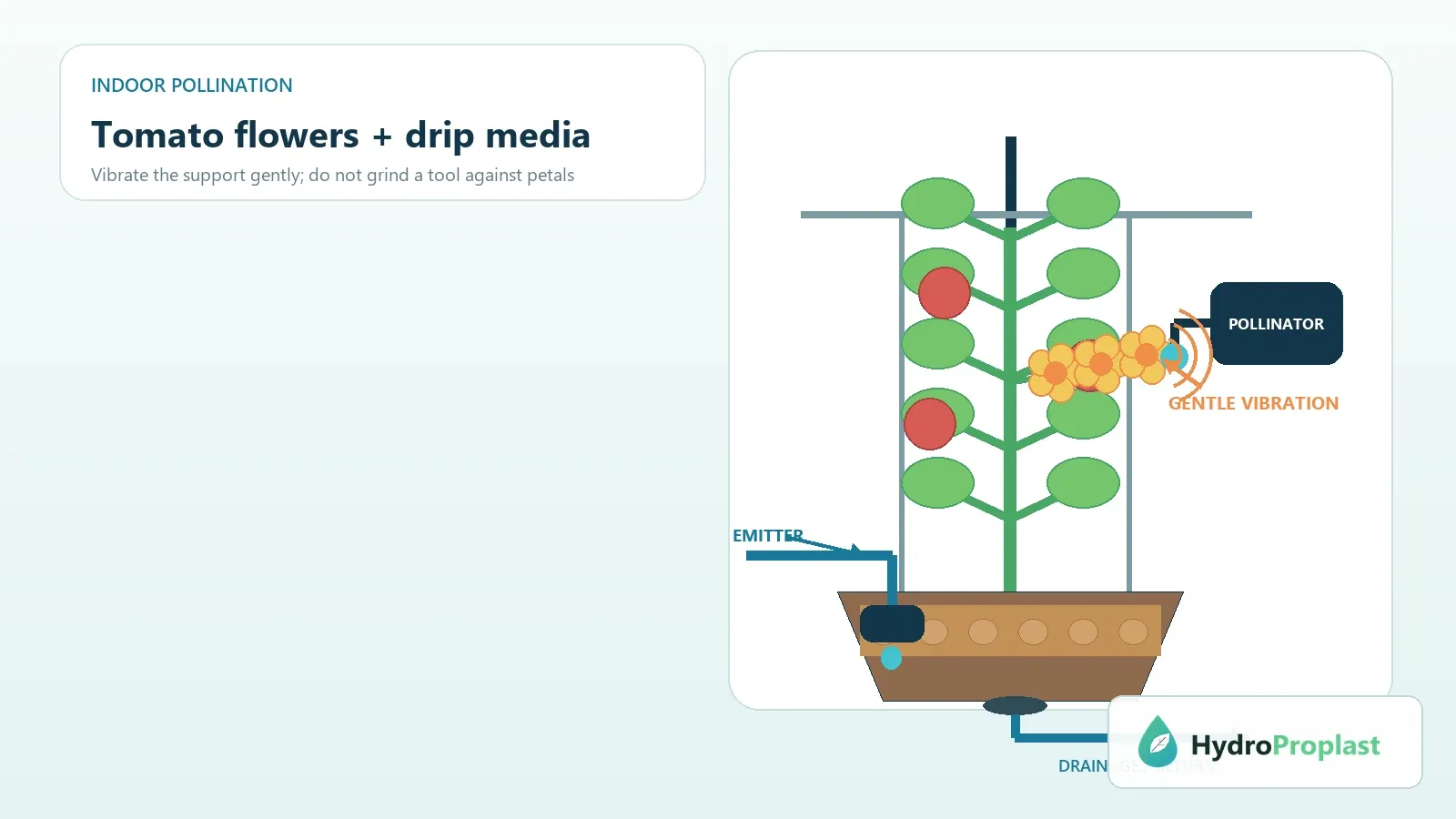
Move a clean soft brush across open strawberry flowers when indoor pollen movement is limited.
Indoor flowers may receive little insect activity or vibration. A clean soft brush moved gently across the flower centers can help distribute pollen. Gentle airflow can also assist, but strong wind may dry or damage flowers.
Work across open dry flowers and repeat during the flowering period as needed. Uneven pollination can contribute to misshapen berries, though cultivar and plant stress should also be considered.
Manage runners
Runners use energy and create new crowns that can crowd the system. Remove them when the goal is fruit production, or root selected daughters separately when propagation is planned and hygiene can be maintained.
Do not allow runners to bridge between channels or hide drainage. Use clean scissors and label propagated plants so their history remains known.
Keep fruit clean and supported
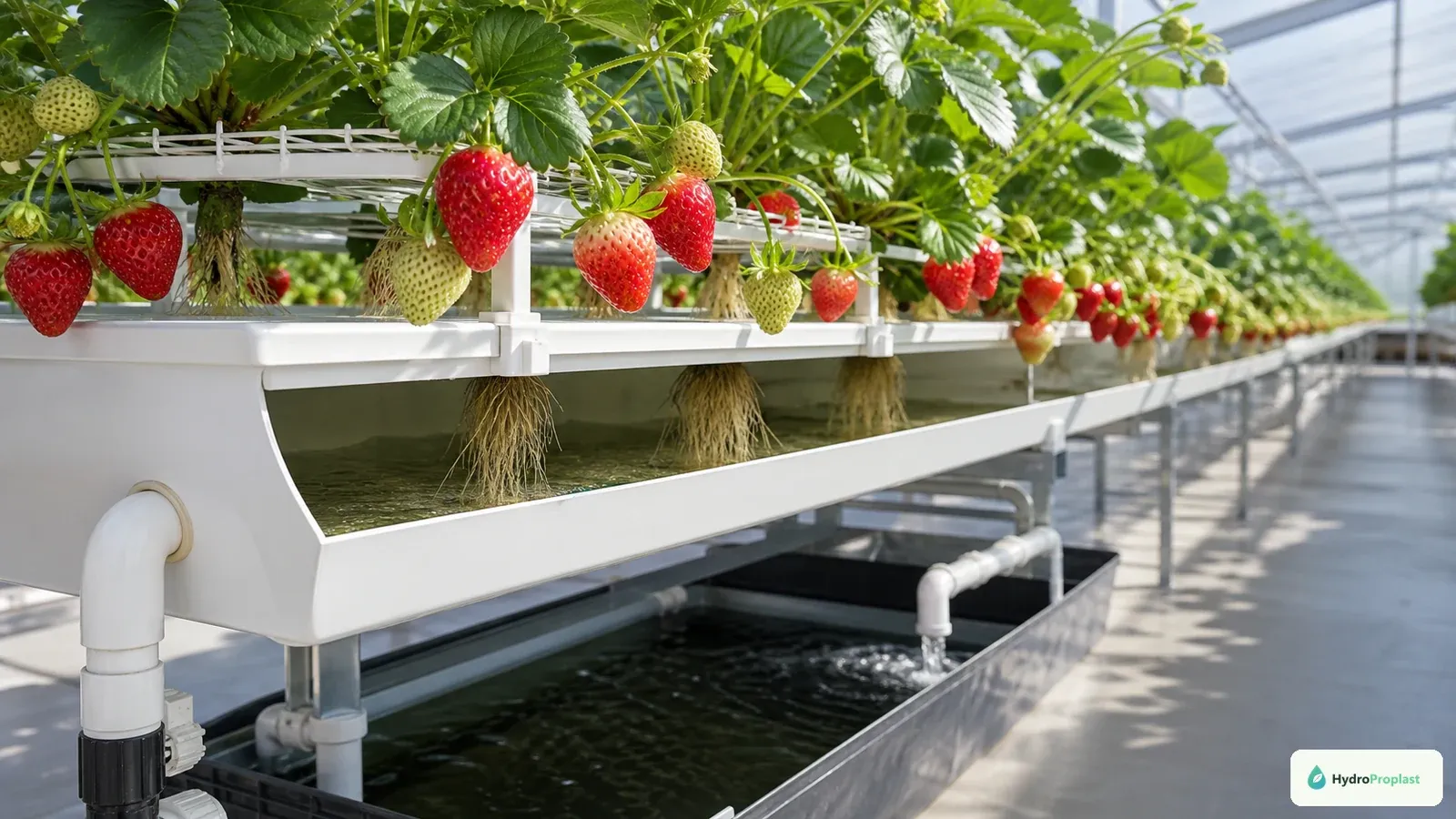
Food-safe supports keep berries above wet channels while the NFT supply and gravity return remain accessible.
Support berries above wet channels, media, and floors using clean clips or food-safe shelves. Keep irrigation directed at roots, not flowers and fruit. Remove damaged berries promptly so they do not contact healthy fruit.
Good spacing makes harvest and inspection easier. A dense canopy that hides fruit is difficult to keep dry and can conceal pests or decay.
Identify pests and disease early
Inspect leaf undersides, crowns, flowers, fruit, and runner tips. Mites, aphids, thrips, and fungal or bacterial problems can spread before symptoms are obvious from above. Quarantine incoming plants and clean tools between groups.
If a crown becomes soft, discolored, or foul smelling, isolate the plant and inspect roots and delivery. Do not return questionable plant material to a shared reservoir without understanding the problem.
Diagnose leaf and crown symptoms
Leaf edges, spots, pale new growth, wilting, and weak fruit can come from multiple causes. Check light, root moisture, solution strength, pH, temperature, and pests before adjusting nutrients.
Compare affected plants with healthy plants in different system positions. A repeated problem at the end of one channel may indicate flow or oxygen distribution rather than a crop-wide deficiency.
Harvest for flavor and plant health
Harvest berries when color and firmness match the cultivar and intended use. Use clean hands or scissors and avoid pulling the crown. Remove damaged or overripe fruit separately.
Cool harvested berries promptly when appropriate and avoid storing wet fruit. The harvest and storage guide provides general hygiene principles, though strawberries require crop-specific handling.
Plan replacement and propagation
Production often declines as plants age, crowns divide, roots congest, or disease pressure increases. Track plant source, transplant date, first flower, harvest, runner production, and rejected fruit.
Propagate only from healthy plants and keep new daughters separate until established. Replacing plants on a planned schedule is safer than waiting for an entire shared system to decline.
Clean between crop cycles
Remove all roots, leaves, fruit, and media before washing equipment. Clean away organic matter, then use an appropriate sanitizer according to its label when sanitation is required. Never mix cleaning chemicals.
Inspect channel ends, pumps, filters, emitters, and return lines before reassembly. Run plain water to confirm flow and drainage before new plants enter the system.
Beginner checklist
- Choose healthy planting material and a suitable fruiting habit.
- Keep crowns above persistent moisture.
- Make NFT supply, shallow film, and return clearly functional.
- Provide even light and gentle airflow.
- Pollinate indoor flowers when natural movement is limited.
- Support fruit above wet surfaces.
- Track plant age, runners, harvest, and root condition.
Hydroponic strawberries are a reasonable next crop after leafy greens when the grower is ready to manage crowns and flowers closely. Clean starts, visible roots, and dry supported fruit matter more than fitting the largest number of plants into the system.