The practical difference in one sentence
Choose the Kratky method for a quiet, pump-free crop that can finish from a correctly sized reservoir; choose deep water culture (DWC) when you want active aeration, easier top-ups, and more control over a longer or less predictable grow. Both suspend roots above nutrient solution, but they supply root oxygen differently.
Kratky creates a moist air space as the solution level falls. Upper roots occupy that gap while lower roots remain in solution. DWC normally keeps the solution level relatively steady and uses an air pump and air stone to oxygenate the submerged root zone. Removing the pump from DWC does not automatically create Kratky: the starting level, falling level, root development, and refill strategy are part of the passive design.
For a first lettuce or compact herb, either can work. Kratky has fewer mechanical failure points. DWC is more forgiving when water demand changes because the reservoir can be topped up while aeration continues. The right choice depends on crop duration, container volume, temperature, noise, power reliability, and how often you can inspect the roots.
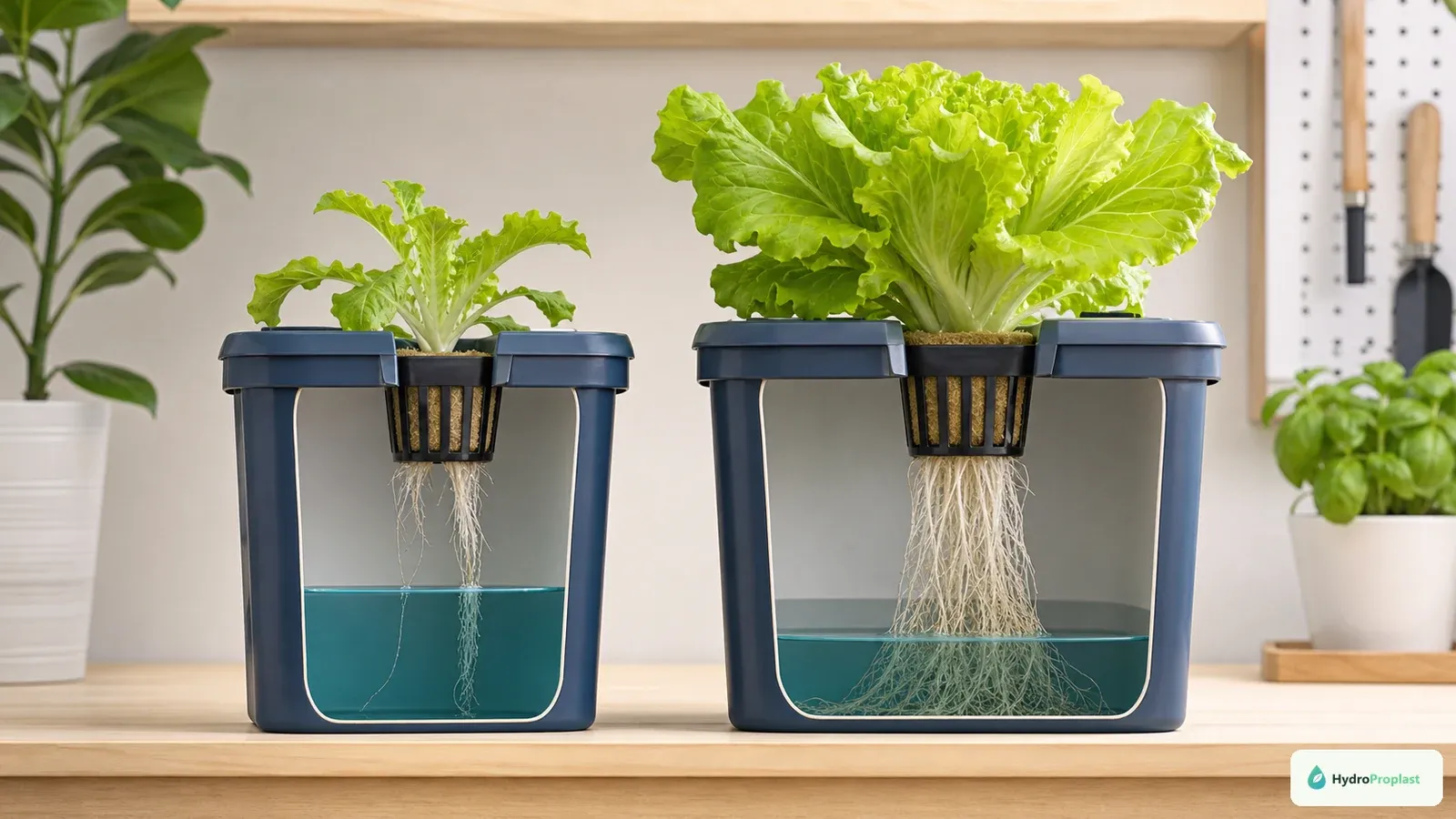
How the Kratky air gap develops
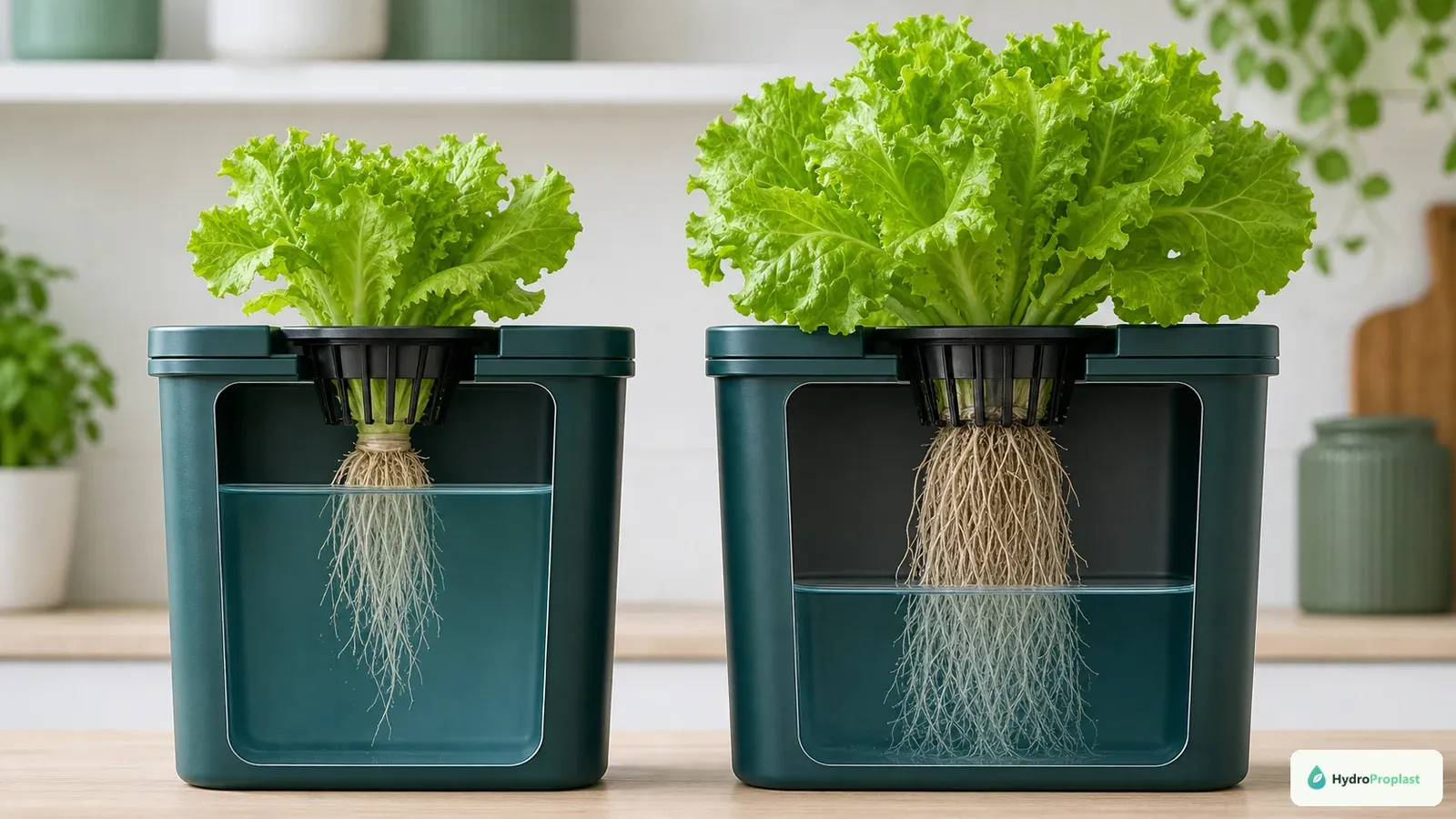
As a Kratky crop uses solution, the falling level creates humid air space for upper roots while lower roots continue reaching nutrient solution.
In a suspended-pot Kratky setup, the seedling starts with the lower portion of its plug or young roots reaching nutrient solution. As the plant consumes water, the solution surface drops. A humid chamber forms between the lid and solution. Roots in this chamber specialize in oxygen access, while lower roots continue taking up water and minerals.
Bernard Kratky’s University of Hawaiʻi paper on the suspended-pot non-circulating method describes the upper root portion residing in moist air after the level drops and the lower portion remaining immersed. In the elementary short-crop version, the initial reservoir is intended to carry the crop without routine watering or fertilization.
This explains two critical rules. First, the container must hold enough working solution for the crop and conditions. Second, once air-adapted roots occupy the gap, repeatedly filling to the original level can submerge them and remove the oxygen zone. A cautious partial top-up may be necessary in an undersized or unexpectedly thirsty setup, but that becomes active management rather than the original set-and-finish method.
Light must be excluded from the reservoir, and the lid must support the plant while allowing some gas exchange around the root chamber. A sealed jar filled to the lid is not a sound Kratky system.
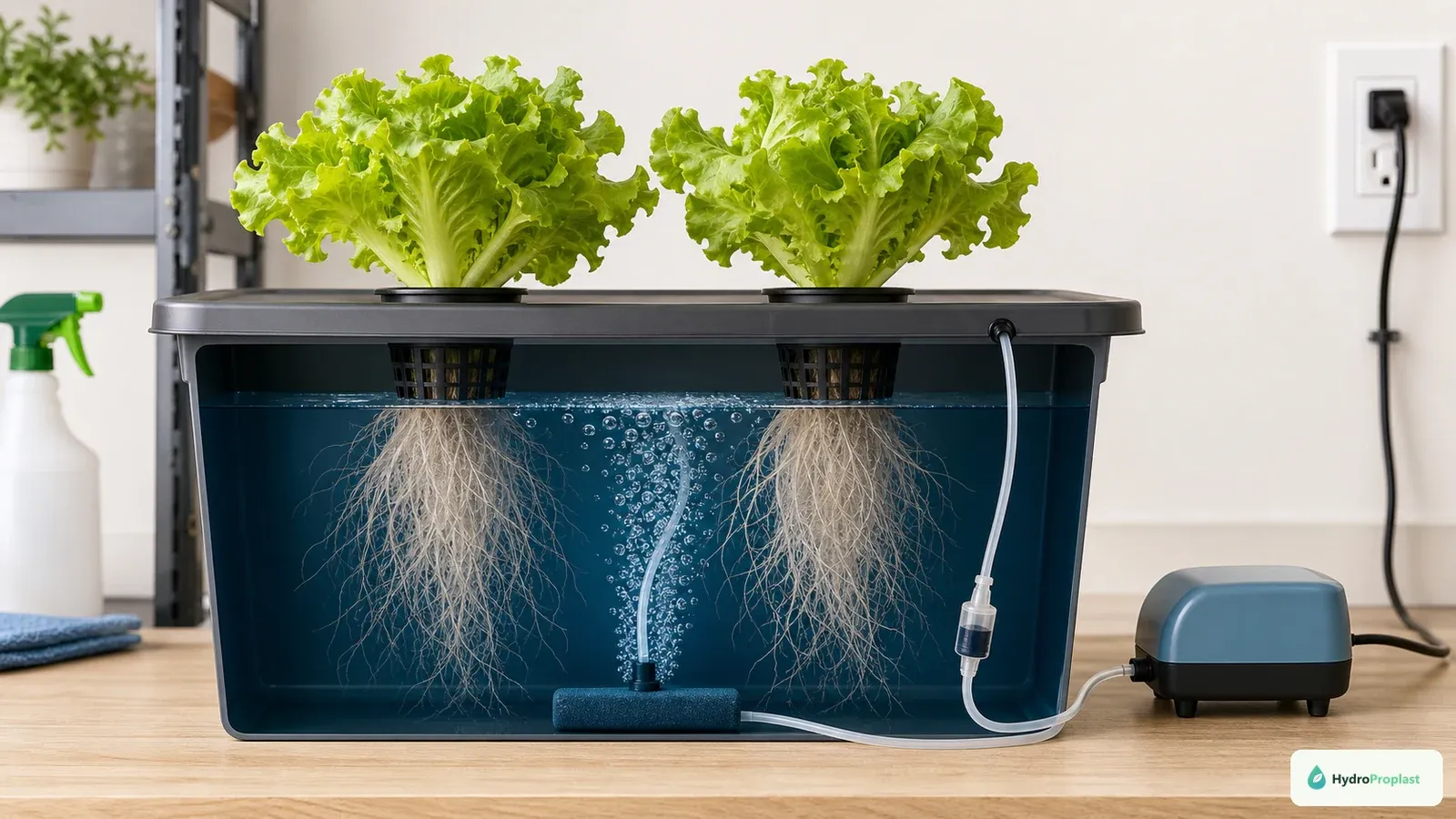
How DWC keeps submerged roots supplied
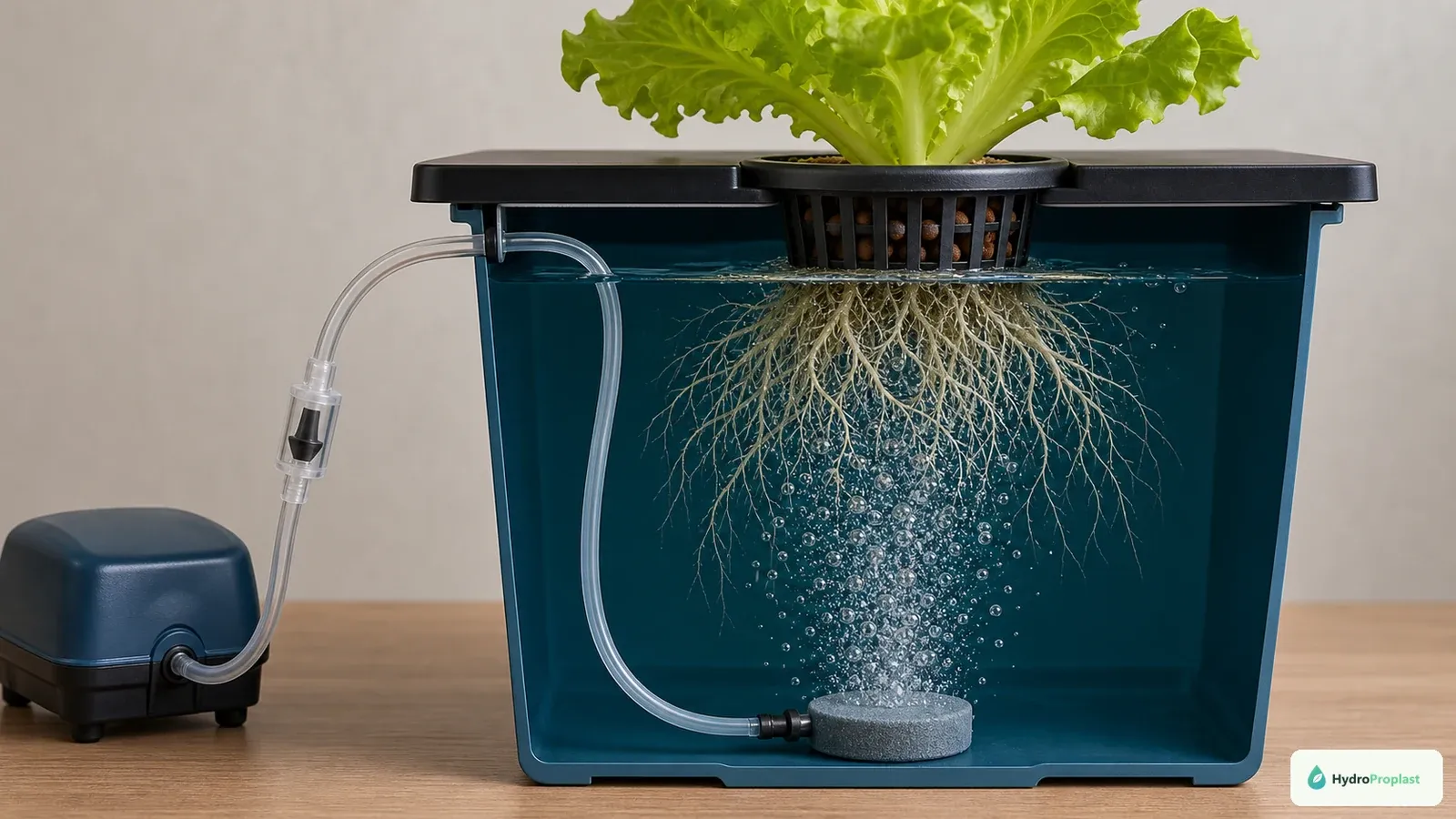
DWC depends on continuous aeration: the dry external pump sends air through a protected line to an air stone beneath submerged roots.
In DWC, roots extend into a reservoir that is intentionally aerated. An air pump pushes air through tubing and usually an air stone, creating bubbles and water movement. The bubbles themselves are not tiny oxygen packages absorbed only when they touch roots; gas exchange and circulation help maintain dissolved oxygen throughout the solution.
The water level can remain comparatively stable because aeration provides oxygen even when more root mass is submerged. Growers can top up, replace, or adjust solution without preserving a large permanent air gap. This makes DWC adaptable to crops whose water consumption is difficult to predict.
The USDA Economic Research Service’s hydroponic systems overview describes DWC roots as continuously suspended in oxygenated nutrient solution and notes its suitability for leafy greens and herbs. That suitability does not eliminate the need to manage water temperature, sanitation, nutrient strength, and light exclusion.
DWC depends on powered aeration. A failed pump, disconnected airline, blocked stone, or extended outage reduces the safety margin. Keep the pump above the waterline or install a suitable check valve, route cables with drip loops, and verify bubble delivery rather than trusting the sound of the pump.
Compare the parts and setup work
A small Kratky build needs an opaque reservoir, secure lid, net pot, starter plug or medium, complete hydroponic nutrient, seedling, and sufficient light. pH testing is still useful. Container depth and volume are functional design choices, not packaging details.
A DWC build uses the same core items plus an air pump, airline, air stone or diffuser, and usually a check valve. A multi-outlet pump can serve several containers, but shared aeration creates a common failure point. Each bucket remains hydraulically separate unless plumbing connects them.
Kratky wins the shortest parts list and can operate where an outlet is inconvenient. DWC wins adjustability. If you already need electric lighting indoors, the extra pump cable may be a minor issue; if the system is on a quiet bedroom shelf, vibration and pump hum may be decisive.
Neither method requires clear containers. Opaque walls and covered openings reduce algae by blocking light from nutrient water. Avoid unknown chemical containers and confirm that a filled vessel and lid can support the load safely.
Reservoir sizing changes the comparison
Kratky must budget water for the entire intended crop or include a deliberate intervention plan. Plant size, crop length, temperature, humidity, airflow, and light all affect water use. A volume that finishes one lettuce in cool conditions may fail in a warmer room or with basil allowed to grow longer.
DWC also benefits from adequate volume. A larger reservoir changes temperature, pH, and concentration more slowly, but it is heavier to move and consumes more solution when fully replaced. Small buckets are easier to clean but offer less buffer.
Do not copy a volume without checking the cited crop and environment. The original Kratky literature includes different tank arrangements for lettuce and much larger reservoirs for cucumbers and tomatoes. That is evidence that the concept scales through design—not evidence that every crop belongs in a small jar.
For both methods, mark the true working volume after lid, roots, and equipment displacement. Mix nutrients for that volume. Leave enough freeboard to prevent spills, and make sure mature roots do not block access needed for measurement or drainage.
Which crops suit each method
Fast leafy greens are the clearest Kratky candidates. Lettuce, some Asian greens, and compact herbs can finish before reservoir sizing becomes difficult. A separate container per plant limits competition and makes failed experiments inexpensive.
DWC is also excellent for leafy greens and herbs, especially when repeated harvesting extends the crop. Aeration and top-up flexibility help with basil or larger plants, provided the reservoir and light are adequate.
Fruiting crops can be grown in either concept only with greater planning. Tomatoes, peppers, and cucumbers need long-duration nutrition, substantial water, structural support, and strong light. DWC generally offers a more manageable route for active home growers, while non-circulating versions require very large reservoirs or carefully designed replenishment that preserves root aeration.
Do not choose by seedling size. Match the system to mature canopy, root mass, crop duration, and support. If you have not yet chosen a crop, Best Hydroponic System for Beginners provides a broader comparison.
Daily work and time away
Kratky is often described as maintenance-free. It removes pump checks and routine irrigation scheduling, but the plant still needs observation. Inspect leaf growth, root color and odor, solution level, heat, pests, and light leaks. A small container can move from adequate to empty quickly near harvest.
DWC adds a daily aeration check and periodic attention to the air stone. It also makes intervention easier: top up with water or appropriately prepared solution, measure pH and EC, and replace solution when the management plan requires it. Avoid automatic calendar rules that ignore crop response and source water.
For short absences, a correctly sized Kratky reservoir has no pump to fail. DWC can tolerate changing water demand better but depends on power. For either system, test autonomy before traveling and give a caretaker specific instructions rather than asking them to “add some nutrient.”
Temperature, oxygen, and failure speed
Warm nutrient solution presents a challenge because oxygen availability and root stress become harder to manage. DWC aeration provides active gas exchange, but an air pump does not make overheated water safe. Place reservoirs away from direct heat, monitor the root zone, and address room or light heat at the source.
Kratky relies on air-zone roots, so preserving the moist gap is central. DWC relies on functioning aeration, so pump reliability is central. In both systems, roots also need clean surfaces, appropriate nutrient concentration, and darkness.
Failure speed differs. A leak can empty either container. DWC may lose oxygen rapidly after aeration stops, especially with a dense root mass and warm water. Kratky avoids that mechanical event but may quietly run out of solution or develop an undersized air zone. The safer system is the one whose critical condition you will actually inspect.
Our guide to air pumps versus water pumps explains why a circulation pump is not automatically a substitute for deliberate DWC aeration.
Nutrient and refill strategy
Use a complete nutrient formulated for hydroponics and follow crop- and stage-appropriate directions. More concentrate does not compensate for a small reservoir. As water leaves, dissolved salts may become more concentrated; plants also remove individual ions at different rates. EC can indicate total ionic concentration but cannot reveal the remaining balance of each nutrient.
In classic short-crop Kratky, the initial correctly mixed solution is designed to decline with the crop. If intervention is needed, avoid blindly restoring the original full level. Observe where the air roots have formed and add cautiously. A setup that needs frequent correction may simply be too small.
In DWC, topping up is normal. Whether to add water or nutrient solution depends on water level, EC trend, crop stage, and source water. Periodic replacement resets accumulated imbalances but should not be performed only because a generic number of days passed.
Both methods require sensible pH management. Read Hydroponic pH Explained before making corrections, and adjust in small measured steps.
Choose with a simple decision rule
Choose Kratky when the crop is compact and short, you can provide a generous opaque reservoir, silence matters, power is unavailable or unwanted, and you are comfortable letting the level fall without routine refilling.
Choose DWC when you want repeated harvests or a longer crop, expect to top up, want a visible and adjustable root environment, accept pump noise and power dependence, and can keep spare aeration options for important plants.
Choose neither if the available location overheats the reservoir, lacks enough light, cannot contain spills, or makes daily inspection difficult. A wick system, media-based drip setup, or soil container may fit those constraints better.
Start with one or two plants rather than a linked array. Record starting volume, nutrient dose, pH, dates, water additions, pump interruptions, and plant response. At harvest, compare work as well as growth. Kratky and DWC are both simple systems, but they simplify different parts of the grow.
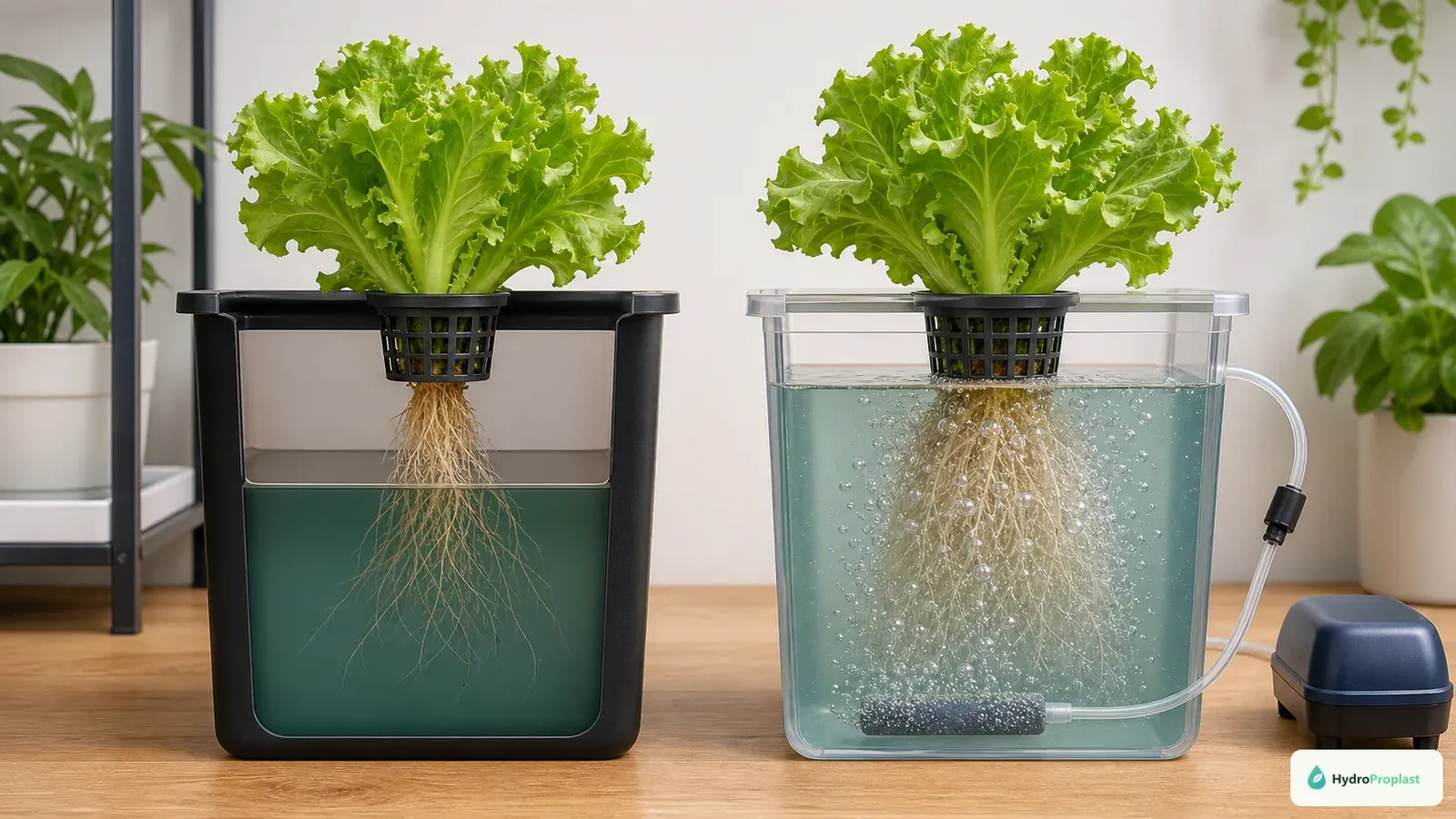
Run a controlled first-crop comparison
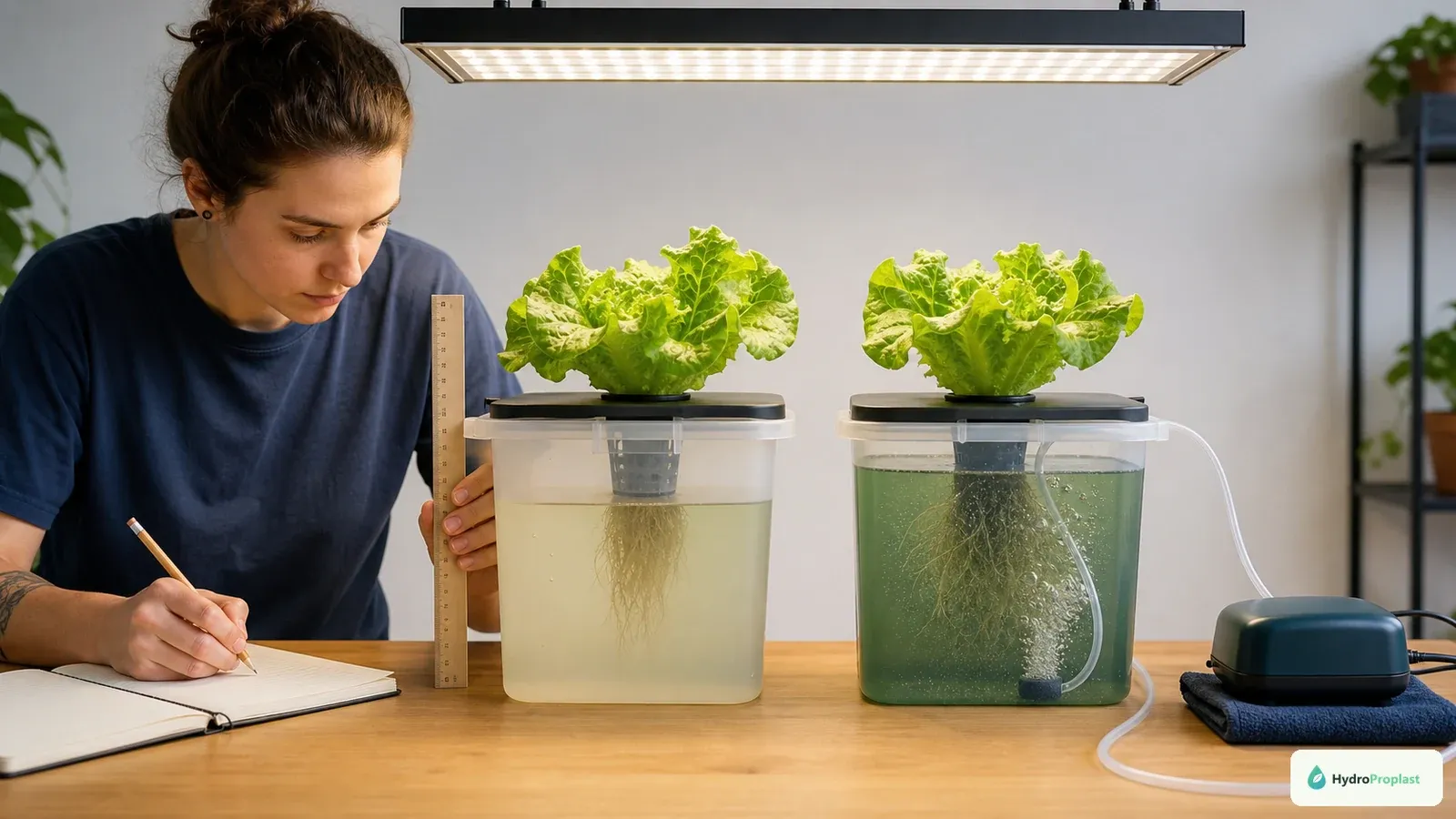
A controlled first crop keeps variety, plant age, light, container volume, and room conditions similar so the oxygen strategy is the meaningful difference.
If both methods remain attractive, test one plant in each under the same light with the same cultivar and starting nutrient solution. Give each reservoir enough volume for its method, rather than forcing identical containers. Record starting and ending volume, pH and EC trends, room and solution temperature, water additions, pump uptime, root appearance, and harvest date.
The purpose is not to declare a universal winner from two plants. It is to learn which workload fits you. Kratky may require less equipment yet more confidence in reservoir sizing. DWC may use more hardware yet make intervention easier. Note cleaning time and noise as well as plant growth.
Keep the two reservoirs separate so a mistake or root problem does not cross between them. At the end, inspect where Kratky air roots formed and compare them with the submerged DWC root mass. That direct observation will make refill and aeration decisions far clearer on the next crop.